
Learn new vocabulary Adding up to 1000 Worksheets for Ages 7-8
3 filtered results
Difficulty Level
Grade
Age
-
From - To
Subject
Activity
Standards
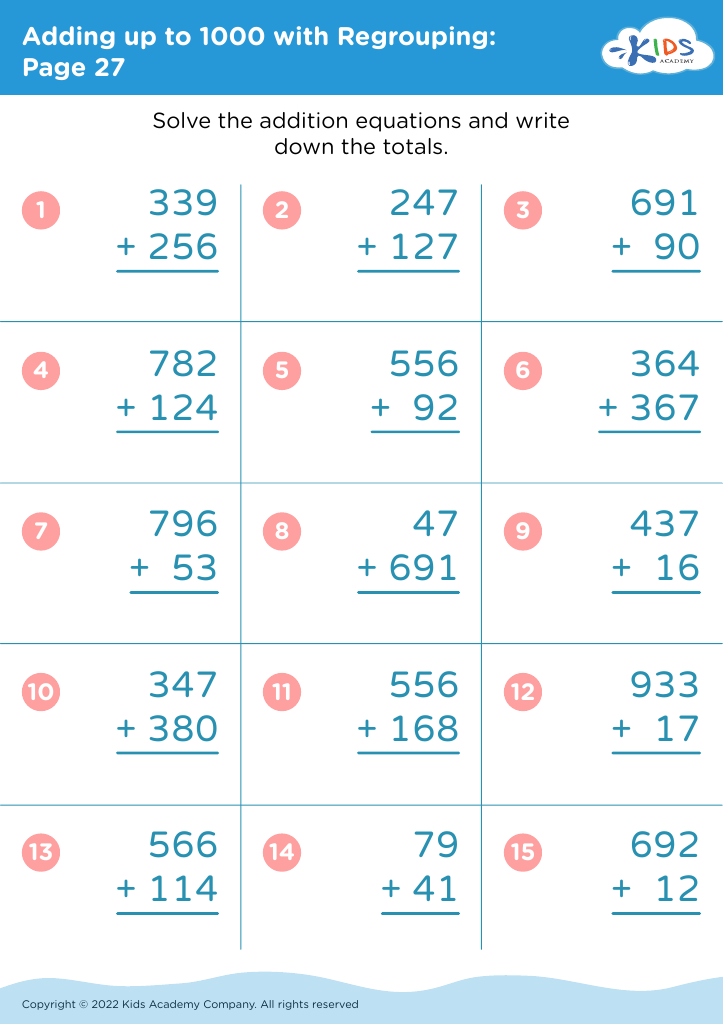
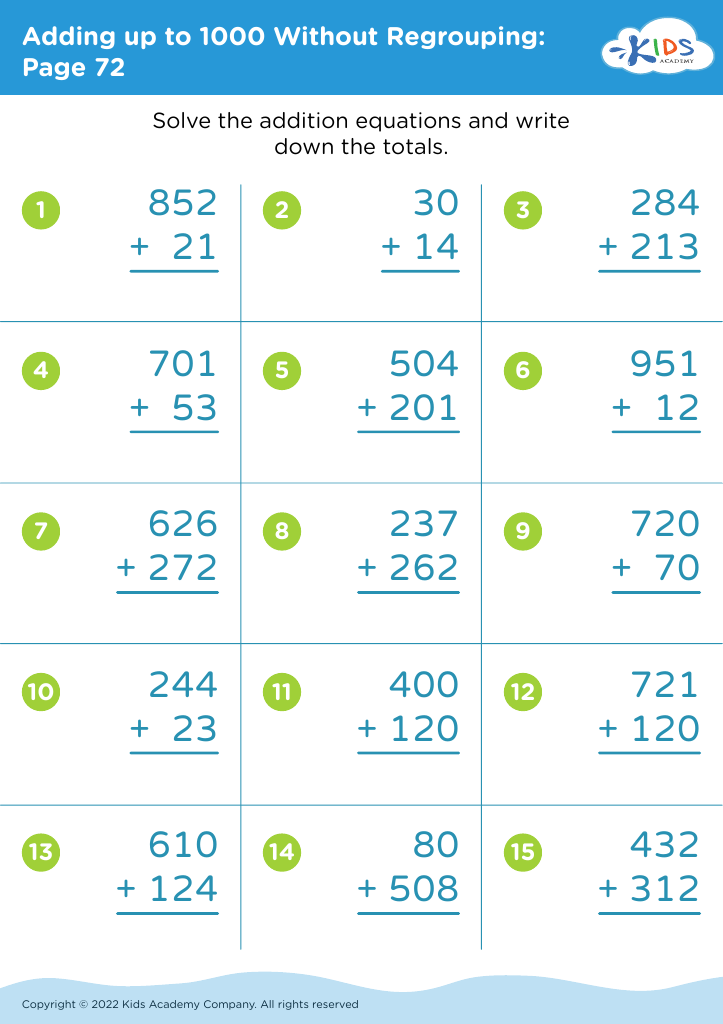
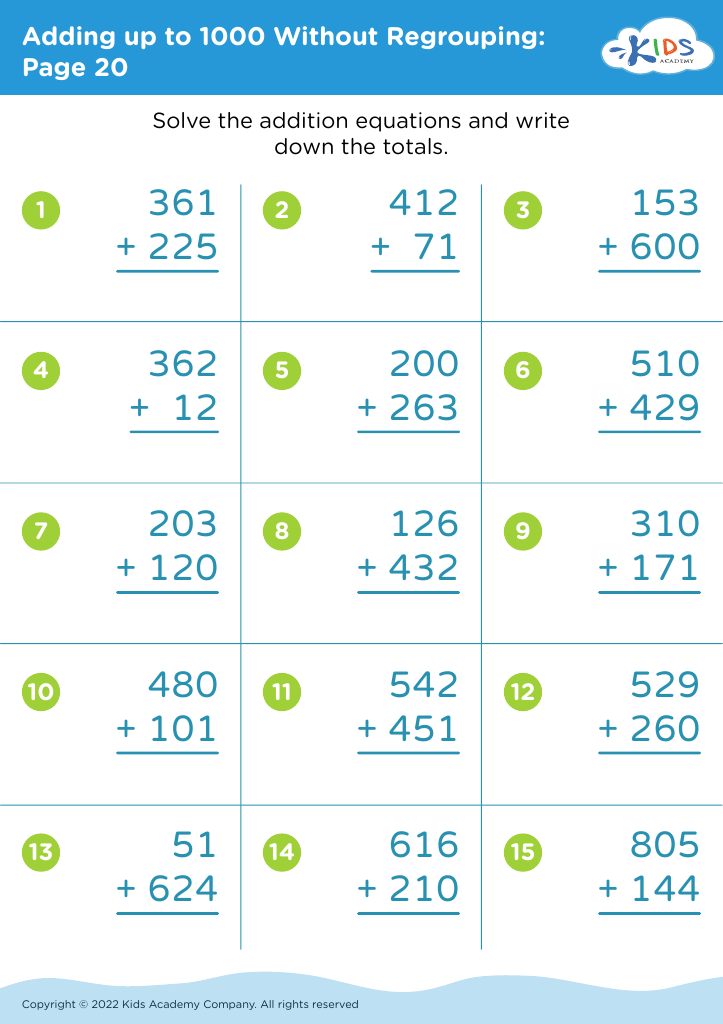
Enhance your child's vocabulary with our comprehensive "Learn New Vocabulary" worksheets, designed specifically for ages 7-8. These engaging resources help young learners understand and apply essential math terminology related to adding up to 1000. Packed with 1000 worksheets, your child will not only boost their arithmetic skills but also enrich their language ability. The activities are thoughtfully crafted to promote interactive learning, making vocabulary acquisition enjoyable and effective. Whether at home or in the classroom, our worksheets provide the perfect opportunity for your child to connect words with math concepts, laying a strong foundation for future learning. Start exploring today!
Favorites
With answer key
Interactive
Join Kids Academy for Free
Who is primarily going to use this learning content?



Parents and teachers should prioritize expanding vocabulary for children aged 7-8 because it plays a crucial role in language development and academic success. At this age, children are increasingly engaging with complex texts and diverse subjects. A robust vocabulary enhances their reading comprehension, enabling them to better understand and enjoy literature, which fosters a love for reading.
Moreover, vocabulary development promotes effective communication skills. Children with a richer vocabulary can express their thoughts and feelings more clearly, leading to better interactions with peers and adults. These skills are essential not only for social interactions but also for collaborative learning experiences in the classroom.
By learning new vocabulary, children also develop critical thinking skills. They are encouraged to make connections between words and concepts, which further enhances their cognitive abilities. Additionally, a strong vocabulary is linked to greater confidence in school, as children feel more equipped to participate in discussions and tackle challenging tasks.
Furthermore, the foundation established in early education can shape a child’s academic trajectory. Investing time in vocabulary development during these formative years can lead to enhanced educational outcomes in later years, setting children up for lifelong learning and success. Empowering children with vocabulary knowledge is empowering them for future learning challenges.








