Number Recognition Adding up to 1000 Worksheets for Ages 7-8 - Page 2
31 filtered results
-
From - To
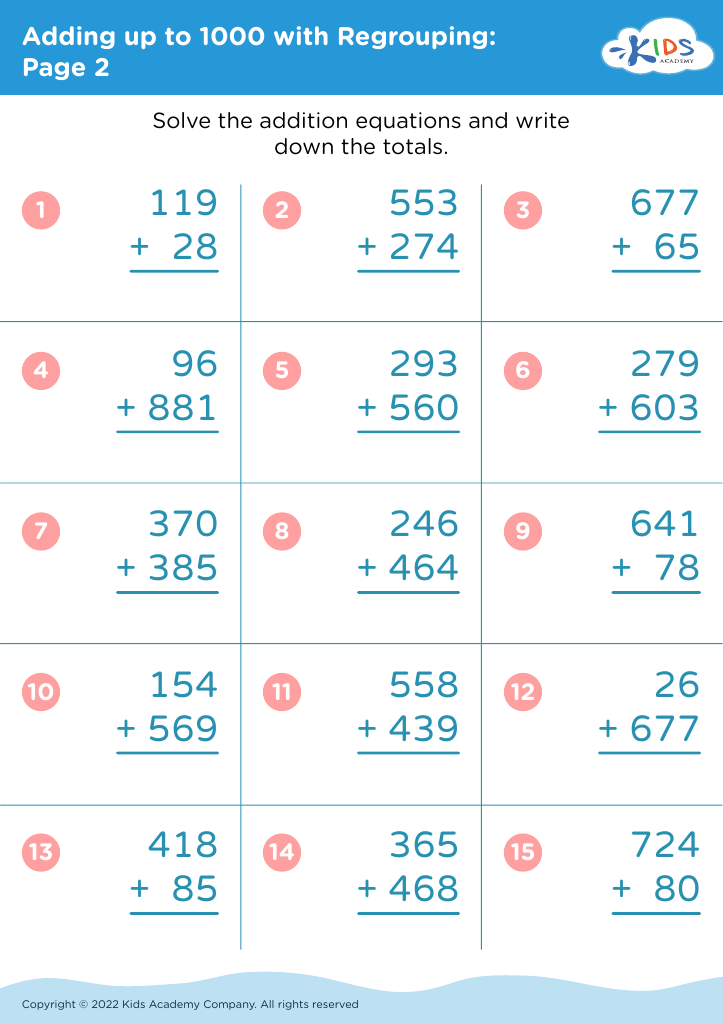
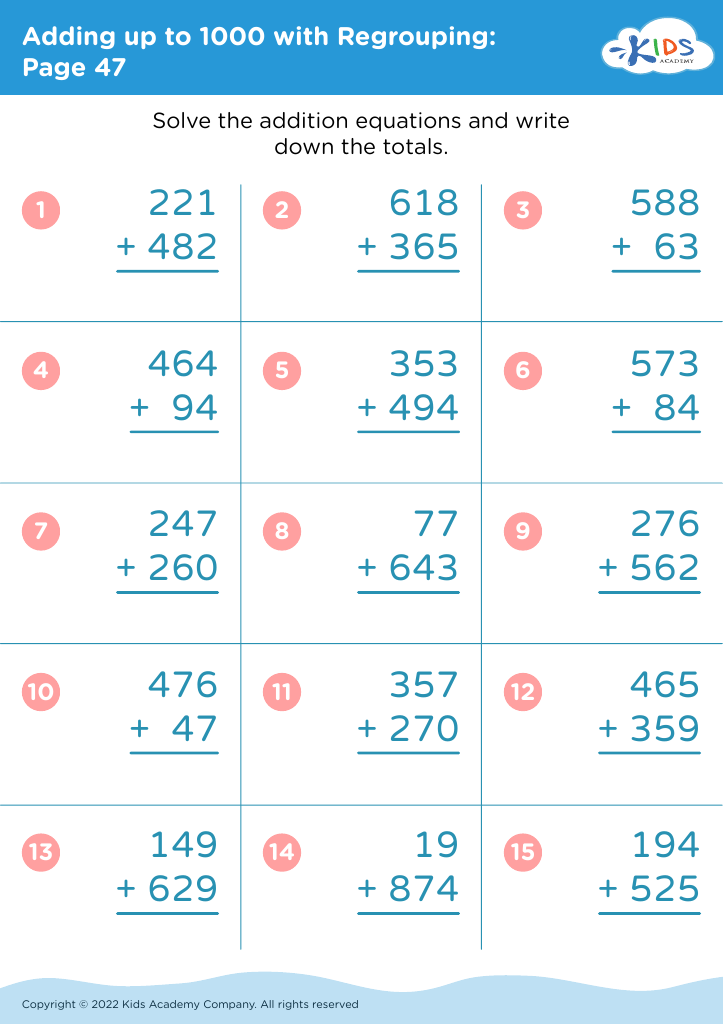
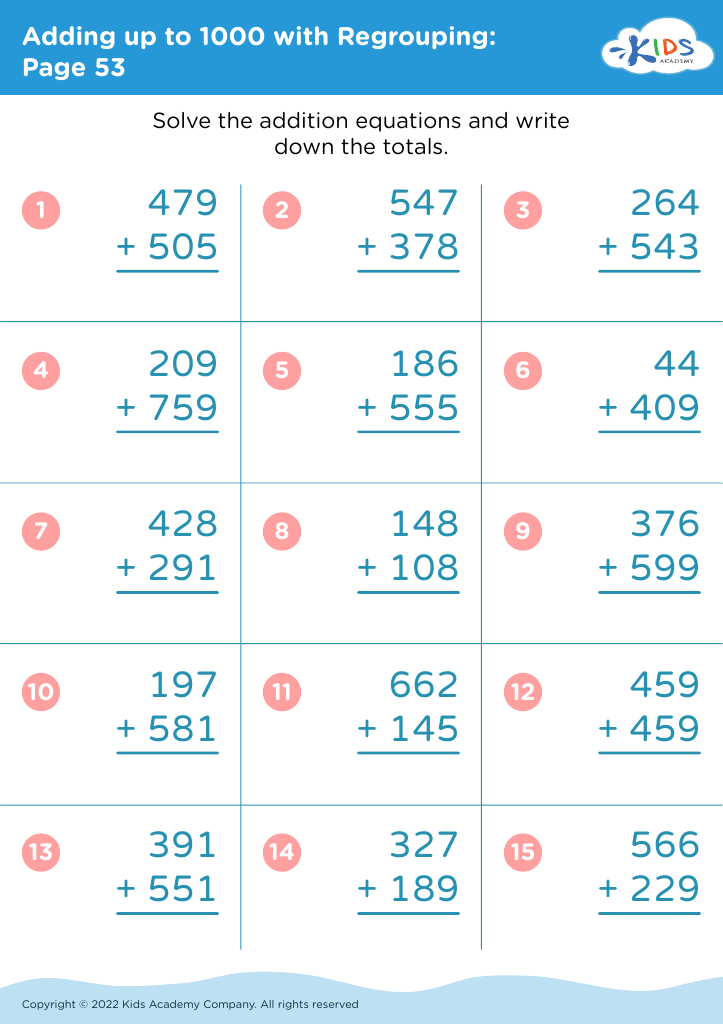
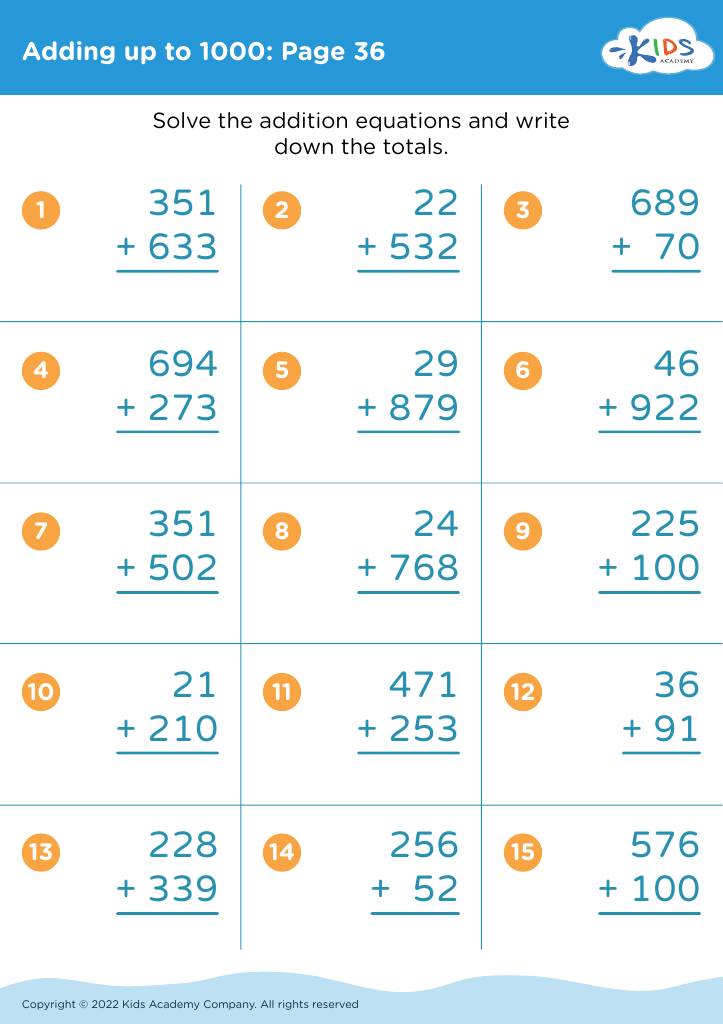
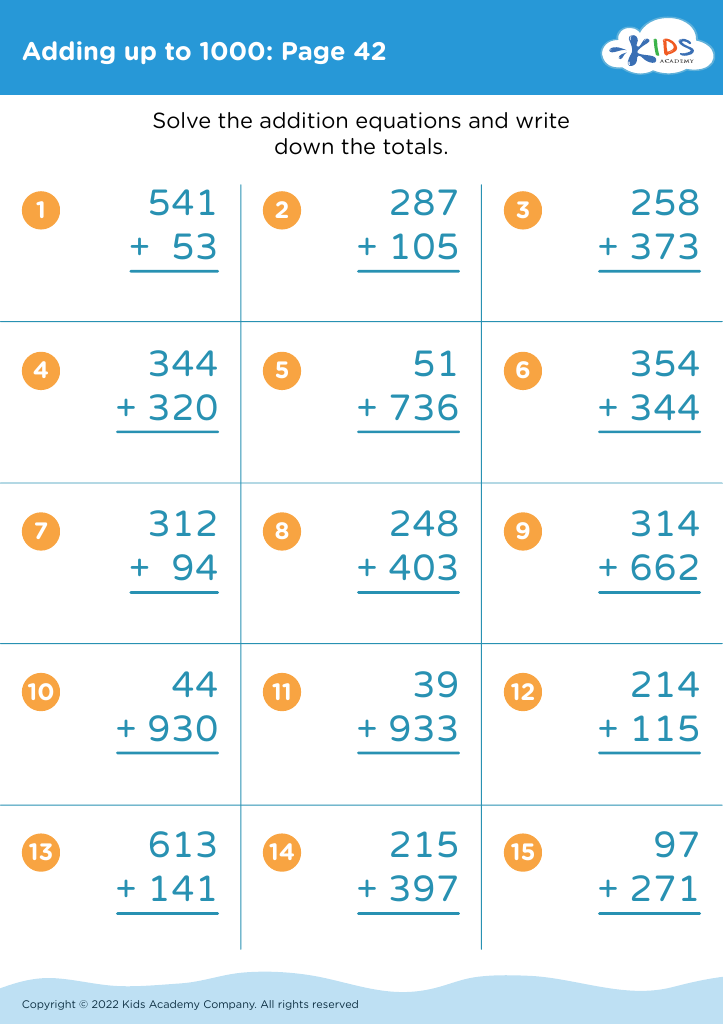
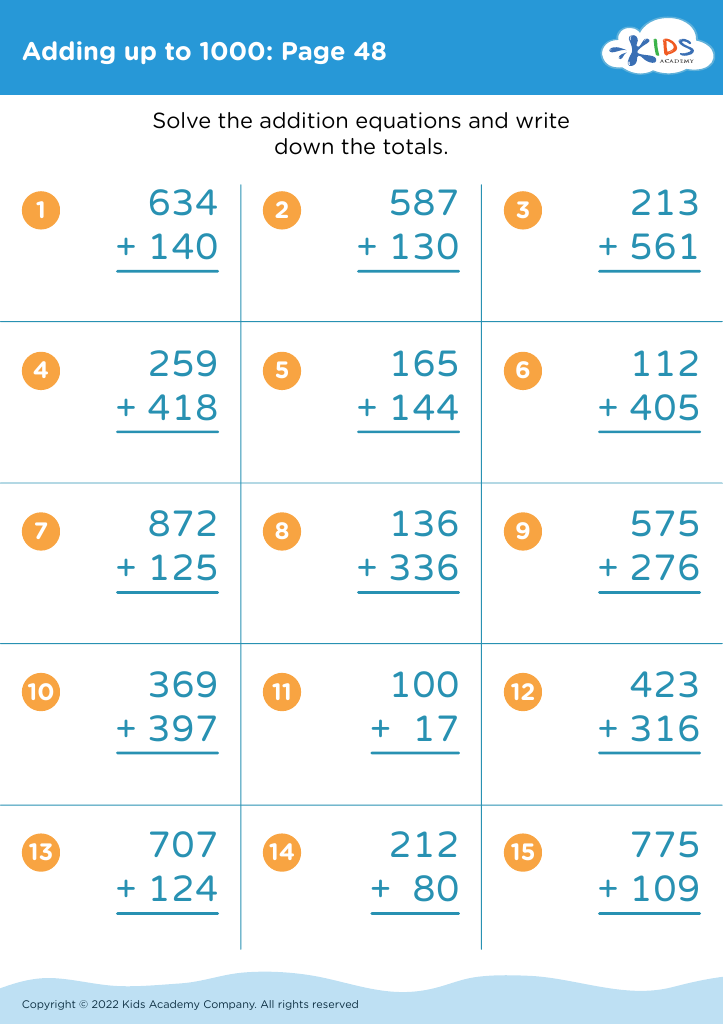
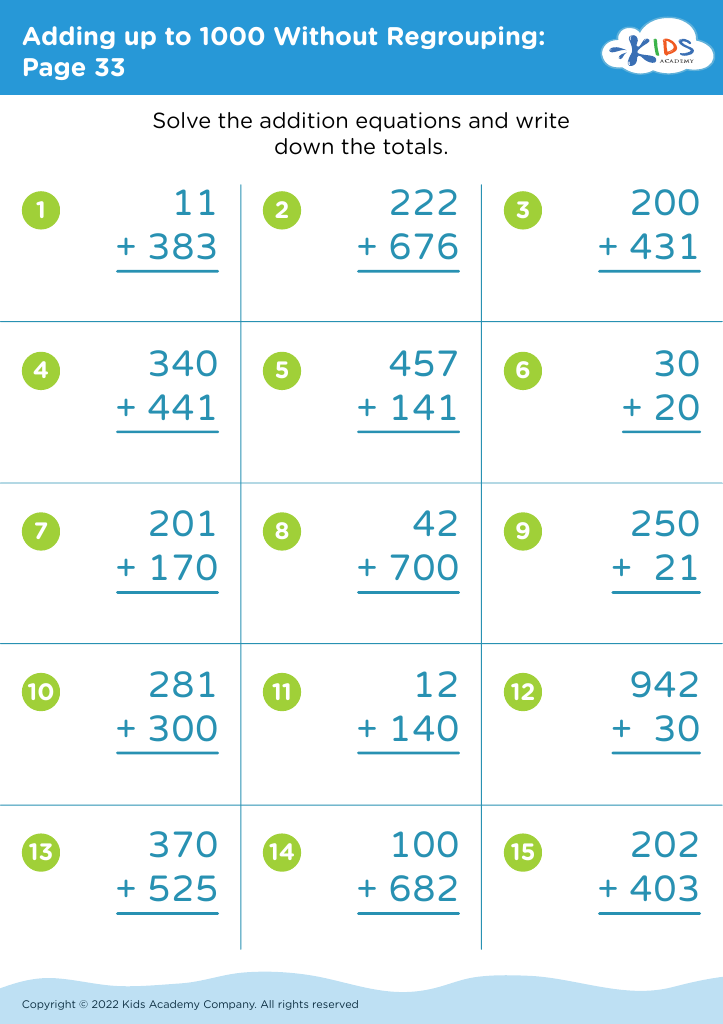




Number recognition, especially when extending to larger numbers like those adding up to 1000, is crucial for the cognitive and academic development of children aged 7-8. At this developmental stage, students are transitioning from basic arithmetic to more complex mathematical concepts. When children recognize and understand numbers up to 1000, they develop stronger numeracy skills, which contributes to their overall mathematical confidence.
Understanding number recognition supports problem-solving and critical-thinking abilities, essential for future academic success. It lays the groundwork for operations such as addition and subtraction, and will extend into multiplication and division as they progress. Parents and teachers should also be aware that proficient number recognition can enhance children's ability to comprehend real-world contexts, such as money management, time, and measurement, which are necessary life skills.
Moreover, fostering number recognition can help identify learning challenges early on. This can prompt timely interventions and tailored support to address these gaps, ensuring no child is left behind. By emphasizing the importance of number recognition, parents and teachers foster a well-rounded foundation in mathematics that will benefit children throughout their educational journey and beyond.








