Recognizing shapes Adding up to 1000 Worksheets for Ages 7-8
8 filtered results
-
From - To
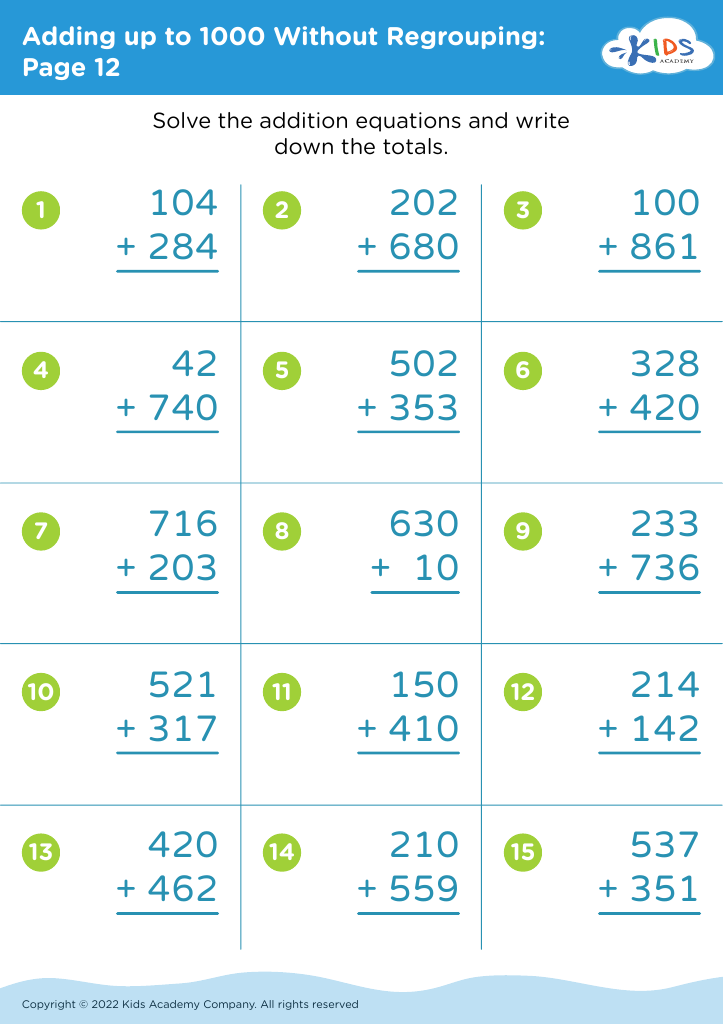
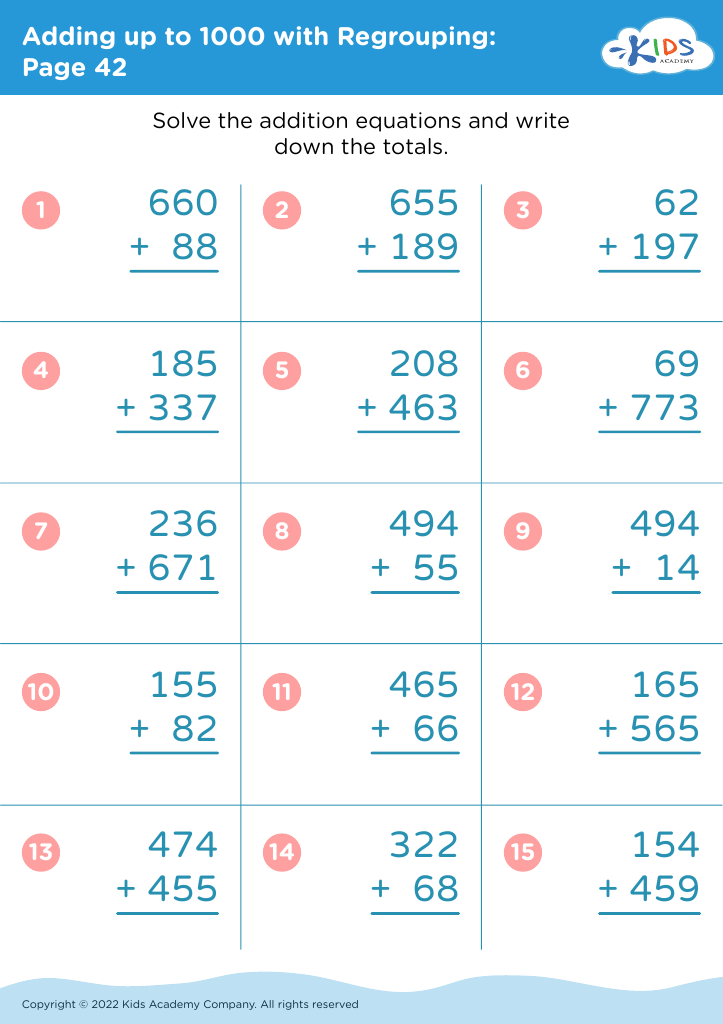
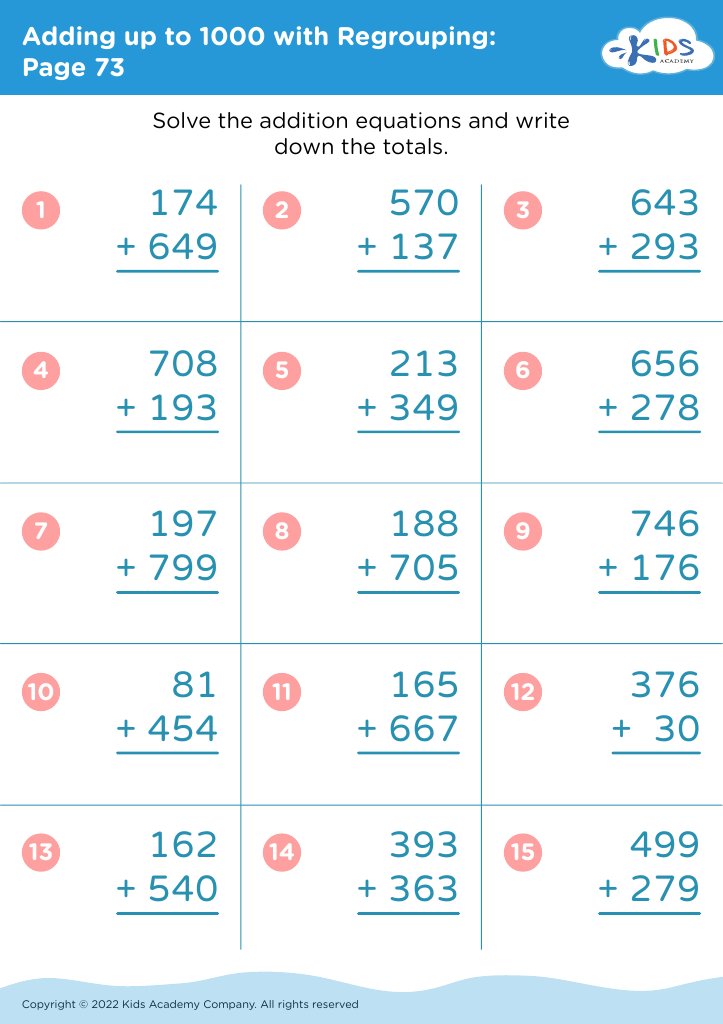
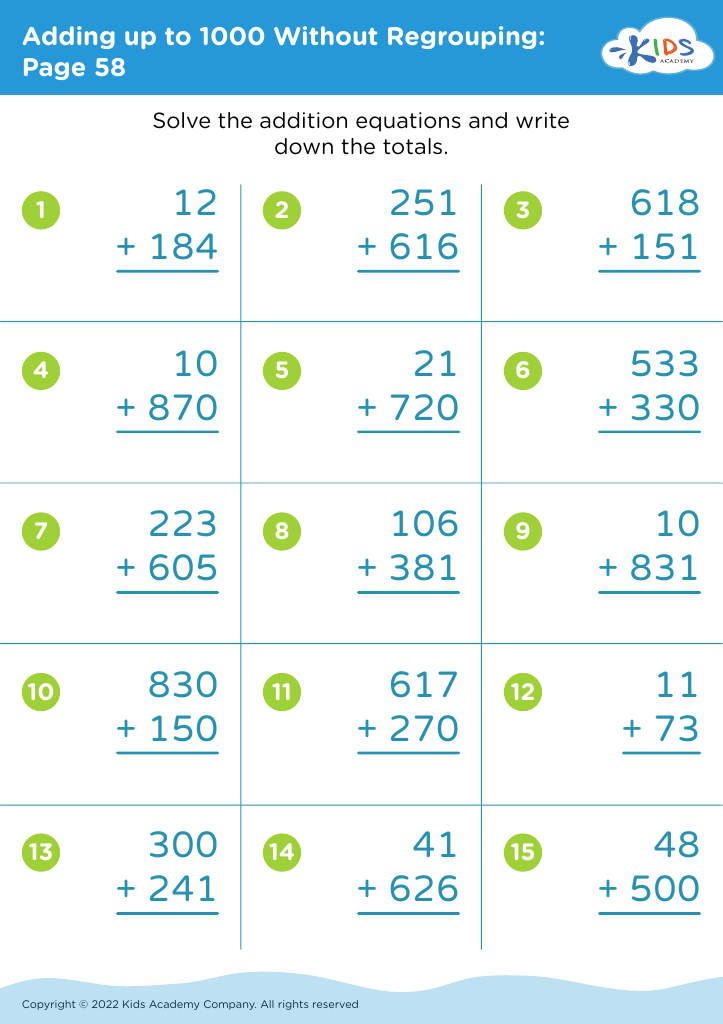
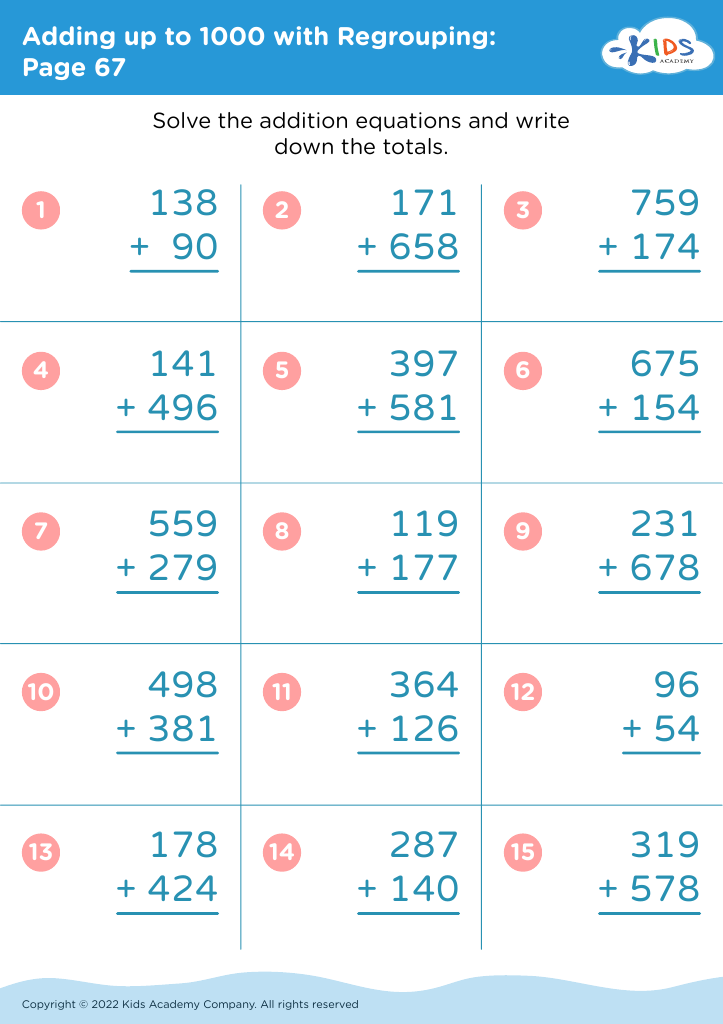
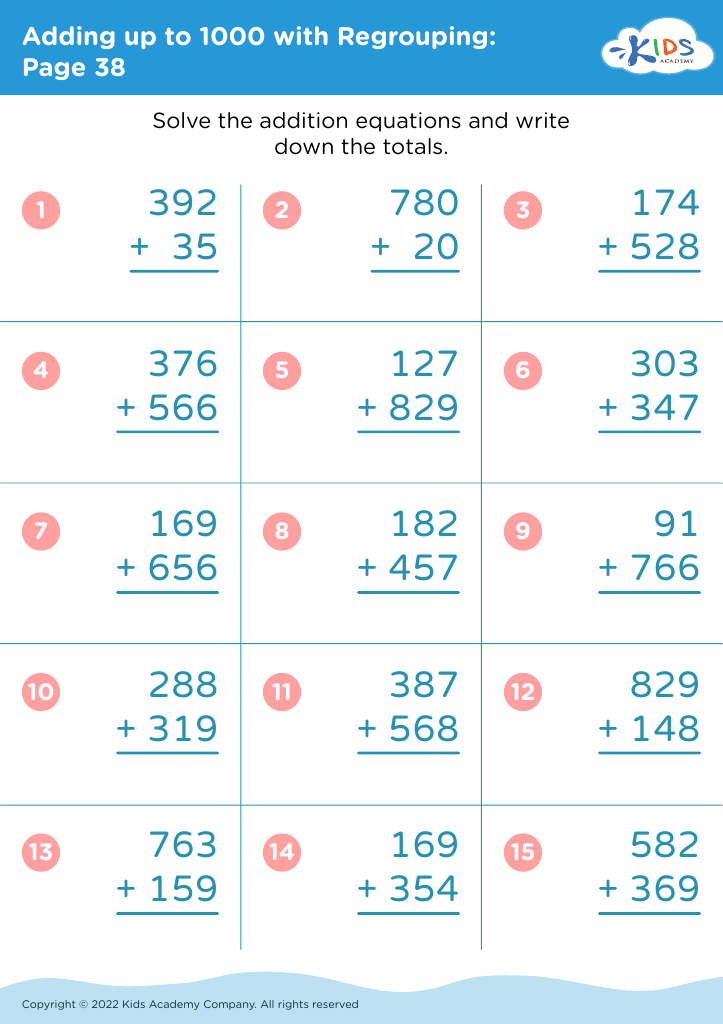
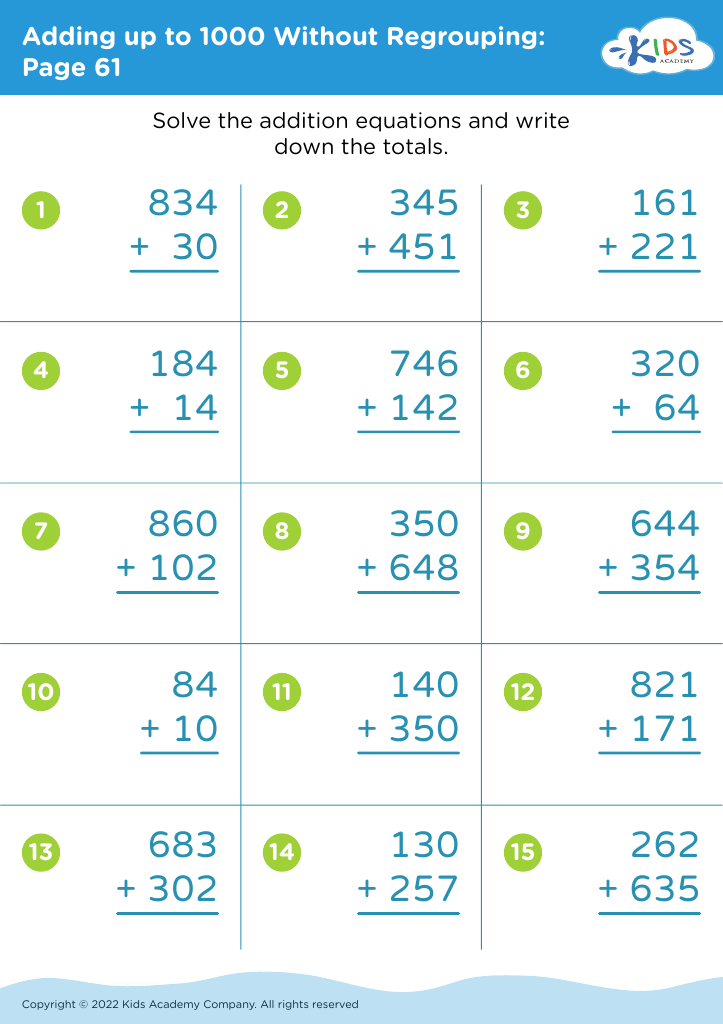
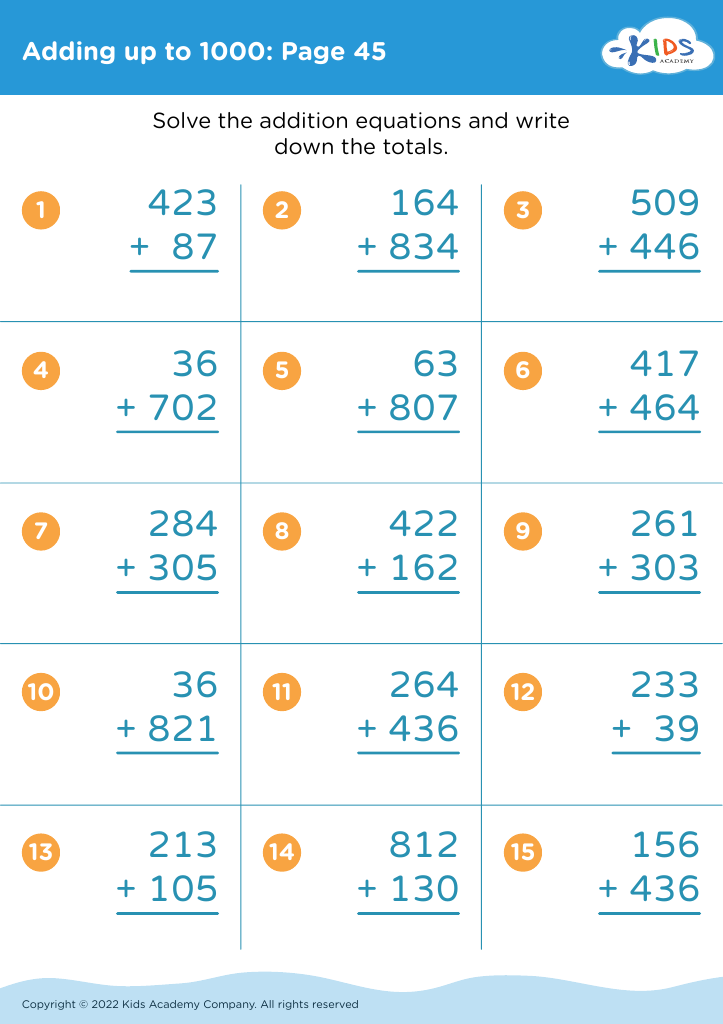
Discover our engaging "Recognizing Shapes Adding up to 1000 Worksheets for Ages 7-8" designed to enhance math skills in young learners. These practical worksheets integrate geometry and arithmetic by blending shape recognition with addition problems up to 1000, ideal for second and third graders. Each sheet is crafted to make learning enjoyable and effective, strengthening analytical reasoning alongside foundational math abilities. Through vibrant and interactive exercises, children will build confidence, improve problem-solving skills, and develop a solid understanding of both geometric shapes and large number addition. Perfect for classroom use or at-home practice!



Parents and teachers should deeply care about helping children ages 7-8 recognize shapes and add up to 1000, as these skills are foundational in early education and crucial for later academic success. Recognizing shapes enhances spatial awareness, critical thinking, and problem-solving abilities. It's not just about naming circles and squares; it's about understanding the properties of these shapes, which is fundamental for more complex concepts in geometry and other STEM fields. This skill also aids in visual learning and can improve a child's ability to interpret graphs and diagrams in various subjects like science and social studies.
Adding up to 1000 builds strong arithmetic skills essential for everyday life and more advanced math, such as multiplication and division. Mastery of addition by this age sets a solid groundwork for understanding money, measurements, and data analysis. If children can confidently add, they are more likely to experience success with more sophisticated math problems later, fostering a positive attitude toward learning. Both recognizing shapes and adding up to 1000 encourage the development of logical reasoning and numerical literacy, preparing children not just for academic achievement, but also for problem-solving in everyday situations. Thus, nurturing these skills early makes learning enjoyable and sets students on a path toward long-term academic engagement and success.








