Simplifying Fractions Adding up to 1000 Worksheets for Ages 7-8
6 filtered results
-
From - To
Unlock your child's mathematical potential with our "Simplifying Fractions Adding up to 1000 Worksheets" tailored for ages 7-8. These engaging printable worksheets provide a fun and interactive way for young learners to master the art of simplifying fractions while honing their addition skills. Each worksheet is designed to promote critical thinking and enhance confidence in mathematics, as students encounter a variety of problems that involve adding numbers up to 1000 alongside fraction simplification exercises. Perfect for at-home practice or classroom activities, our worksheets help build a solid foundation for future math success and instill a love for learning from an early age.
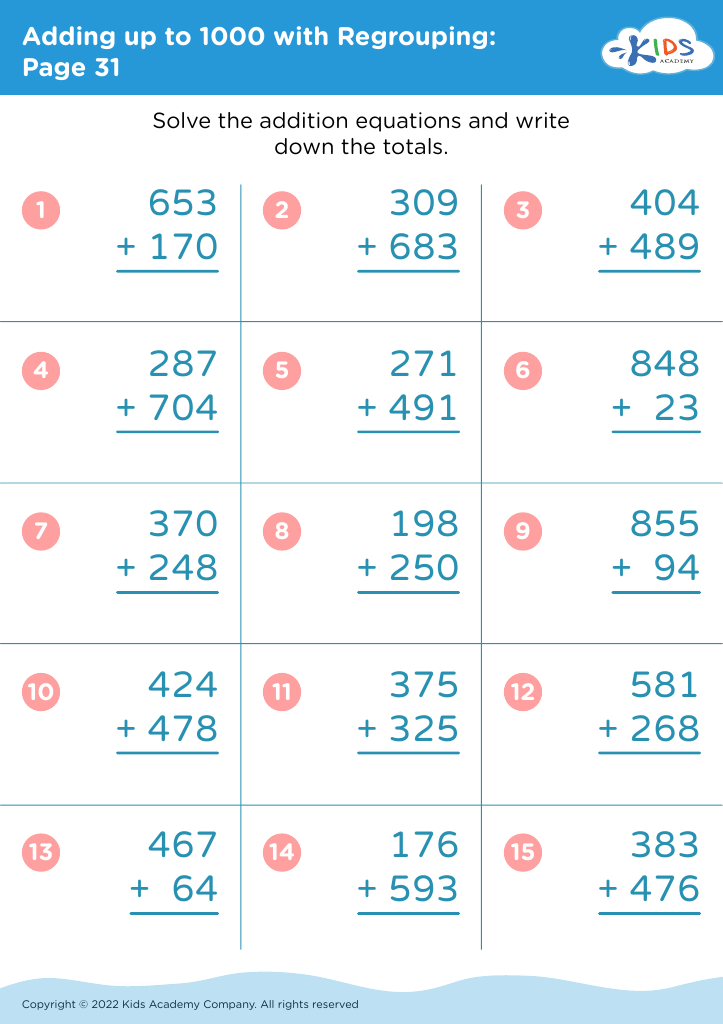
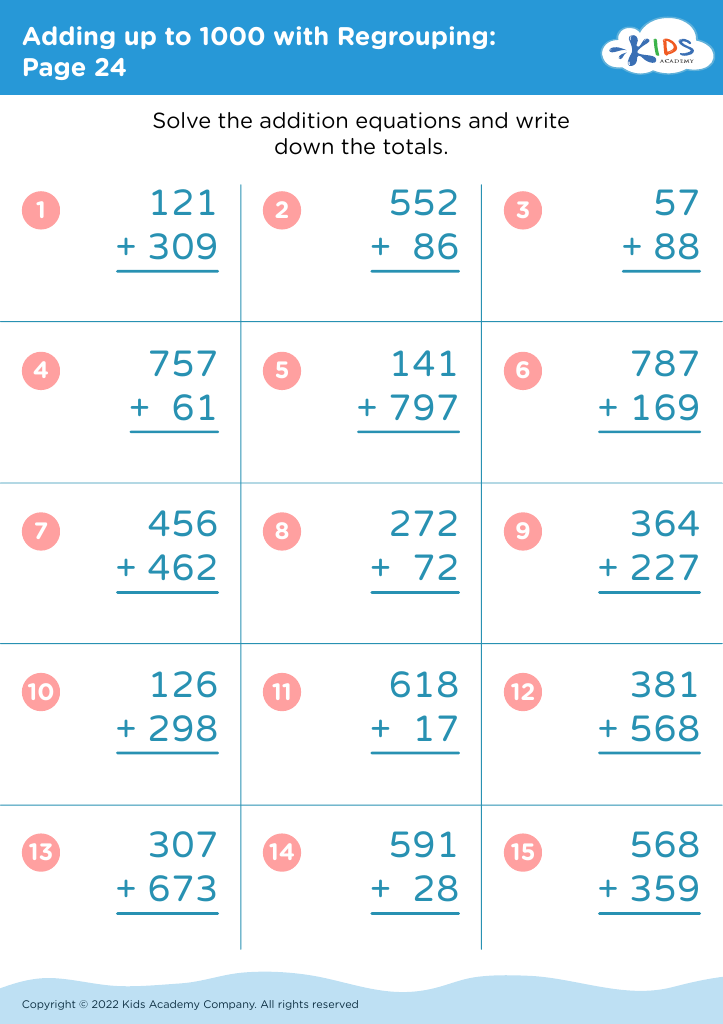
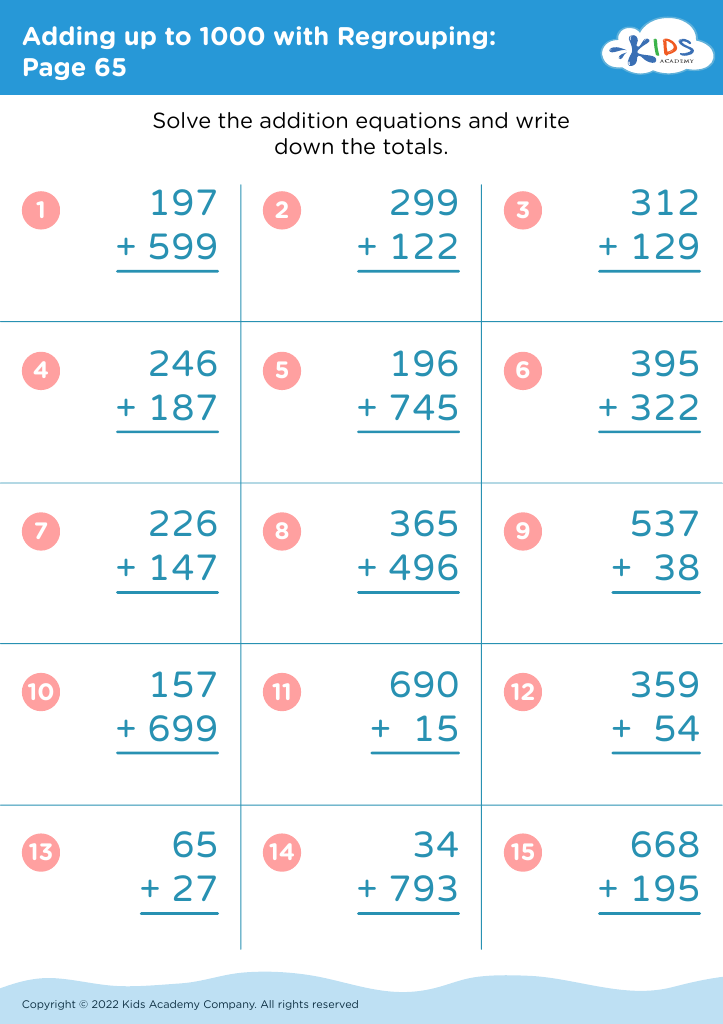
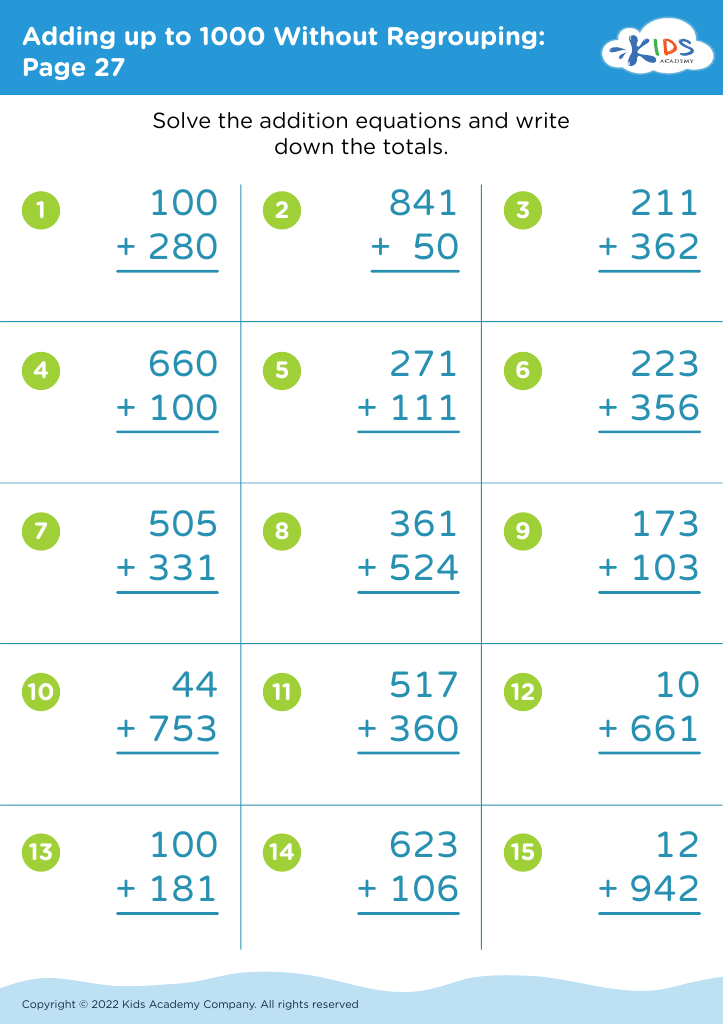
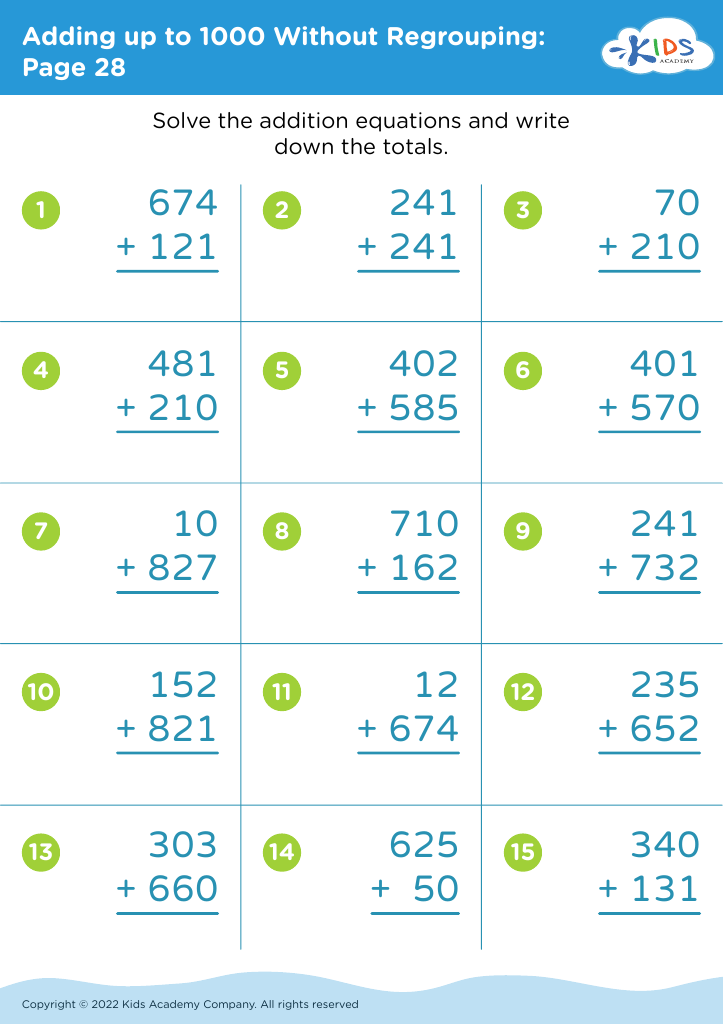
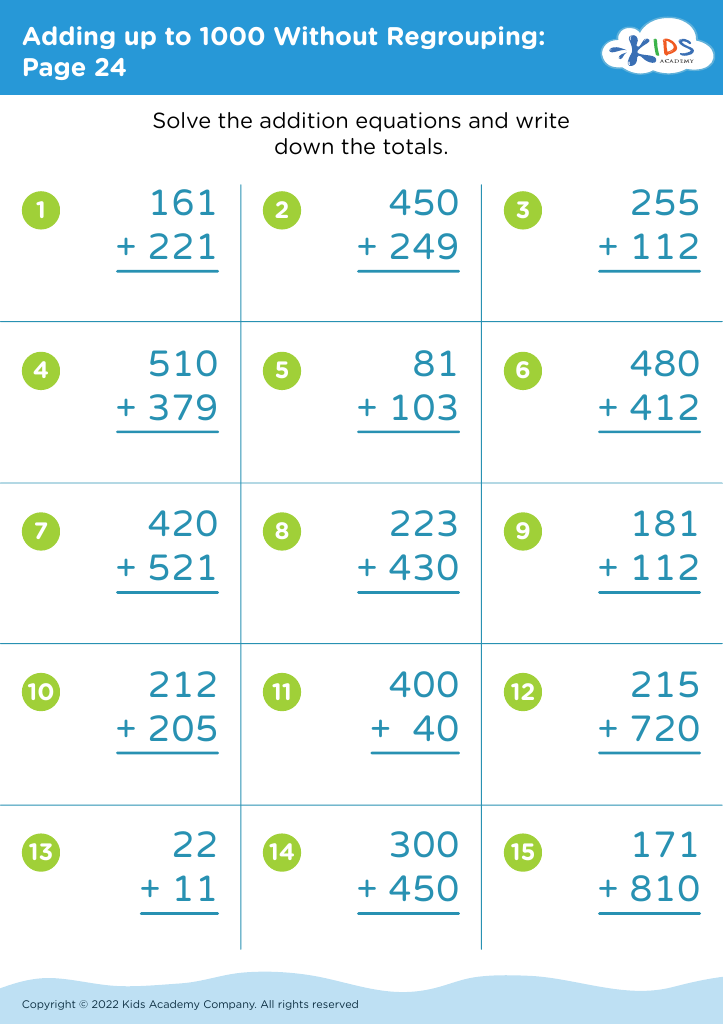



Simplifying fractions and teaching students to add up to 1000 is essential for children aged 7-8 as it lays the groundwork for future mathematical understanding. At this developmental stage, children are cultivating their ability to think critically and solve problems.
Understanding fractions helps kids grasp fundamental concepts of division and ratios, which are foundational elements of more advanced mathematics. When they learn to simplify fractions, it not only strengthens their number sense but also enhances their ability to compare and operate with different fractional values. This becomes especially relevant as they begin to encounter real-world applications, such as cooking, construction, or budgeting.
Adding up to 1000 provides students with an opportunity to practice their arithmetic skills in a more manageable context. This exercise builds their confidence and fluency with larger numbers, helping them tackle more complex problems later. It also encourages mental math strategies, which improve cognitive flexibility.
Together, simplifying fractions and adding numbers fosters a holistic approach to mathematics. When teachers and parents prioritize these skills, they create a supportive environment that encourages curiosity, resilience, and a lifelong love of learning in children, essential qualities for their academic success.








