Filters

44 filtered results

Clear all filters
Favorites
With answer key
Interactive

44 filtered results

Difficulty Level

Grade


Check out this FREE Trial Lesson on Adding up to 1000 for age 7-8!

T

Favorites
With answer key
Interactive
  • 7-8
  • Understanding fractions
  • Adding up to 1000
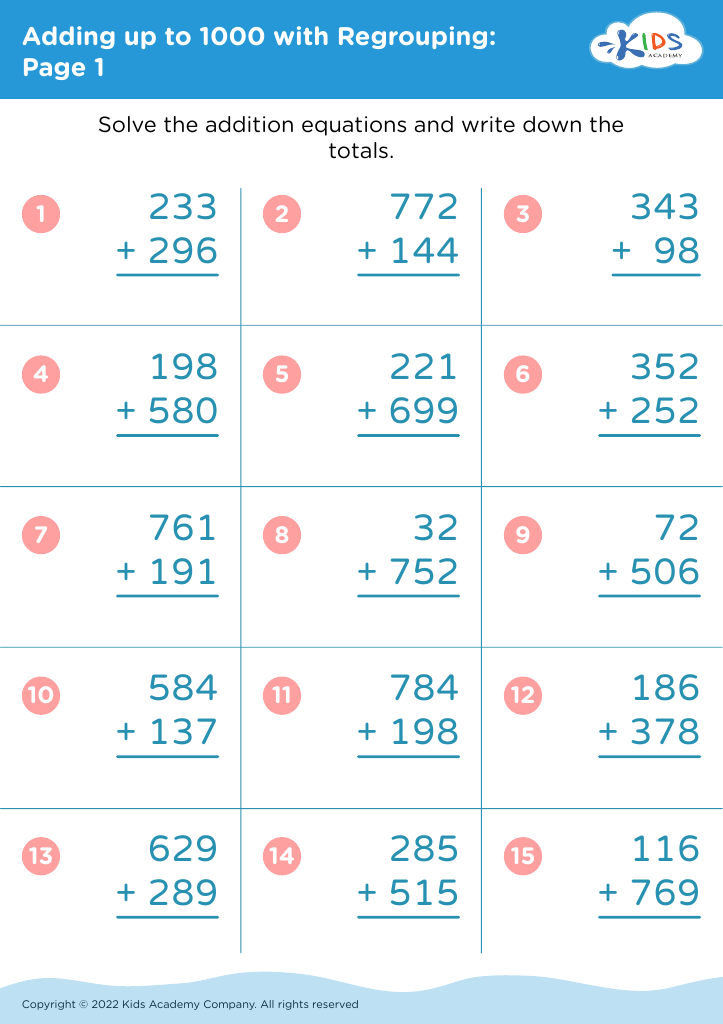
Adding up to 1000 with Regrouping: Page 1
Worksheet
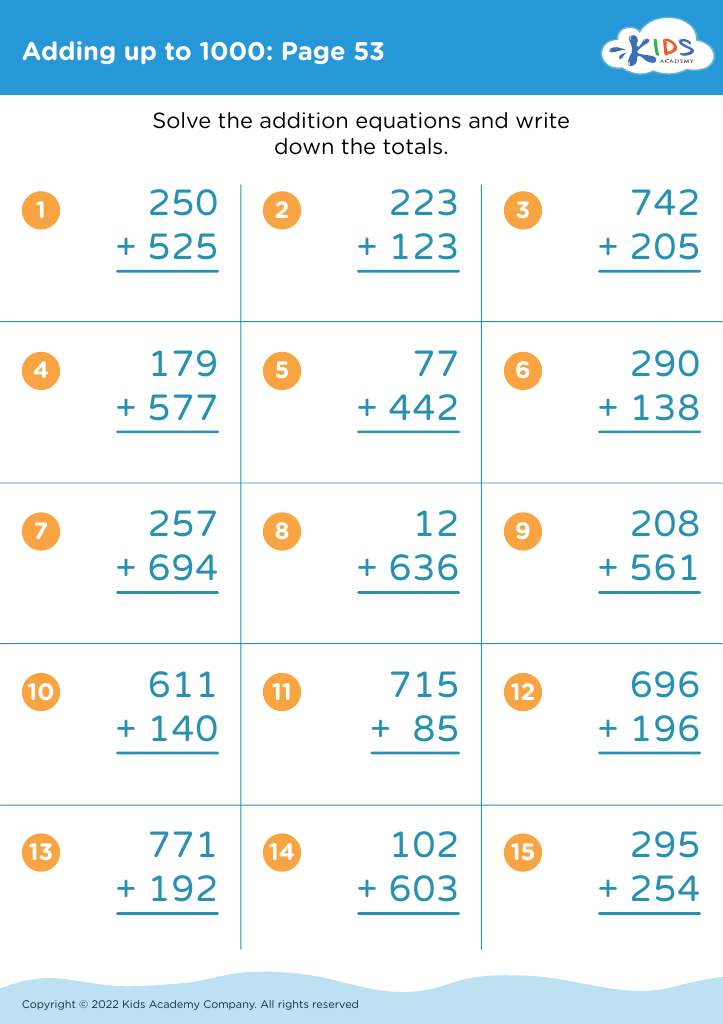
Adding up to 1000: Page 53

Adding up to 1000: Page 53

Adding up to 1000: Page 53
Worksheet
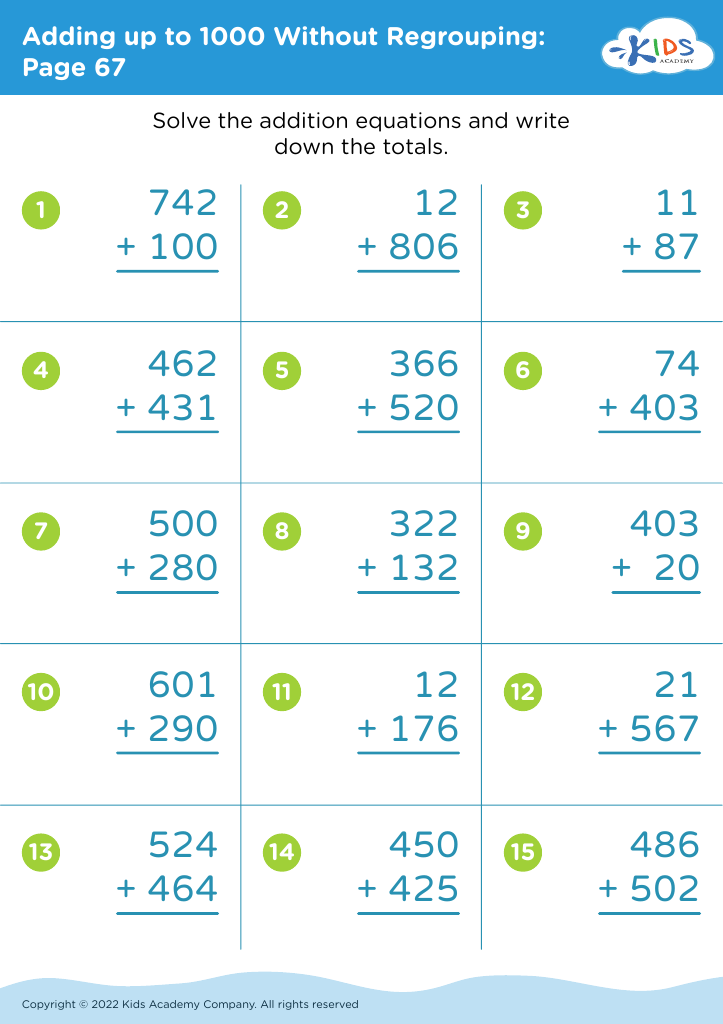
Adding up to 1000 Without Regrouping: Page 67
Worksheet
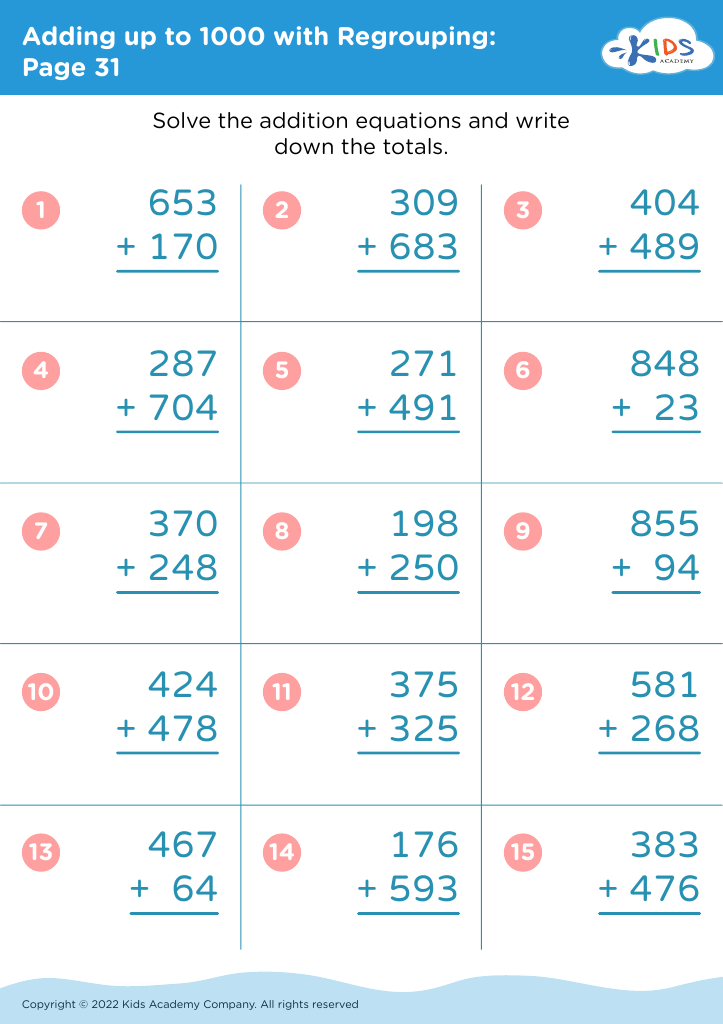
Adding up to 1000 with Regrouping: Page 31
Worksheet
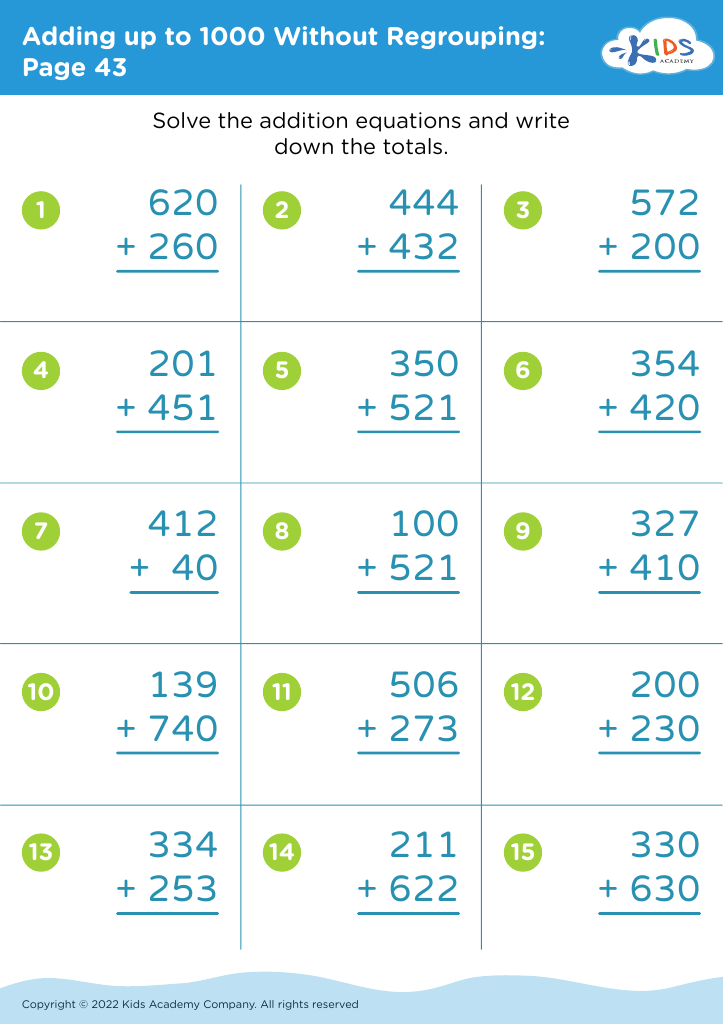
Adding up to 1000 Without Regrouping: Page 43
Worksheet
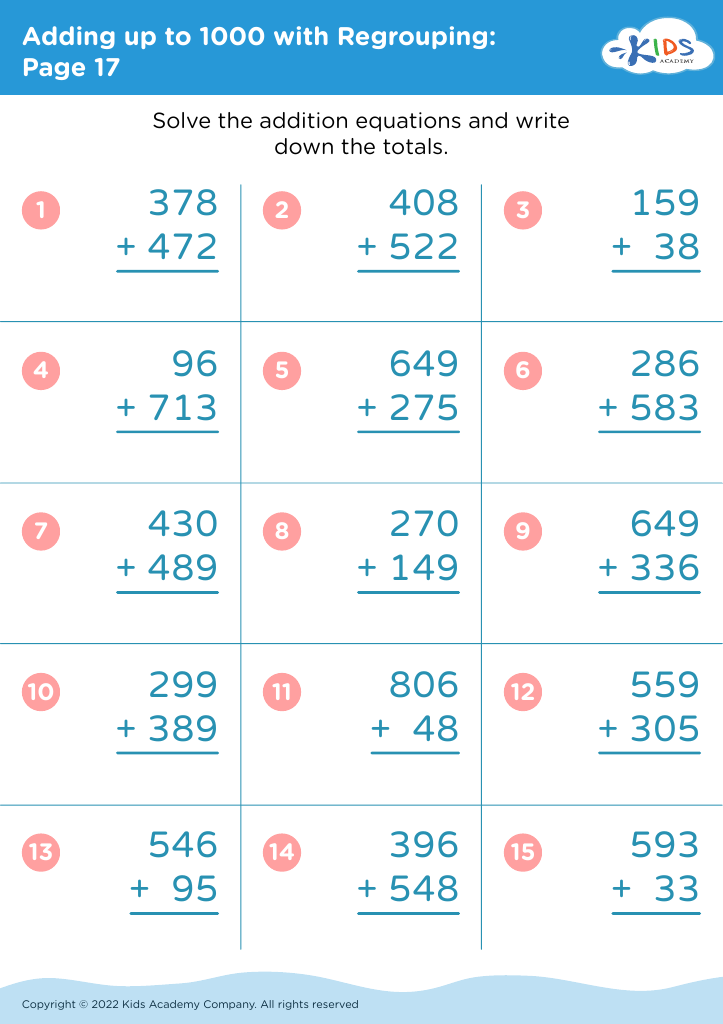
Adding up to 1000 with Regrouping: Page 17
Worksheet
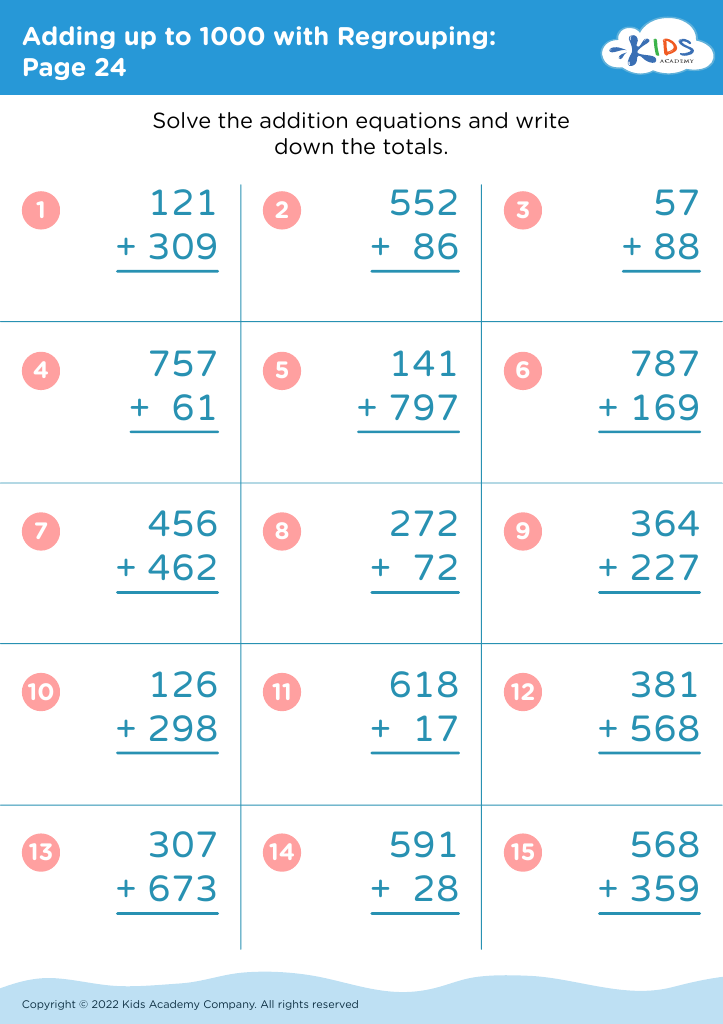
Adding up to 1000 with Regrouping: Page 24
Worksheet
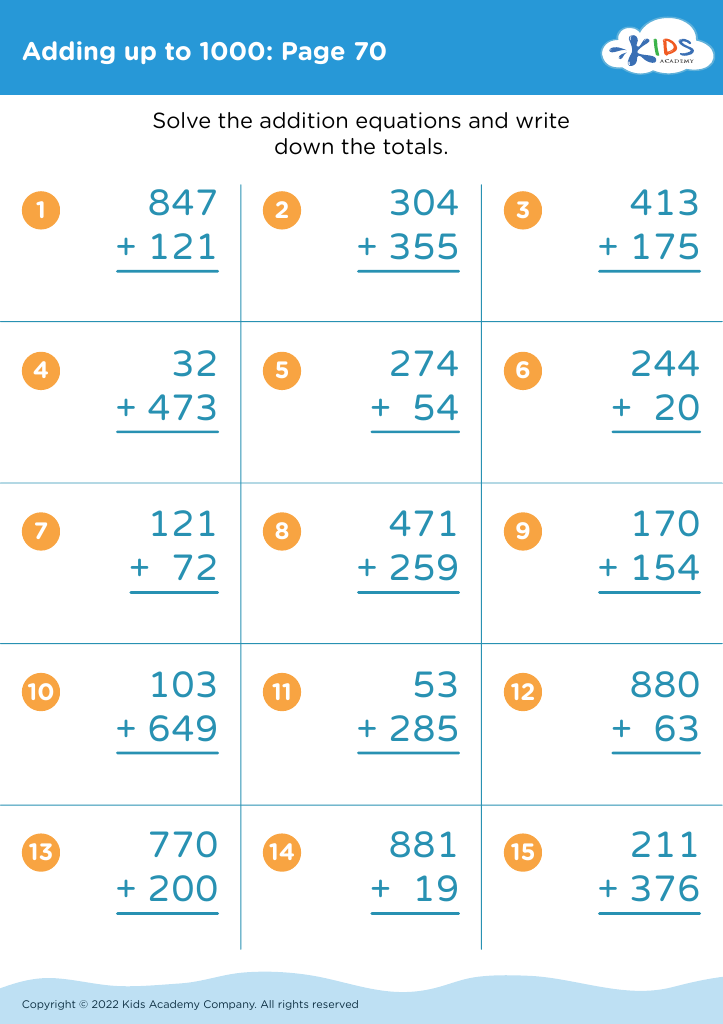
Adding up to 1000: Page 70

Adding up to 1000: Page 70

Adding up to 1000: Page 70
Worksheet
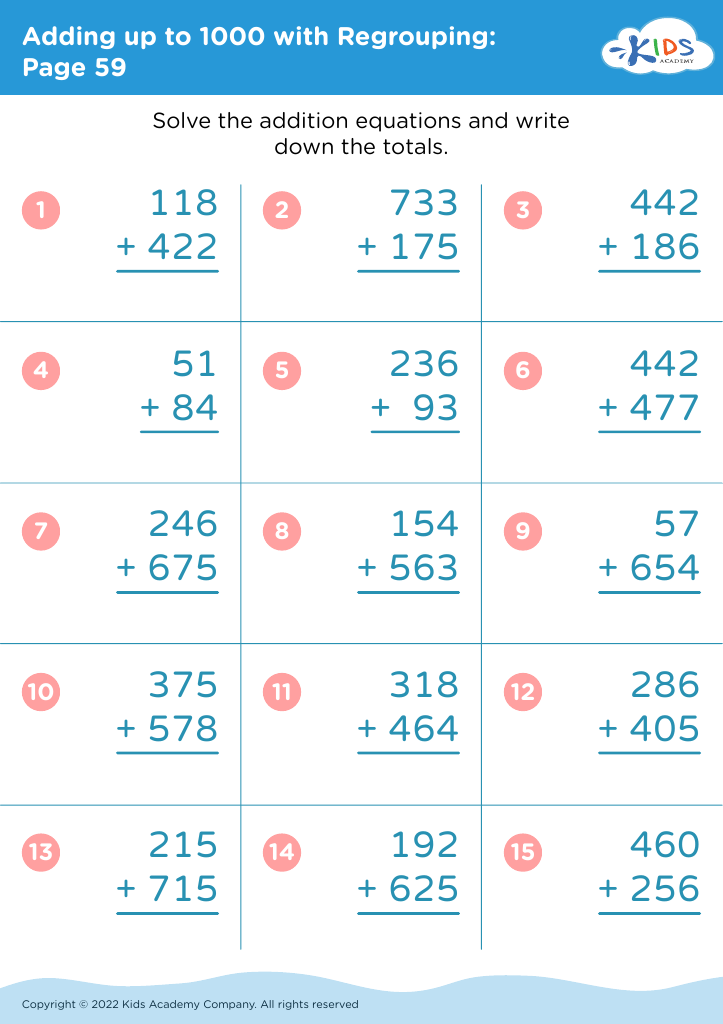
Adding up to 1000 with Regrouping: Page 59
Worksheet
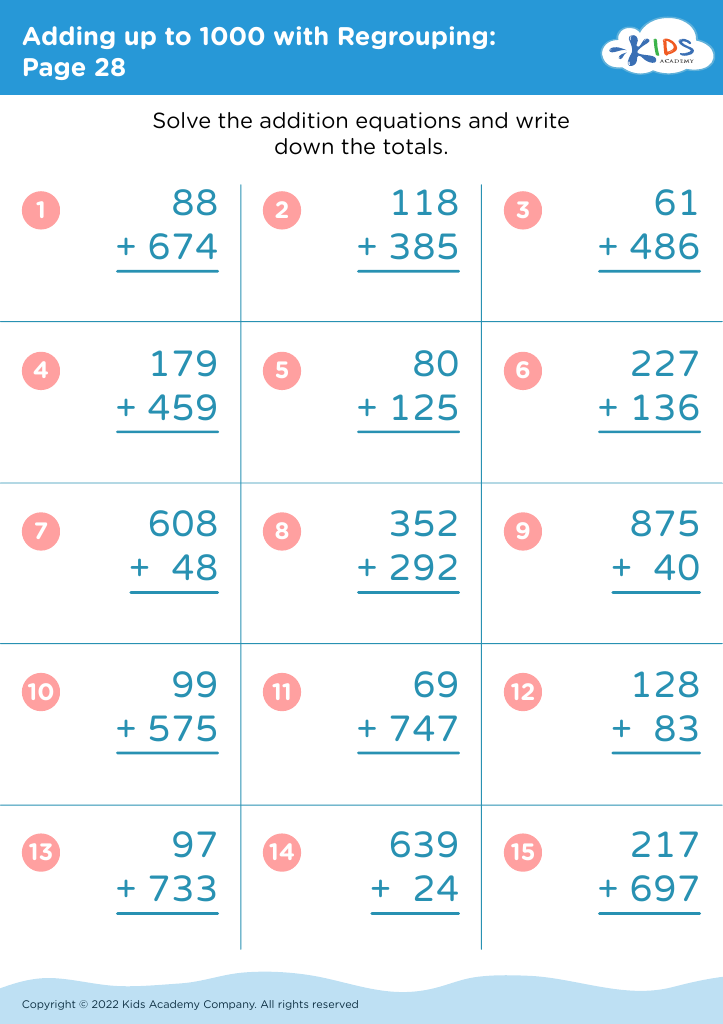
Adding up to 1000 with Regrouping: Page 28
Worksheet
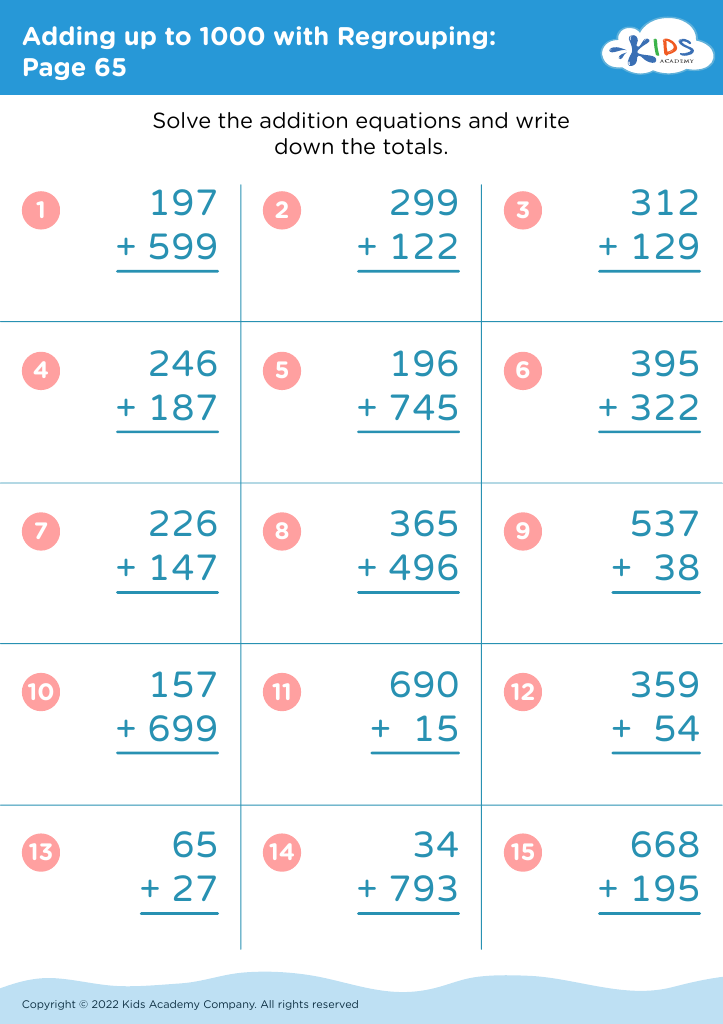
Adding up to 1000 with Regrouping: Page 65
Worksheet
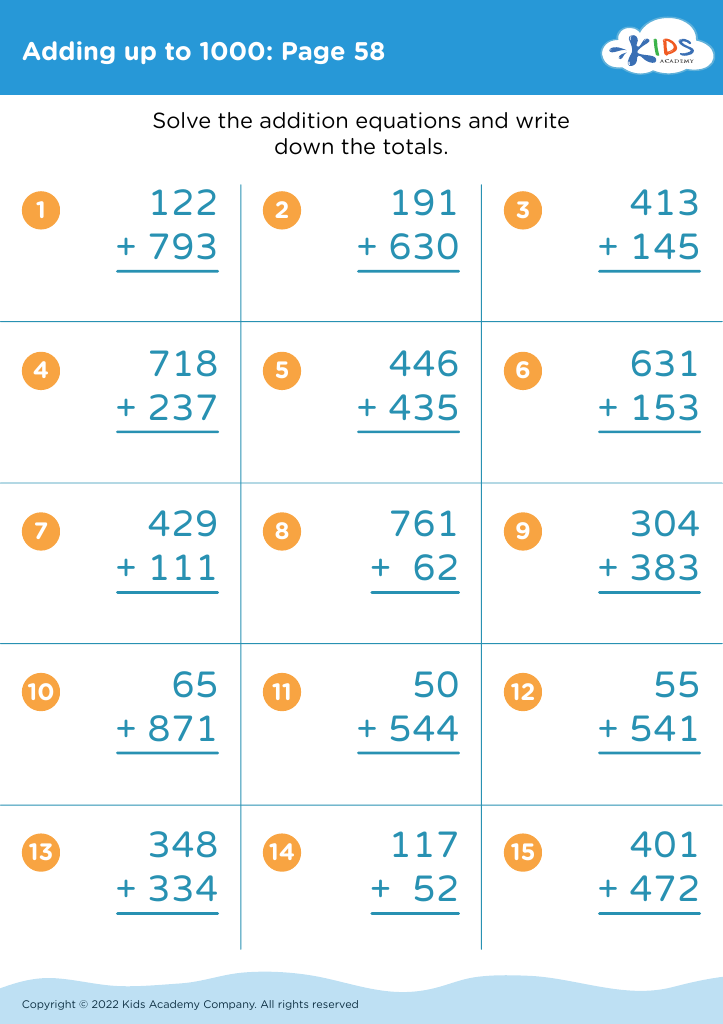
Adding up to 1000: Page 58

Adding up to 1000: Page 58

Adding up to 1000: Page 58
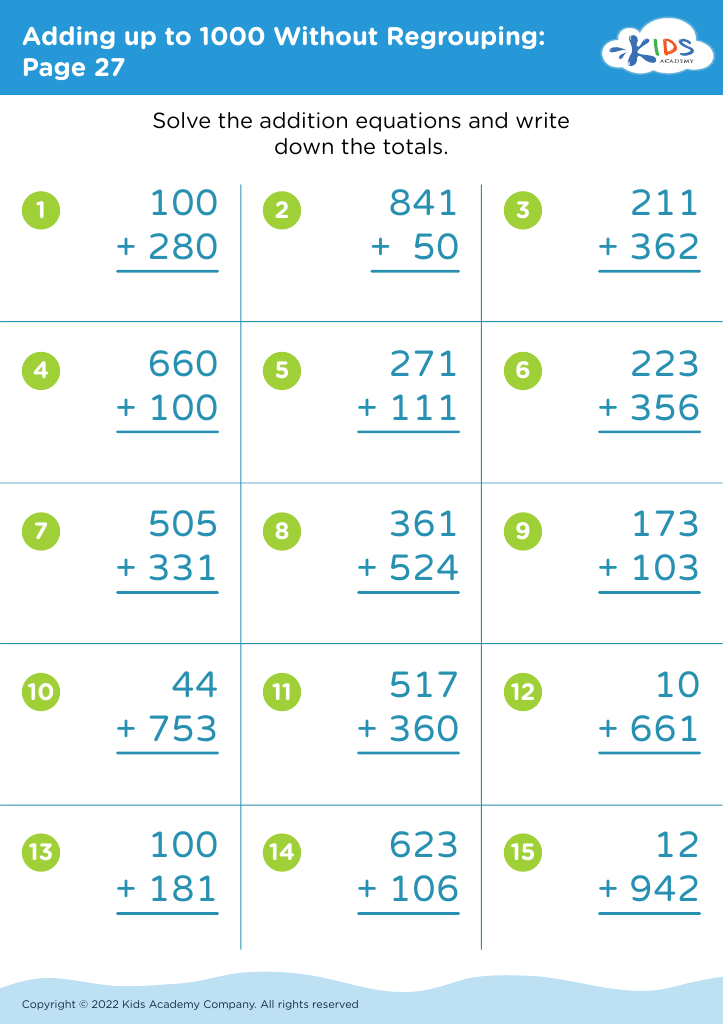
Worksheet
Adding up to 1000 Without Regrouping: Page 27
Worksheet
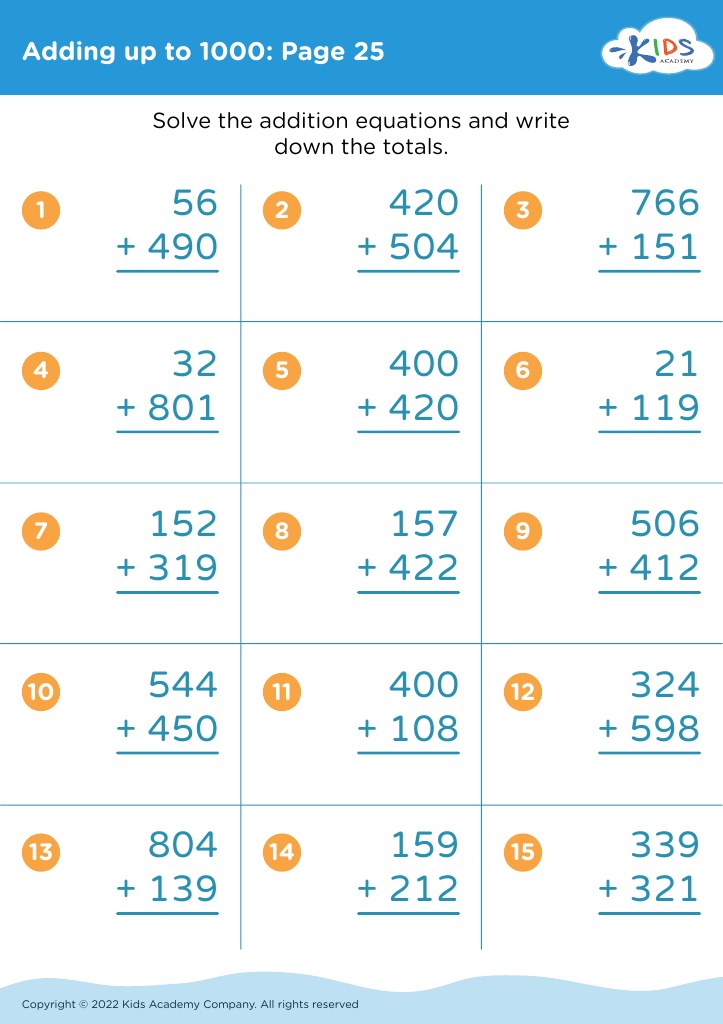
Adding up to 1000: Page 25

Adding up to 1000: Page 25

Adding up to 1000: Page 25
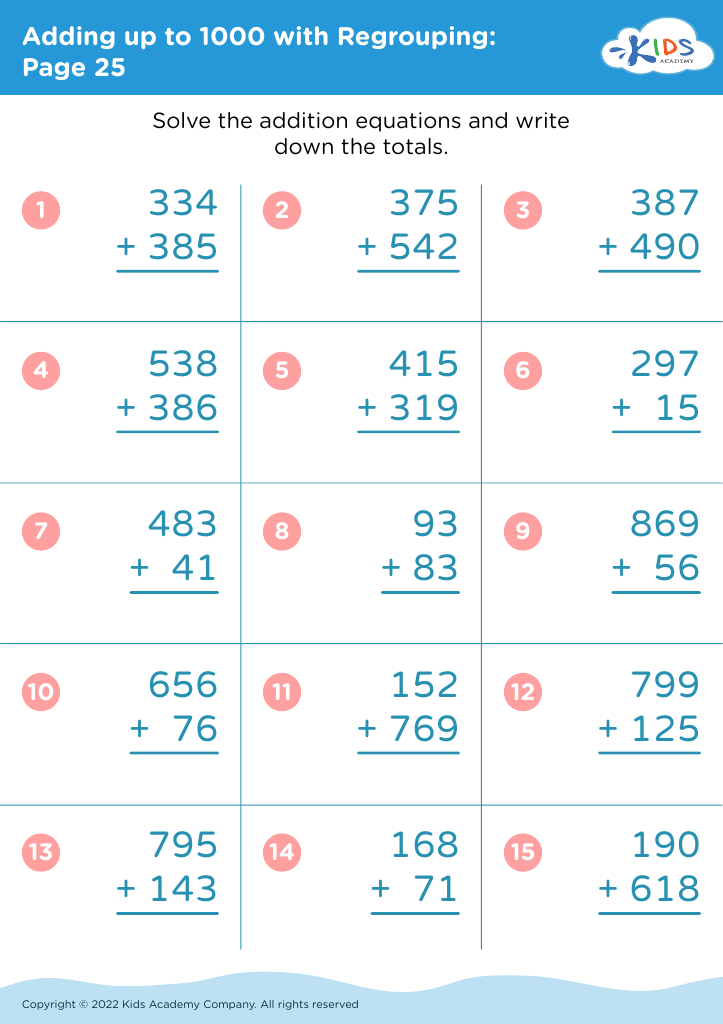
Worksheet
Adding up to 1000 with Regrouping: Page 25
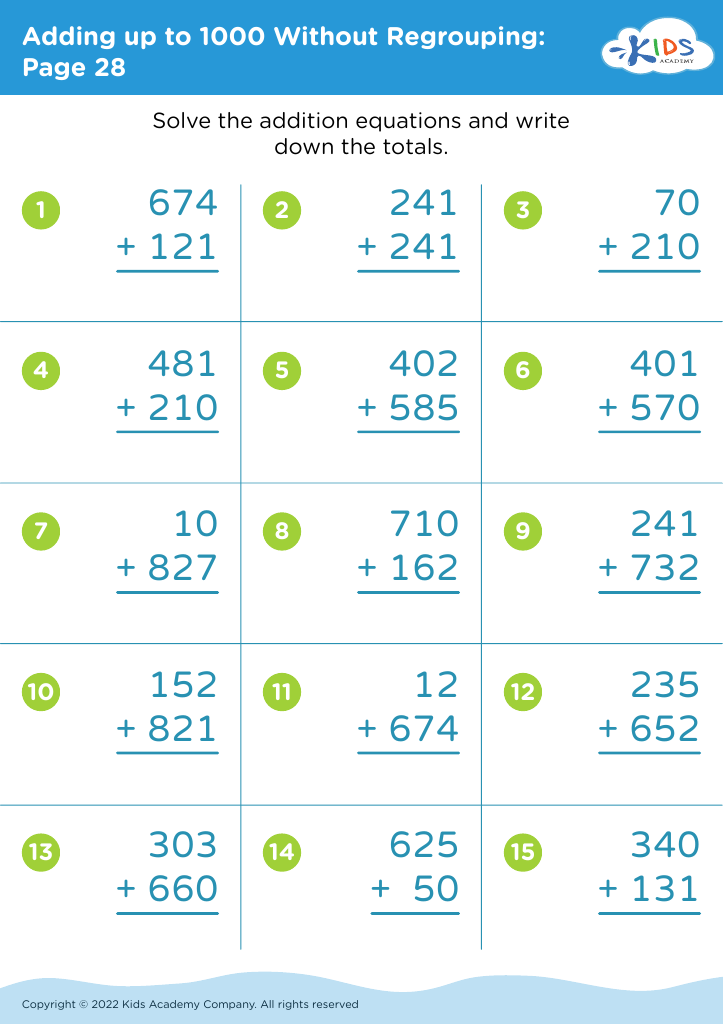
Worksheet
Adding up to 1000 Without Regrouping: Page 28
Worksheet
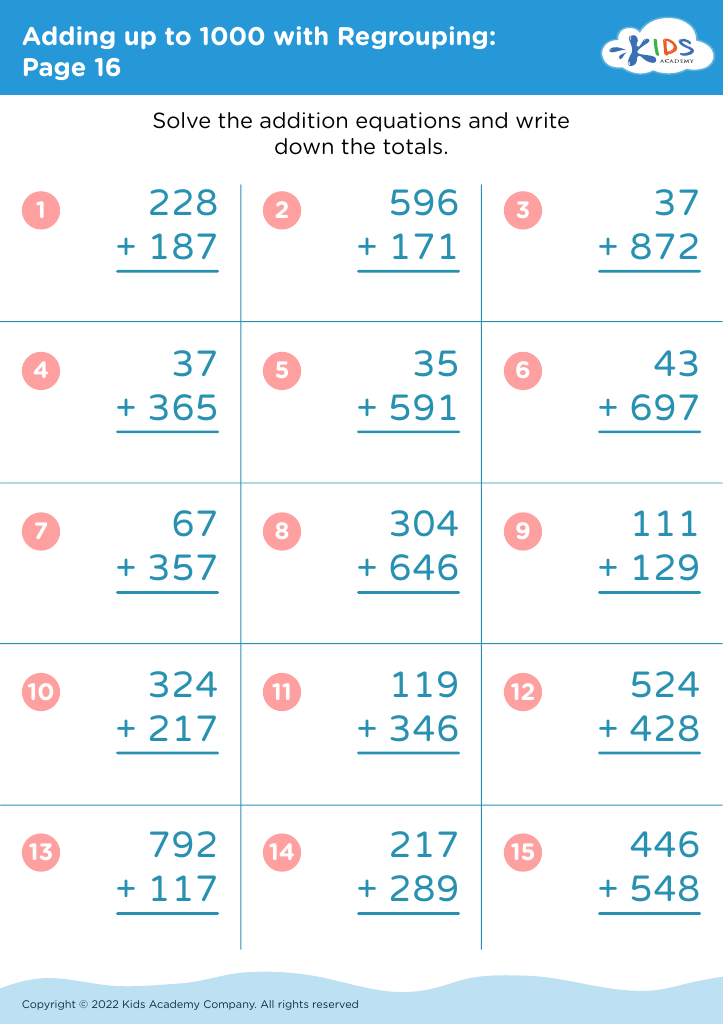
Adding up to 1000 with Regrouping: Page 16
Worksheet
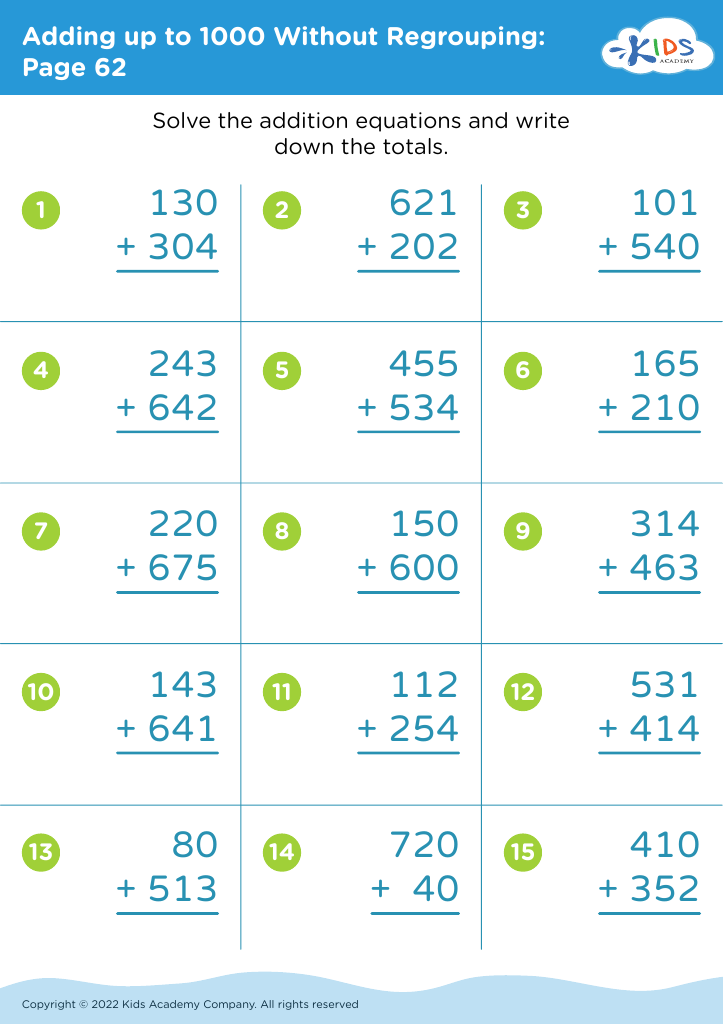
Adding up to 1000 Without Regrouping: Page 62
Worksheet
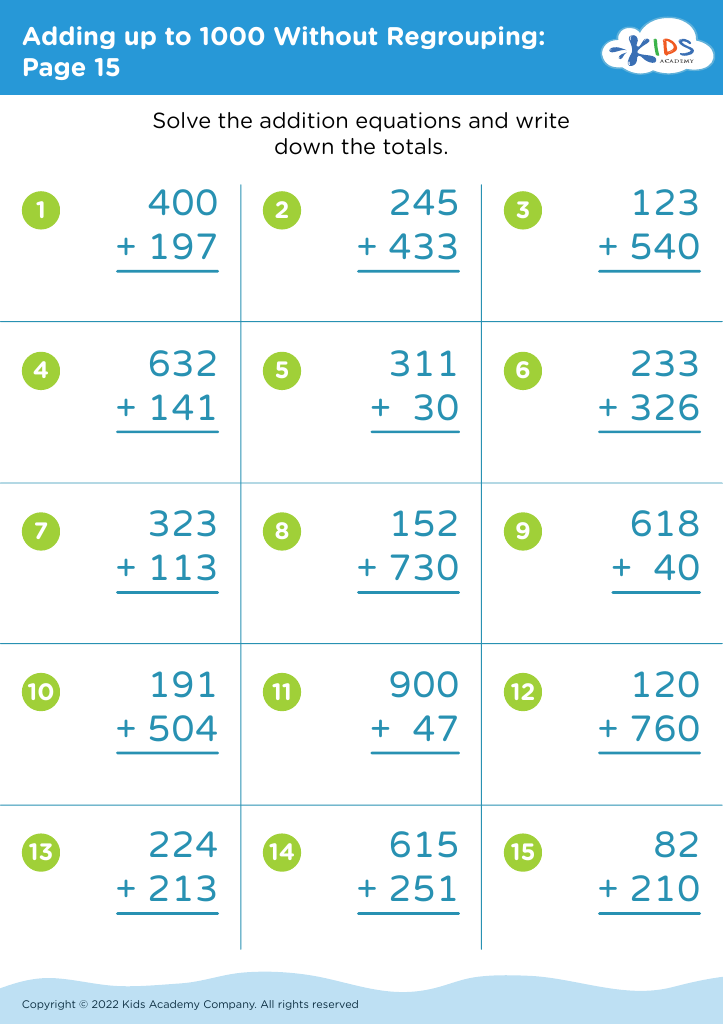
Adding up to 1000 Without Regrouping: Page 15
Worksheet
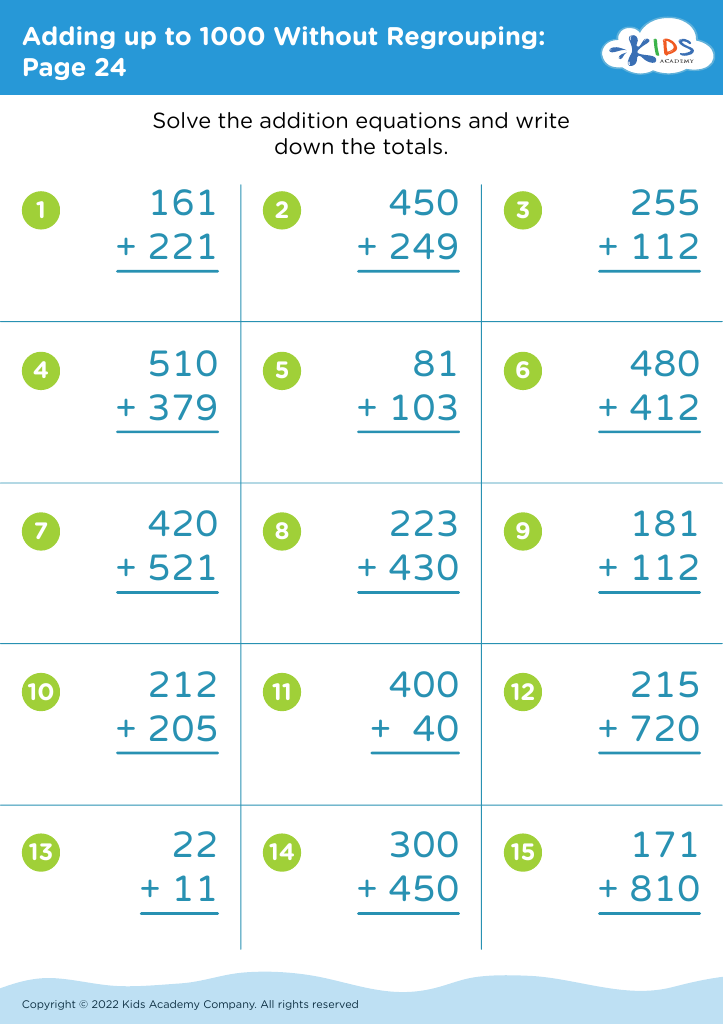
Adding up to 1000 Without Regrouping: Page 24
Worksheet


Understanding fractions is crucial for children aged 7-8 as it lays the foundation for more complex mathematical concepts. At this developmental stage, children begin to grasp the idea of parts and wholes, which is central to recognizing and working with fractions. By learning to add fractions that sum up to 1, students improve their number sense and develop problem-solving skills.

For parents and teachers, emphasizing fractions teaches kids to interpret and analyze real-world situations. Whether split in a pizza, sharing candy, or measuring ingredients in a recipe, fractions represent everyday actions. Cultivating these skills fosters critical thinking, enabling children to make connections between math and daily life.

Moreover, understanding fractions at a young age prepares students for future math curricula, enriching their cognitive capabilities. As they progress, proficiency in fractions enhances their ability to tackle more advanced topics such as decimals, ratios, and percentages.

By nurturing a strong understanding of fractions, we equip children with essential skills that boost their confidence and competence in mathematics, encouraging a lifelong positive attitude towards learning. Overall, quality education in fractions contributes to lifelong learning and equips students with essential skills for academic success.