Understanding symmetry Adding up to 50 Misc Worksheets for Ages 7-8
3 filtered results
-
From - To
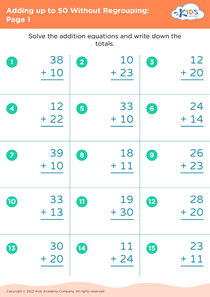
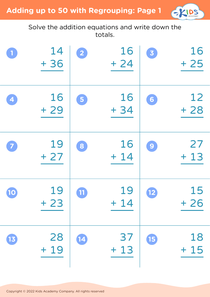
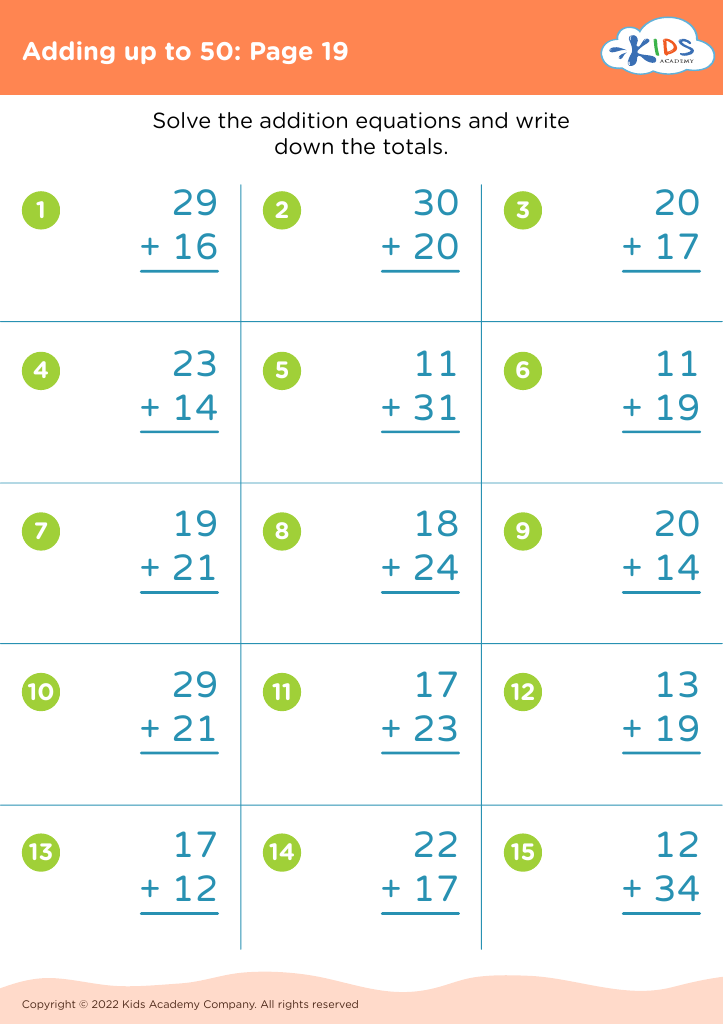
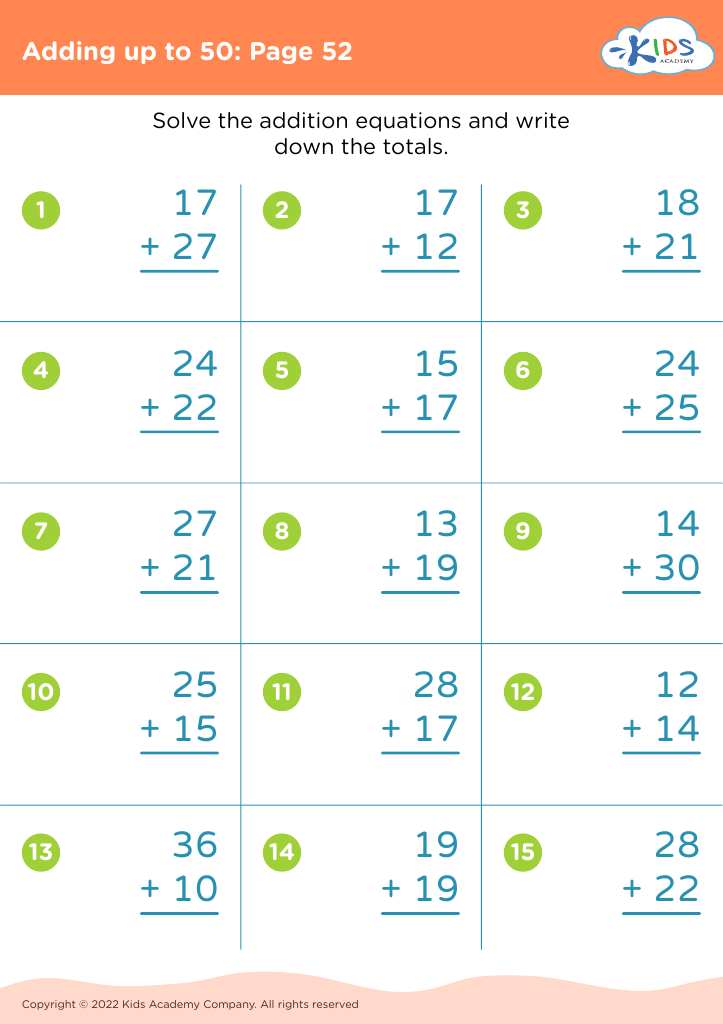
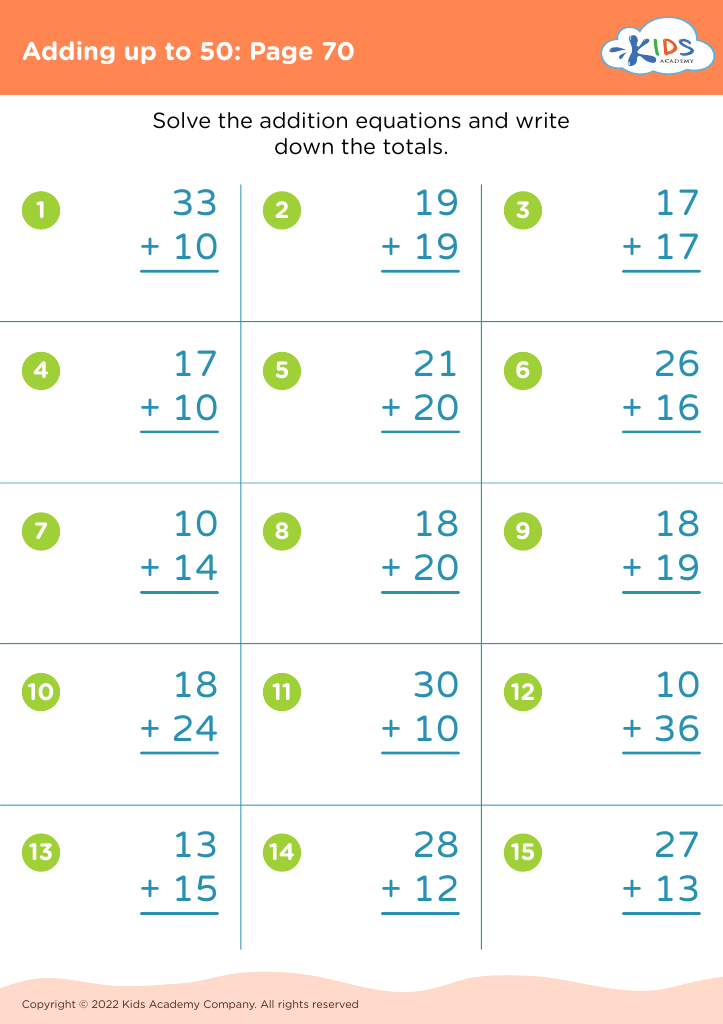
Explore our wide selection of "Understanding Symmetry" and "Adding up to 50" printable worksheets designed for kids ages 7-8. These engaging activities help young learners develop essential math skills such as symmetry recognition and basic addition within 50. Perfect for classroom use or extra practice at home, our worksheets are tailored to support critical thinking and problem-solving abilities in a fun and interactive manner. Whether your child is mastering shapes or enhancing their arithmetic, our expertly curated materials provide the perfect supplement to their educational journey. Visit us to boost your child's confidence and love for math!


Understanding symmetry, adding up to 50, and engaging in miscellaneous activities are crucial for children aged 7-8 because they serve as foundational skills for future learning. Symmetry helps develop spatial awareness and geometric reasoning. By recognizing patterns and balanced structures, children can enhance their problem-solving abilities and better understand mathematics and the natural world. This concept also relates to art, design, and even biology, fostering a well-rounded cognitive development.
Adding up to 50 builds essential arithmetic skills. At this age, mastering basic addition sets the stage for more complex mathematical tasks like subtraction, multiplication, and division. It develops mental math capabilities, encourages logical thinking, and boosts confidence in handling numbers, which is critical for everyday situations and future academic success.
Engaging in miscellaneous educational activities provides varied learning experiences, catering to different interests and learning styles. It keeps children engaged and motivated, promoting curiosity and a love for learning. Whether solving puzzles, exploring science experiments, or engaging in creative writing, these activities encourage critical thinking, creativity, and social skills.
In sum, focusing on these areas equips children with crucial academic skills, nurtures their intellectual curiosity, and fosters a joy for learning, ultimately setting them up for future success in various disciplines.