Filters

17 filtered results

Clear all filters
Favorites
With answer key
Interactive

17 filtered results

Difficulty Level

Grade


Master the essentials of fractions with our "Understanding Fractions Adding up to 50 with Regrouping Worksheets" designed for ages 7-8! Our engaging worksheets provide a step-by-step approach, making complex concepts easy to grasp. Students will learn how to regroup when adding up to 50, enhancing their comprehension of fractions through visual aids, interactive problems, and real-world applications. These resources develop critical math skills, preparing young learners for advanced topics. Perfect for classroom use or supplemental learning at home, our worksheets help build a strong mathematical foundation in a fun and effective way! Start exploring today.
Check out this FREE Trial Lesson on Adding up to 50 with Regrouping for age 7-8!

X

Favorites
With answer key
Interactive
  • 7-8
  • Understanding fractions
  • Adding up to 50 with Regrouping
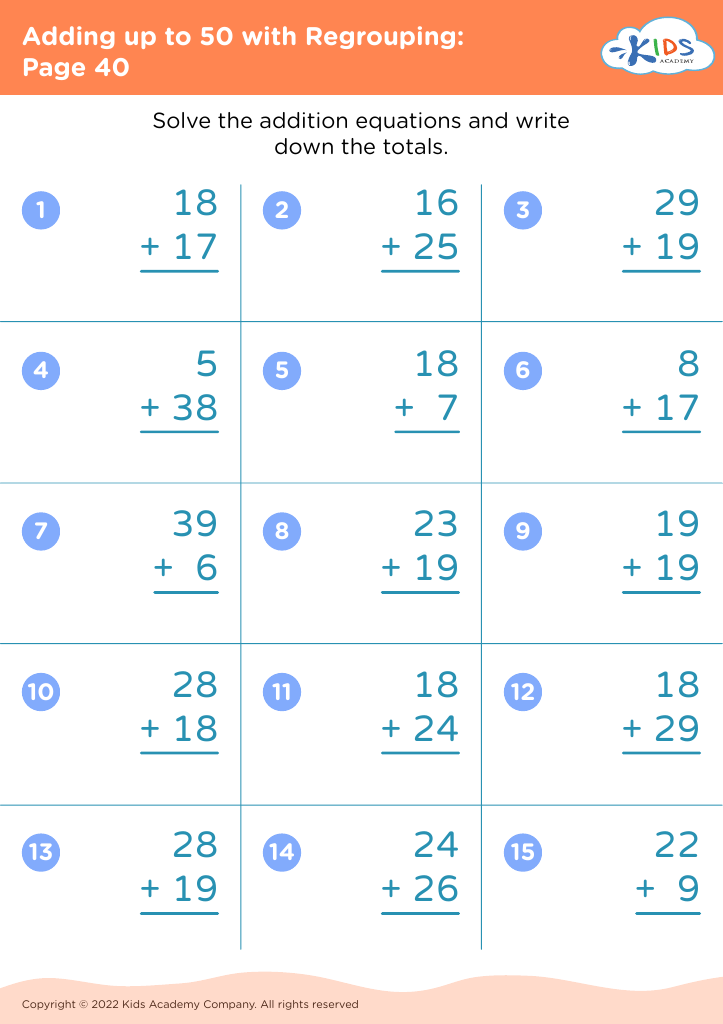
Adding up to 50 with Regrouping: Page 40
Worksheet
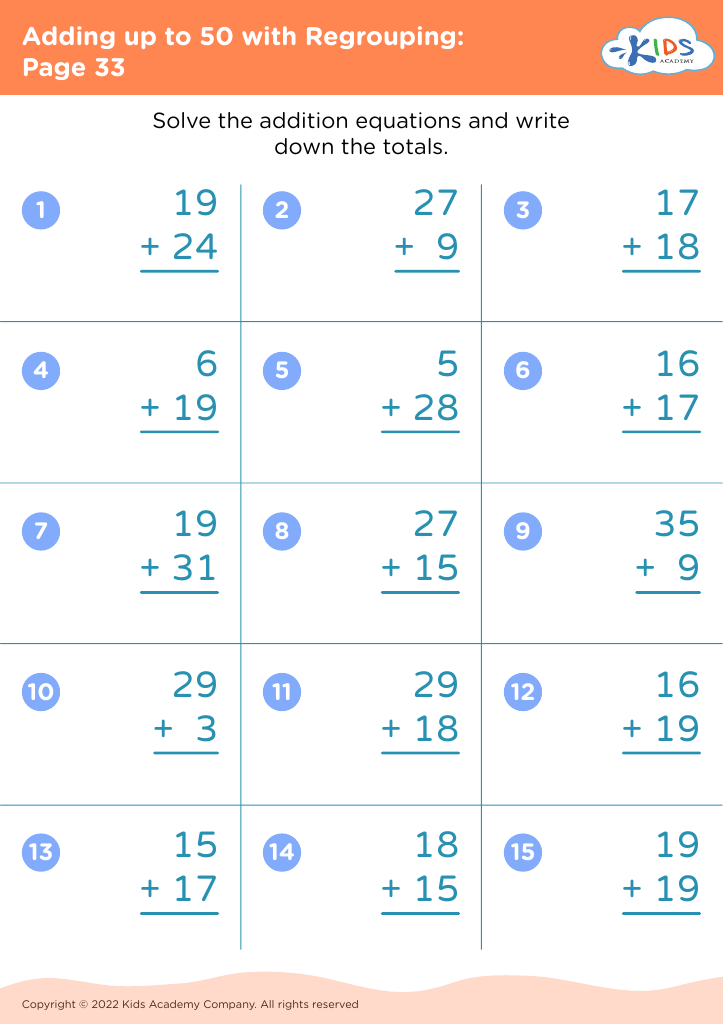
Adding up to 50 with Regrouping: Page 33
Worksheet
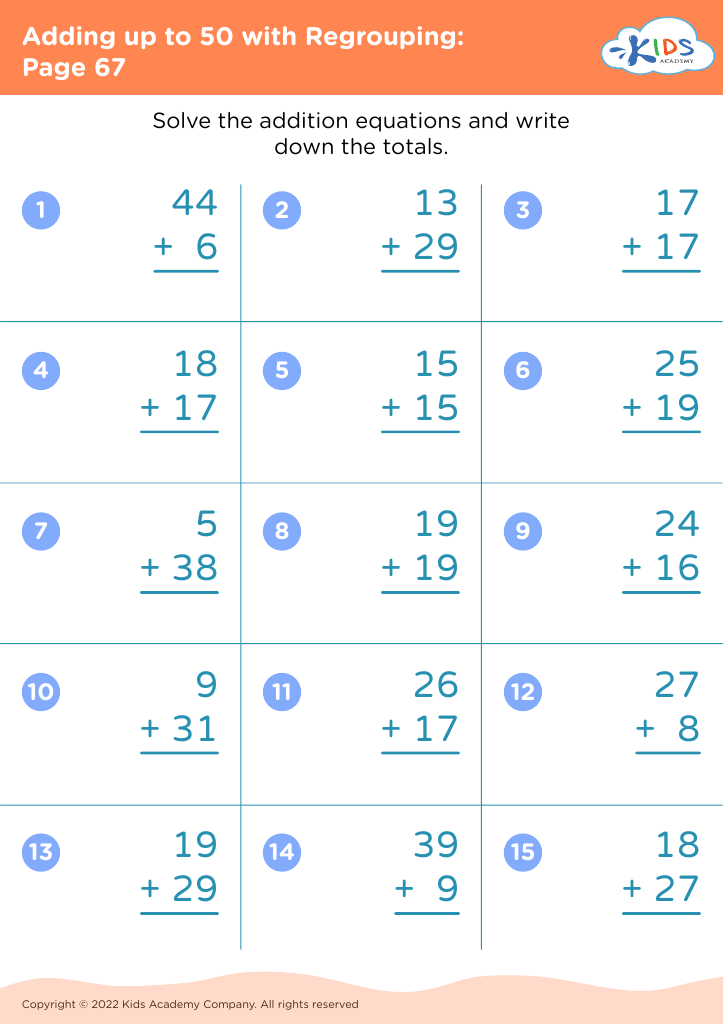
Adding up to 50 with Regrouping: Page 67
Worksheet
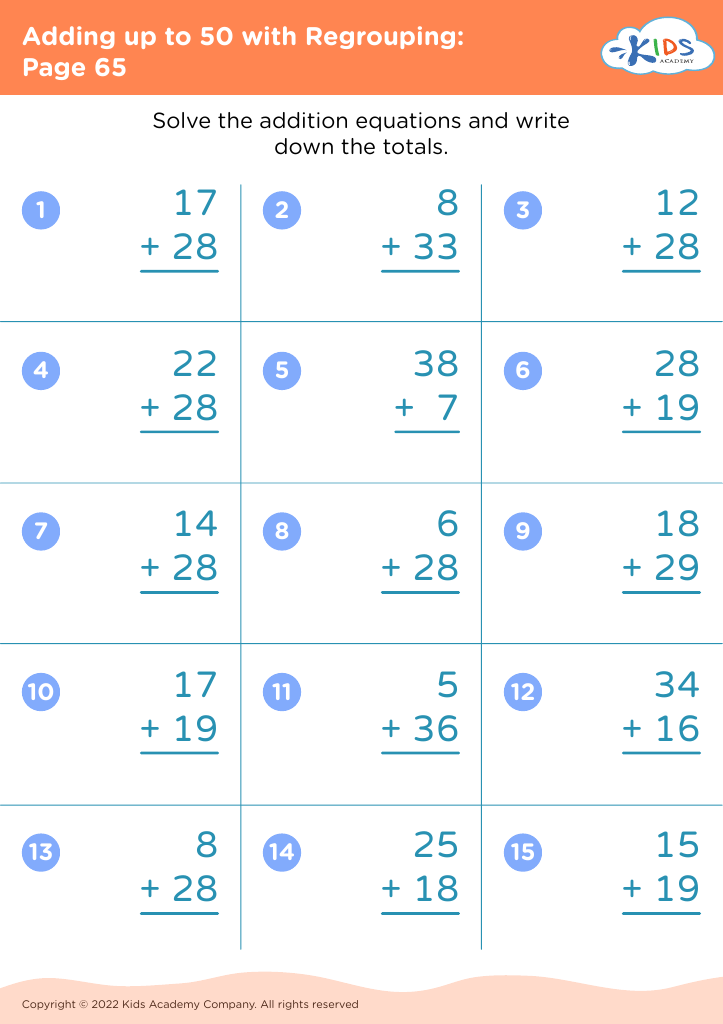
Adding up to 50 with Regrouping: Page 65
Worksheet
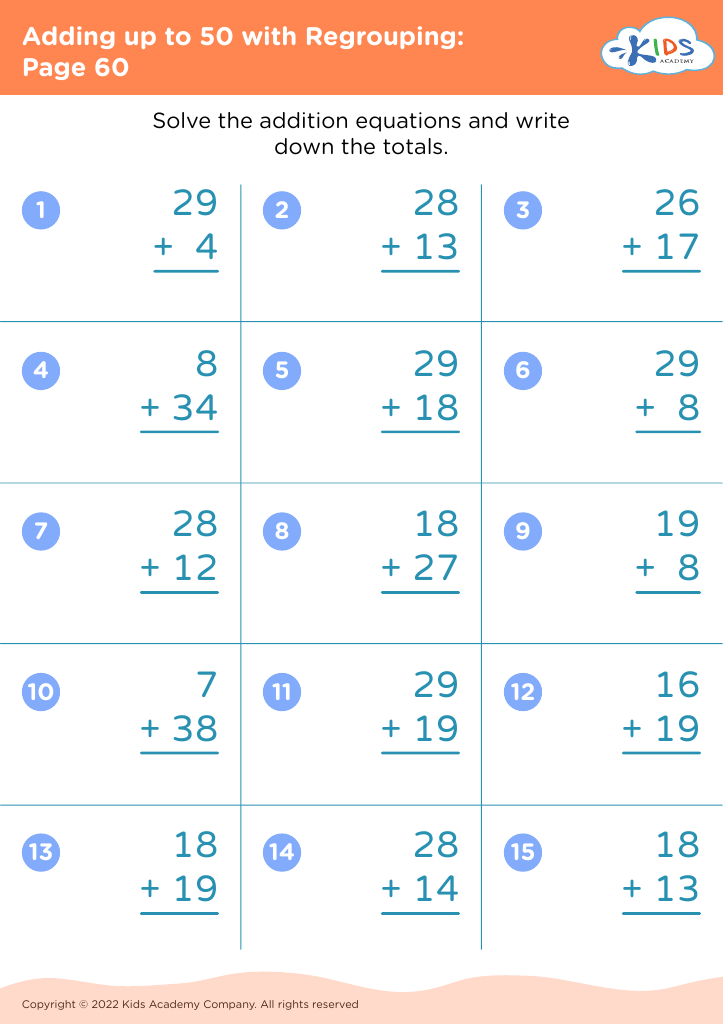
Adding up to 50 with Regrouping: Page 60
Worksheet
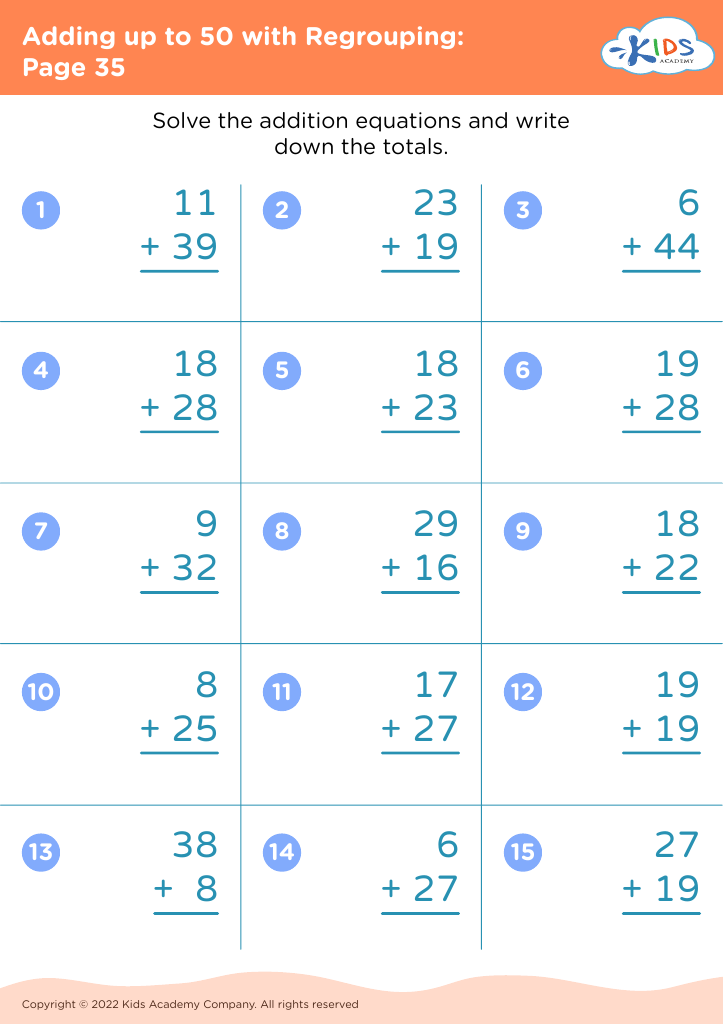
Adding up to 50 with Regrouping: Page 35
Worksheet
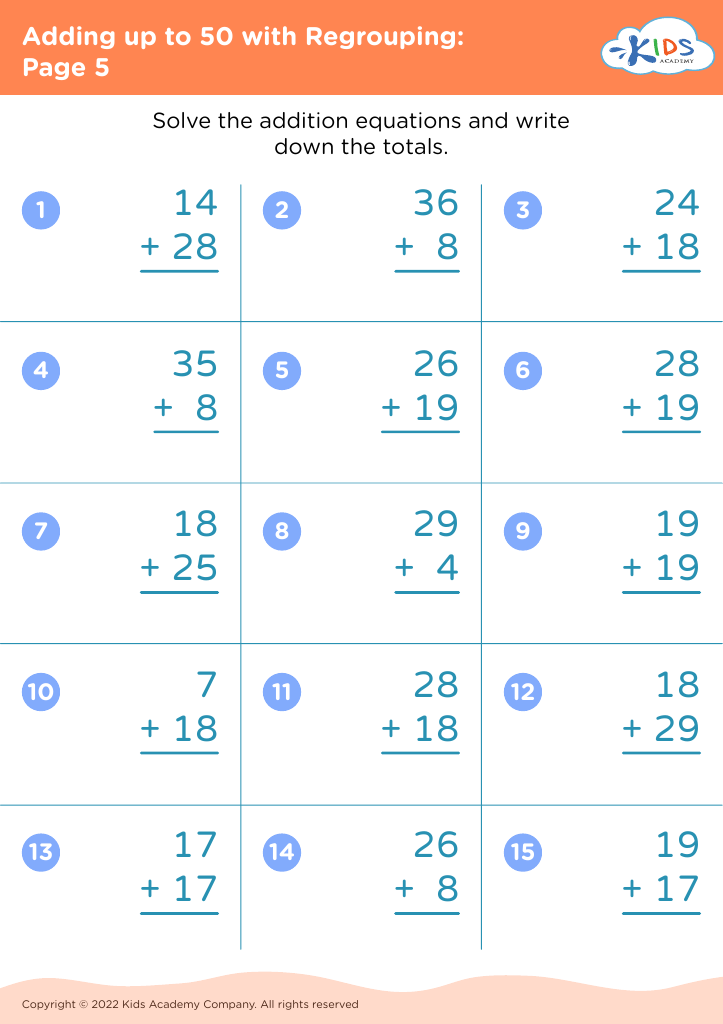
Adding up to 50 with Regrouping: Page 5
Worksheet
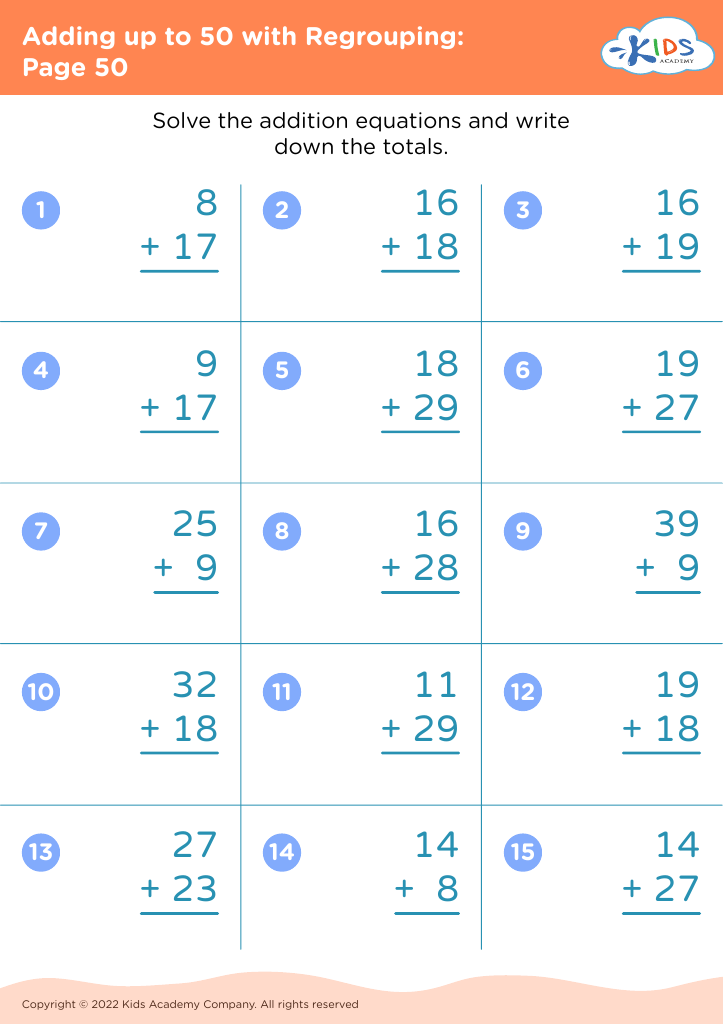
Adding up to 50 with Regrouping: Page 50
Worksheet
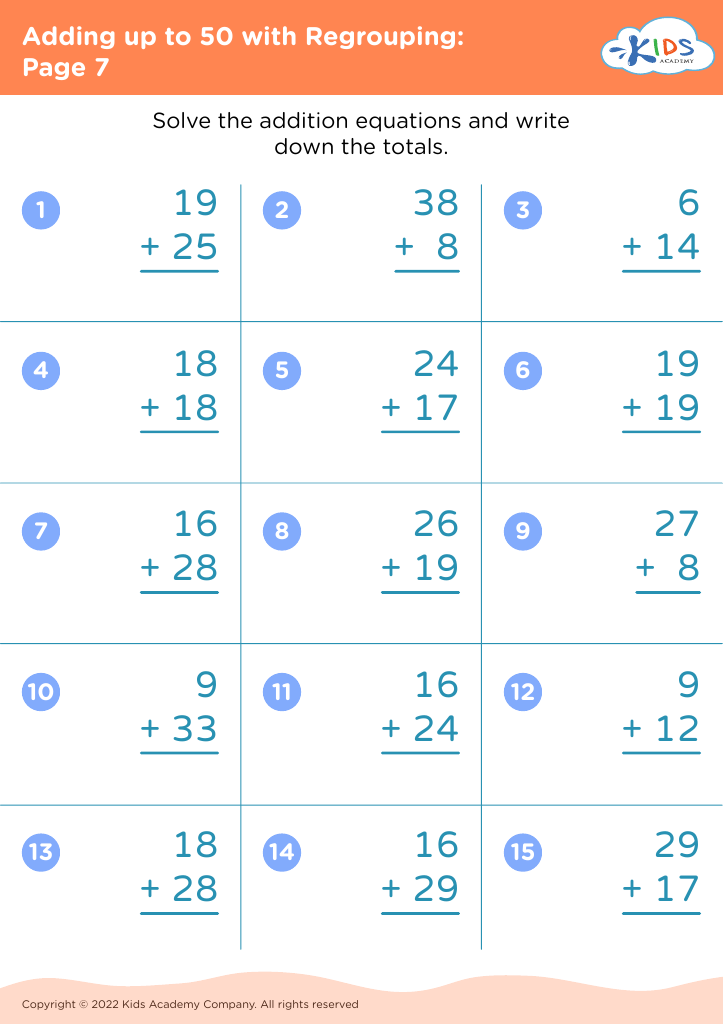
Adding up to 50 with Regrouping: Page 7
Worksheet
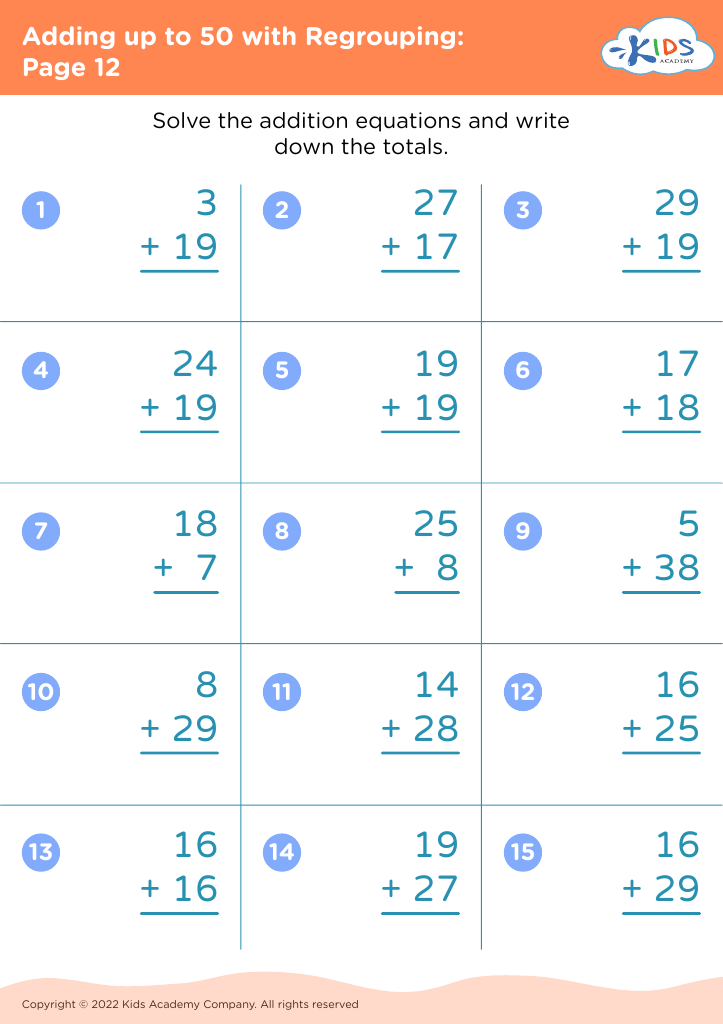
Adding up to 50 with Regrouping: Page 12
Worksheet
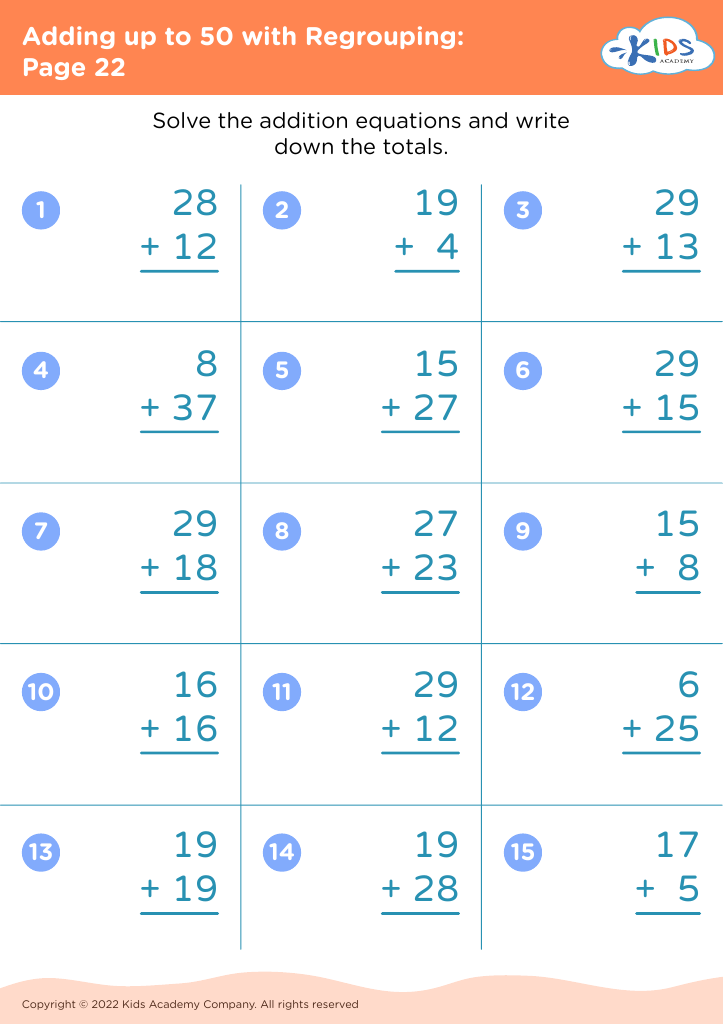
Adding up to 50 with Regrouping: Page 22
Worksheet
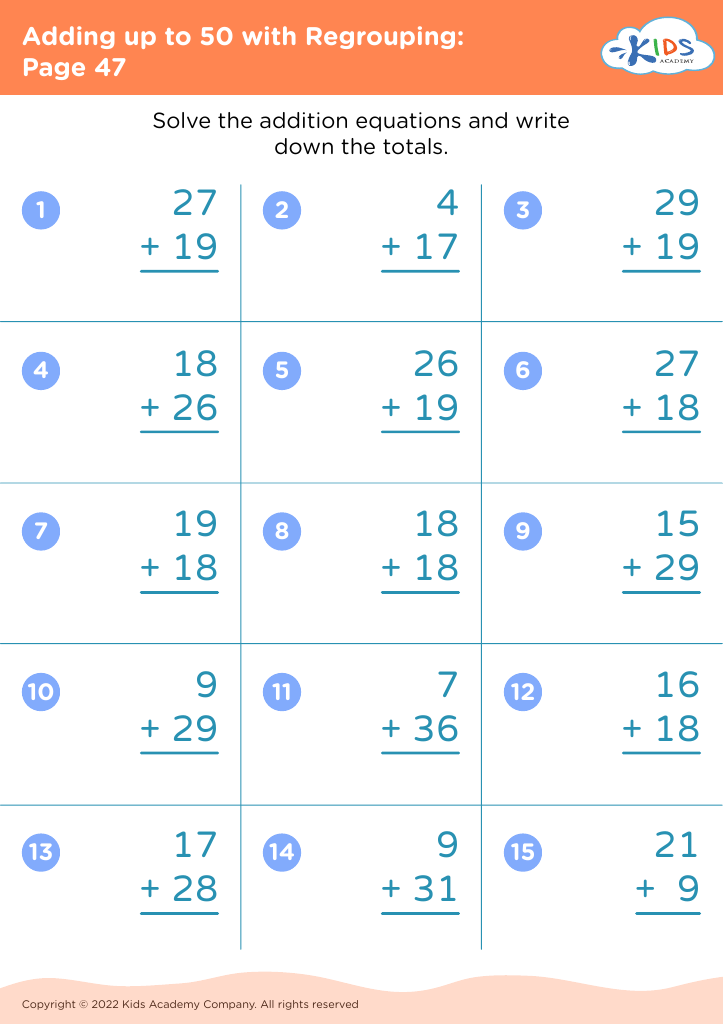
Adding up to 50 with Regrouping: Page 47
Worksheet
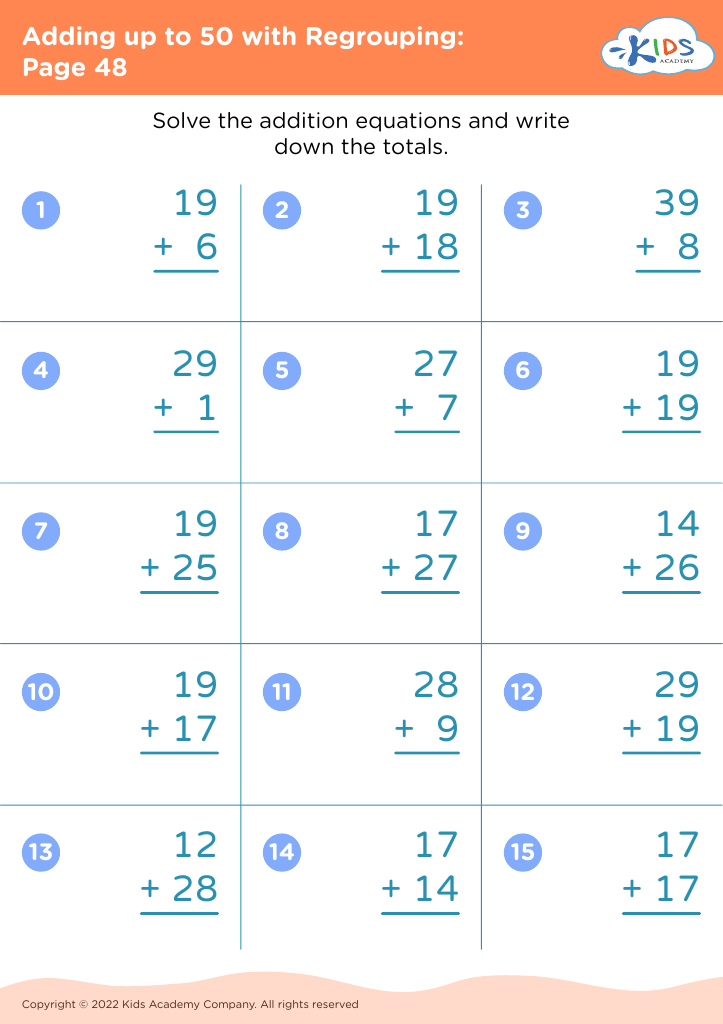
Adding up to 50 with Regrouping: Page 48
Worksheet
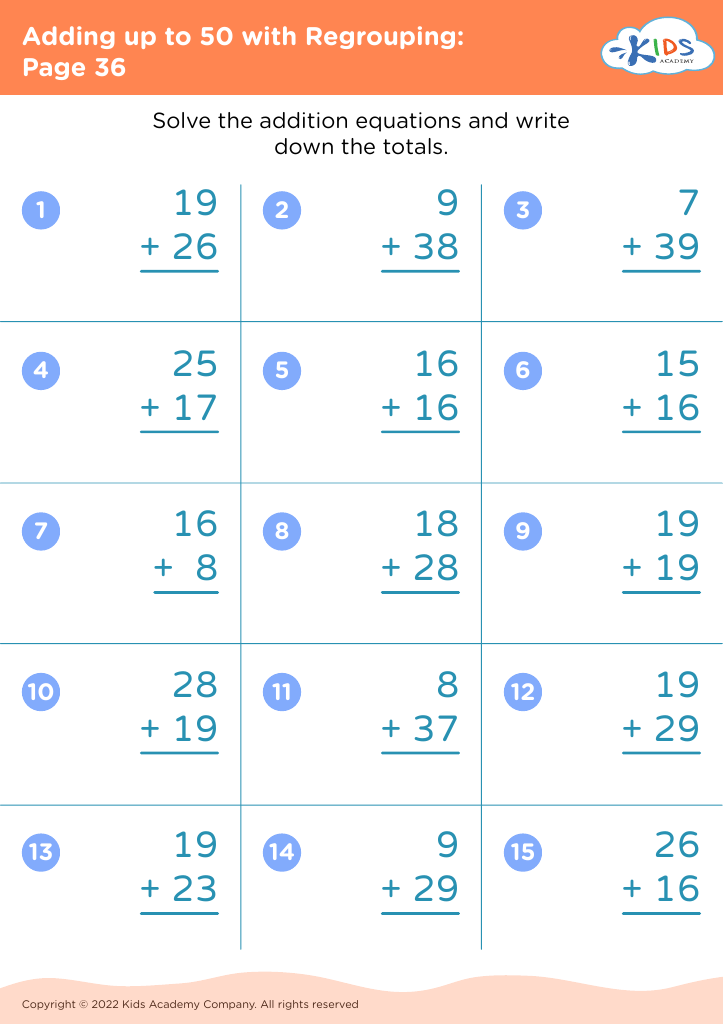
Adding up to 50 with Regrouping: Page 36
Worksheet
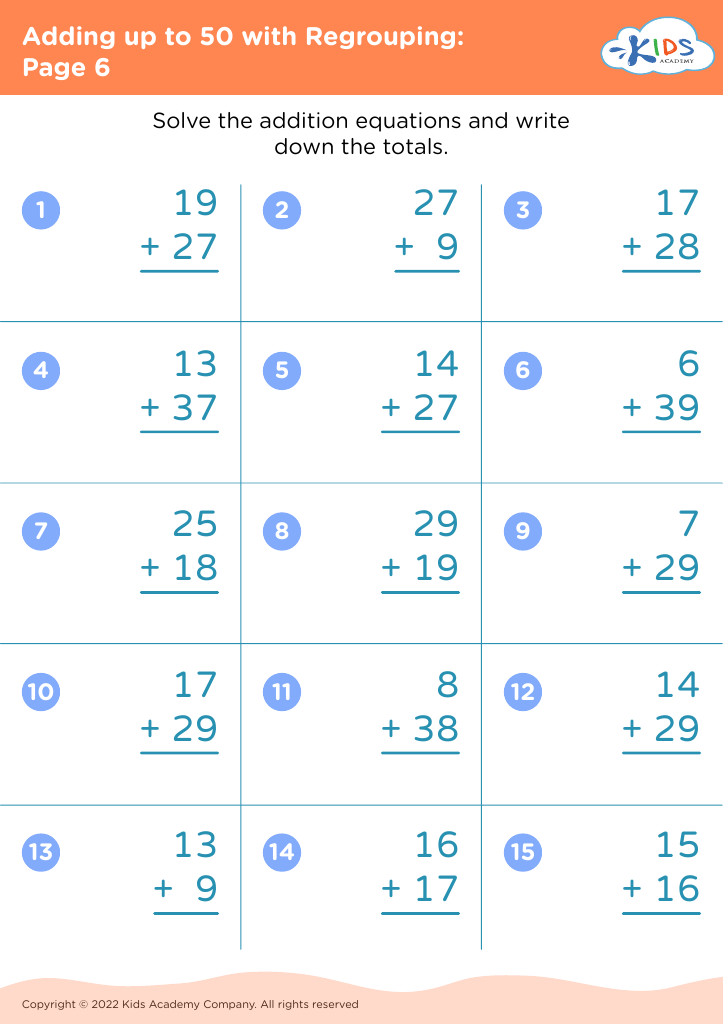
Adding up to 50 with Regrouping: Page 6
Worksheet
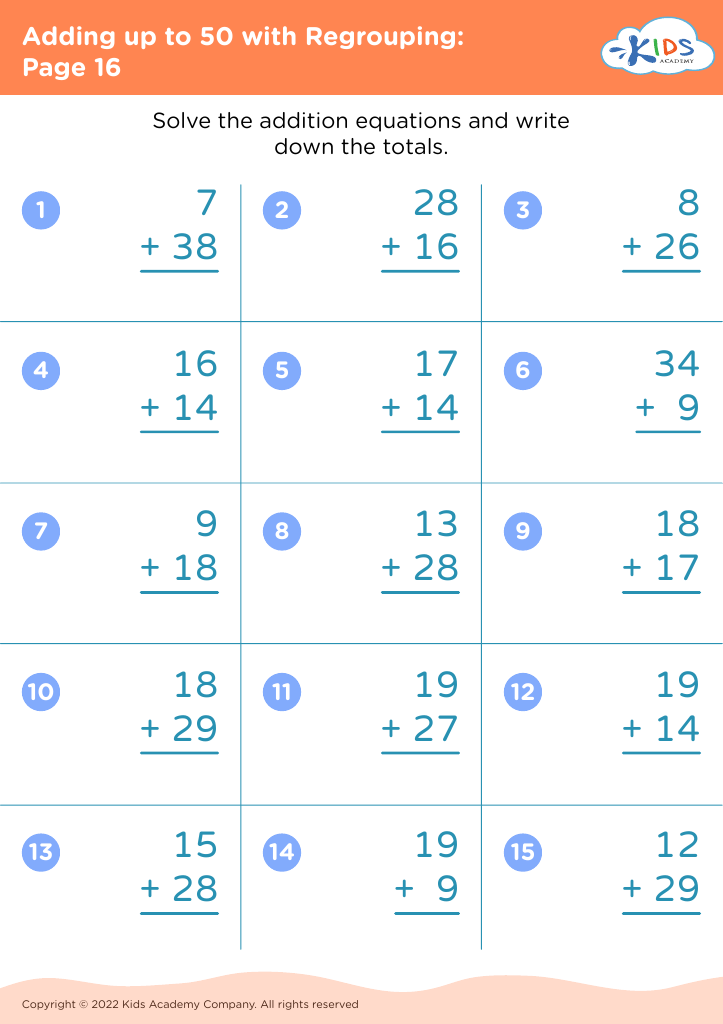
Adding up to 50 with Regrouping: Page 16
Worksheet
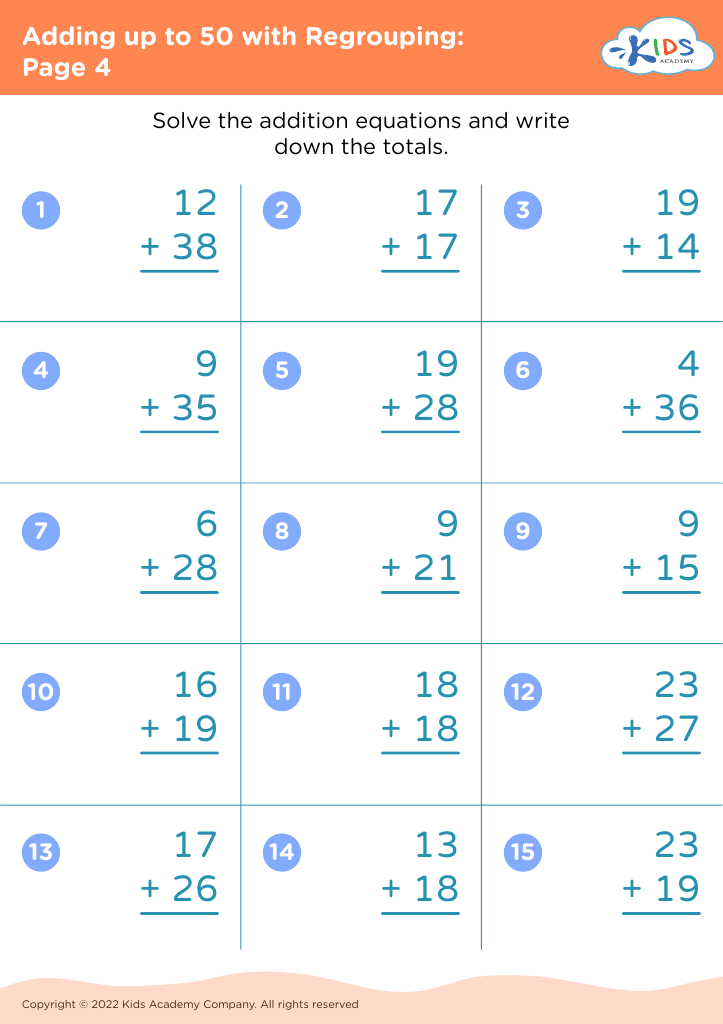
Adding up to 50 with Regrouping: Page 4
Worksheet


Understanding fractions and mastering addition with regrouping are fundamental skills for children aged 7-8 that lay a solid foundation for future mathematical learning.

First, grasping the concept of fractions teaches children to understand parts of a whole, which is essential in many real-life situations like cooking, sharing, and telling time. Comprehending fractions helps in developing logical thinking and problem-solving skills. These early experiences make more advanced fractional concepts in later grades less daunting.

Learning addition within the range of up to 50, particularly with regrouping (or carrying), is another crucial milestone. Regrouping is the process of rearranging groups in place value systems while performing operations like addition. At this age, it often involves the decimal system, signifying the importance of understanding tens and ones. This teaches them place value comprehensively and paves the way for more difficult operations like multiplication and division.

Furthermore, these skills build computational fluency, support overall numeracy, and foster confidence essential for approaching mathematical challenges. Parents and teachers who emphasize understanding rather than rote learning cultivate a deeper, intuitive grasp of math. This solid foundation bolsters future academic success and creates a positive attitude towards a subject often perceived as difficult. Continual practice and patience are crucial in helping young learners excel in these fundamental areas.