Understand fractions Adding up to 50 Without Regrouping Worksheets for Ages 7-8
4 filtered results
-
From - To
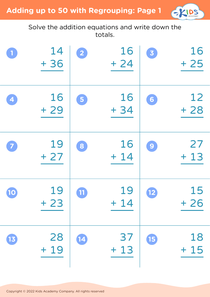
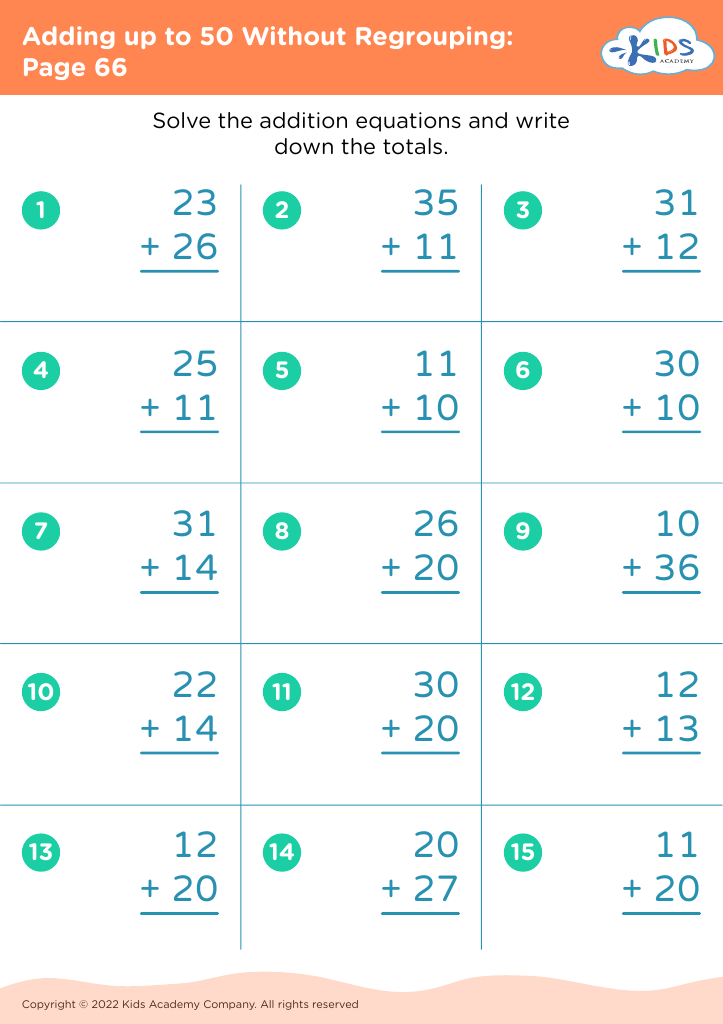
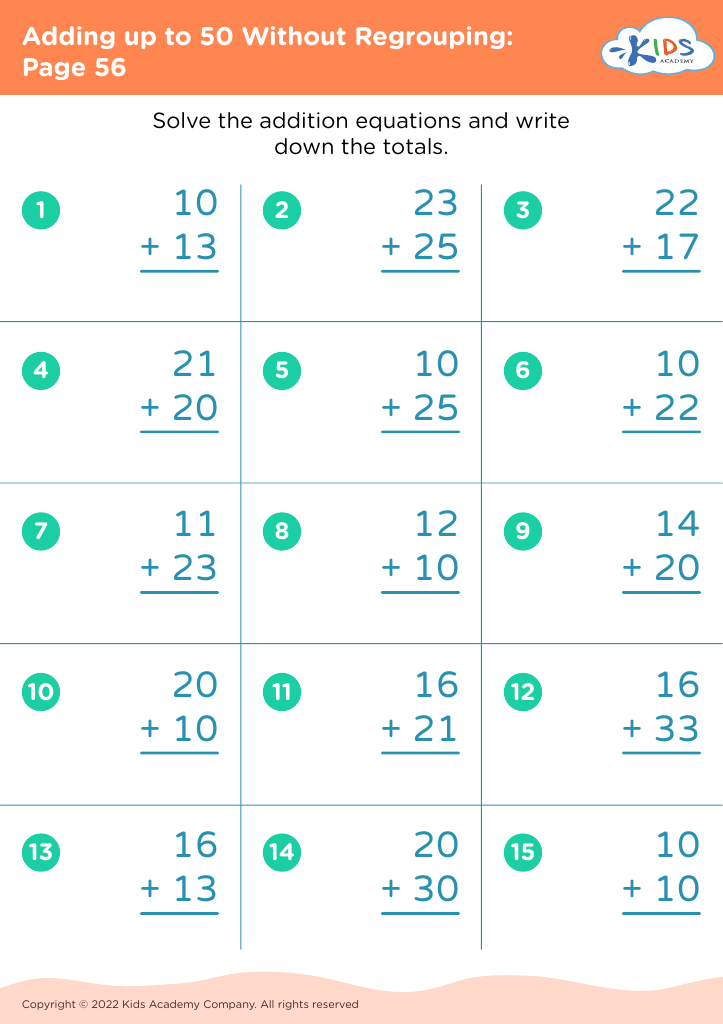
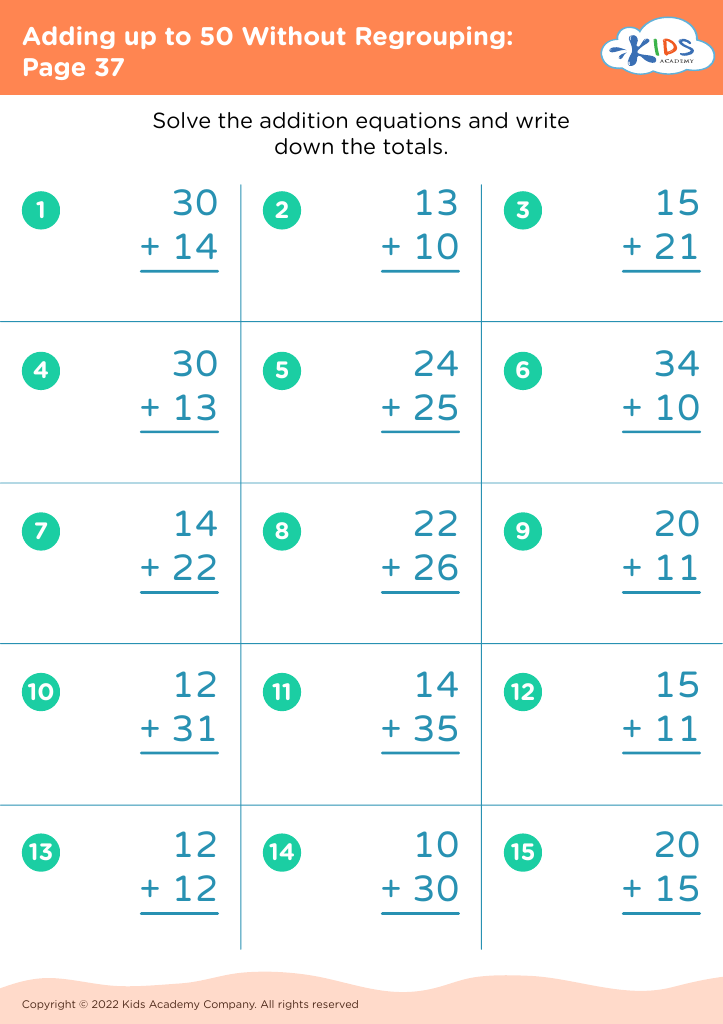
Welcome to our “Understand Fractions: Adding Up to 50 Without Regrouping” worksheets designed specifically for ages 7-8! These engaging resources aim to introduce young learners to the concept of fractions by relating them to addition problems that do not require regrouping. Each worksheet features colorful visuals and age-appropriate exercises that encourage students to develop a solid foundational knowledge of fractions while honing their addition skills. Perfect for classroom use or at-home learning, these worksheets boost confidence in mathematics, ensuring a fun and effective educational experience. Dive into the world of fractions and watch your child excel in their math journey!
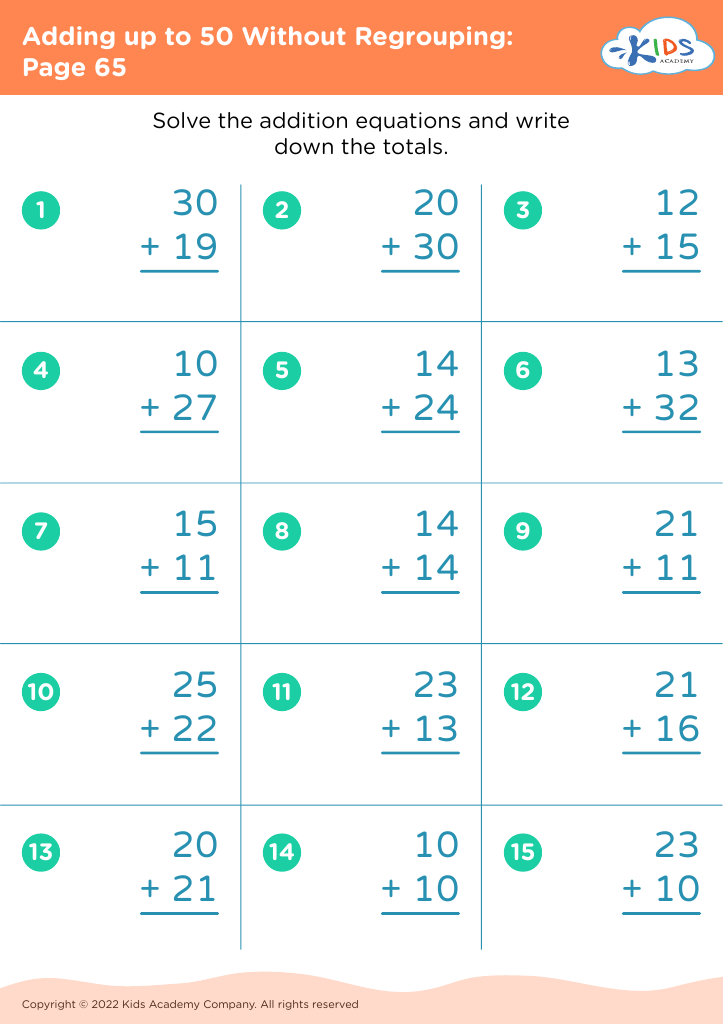


Understanding fractions, particularly the concept of adding them up to 50 without regrouping, is crucial for children aged 7-8 for several reasons. First, it lays the foundation for future mathematical concepts. Fractions are essential in higher mathematics, including decimals, percentages, and ratios, and grasping the fundamentals at an early age ensures that students do not struggle later.
Moreover, learning to add fractions enhances critical thinking and problem-solving skills. This age is pivotal for cognitive development, and engaging with fractions helps children learn to analyze problems, think logically, and make connections between numbers. It's not just a math skill; it's a cognitive exercise that boosts overall academic performance.
Additionally, incorporating fractions into daily life scenarios, such as cooking or dividing items among friends, helps children see the practical applications of math. This real-world relevance fosters a greater appreciation for the subject.
Finally, mastering this concept improves confidence. Children who feel competent in basic math are more likely to participate in discussions and tackle more challenging problems. Thus, parents and teachers should prioritize helping young learners master adding fractions up to 50 without regrouping, setting them on a path to success in mathematics and beyond.