Basic addition practice Adding up to 50 Worksheets for Ages 7-8
5 filtered results
-
From - To
Enhance your child's math skills with our "Basic Addition Practice Adding up to 50 Worksheets" tailored for ages 7-8. Available at Kids Academy, these printable worksheets are designed to make learning addition fun and engaging. Each worksheet presents colorful and challenging problems, perfect for building confidence in young learners. With practice, students can improve their addition skills, sharpen their problem-solving abilities, and gain a solid mathematical foundation. Support your child's educational journey with these expertly crafted activities that make mastering basic addition an enjoyable experience. Download now and watch your child's math abilities soar!
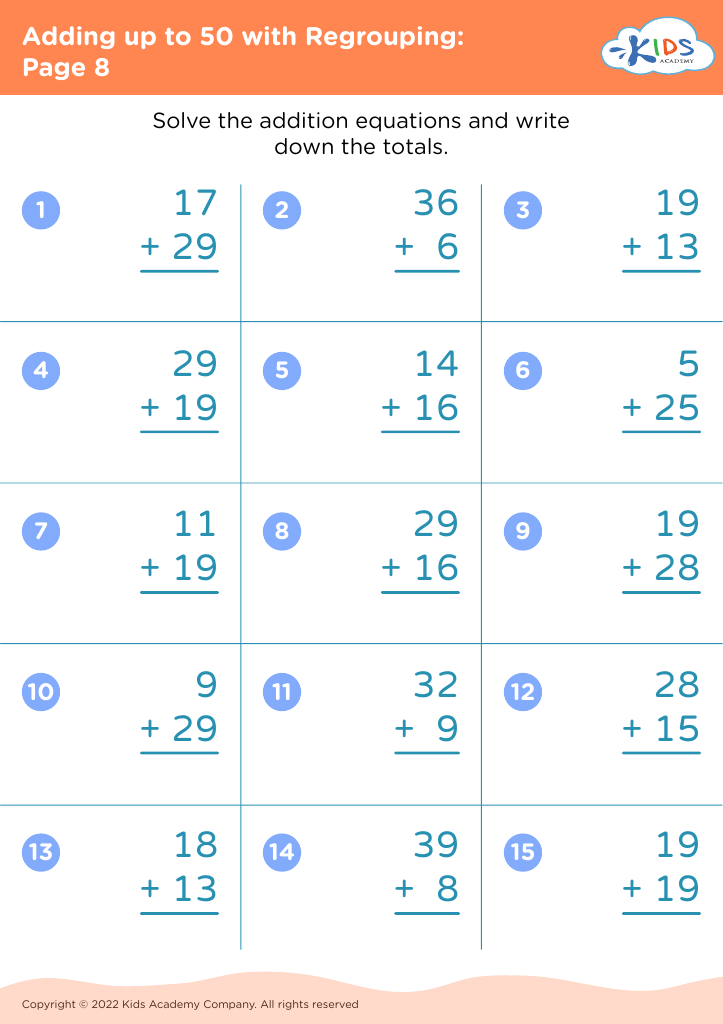
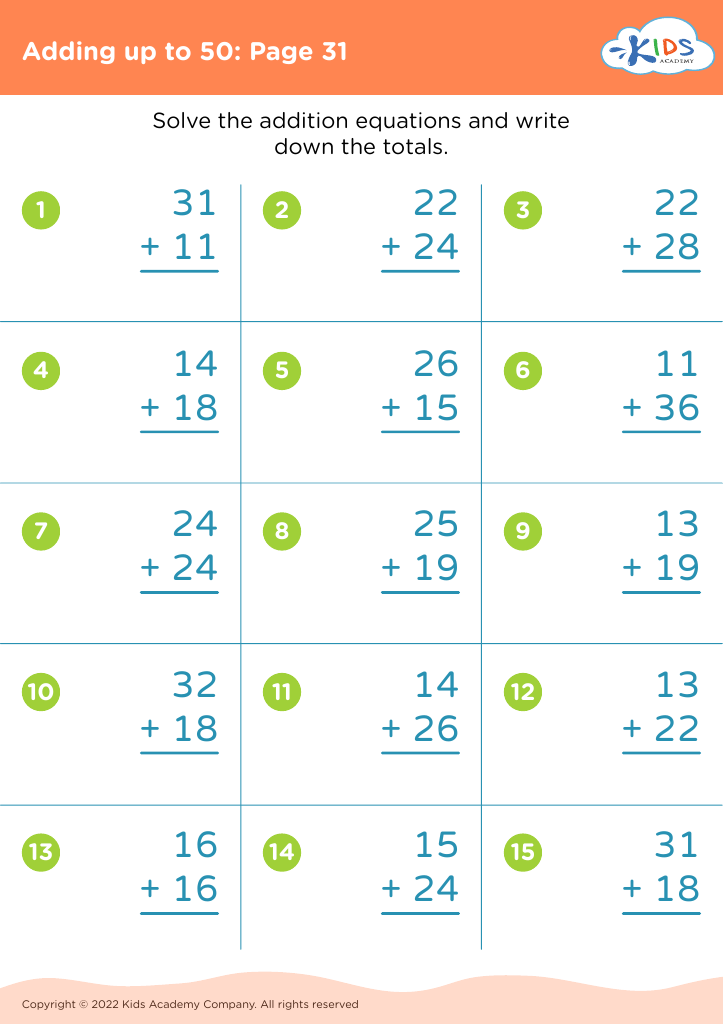
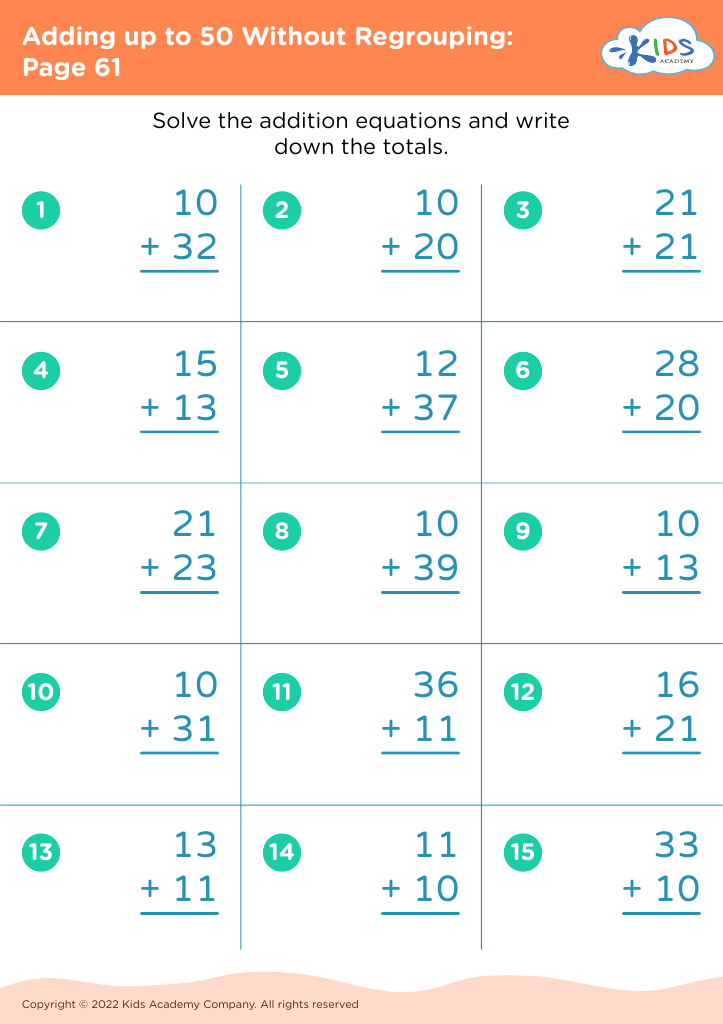
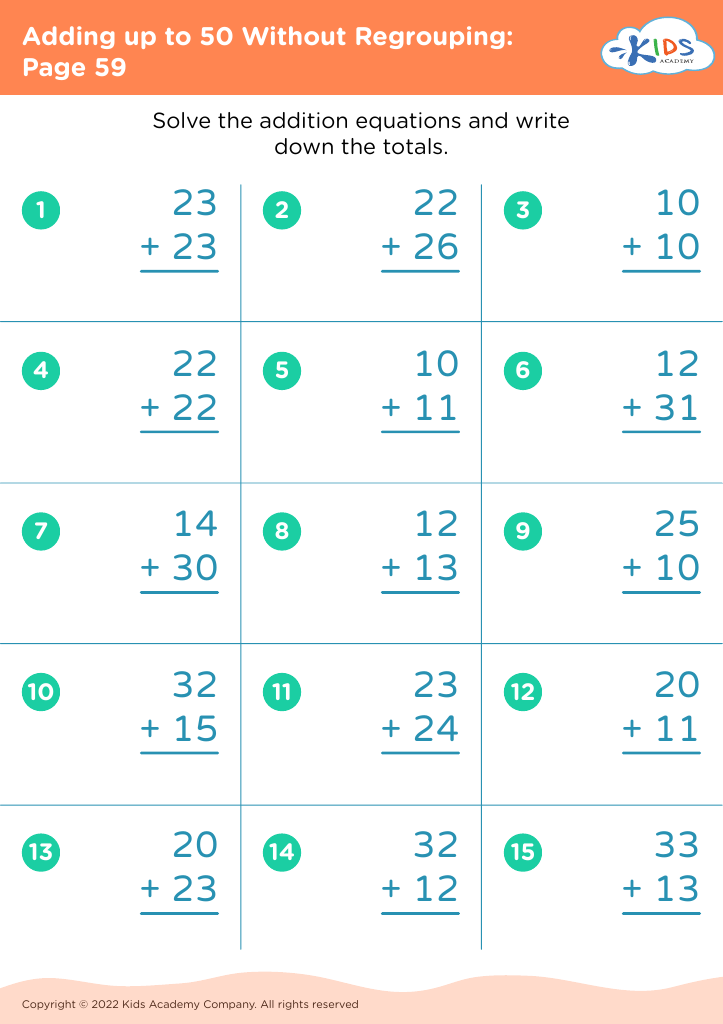
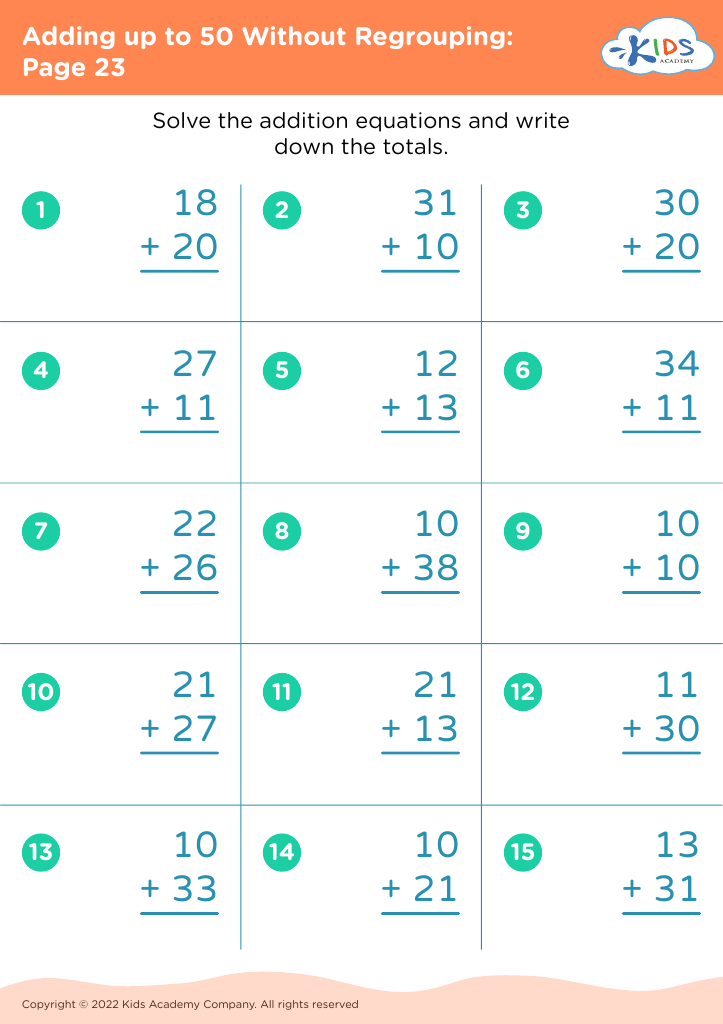




Parents and teachers should care about basic addition practice that involves adding up to 50 for children ages 7-8 because it forms the cornerstone of more advanced mathematical concepts. At this age, kids are typically in grades 2 and 3, which means they are building foundational skills that will be critical as they advance in school.
Mastering basic addition ensures that children can handle more complex arithmetic functions with confidence. When they become comfortable with numbers up to 50, it strengthens their number sense and makes learning about patterns, place value, and mental math more intuitive.
Equipping children with solid arithmetic fundamentals reduces anxiety associated with mathematics and encourages a positive attitude towards the subject. This skill set also supports daily activities such as counting money, measuring ingredients in recipes, and telling time, facilitating practical life skills.
Furthermore, early practice in mathematical proficiency has been linked to improved academic and cognitive outcomes. Children who are adept at basic addition are more likely to excel in other subjects as well due to enhanced problem-solving and logical reasoning abilities.
Encouraging and implementing structured practice in basic addition isn't about rote memorization; it's about nurturing a comprehensive comprehension that will benefit children in a multitude of ways both in and out of the classroom.








