Filters

16 filtered results

Clear all filters
Favorites
With answer key
Interactive

16 filtered results

Difficulty Level

Grade


Explore our "Basic Math Skills Adding Up to 50 Worksheets" designed specifically for children ages 7-8. These engaging and educational worksheets encourage young learners to practice addition skills while building a strong mathematical foundation. With a focus on sums up to 50, students will gain confidence and improve their numerical fluency through various fun and interactive exercises. Each worksheet features colorful designs to capture children's interest and makes learning enjoyable. Perfect for reinforcing lessons in the classroom or at home, our resources support your child's math journey while fostering critical thinking and problem-solving abilities. Boost your child's math skills today!
Check out this FREE Trial Lesson on Adding up to 50 for age 7-8!

My Family

Favorites
With answer key
Interactive
  • 7-8
  • Basic Math Skills
  • Adding up to 50
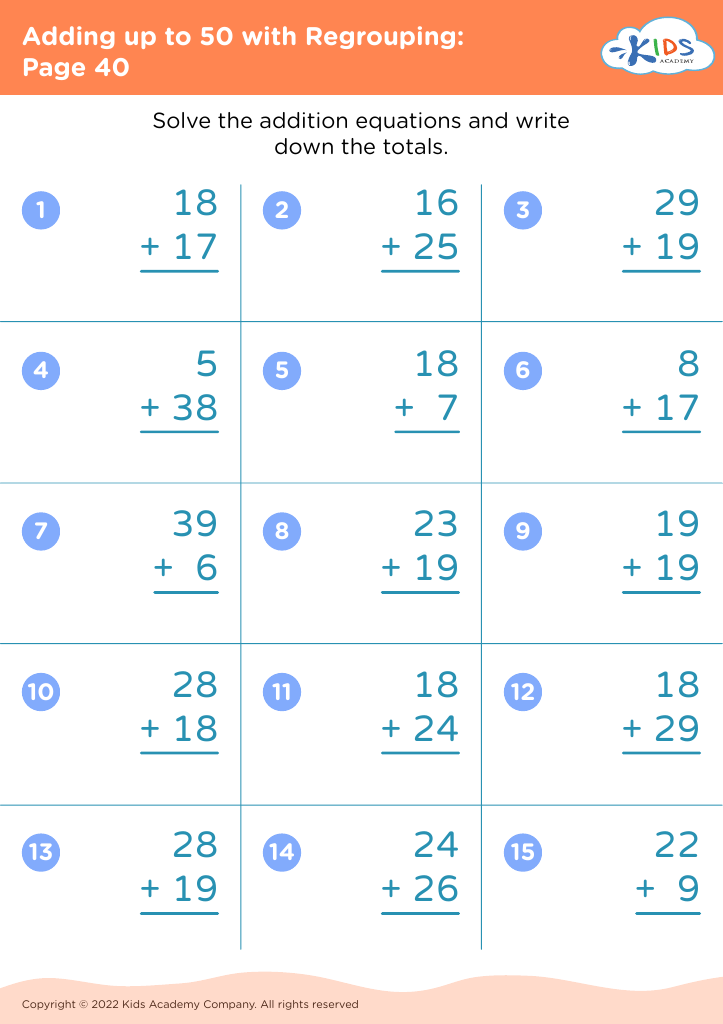
Adding up to 50 with Regrouping: Page 40
Worksheet
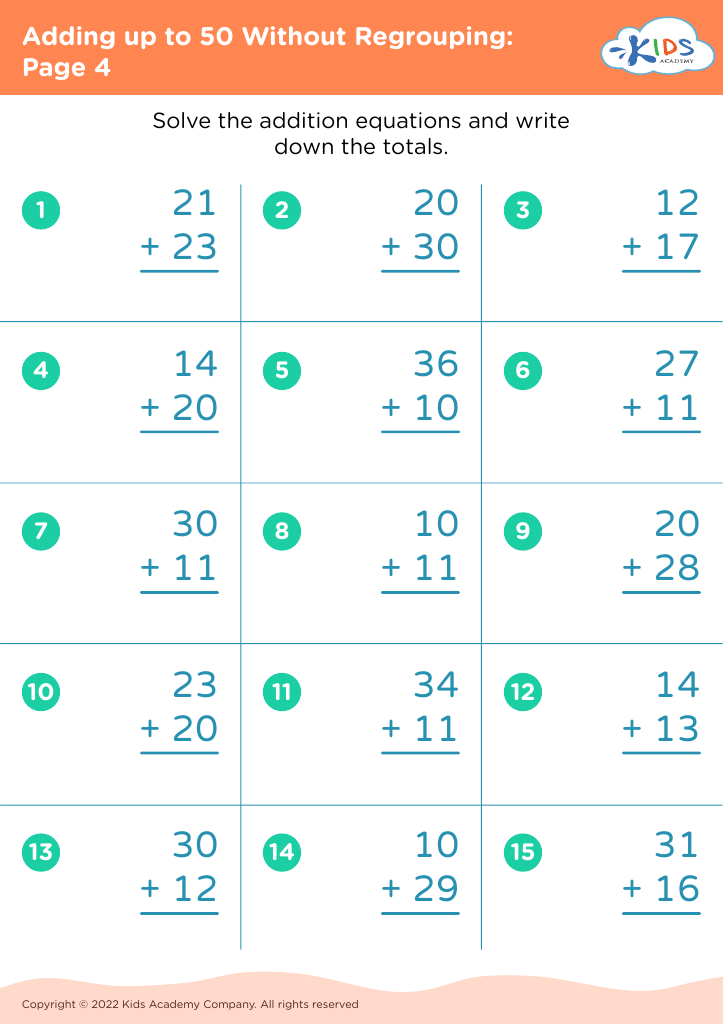
Adding up to 50 Without Regrouping: Page 4
Worksheet
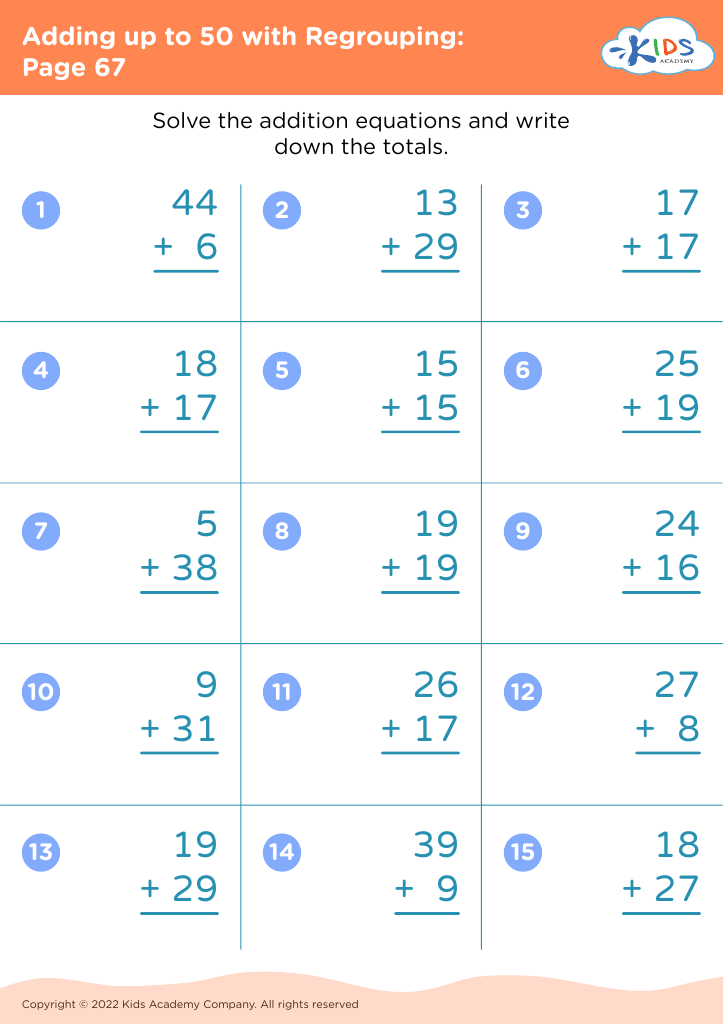
Adding up to 50 with Regrouping: Page 67
Worksheet
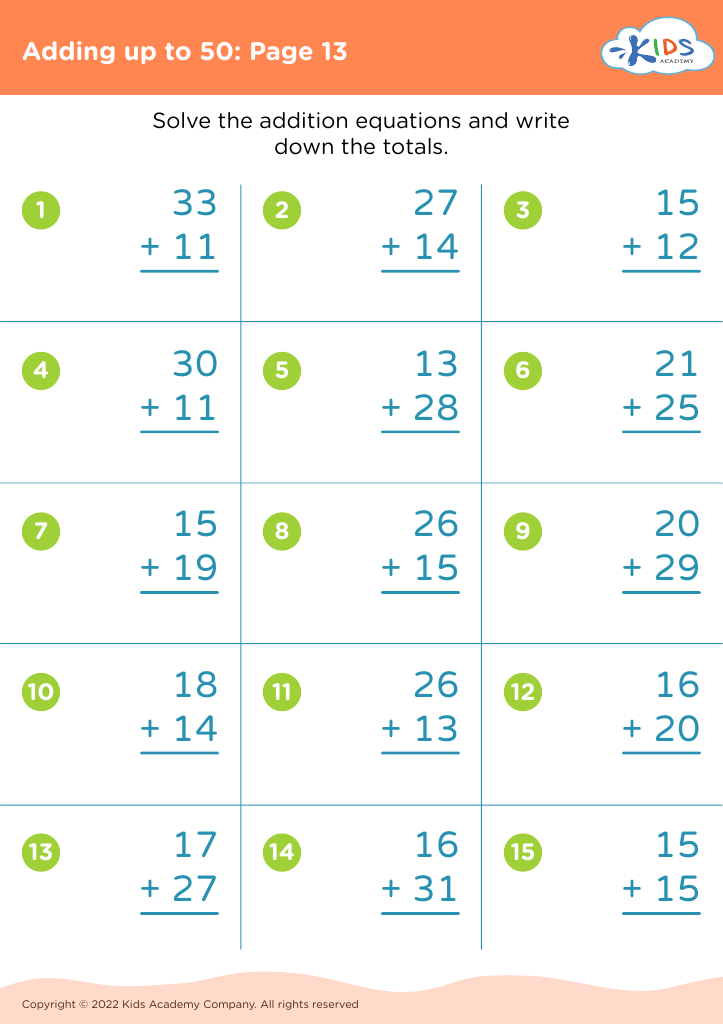
Adding up to 50: Page 13

Adding up to 50: Page 13

Adding up to 50: Page 13
Worksheet
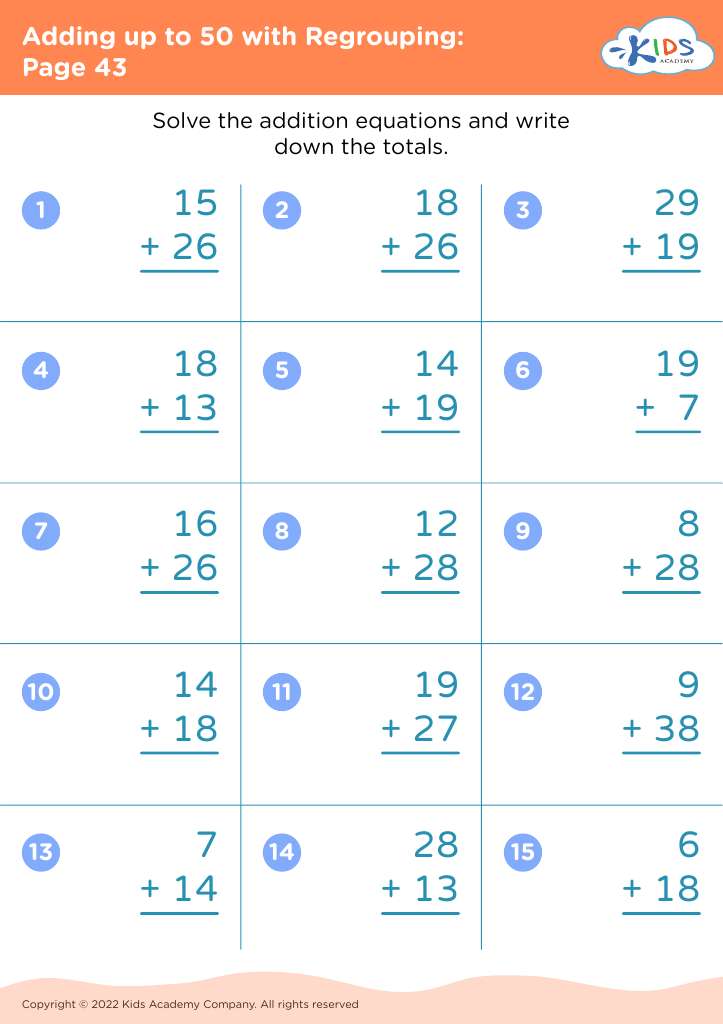
Adding up to 50 with Regrouping: Page 43
Worksheet
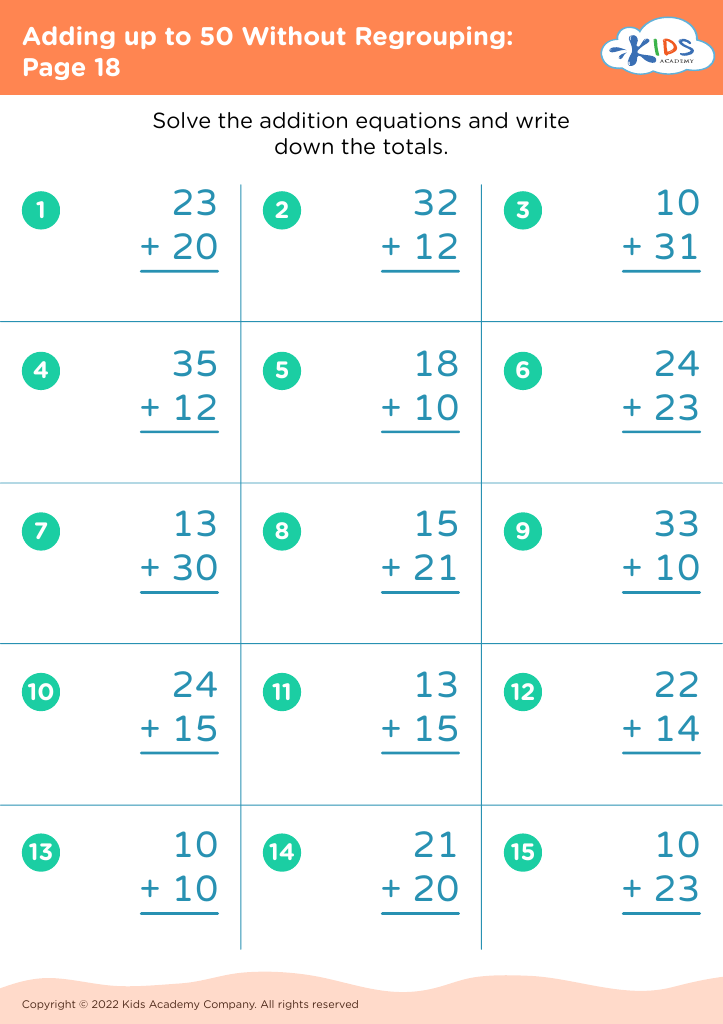
Adding up to 50 Without Regrouping: Page 18
Worksheet
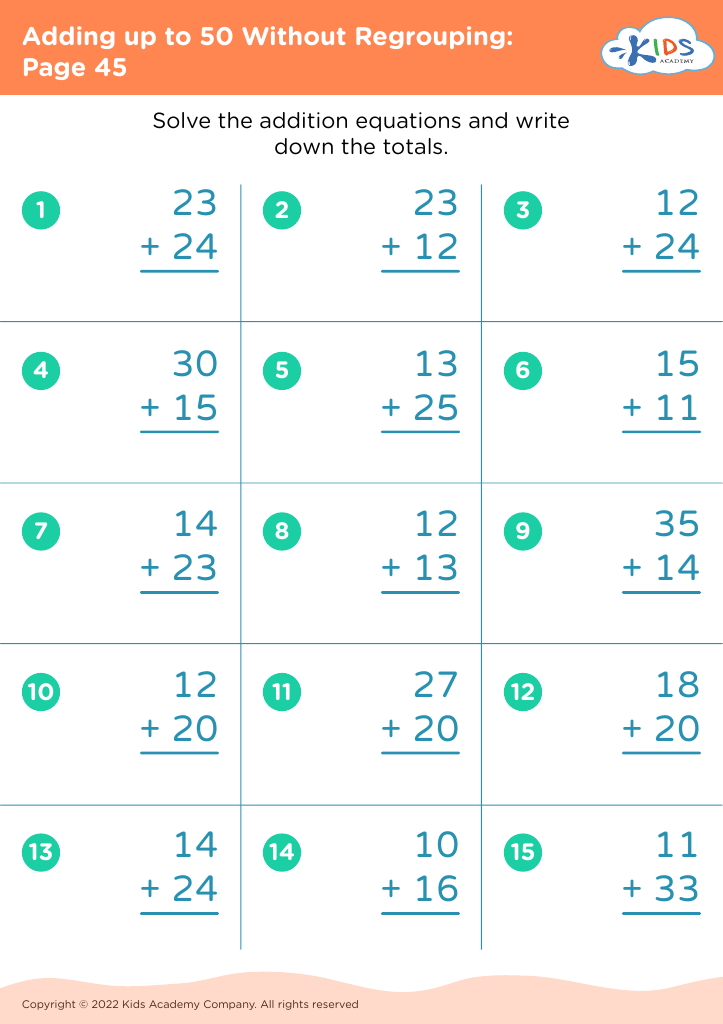
Adding up to 50 Without Regrouping: Page 45
Worksheet
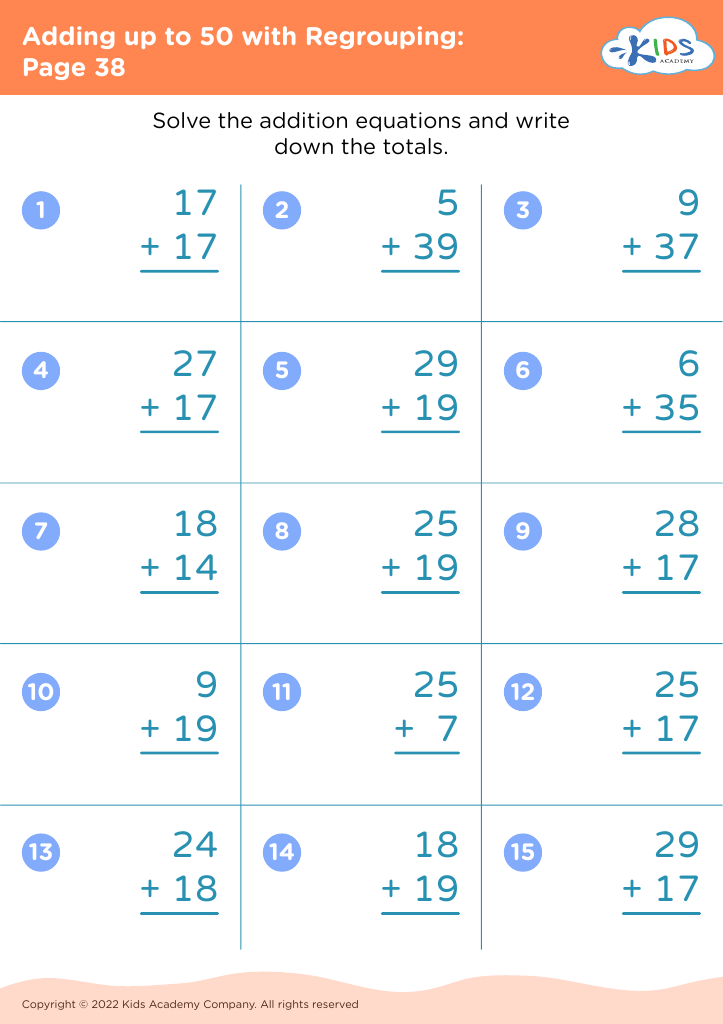
Adding up to 50 with Regrouping: Page 38
Worksheet
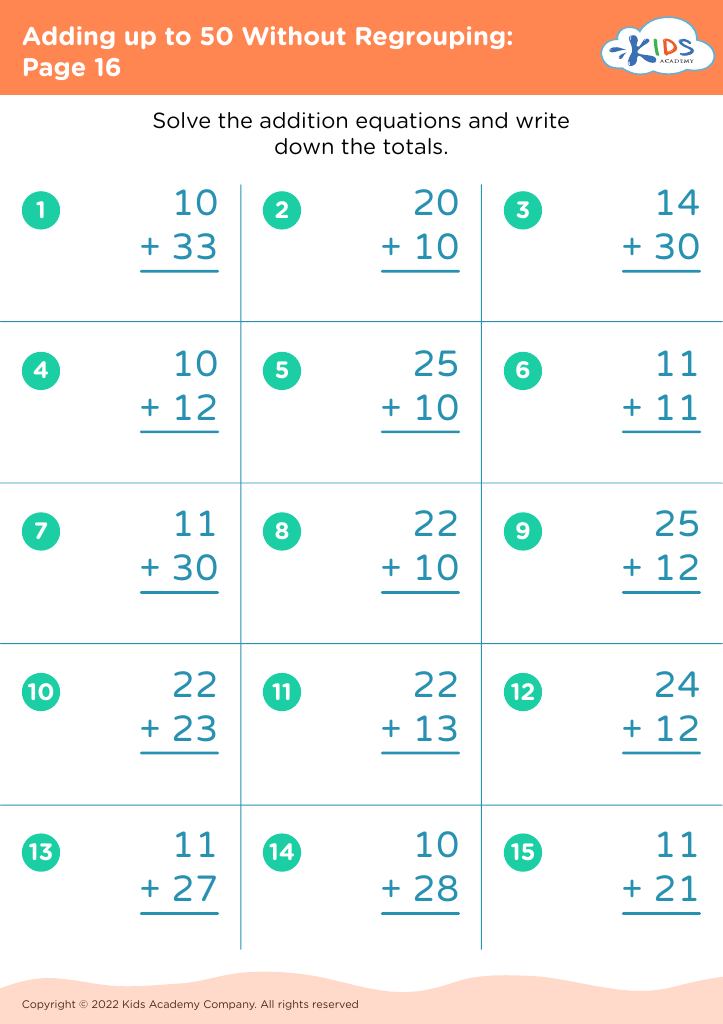
Adding up to 50 Without Regrouping: Page 16
Worksheet
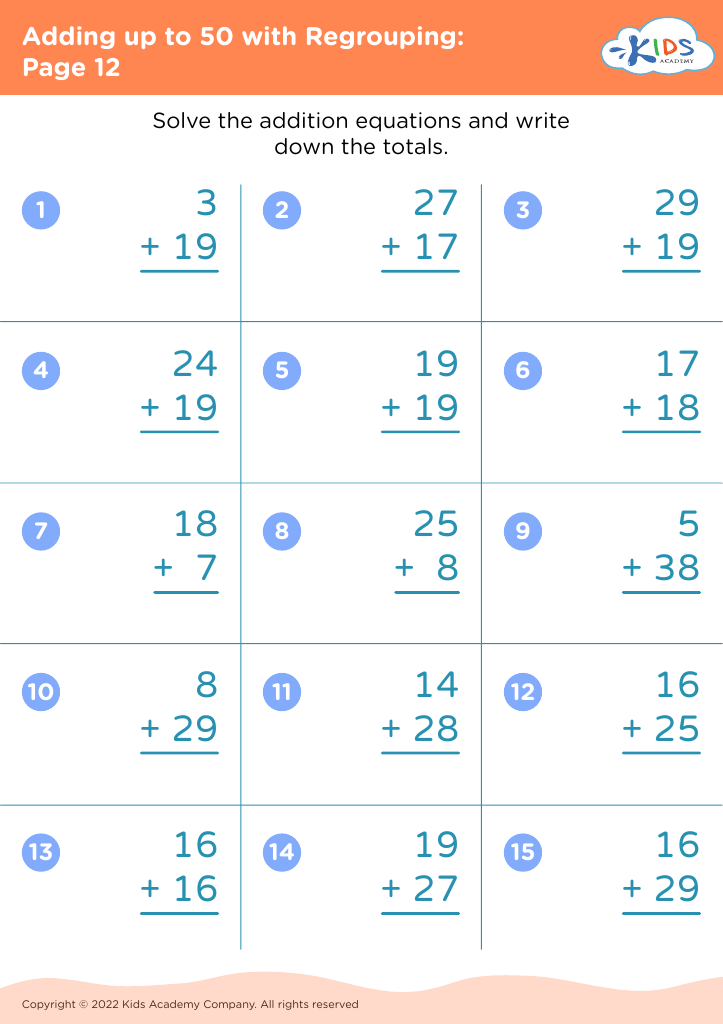
Adding up to 50 with Regrouping: Page 12
Worksheet
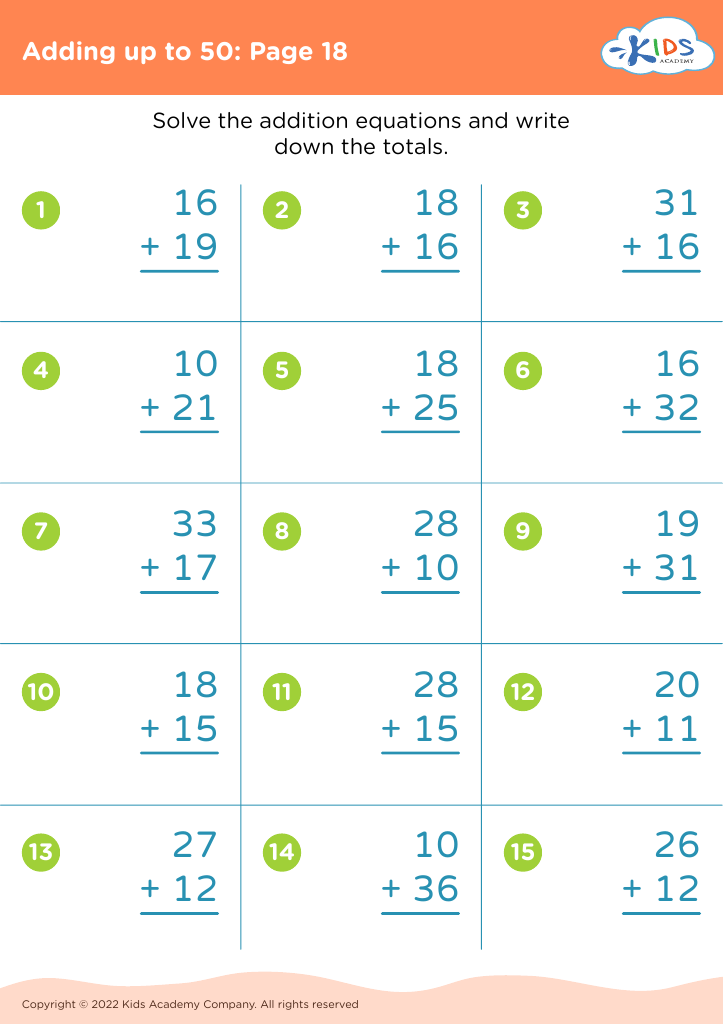
Adding up to 50: Page 18

Adding up to 50: Page 18

Adding up to 50: Page 18
Worksheet
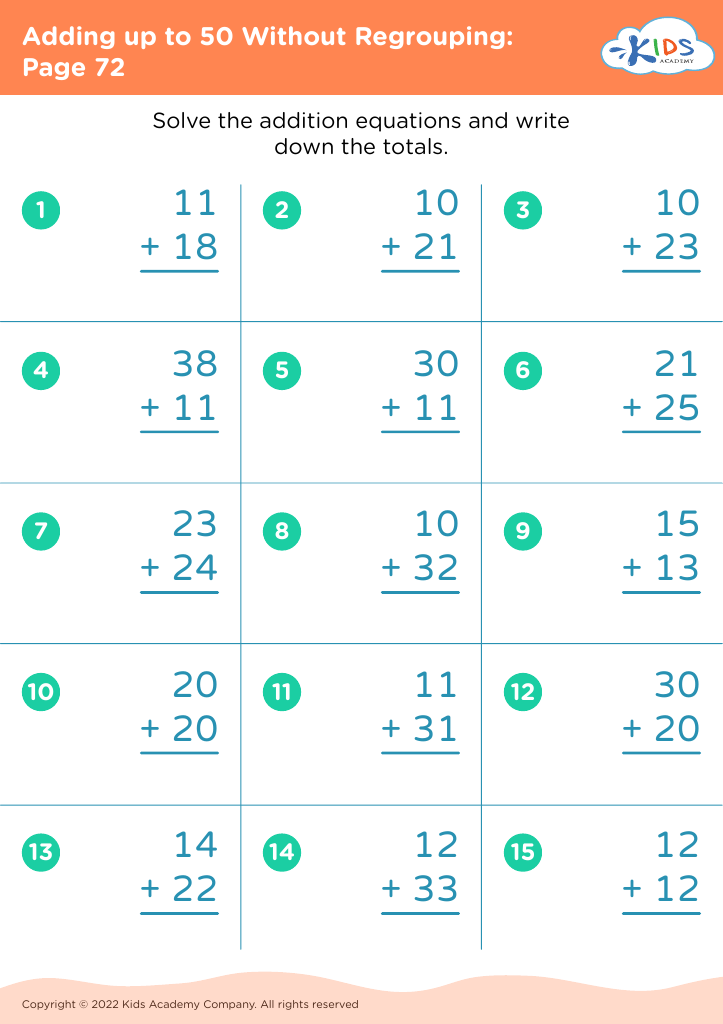
Adding up to 50 Without Regrouping: Page 72
Worksheet
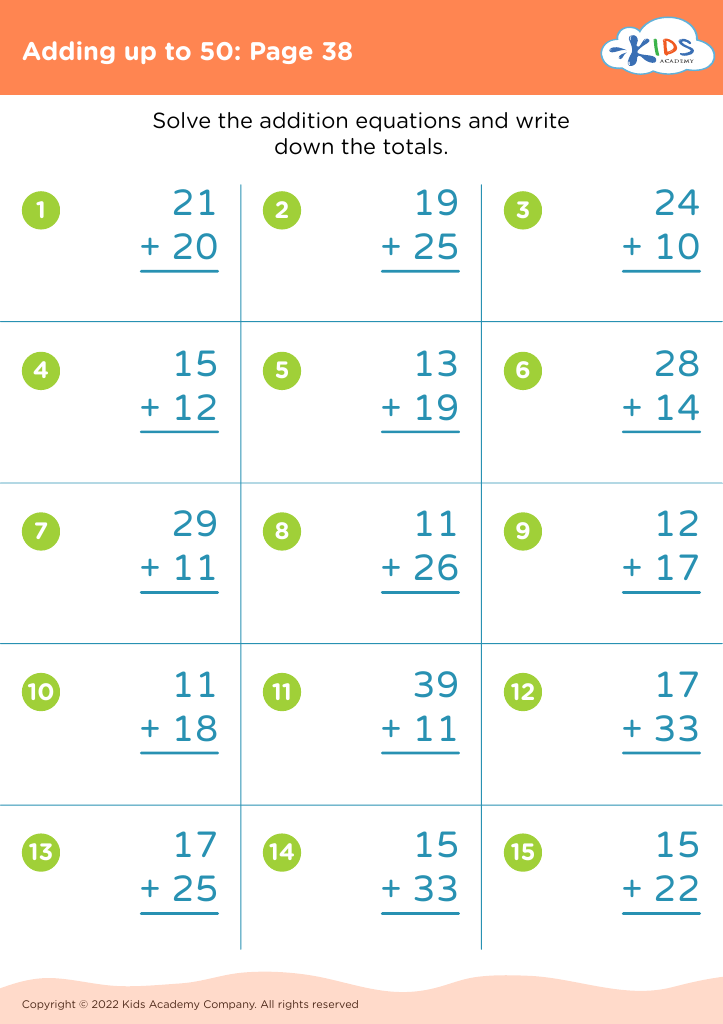
Adding up to 50: Page 38

Adding up to 50: Page 38

Adding up to 50: Page 38
Worksheet
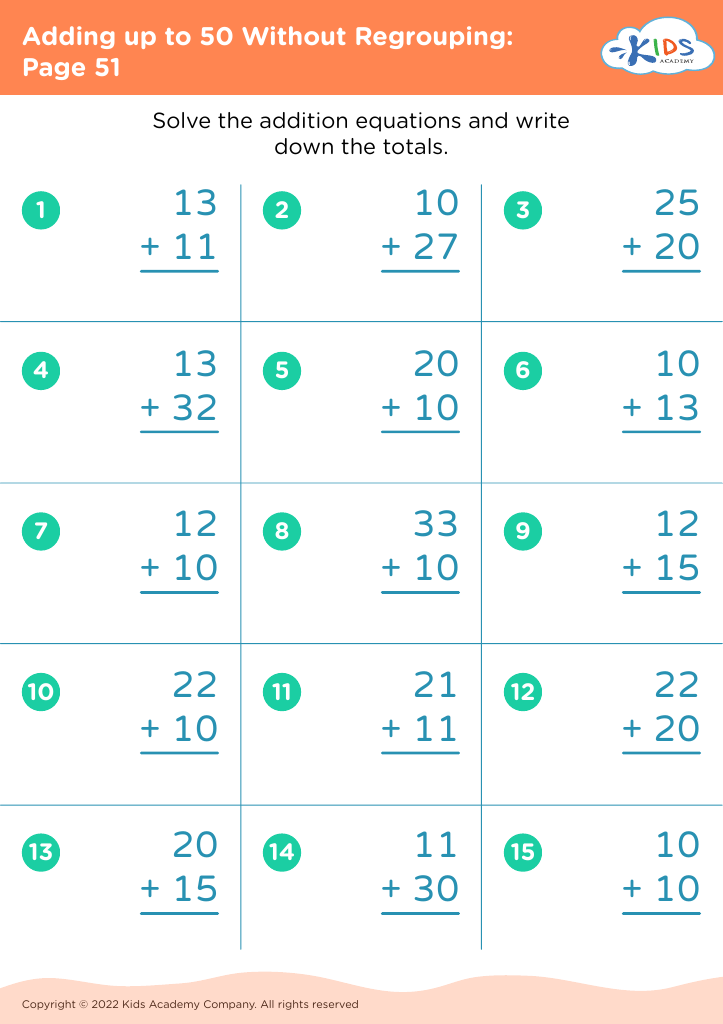
Adding up to 50 Without Regrouping: Page 51
Worksheet
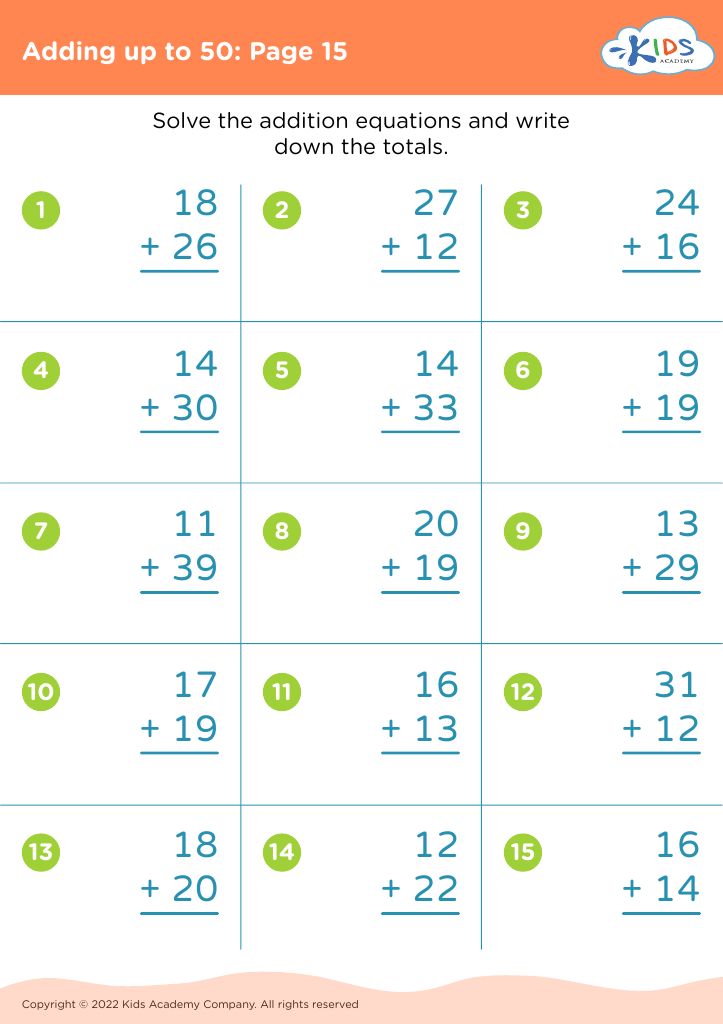
Adding up to 50: Page 15

Adding up to 50: Page 15

Adding up to 50: Page 15
Worksheet
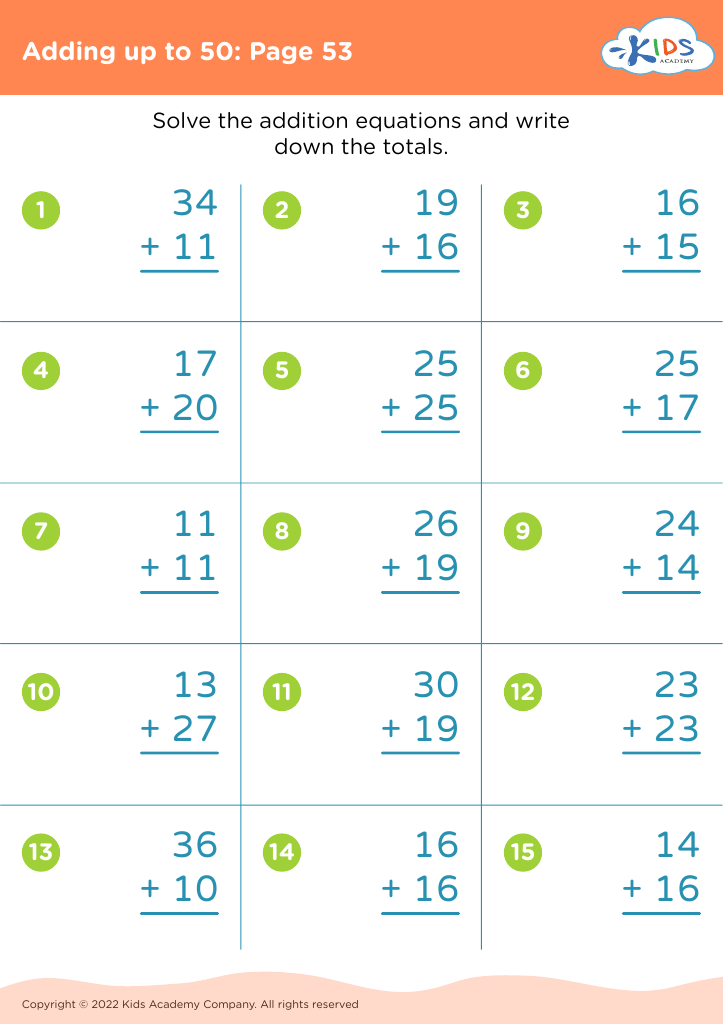
Adding up to 50: Page 53

Adding up to 50: Page 53

Adding up to 50: Page 53
Worksheet


Basic math skills, particularly the ability to add up to 50, are vital for children ages 7-8, laying a strong foundation for their mathematical understanding and everyday problem-solving. At this age, students are transitioning from simple arithmetic to more complex mathematical concepts. Mastering addition up to 50 enables them to grasp more advanced topics like subtraction, multiplication, and even basic fractions in subsequent years.

For parents and teachers, focusing on these skills is essential as they encourage cognitive development and enhance critical thinking. Children learn to recognize patterns, relationships among numbers, and the fundamentals of numerical operations. These skills also promote confidence in their abilities, which can lead to a positive attitude towards learning and education.

Moreover, proficiency in basic math aids in practical life applications, such as telling time, managing money, and measuring ingredients in cooking, fostering independence as children grow. Supporting children in achieving proficiency in basic addition strengthens their arithmetic instincts, prepares them for standardized assessments, and paves the way for their future success in subjects that rely heavily on math. Investing time and resources in enhancing these basic skills means investing in a child's academic journey and lifelong learning.