Color recognition Adding up to 50 Worksheets for Ages 7-8
3 filtered results
-
From - To
Discover our engaging Color Recognition Adding up to 50 Worksheets, designed specially for children aged 7-8. These educational printables blend mathematics and fun by incorporating vibrant colors and interactive exercises. Each worksheet allows kids to practice their addition skills up to 50 while learning to recognize and differentiate colors. Ideal for classroom or at-home learning, these activities promote cognitive development and enhance problem-solving abilities. Teachers and parents will appreciate the creative approach to reinforcing essential math skills. Make math enjoyable and rewarding with our Color Recognition Adding up to 50 Worksheets, brought to you by Kids Academy!
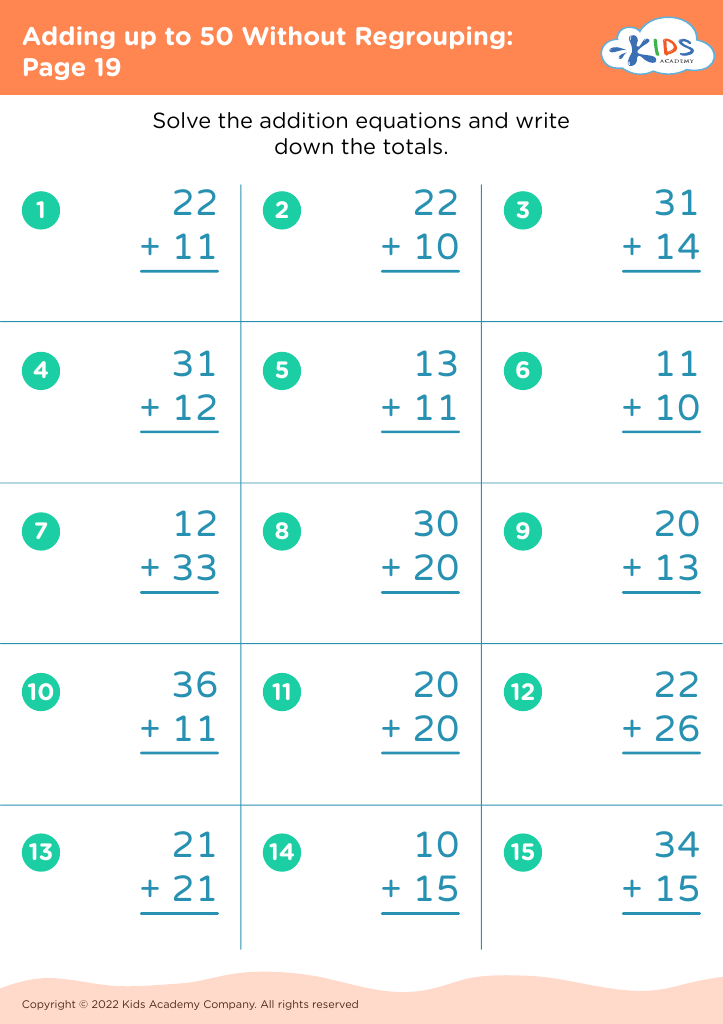
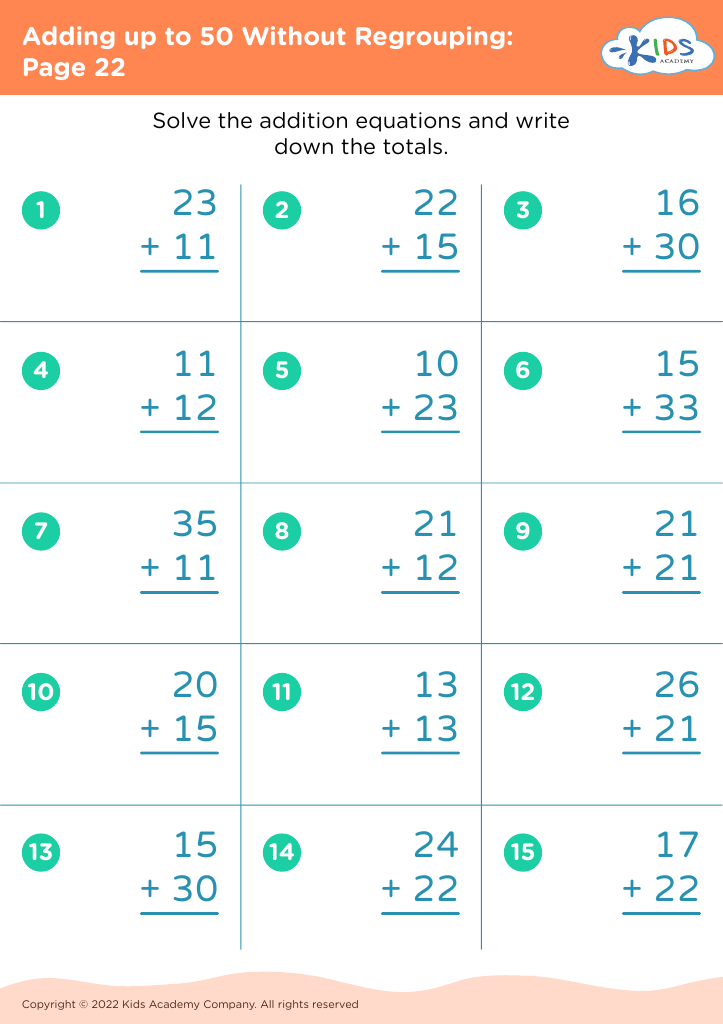
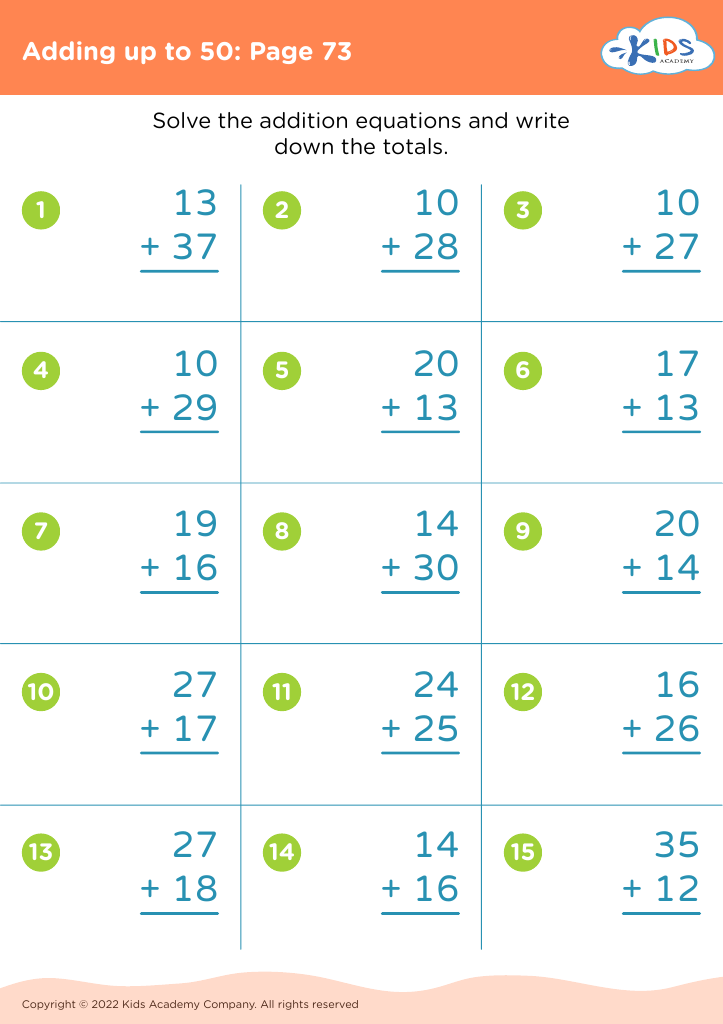




Color recognition and basic addition skills are foundational for children aged 7-8, facilitating their overall cognitive development. Parents and teachers should prioritize color recognition because it enhances children's perception, differentiation, and communication skills. Understanding colors promotes language development by expanding vocabulary and descriptive abilities, crucial for social interactions. For instance, when a child can identify and label different colors, they can articulate their surroundings and express creativity more effectively.
On the other hand, the ability to add numbers up to 50 is equally pivotal. At ages 7-8, children are transitioning to more complex mathematical concepts, and proficiency in simple addition lays a robust groundwork for future arithmetic learning. Mastering addition up to 50 aids in developing number sense, problem-solving abilities, and logical thinking. It's also practical for daily activities, such as making purchases and understanding measurements.
Combining these skills supports a holistic approach to learning, fostering both hemispheres of the brain. Parents and teachers who focus on these areas help bridge the connection between visual information and numerical understanding, paving the way for well-rounded intellectual growth and preparedness for more advanced academic challenges. Engaging methods like colorful counting exercises can make learning enjoyable and effective.








