Fraction Addition Adding up to 50 Worksheets for Ages 7-8
5 filtered results
-
From - To
Enhance your child's mathematical skills with our engaging "Fraction Addition Adding up to 50" worksheets designed specifically for ages 7-8. These interactive resources introduce children to the concept of adding fractions in a fun and approachable manner. With visual aids and step-by-step instructions, young learners will navigate the process of fraction addition, building a strong foundation in math. Ideal for home or classroom use, these worksheets offer practice scenarios that allow kids to explore different fractions and their sums, ultimately aiming for answers that total up to 50. Help your child gain confidence and mastery in fractions today!
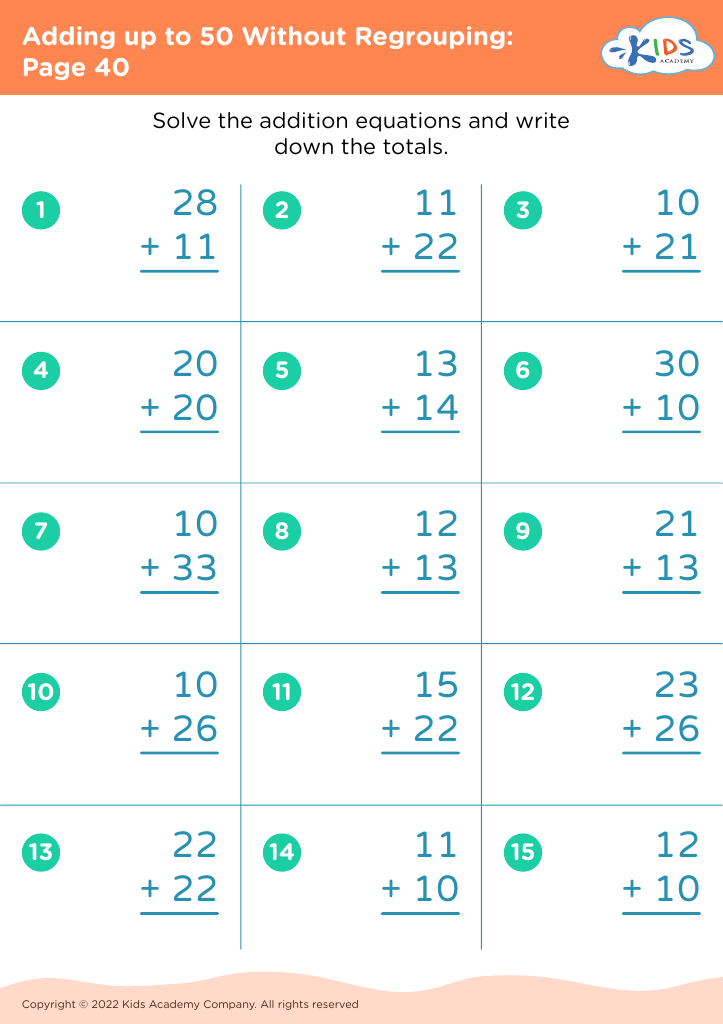
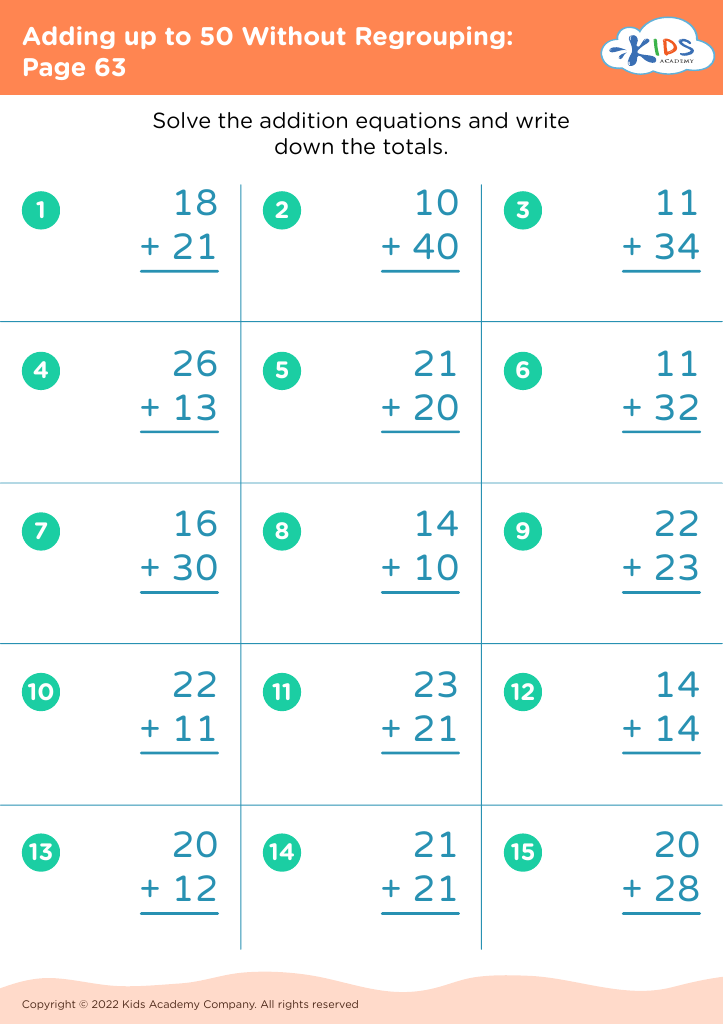
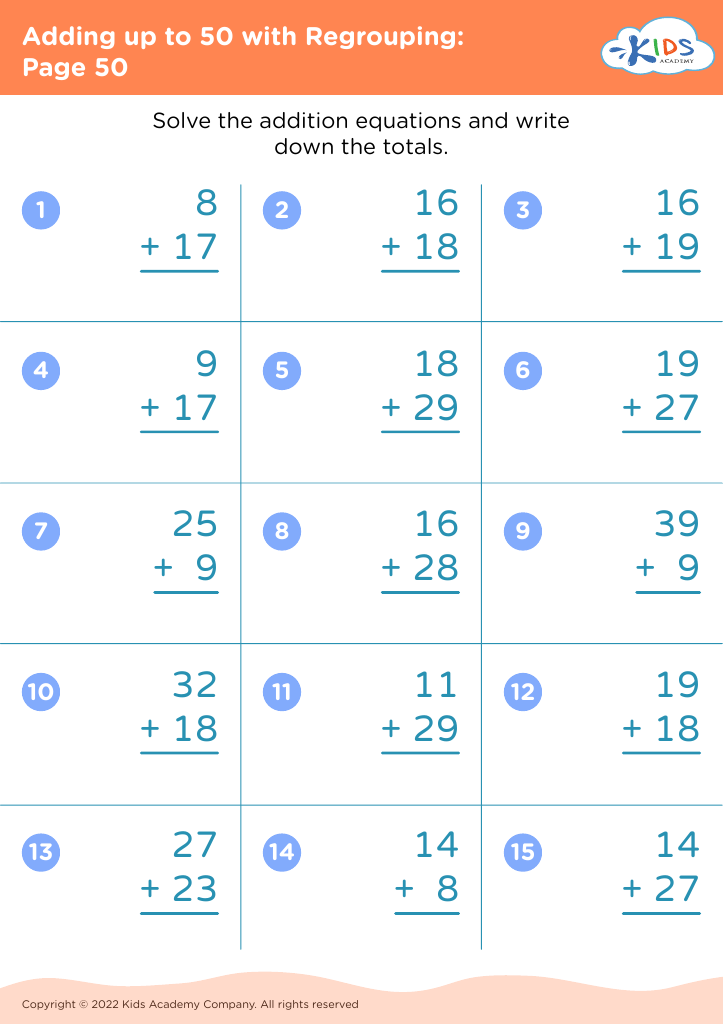
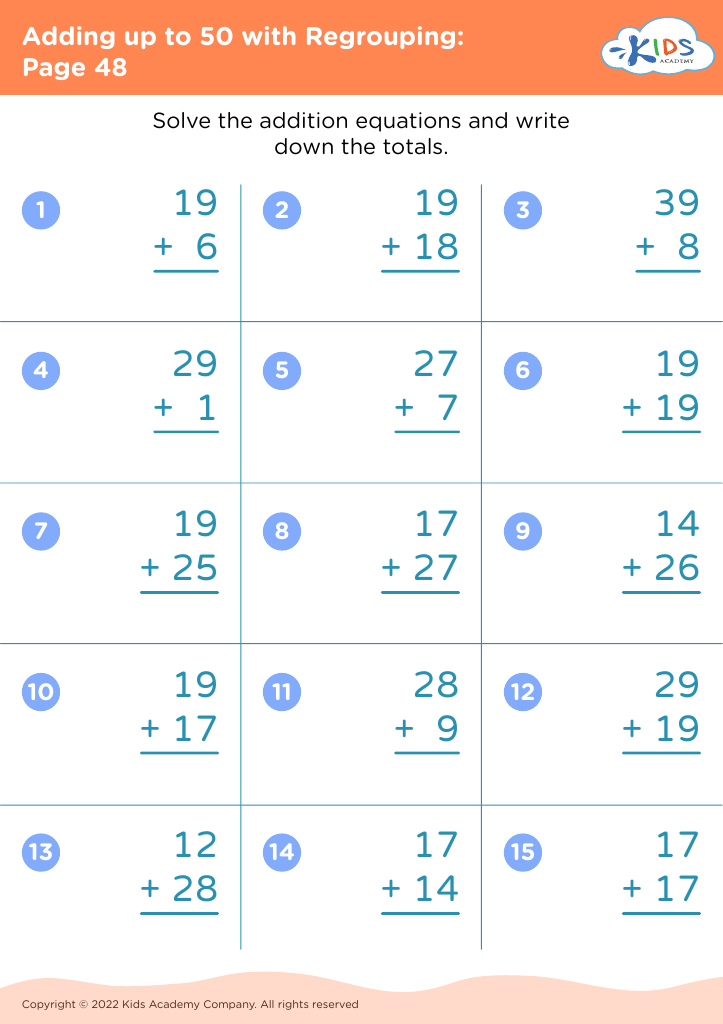
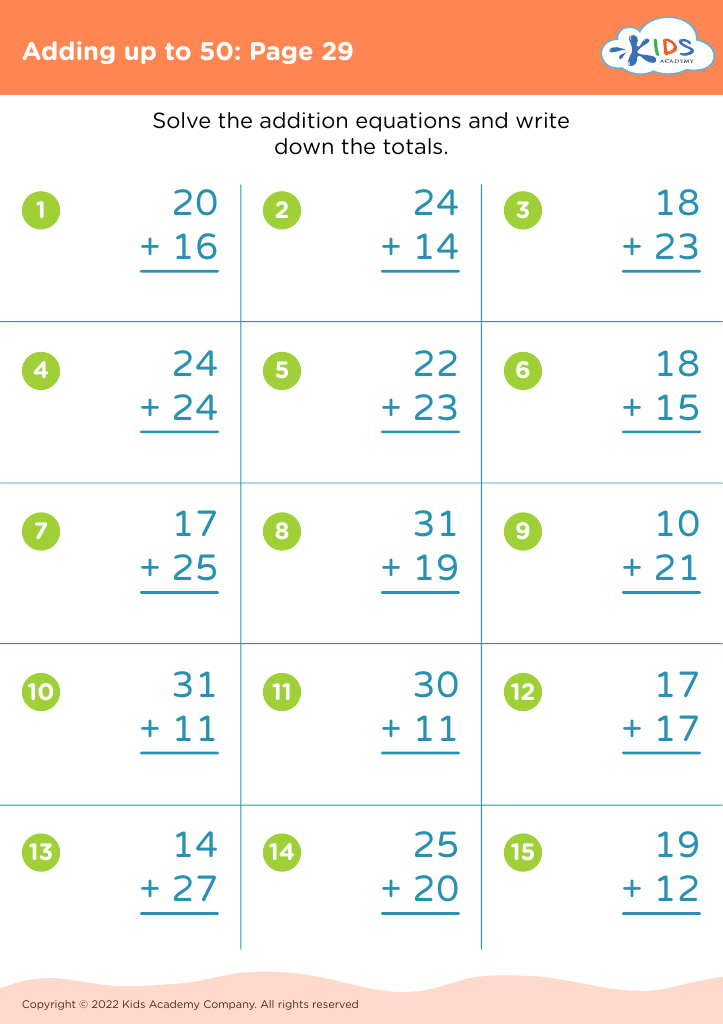




Understanding fraction addition, especially for numbers that add up to 50, is crucial for children aged 7-8 as it lays the foundation for future math skills. This stage in a child's education is vital, as their cognitive abilities are rapidly developing, and introducing more complex concepts like fractions prepares them for higher-level math.
When parents and teachers emphasize fraction addition, they help students gain a strong grasp of essential mathematical principles. For instance, learning to add fractions aids in understanding parts of a whole, which is integral in real-life scenarios—such as sharing food or dividing resources. Mastery of these skills enhances critical thinking and problem-solving abilities.
Moreover, engaging with fractions at this age cultivates confidence in math, reduces anxiety around the subject, and creates a positive attitude towards learning. This is especially important, as the apprehension towards math can begin during these formative years. Parents and teachers can reinforce this concept through everyday activities and interactive games, making learning both enjoyable and applicable. This can spark a love for mathematics that persists throughout the students’ educational journey. Thus, understanding fraction addition is not just about numbers; it's about empowering children to excel in math and beyond.








