Fraction comparison Adding up to 50 Worksheets for Ages 7-8
7 filtered results
-
From - To
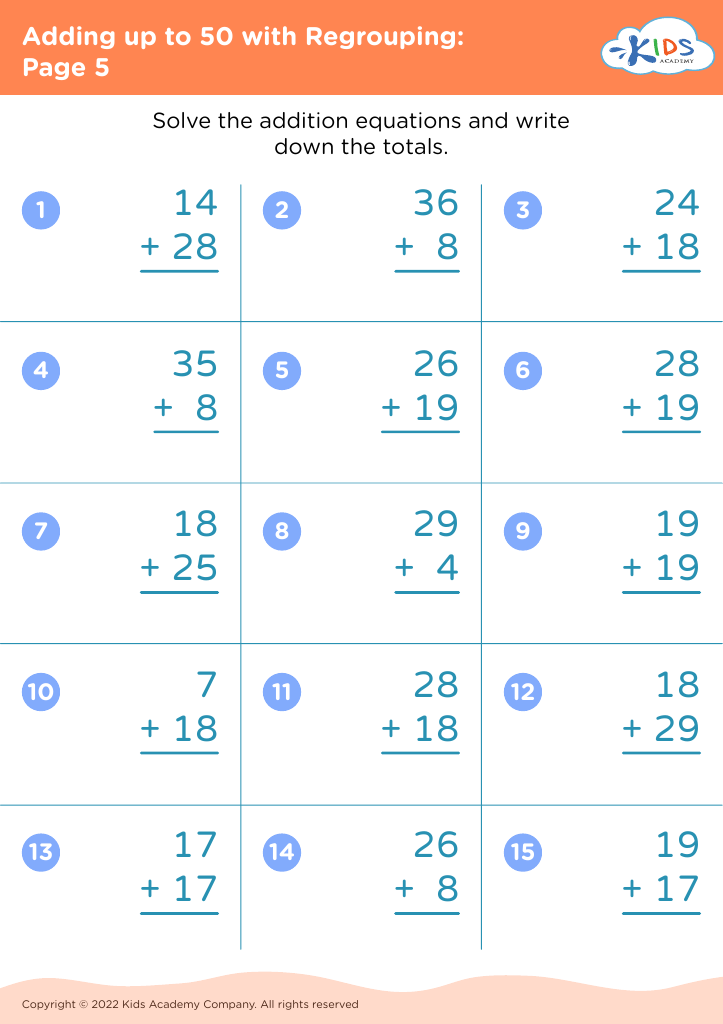
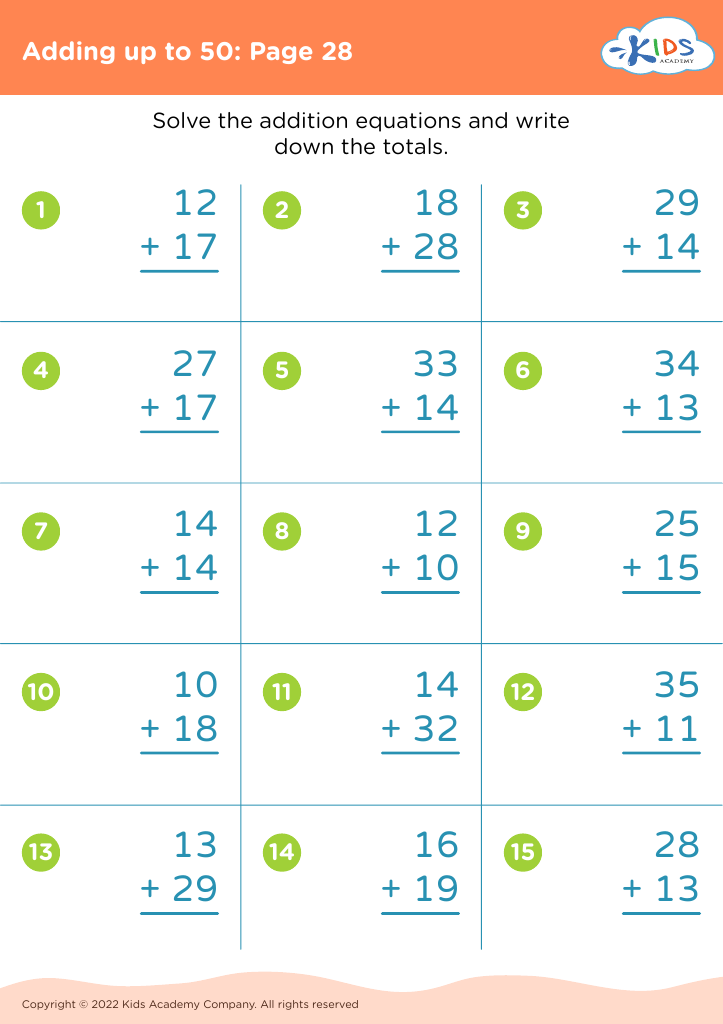
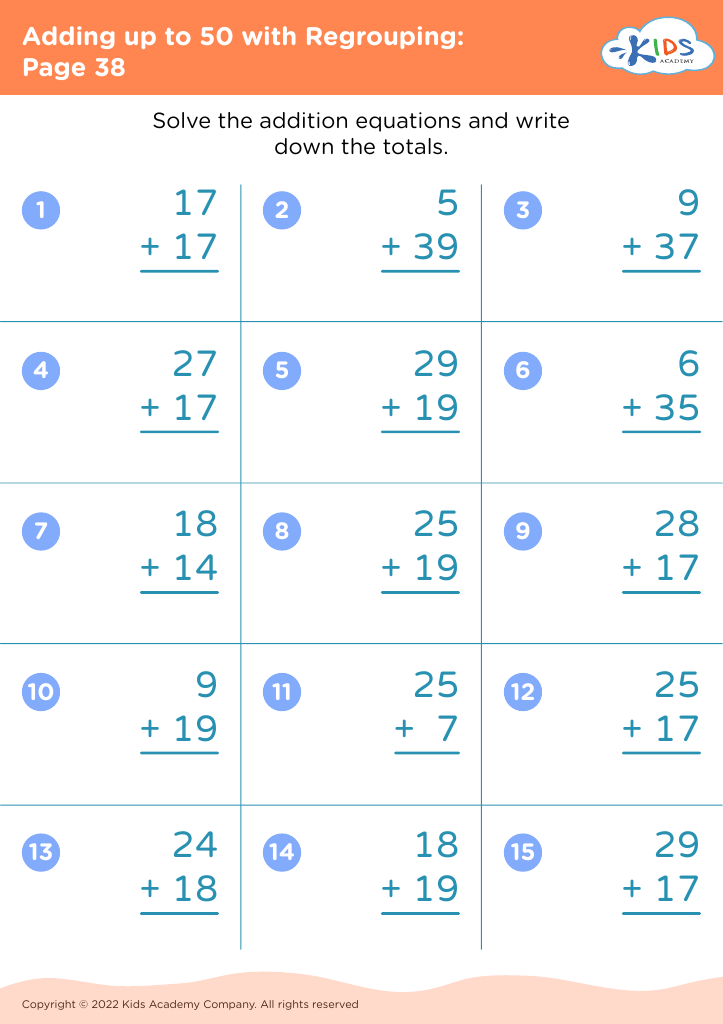
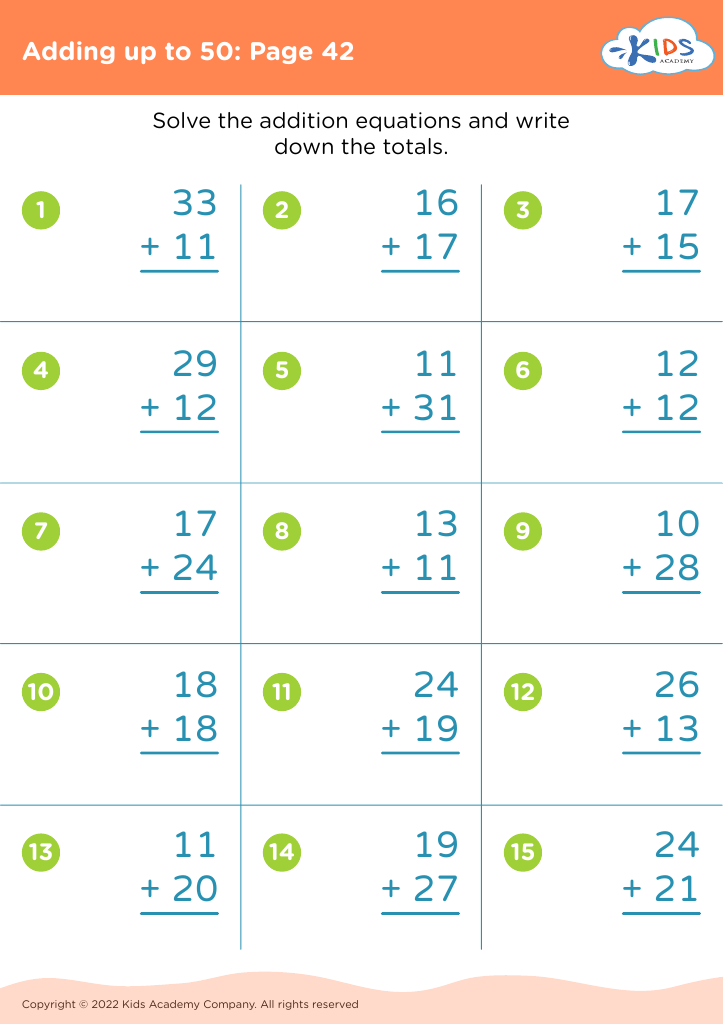
Welcome to our engaging "Fraction Comparison: Adding Up to 50" worksheets designed for children aged 7-8! These worksheets are an excellent resource to help young learners master the concept of fraction comparison while practicing addition skills up to 50. Packed with fun activities, colorful illustrations, and clear instructions, these worksheets make math enjoyable and accessible. Your child will enhance their critical thinking and problem-solving abilities by comparing fractions, understanding larger vs. smaller values, and adding components seamlessly. Perfect for classroom use or at home, our worksheets promote a solid foundation in math. Get started today and watch your child's confidence soar!
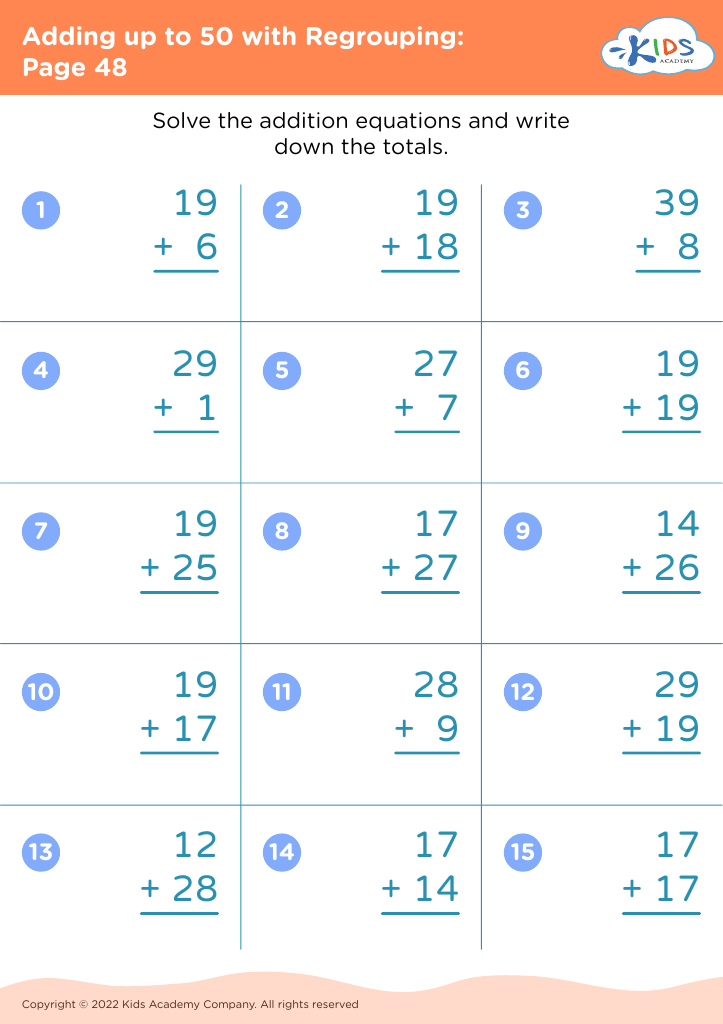
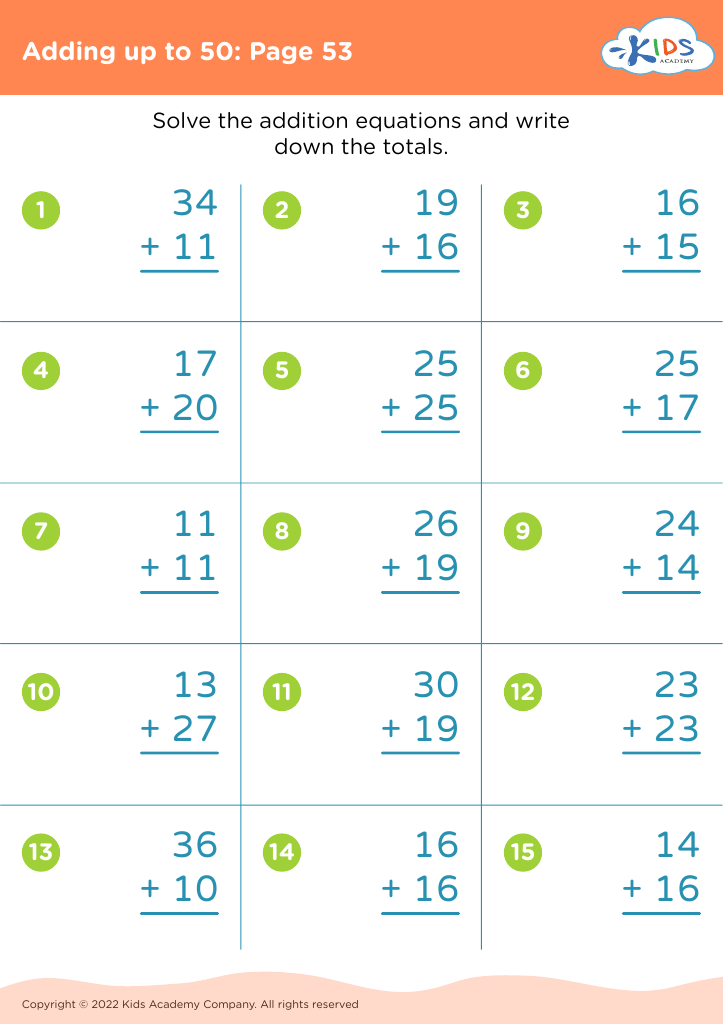
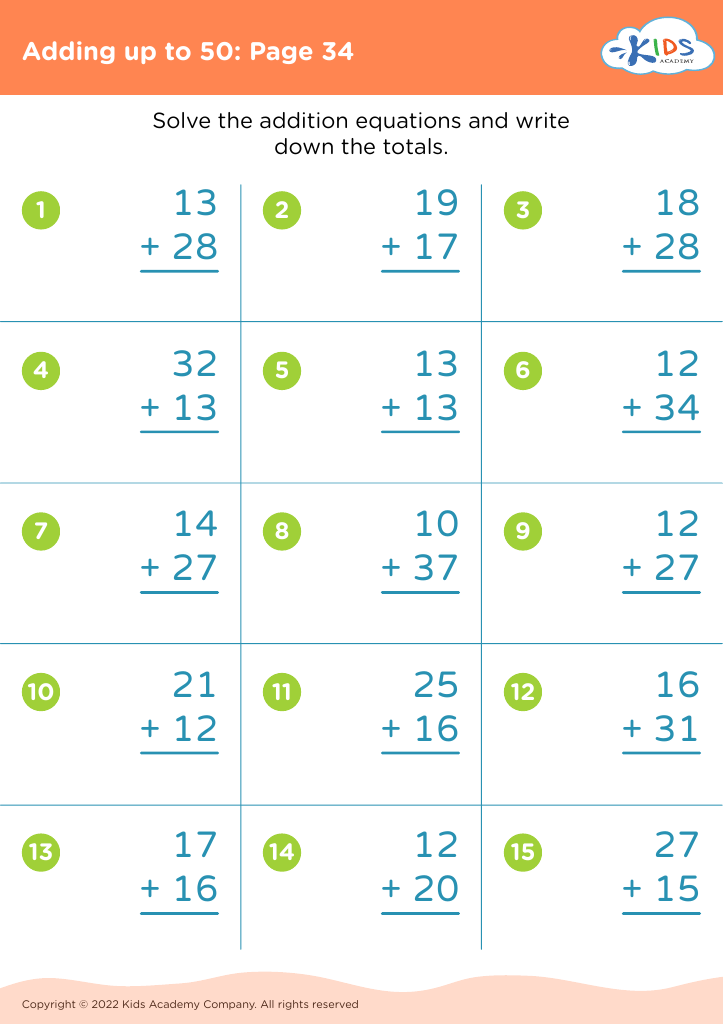




Understanding fraction comparison is crucial for children ages 7-8, as it lays the groundwork for more complex mathematical concepts later in their education. At this age, students begin to explore number relationships, and grasping fractions is a key part of this process. By learning to compare fractions, kids develop critical analytical skills that improve their problem-solving abilities.
Additionally, comparing fractions helps students make real-world connections, such as in cooking or sharing. This relevance reinforces their understanding and keeps them engaged. When parents and teachers emphasize fraction comparison, they encourage students to articulate their reasoning, facilitating better communication skills in math and beyond.
Furthermore, as students progress in mathematics, they will encounter topics such as proportions and ratios, which heavily rely on fraction comparison knowledge. Mastery at this stage ensures a smoother transition to these concepts, ultimately leading to greater academic success. By caring about this foundational skill, parents and teachers foster a more profound appreciation for mathematics in children, empowering them with the confidence to tackle more complex problems. Incorporating engaging activities that promote understanding of fractions will not only make learning enjoyable but also lay a solid groundwork for future educational pursuits.








