Fraction identification Adding up to 50 Worksheets for Ages 7-8
3 filtered results
-
From - To
Explore our engaging "Fraction Identification Adding Up to 50 Worksheets" designed specifically for children aged 7-8! These carefully crafted worksheets help young learners grasp the concept of fractions while practicing their addition skills. Each activity encourages kids to identify and work with fractions, reinforcing their understanding and boosting their confidence in math. With vibrant illustrations and age-appropriate challenges, these worksheets make learning fun and effective. Perfect for classroom settings or at-home practice, our resources ensure children can confidently add fractions and understand their relationships. Start your child's journey to math mastery today with these exciting educational tools!
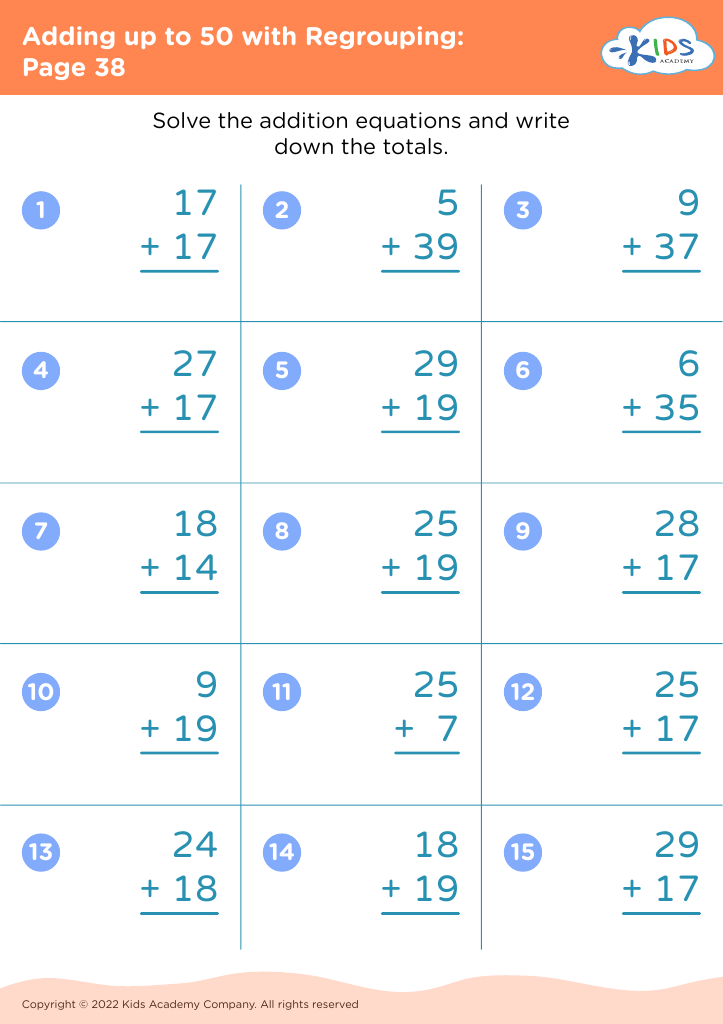
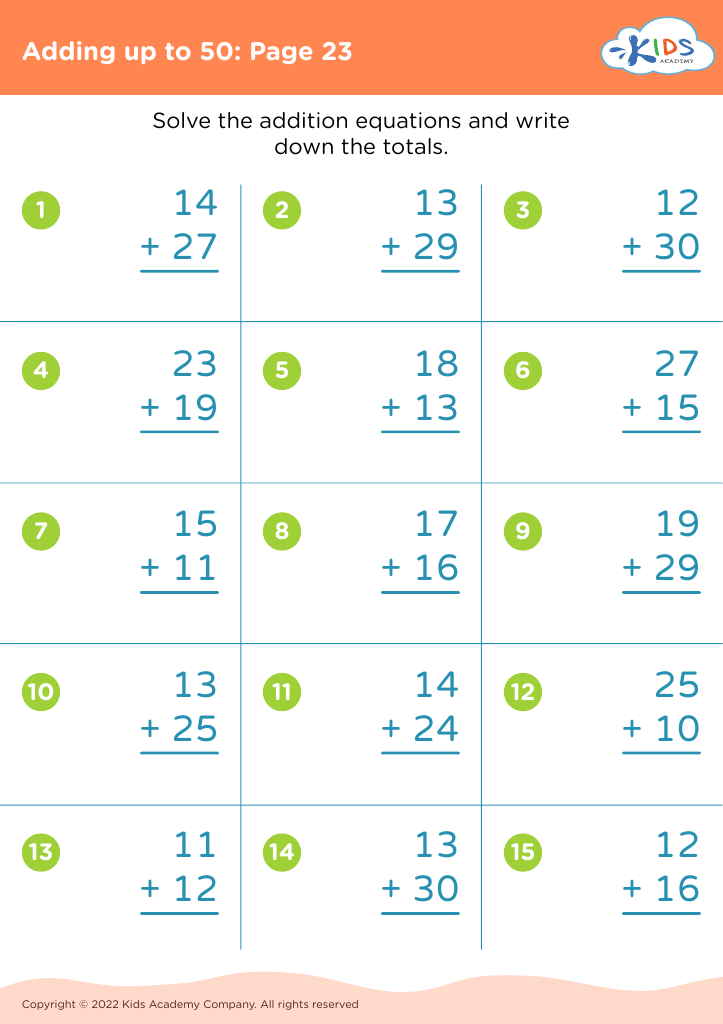
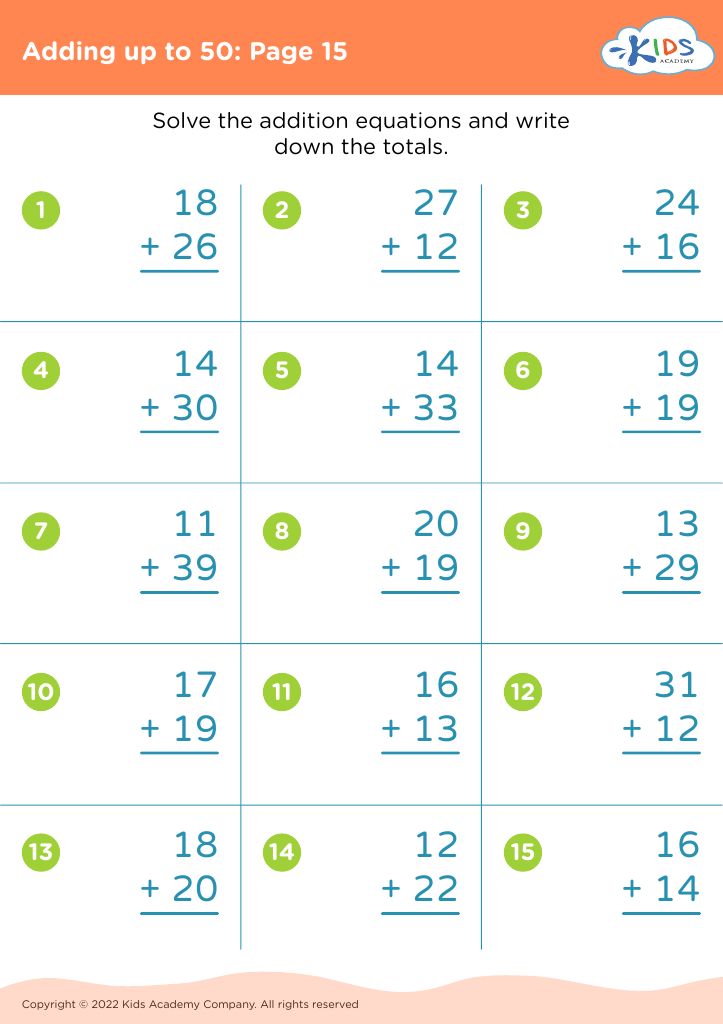




Understanding fraction identification and addition is crucial for children aged 7-8, as it lays the foundation for their mathematical development. At this age, children are transitioning from basic arithmetic to more complex mathematical concepts, and grasping fractions is essential in this process.
Firstly, fractions introduce the idea of part-to-whole relationships, enhancing children's ability to comprehend proportions and comparisons. For example, recognizing that 1/2 is equivalent to 2/4 reinforces problem-solving skills and critical thinking. Additionally, adding fractions, especially those that sum up to 50, allows children to practice two key math operations simultaneously—addition and fraction recognition—boosting their overall numerical literacy.
Parents and teachers should care about this topic because it prepares students for future math challenges, increases their confidence in handling numbers, and improves their performance in standardized assessments. Moreover, fostering a deep understanding of fractions enhances everyday skills, such as cooking, measuring, and budgeting, making math more relatable and enjoyable.
Encouraging exploration of fractions through games, visual aids, and practical activities will nurture a positive attitude towards mathematics, empowering children to tackle more advanced concepts as they progress in their education.








