Improve number recognition Adding up to 50 Worksheets for Ages 7-8
5 filtered results
-
From - To
Enhance your child's math skills with our “Improve Number Recognition: Adding up to 50” worksheets, perfect for ages 7-8. These engaging resources focus on fostering strong number recognition and fluency in addition up to 50 through practical exercises and fun activities. Each worksheet offers a variety of problems that challenge young learners while providing ample practice to build their confidence in handling numbers. By integrating interactive methods and step-by-step guidance, our worksheets make learning enjoyable and effective. Equip your child with the tools they need to excel in math by exploring our expertly designed, age-appropriate printables today!
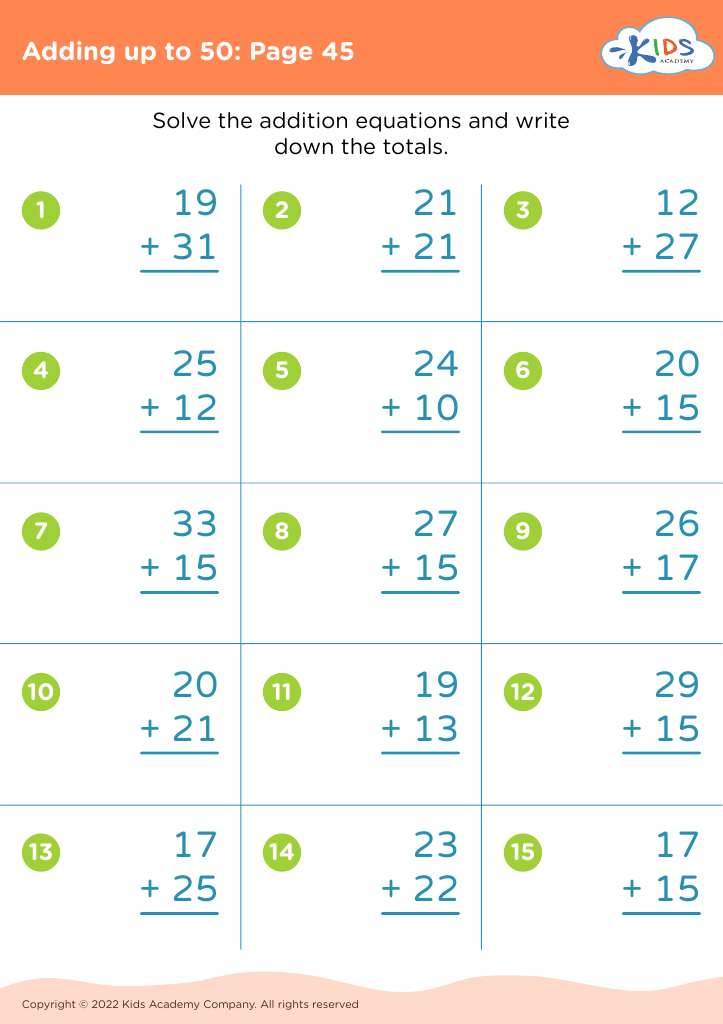
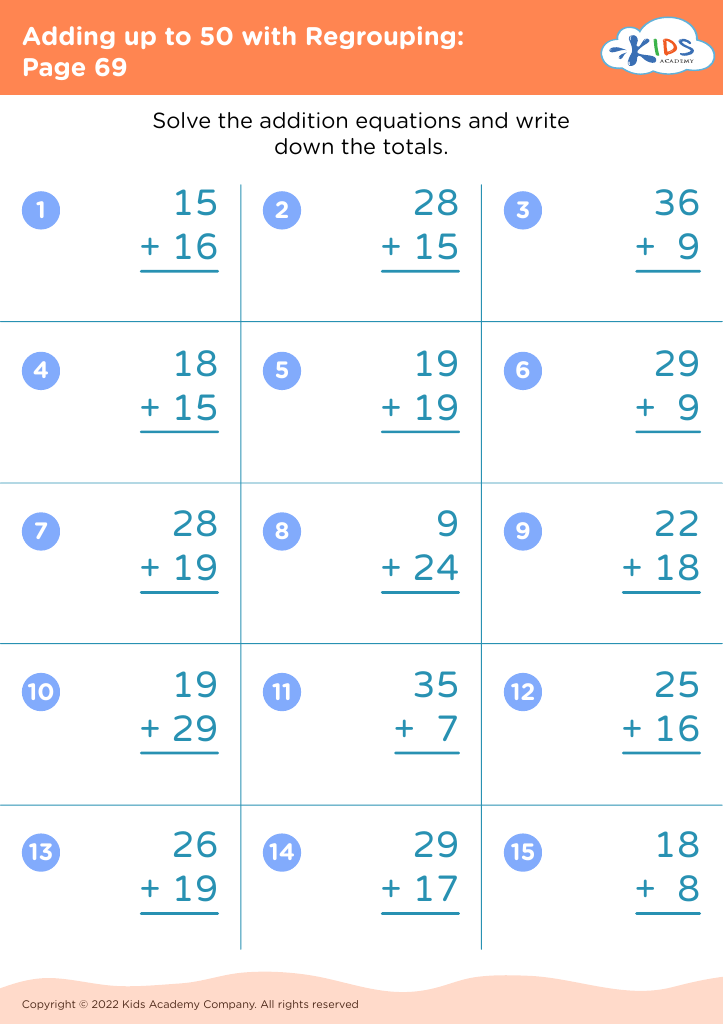
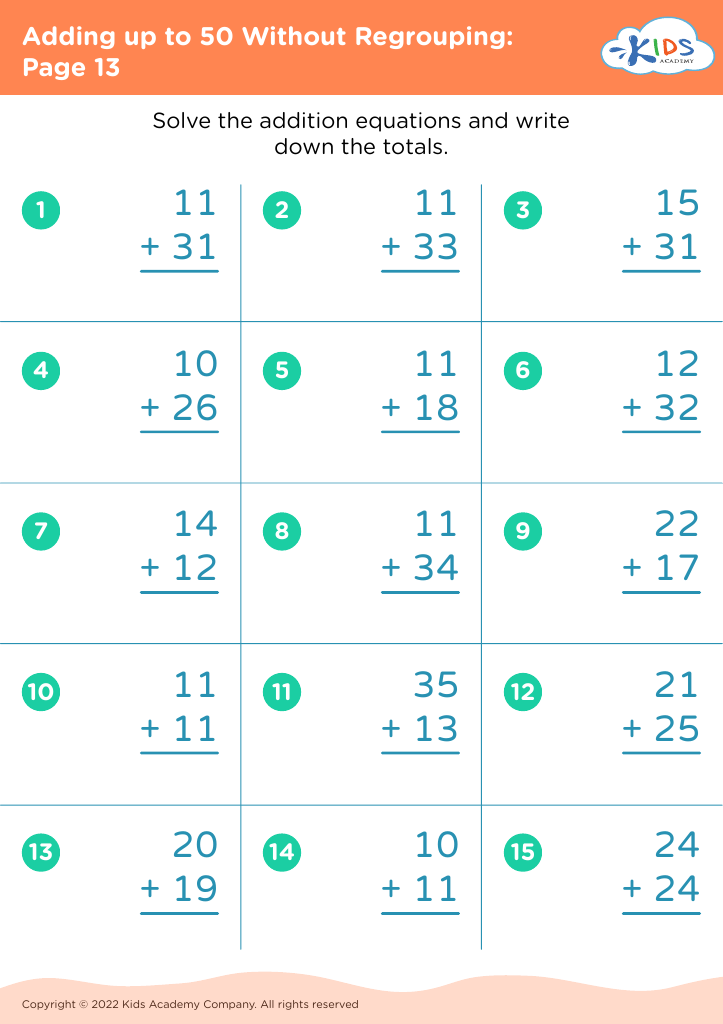
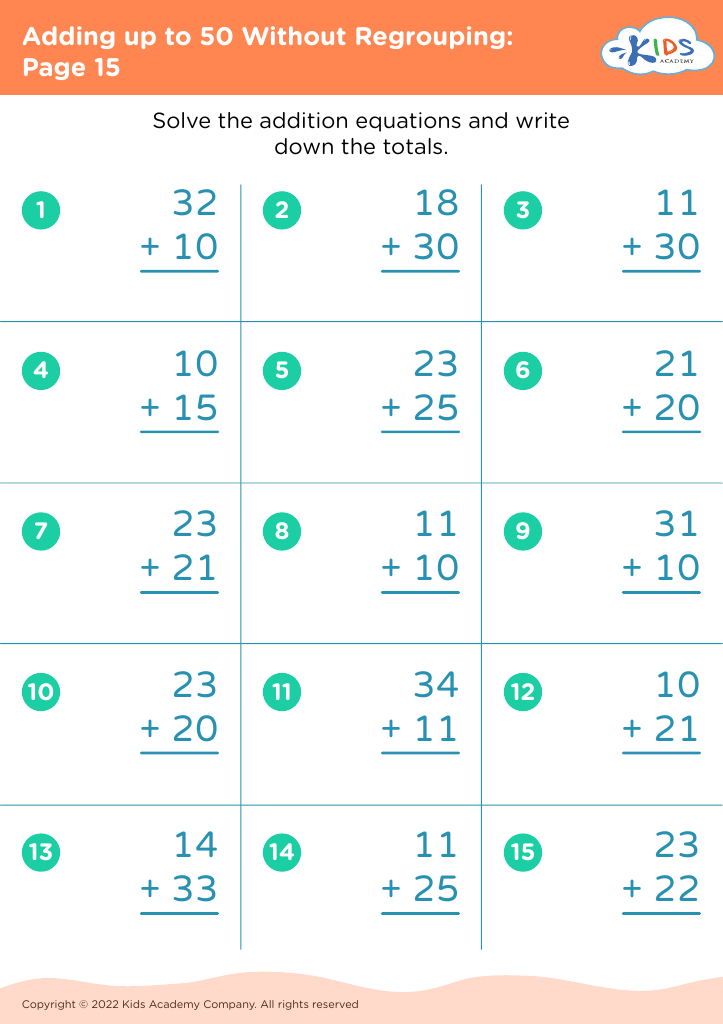
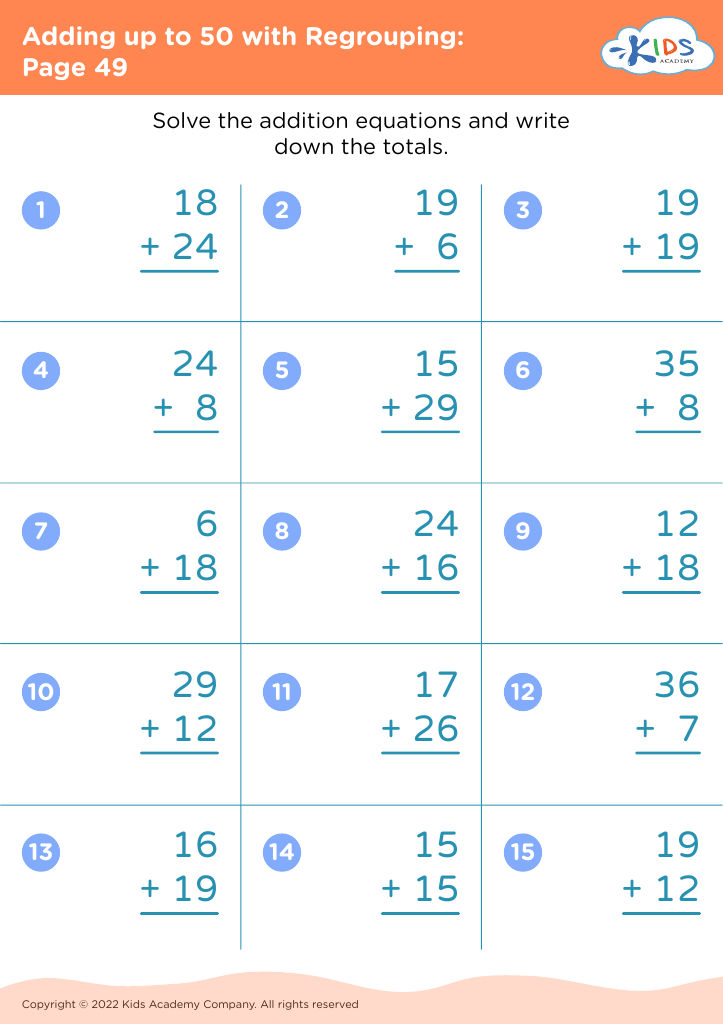




Improving number recognition and the ability to add numbers up to 50 for ages 7-8 is vital for a few significant reasons. At this developmental stage, children are laying the foundation for future mathematical learning, which is essential for academic success and daily life skills. Fostering these skills early promotes strong numerical literacy, making it easier for children to grasp more complex mathematical concepts as they progress in their education.
Number recognition and basic addition form the core of many real-world applications, such as handling money, telling time, and measuring quantities. This foundational skill helps children build confidence and reduce anxiety related to math, fostering a positive attitude towards the subject. Additionally, engaging in numerical activities enhances critical thinking, problem-solving, and cognitive development.
Supporting children in achieving these milestones helps in creating a structured learning environment, reinforcing the importance of persistence and practice. Teachers and parents play a critical role in providing appropriate resources, encouragement, and reinforcement to help children succeed. By focusing on number recognition and basic addition, parents and educators not only equip children with essential skills for academics but also for their everyday interactions with the world around them, setting the stage for lifelong learning and adaptability.








