Mathematical reasoning Adding up to 50 Worksheets for Ages 7-8
4 filtered results
-
From - To
Enhance your child's math skills with our "Mathematical Reasoning Adding up to 50 Worksheets" designed for ages 7-8. These engaging and educational printable worksheets from Kids Academy provide young learners with focused practice to master addition within 50. The activities are carefully crafted to promote mathematical reasoning and boost problem-solving abilities, making math fun and exciting. Through interactive exercises and a variety of problem scenarios, children will build confidence in their addition abilities, helping them succeed in more complex math concepts. Download these worksheets today to give your child a strong foundation in math!
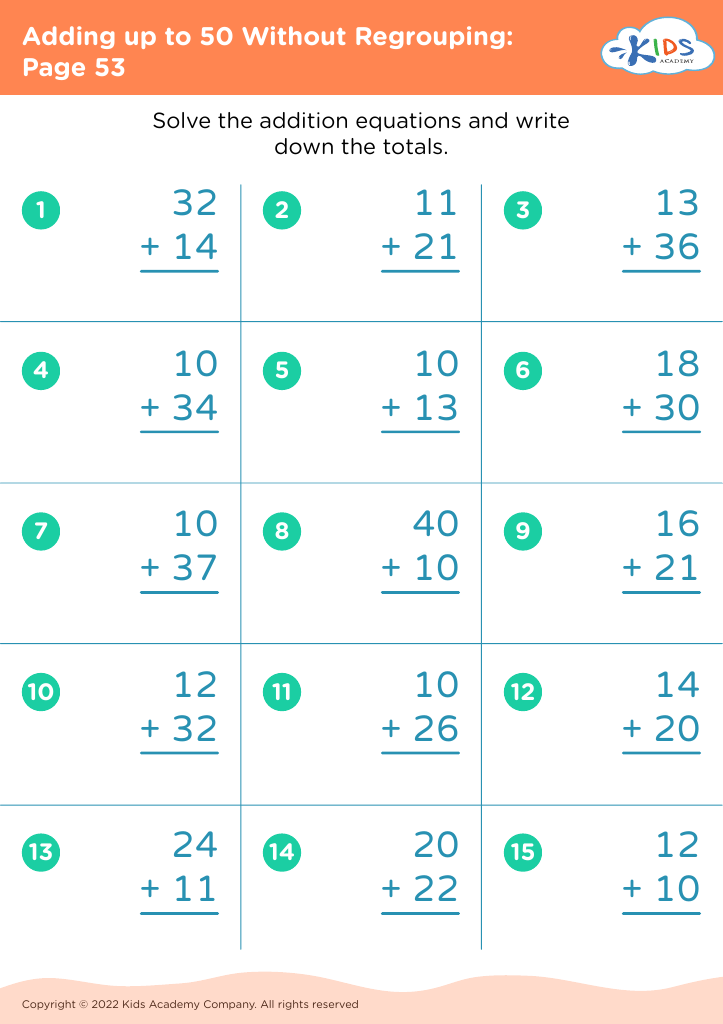
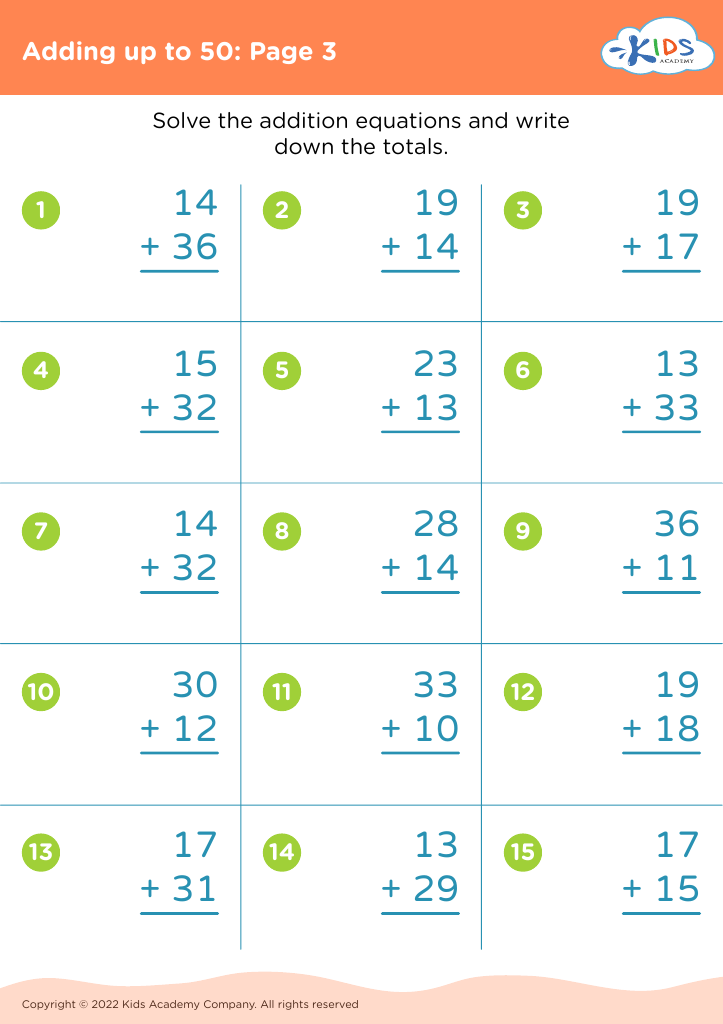
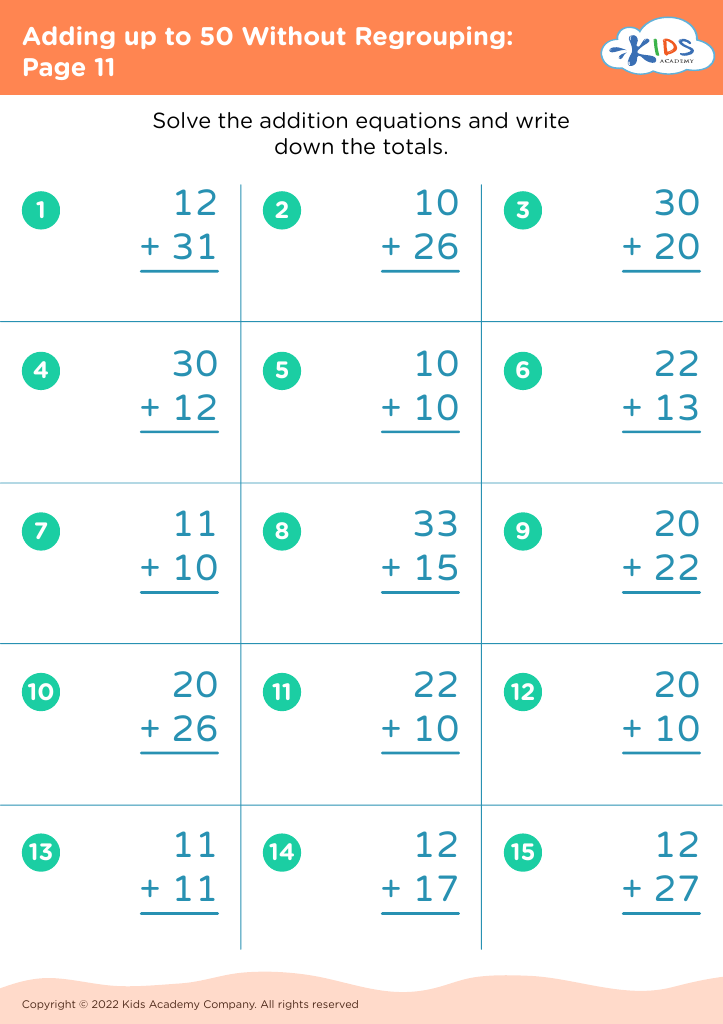
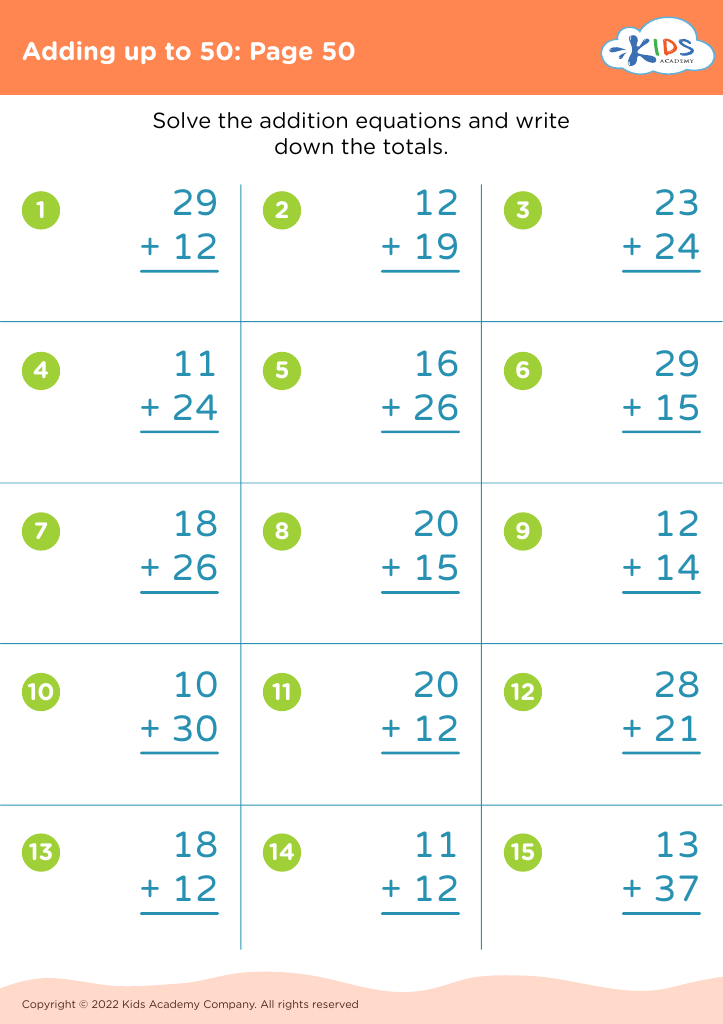




Mathematical reasoning is a critical skill for young learners, and understanding how to add up to 50 is foundational for children aged 7-8. This skill not only reinforces basic arithmetic but also helps in developing logical thinking, problem-solving abilities, and cognitive development.
Children at this age are in a crucial stage of brain development. By mastering addition up to 50, they gain confidence in handling numbers, which sets a solid ground for more advanced mathematical concepts in later grades. It goes beyond just memorizing facts; it involves recognizing patterns, making predictions, and understanding number relationships.
Moreover, reasoning skills in math translate to other subject areas and everyday life situations. For instance, when students solve math problems, they learn how to break down complex tasks into manageable steps, a vital skill for subjects like science and social studies. In practical scenarios, they can better manage tasks such as counting money, telling time, or measuring ingredients in a recipe.
Teachers and parents play a key role in nurturing this development by providing engaging and supportive learning environments. Interactive activities like games, puzzles, and real-life scenarios make learning math fun and meaningful. Investing time and resources in teaching mathematical reasoning not only boosts academic performance but also overall intellectual growth and life skills.








