Problem Solving Adding up to 50 Worksheets for Ages 7-8
3 filtered results
-
From - To
Unlock your child’s potential with our "Problem Solving Adding up to 50" worksheets, specifically designed for ages 7-8. These engaging worksheets help young learners practice essential math skills while developing critical thinking abilities. Each worksheet presents a variety of real-life scenarios that challenge students to apply addition strategies to solve problems, enhancing both comprehension and problem-solving techniques. Perfect for reinforcing classroom lessons or for extra practice at home, these resources support the development of a solid mathematical foundation. Let your child explore the wonders of mathematics and boost their confidence with fun and interactive learning experiences!
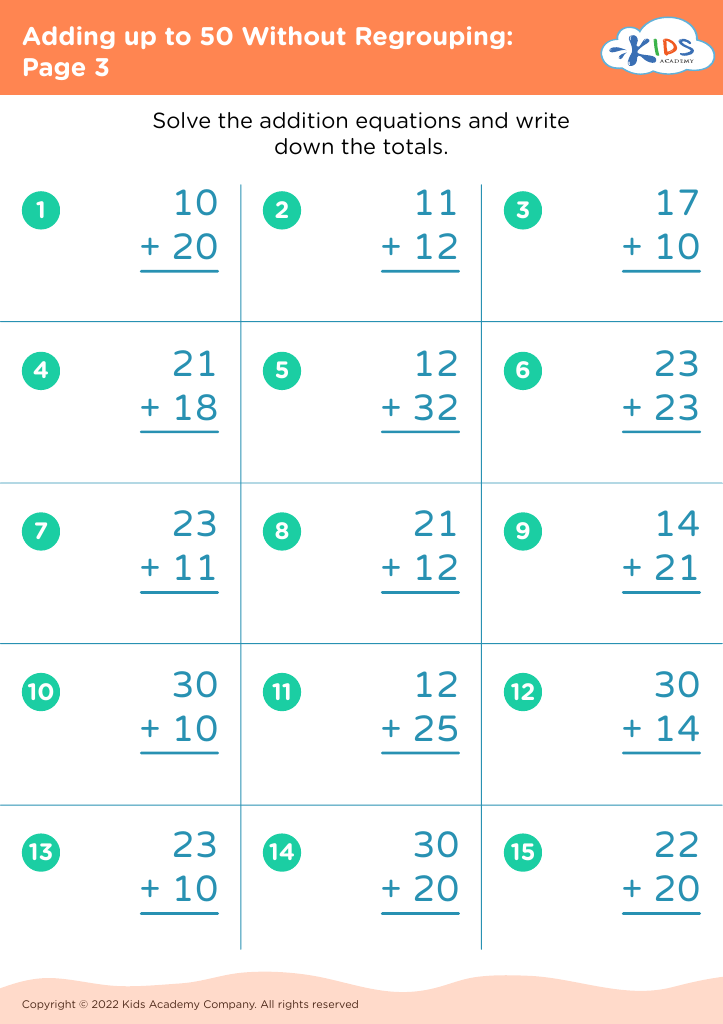
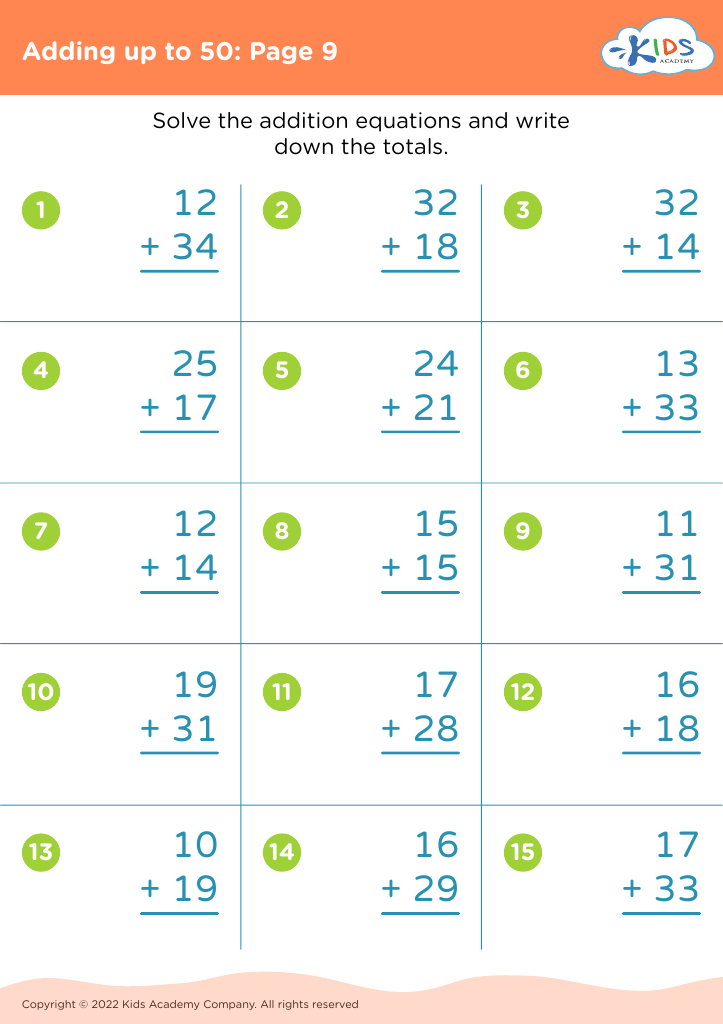
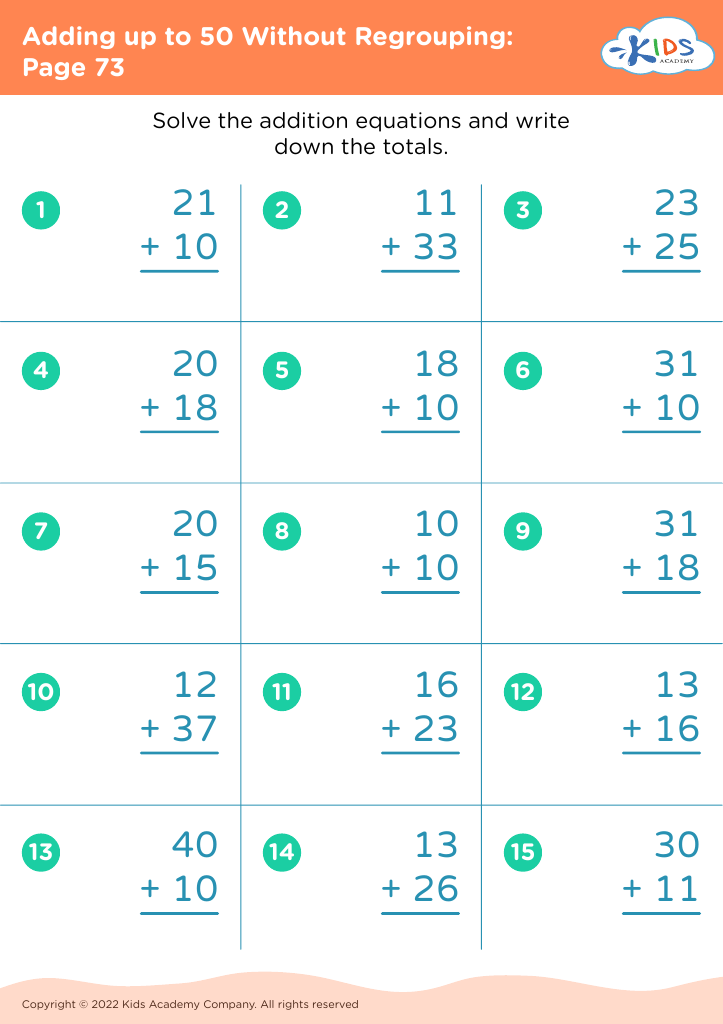




Problem solving, especially with mathematical concepts like Adding up to 50, is vital for children ages 7-8. This foundational skill sets the stage for more complex math concepts they'll encounter later in their education. Understanding addition helps young learners develop logical thinking and reasoning abilities, laying the groundwork for critical problem-solving skills essential in daily life.
In this age group, children are active explorers, and engaging them in challenges that involve adding up to 50 fosters a sense of curiosity and encourages perseverance. It challenges them to think creatively, find various combinations that lead to a total, and enhances their number sense.
Moreover, this practice aligns with curriculum standards and promotes confidence in handling numbers. When parents and teachers focus on these activities, they provide support and motivation, showing children the real-life applications of math skills. Cooperative problem-solving also teaches important social skills such as communication and teamwork.
Ultimately, emphasizing problem-solving in mathematics leads to a more integrated and enjoyable learning experience. It encourages students to view challenges positively, building resilience that will serve them throughout their educational journey and beyond. Parents and teachers play a critical role in fostering these skills at a young age.








