Problem-solving abilities Adding up to 50 Worksheets for Ages 7-8
4 filtered results
-
From - To
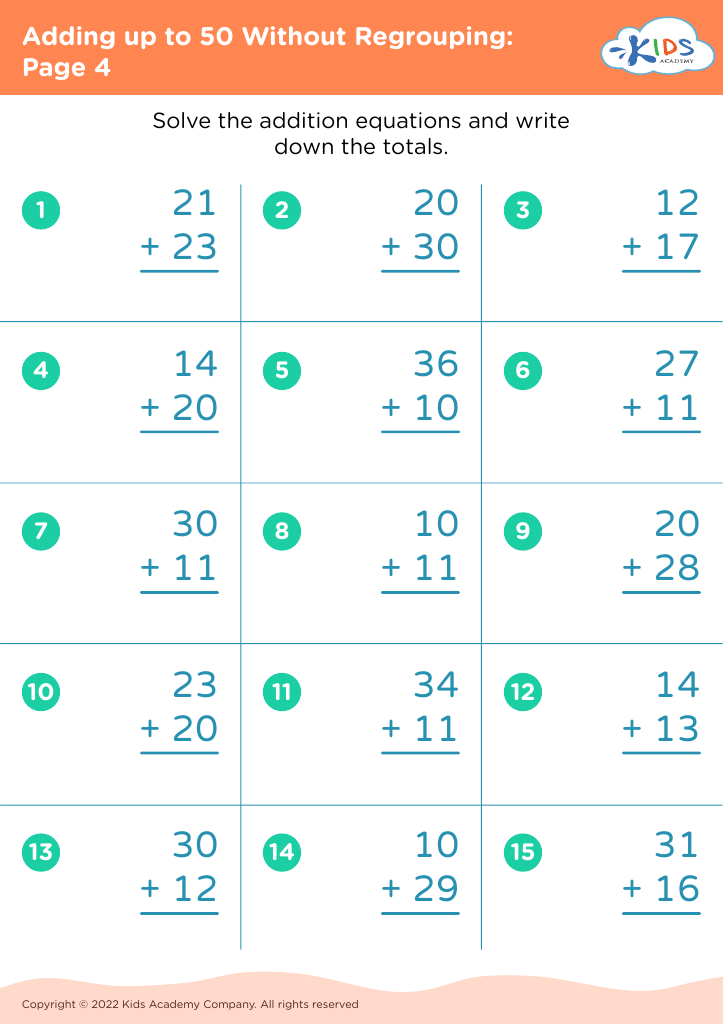
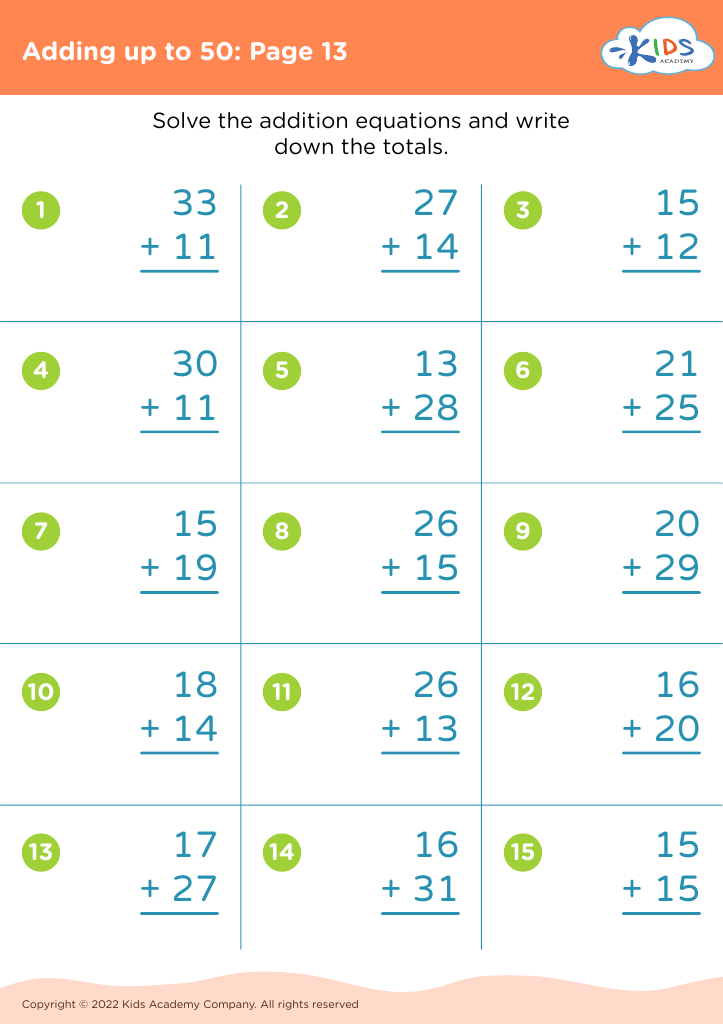
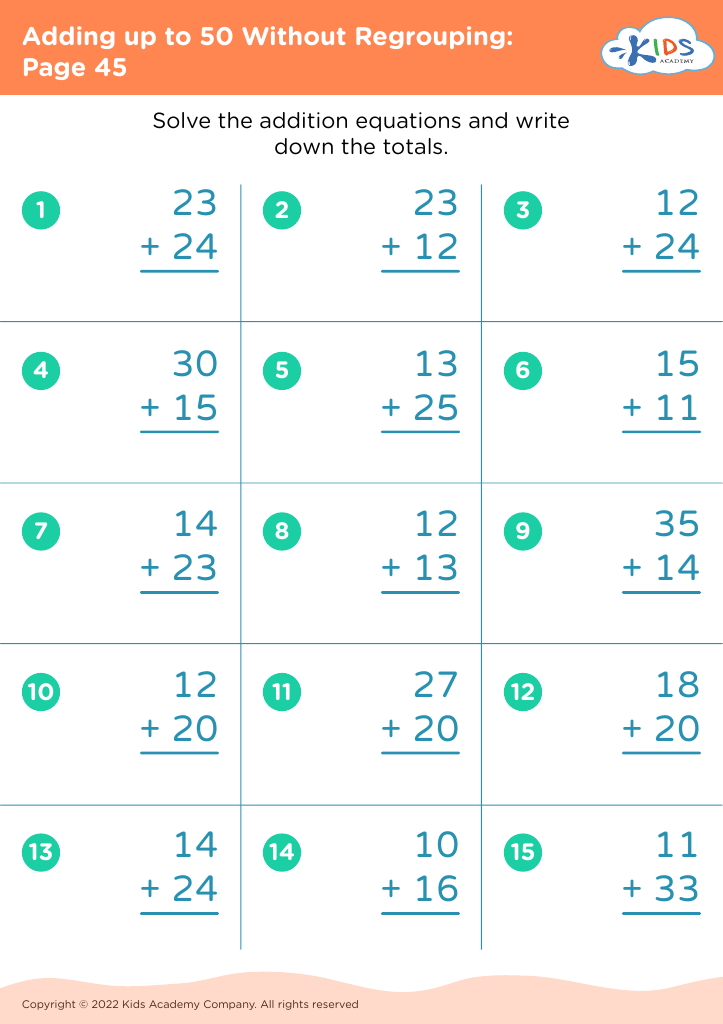
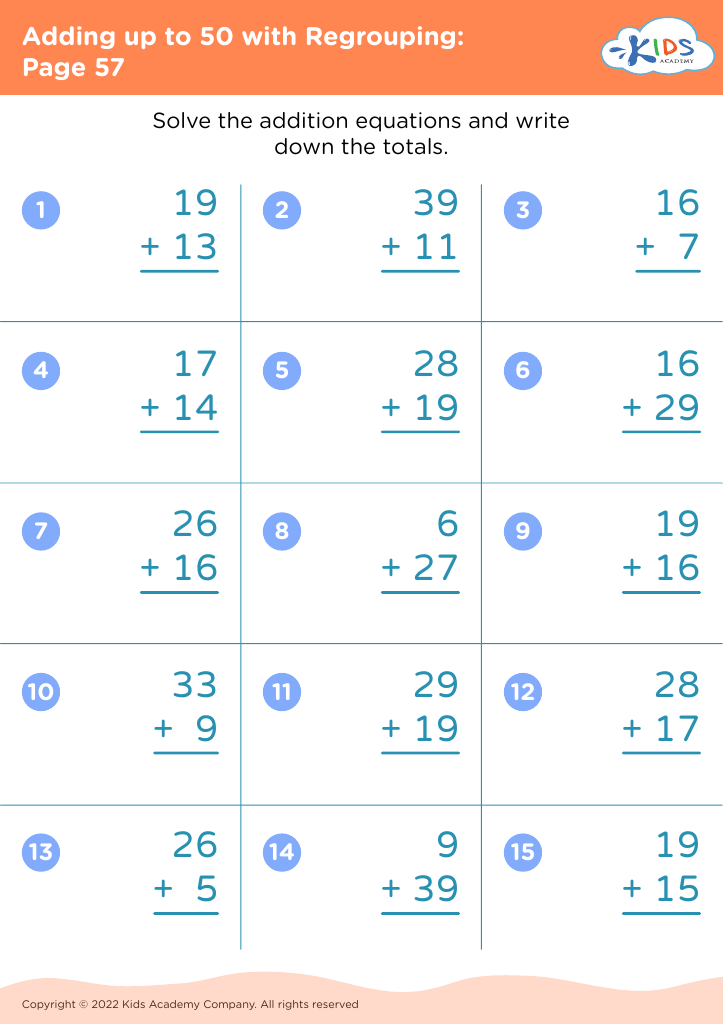
Explore our "Problem-Solving Abilities: Adding Up to 50 Worksheets" designed for children ages 7-8! These engaging worksheets focus on enhancing students' mathematical reasoning and critical thinking skills through fun problem-solving challenges. Each worksheet features a variety of addition problems that aim to strengthen students' understanding of sums up to 50, all while fostering a love for math. Our carefully crafted activities are perfect for the classroom or at-home practice, encouraging kids to think analytically and develop their problem-solving abilities. Help your child master addition in a playful and effective way with our enticing collection of worksheets!




Parents and teachers should prioritize problem-solving abilities in children aged 7-8, especially when it comes to mathematical skills like adding up to 50. At this age, children are developing essential cognitive functions and learning how to think critically and logically. Problem-solving skills lay the foundation for mathematics and enhance their overall academic performance.
Mastering addition not only boosts their numerical fluency but also aids in the development of perseverance and resilience. When children encounter challenges during problem-solving, they learn to think independently and explore various strategies to arrive at a solution. This process fosters creativity and adaptability, which are vital skills not just in math, but in real life as well.
Moreover, strong problem-solving abilities can enhance a child's self-esteem. Successfully tackling problems provides a sense of achievement, encouraging a positive attitude towards learning. Additionally, these skills are interconnected with other subjects and areas of life, preparing children for future academic endeavors and challenges.
Lastly, engaging children in problem-solving activities promotes collaboration and communication, essential social skills that contribute to their holistic development. Thus, parents and teachers play a pivotal role in nurturing these skills to help children thrive academically and socially.








