Recognizing equivalent fractions Adding up to 50 Worksheets for Ages 7-8
3 filtered results
-
From - To
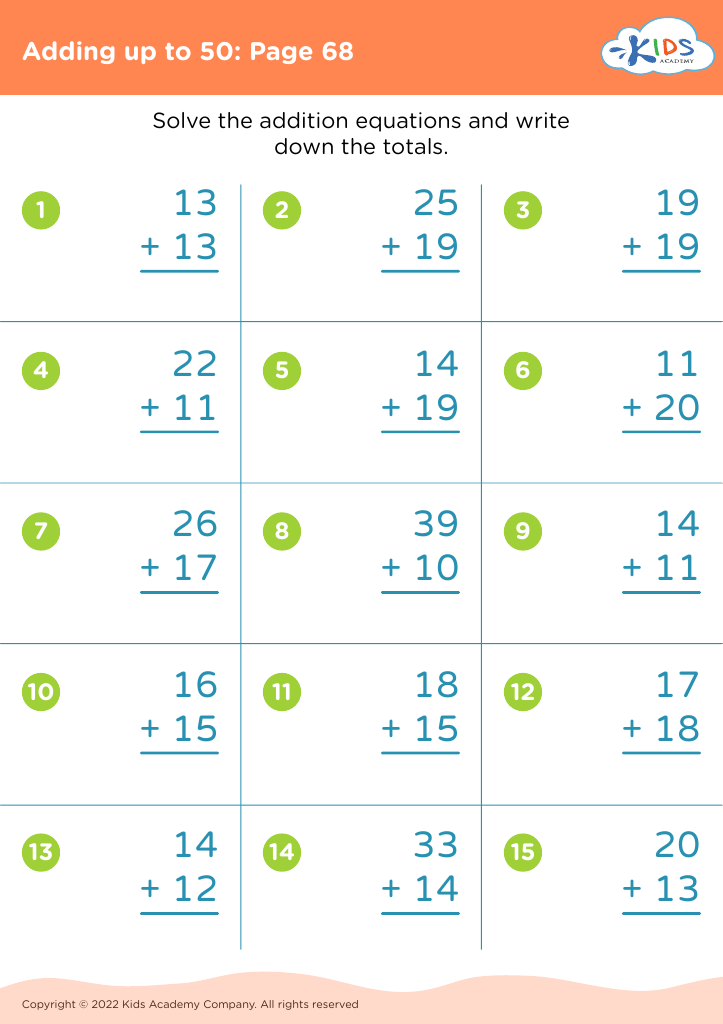
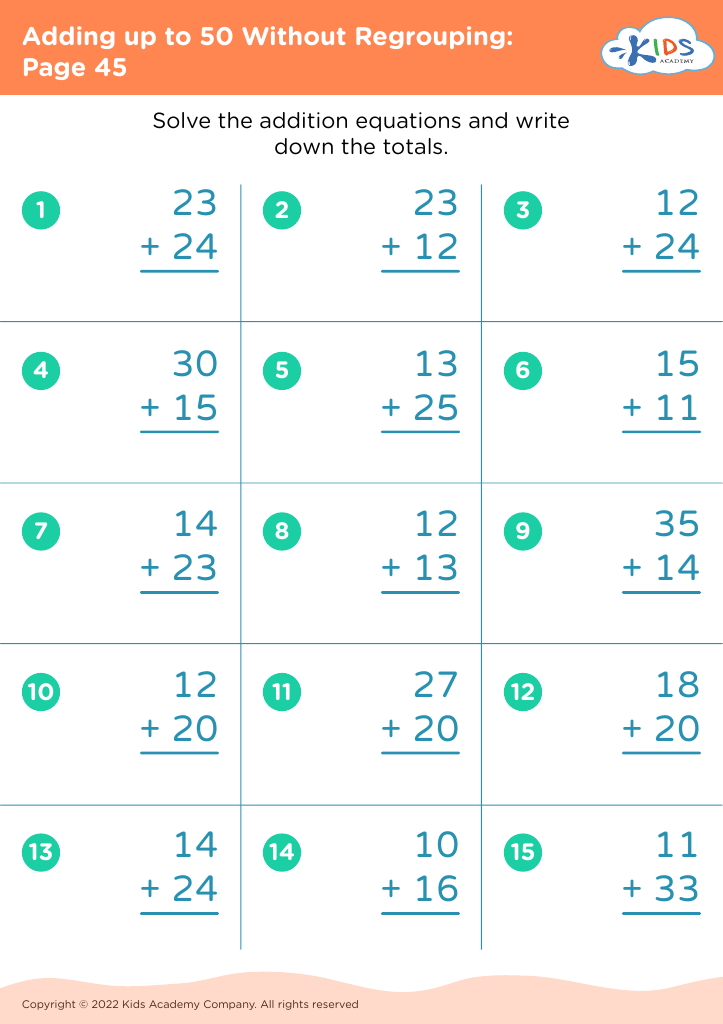
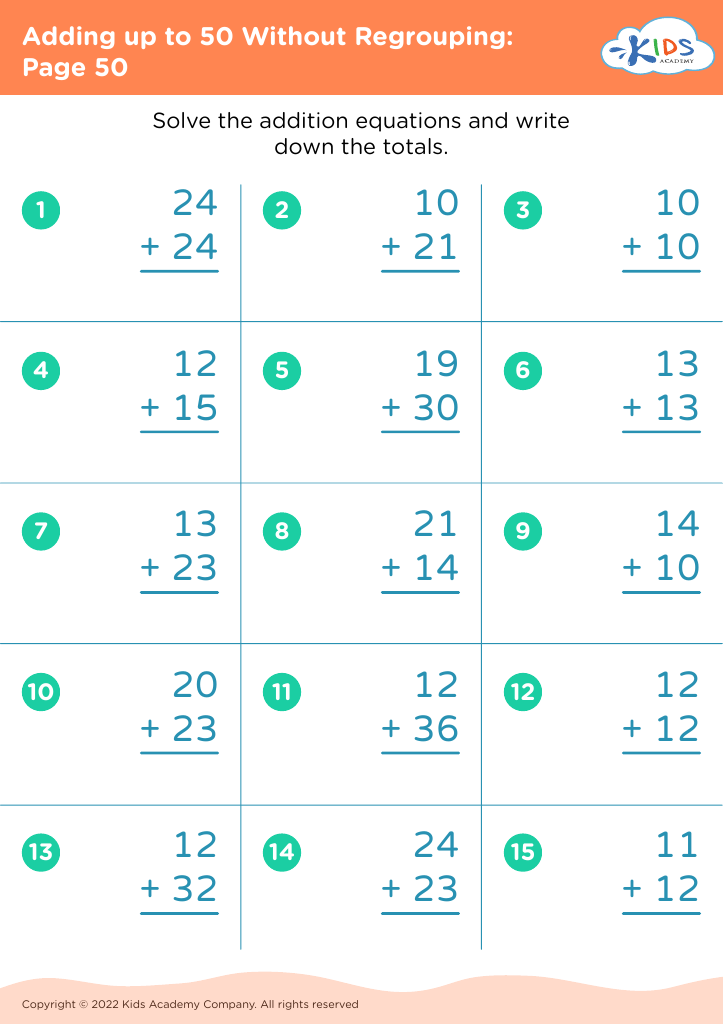
Discover our engaging "Recognizing Equivalent Fractions Adding Up to 50 Worksheets" tailored for kids ages 7-8! These interactive worksheets help young learners understand and identify equivalent fractions while practicing addition skills up to 50. With visually stimulating exercises and fun challenges, children will build a strong foundation in fractions, reinforcing critical math concepts. Each worksheet is designed to promote comprehension and independent problem-solving, making learning both effective and enjoyable. Ideal for classroom activities or at-home practice, our resources aim to foster a love for math and improve overall confidence in young mathematicians. Download your worksheets today and watch them thrive!




Recognizing equivalent fractions is a foundational skill in mathematics that helps children aged 7-8 develop a deeper understanding of numbers and their relationships. As students explore the concept of fractions, they learn that different representations can express the same value, enhancing their problem-solving skills and number sense. For parents and teachers, fostering this ability is crucial because equivalence prepares children for more complex mathematical concepts, such as addition, subtraction, and simplifying fractions.
By incorporating exercises like "Adding up to 50," children can practice recognizing equivalent fractions in a practical context. This exercise helps reinforce their mastery of basic addition and strengthens their understanding of fractions simultaneously. When students realize that 1/2 is equivalent to 2/4, they learn to think critically about numbers, facilitating their ability to work with diverse mathematical operations.
Additionally, understanding equivalent fractions supports more advanced math skills, including geometry and algebra, laying a solid groundwork for future learning. When parents and teachers emphasize this skill, they significantly empower students on their educational journey, boost their confidence, and help them excel in STEM-focused areas. Ultimately, recognizing equivalent fractions plays a vital role in nurturing a well-rounded mathematical mindset in young learners.








