Simplifying Fractions Adding up to 50 Worksheets for Ages 7-8
8 filtered results
-
From - To
Enhance your child's math skills with our "Simplifying Fractions Adding up to 50 Worksheets for Ages 7-8". These engaging worksheets provide a perfect combination of foundational math practice and fun. Children will learn to simplify fractions through a variety of interactive exercises, ensuring they grasp key concepts effectively. Tailored to fit the learning style of young minds, each worksheet is designed to build confidence and accelerate learning. Perfect for both classroom settings and home practice, these worksheets offer an essential tool to foster a deeper understanding of fractions and addition up to 50. Start a journey of mathematical mastery today!
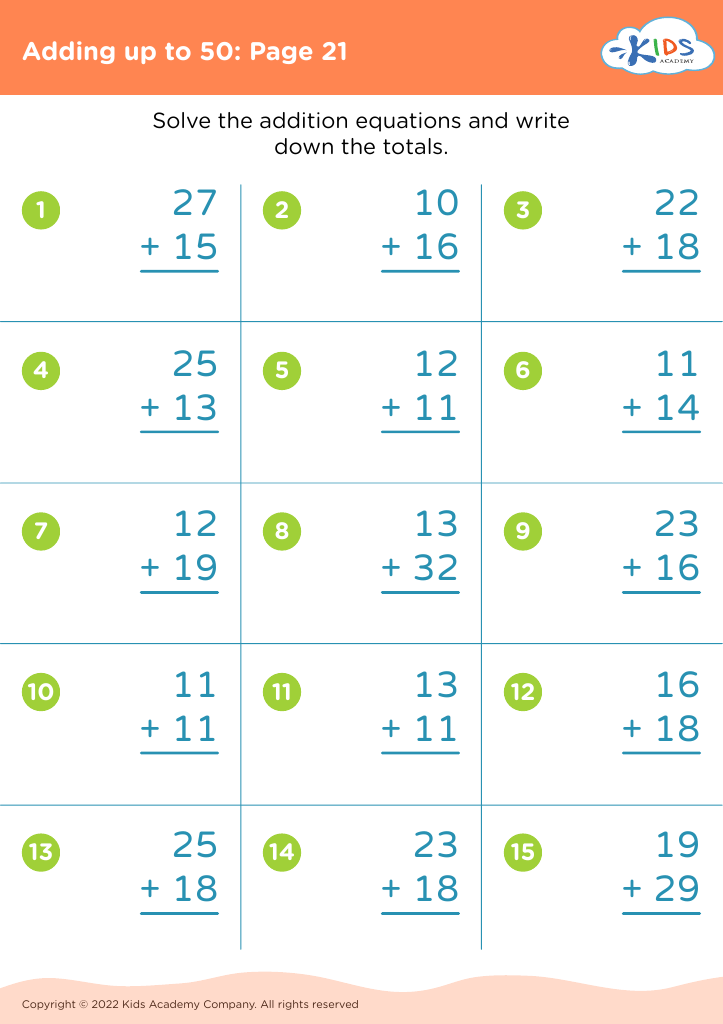
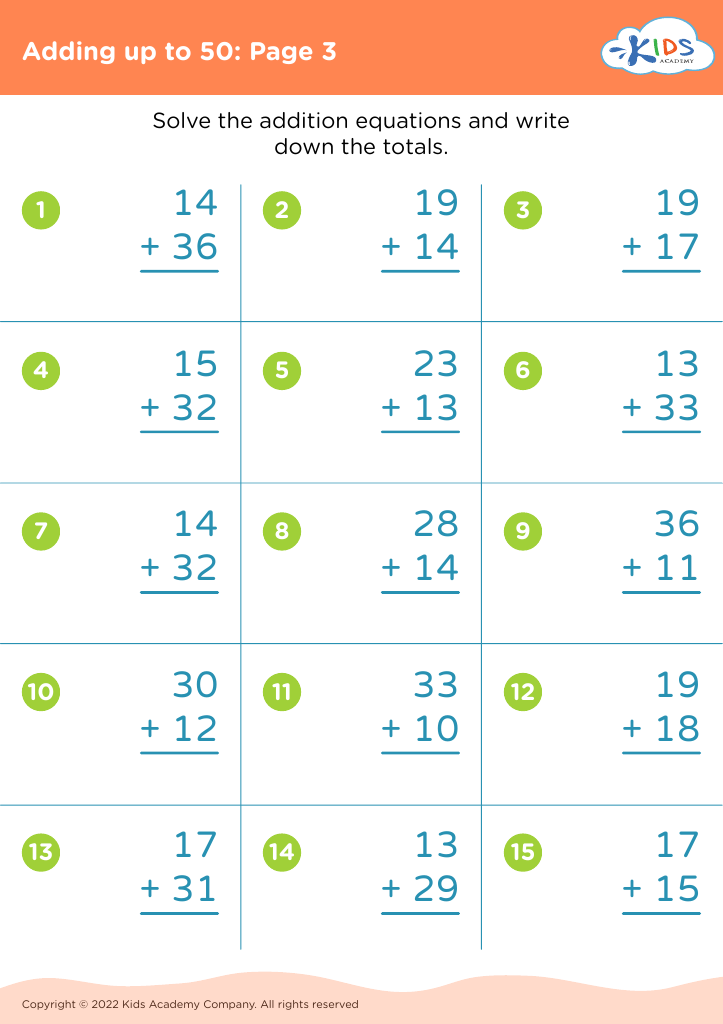
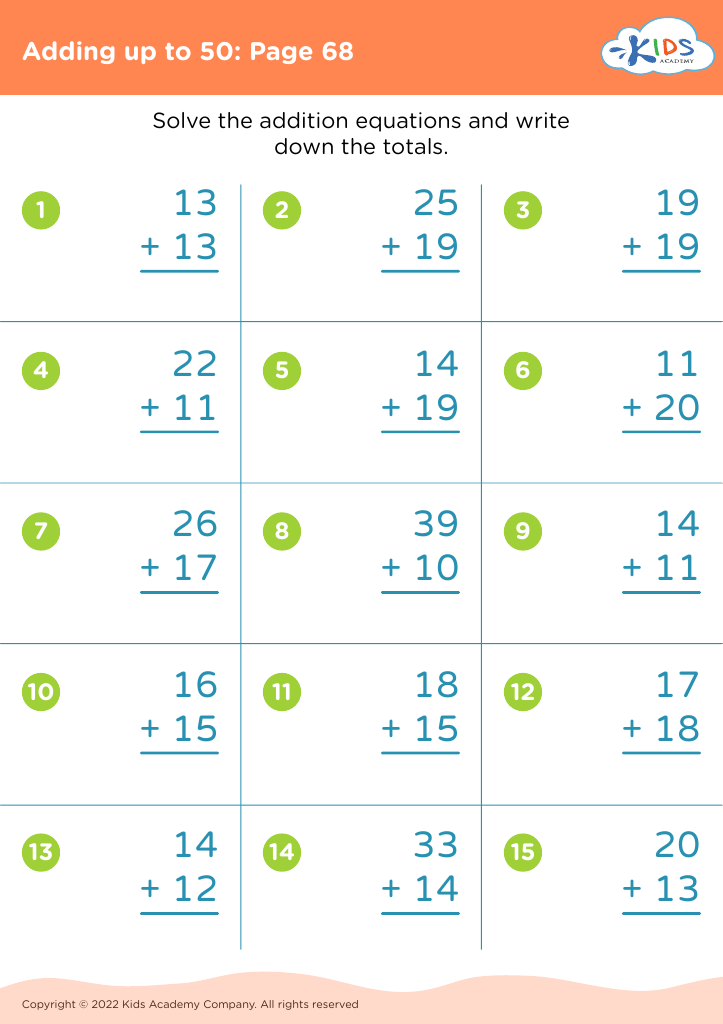
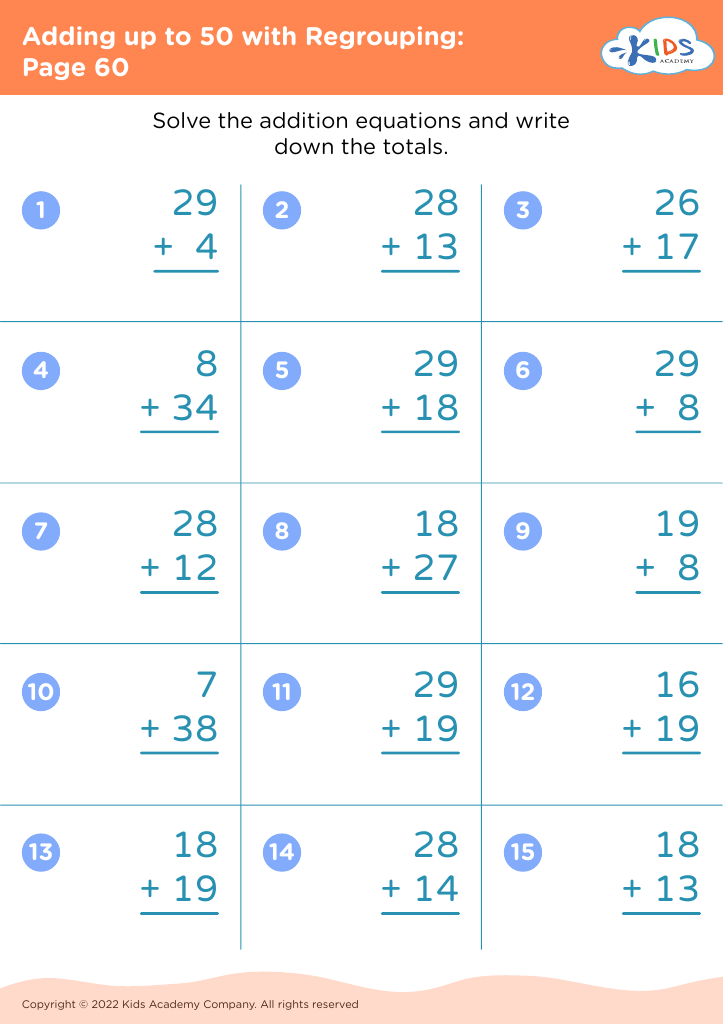
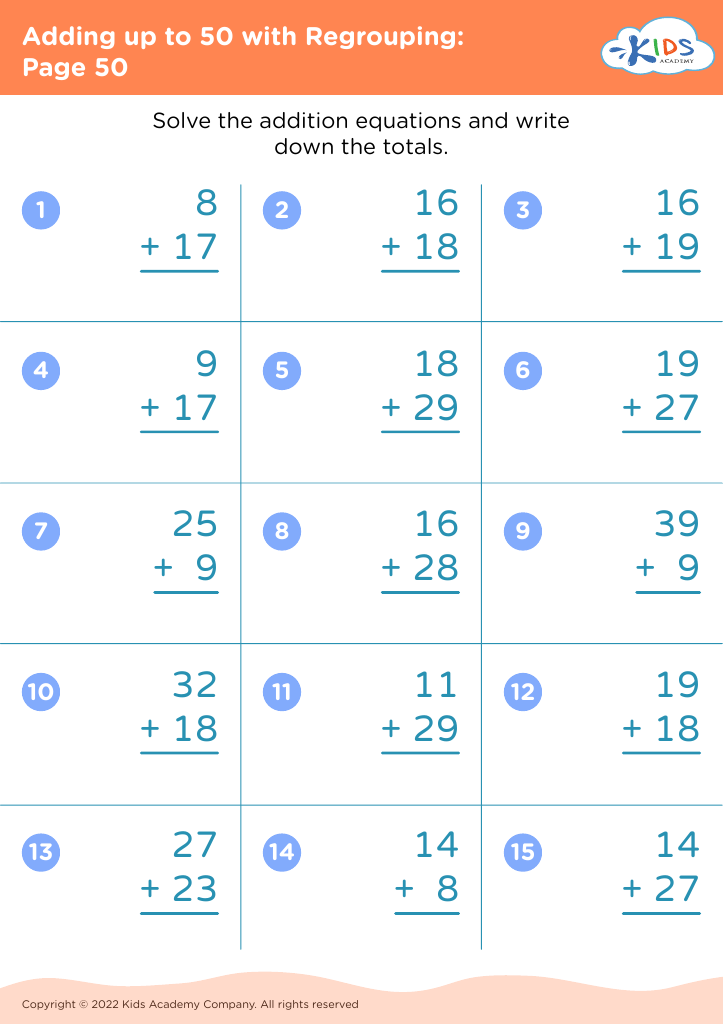
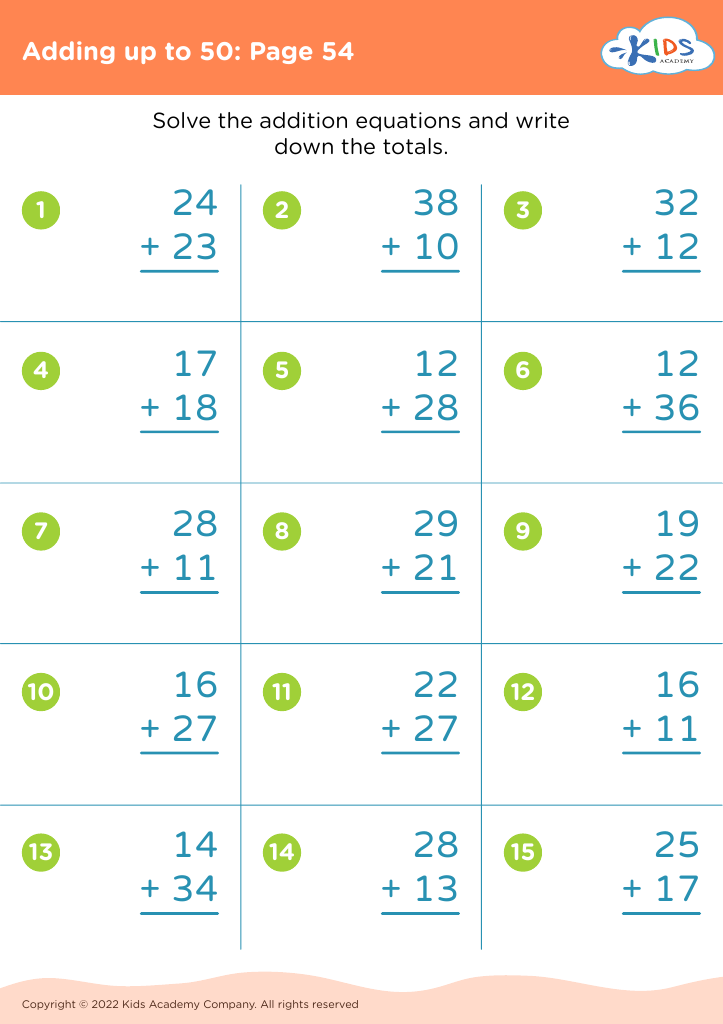
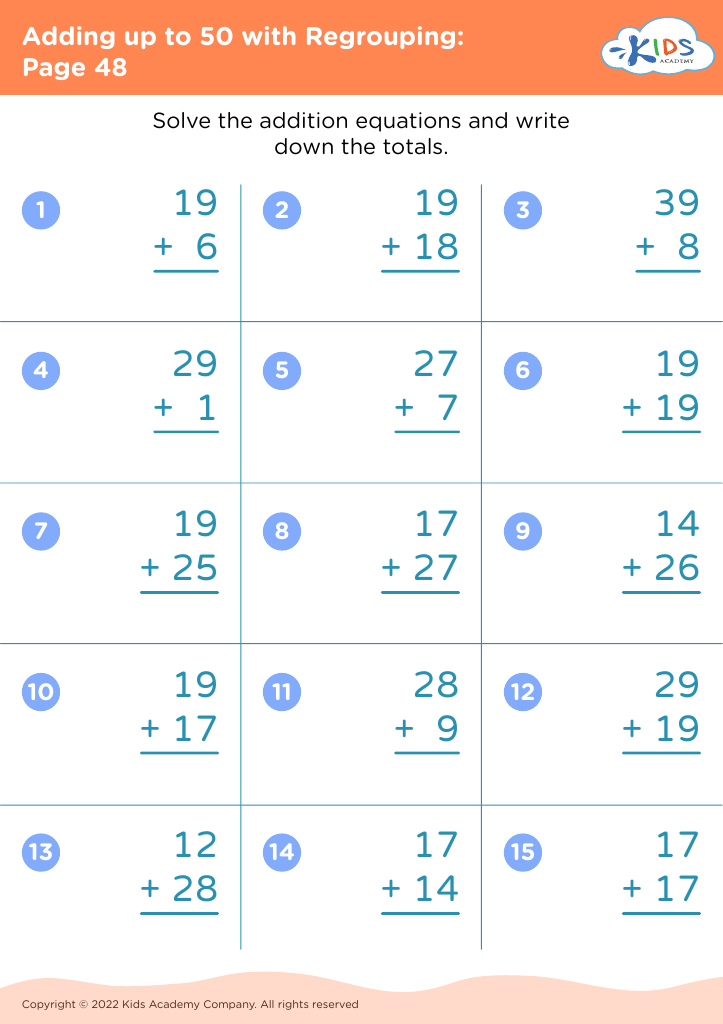
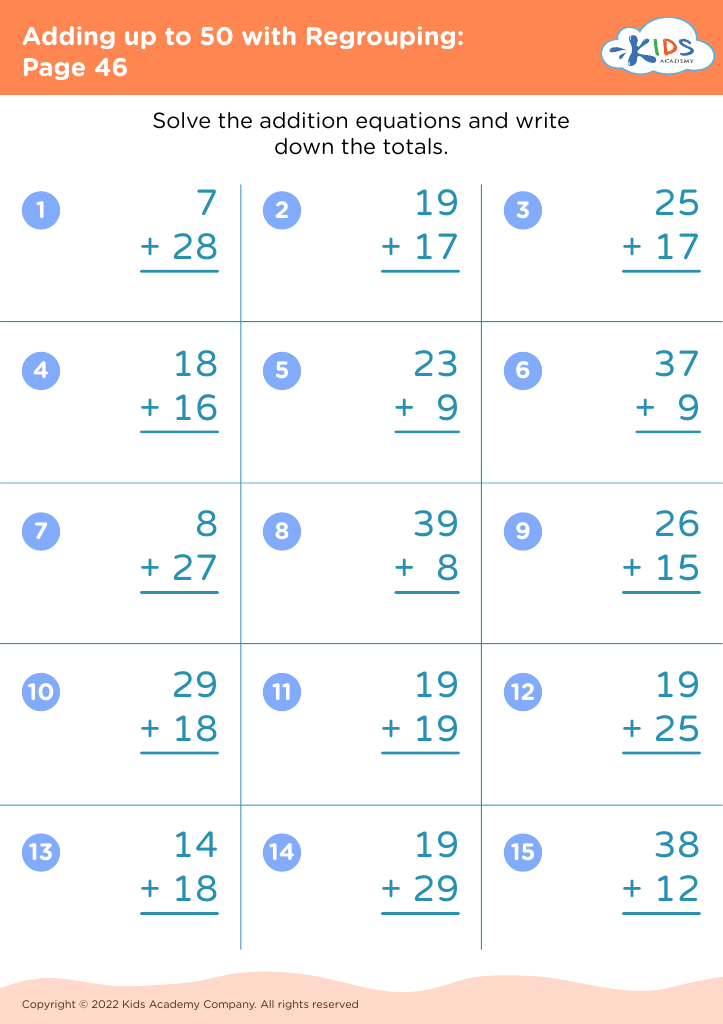




Simplifying fractions and adding up to 50 for children aged 7-8 is crucial as it builds a strong foundational understanding of math, promoting problem-solving and critical thinking skills. Parents and teachers should care because these activities help children grasp essential principles such as equivalence, number sense, and the relationship between parts and wholes.
At this age, children are developing their cognitive abilities and learning how to approach complex mathematical concepts in a simple, structured way. Simplifying fractions teaches them to see patterns and relationships between numbers, facilitating smoother progression into advanced topics like algebra and geometry later on.
Furthermore, addition up to 50 encourages children to practice their arithmetic operations, enhancing their computational fluency and confidence. Managing sums within this range is a fundamental skill that reinforces their number comprehension and aids in practical tasks, such as handling money and measuring.
Investing time in these educational practices ensures children are not only performing arithmetic but also understanding the concepts behind their operations. This fosters a more profound interest and competence in mathematics, encouraging them to approach more challenging problems with a positive and resilient mindset. Overall, simplifying fractions and mastering addition to 50 lays the groundwork for future academic success in math and beyond.








