Subtraction skills Adding up to 50 Worksheets for Ages 7-8
3 filtered results
-
From - To
Boost your child's subtraction skills with our engaging "Subtraction Skills Adding Up to 50 Worksheets," designed specifically for ages 7-8. These fun, printable worksheets provide a variety of exercises that help children identify and solve subtraction problems involving numbers up to 50. Our carefully crafted resources focus on essential skills like regrouping and understanding the relationship between addition and subtraction. With colorful illustrations and interactive activities, these worksheets make learning enjoyable while building confidence. Perfect for homeschooling or classroom use, our materials provide a strong foundation in math, ensuring your child masters subtraction in a fun and engaging way. Start exploring today!
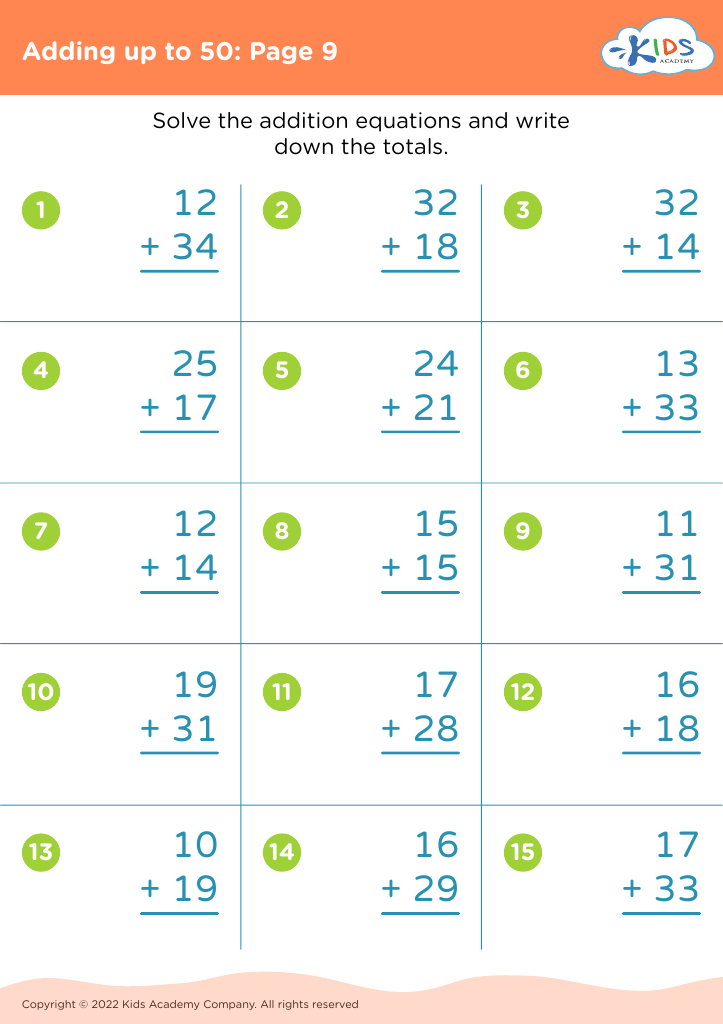
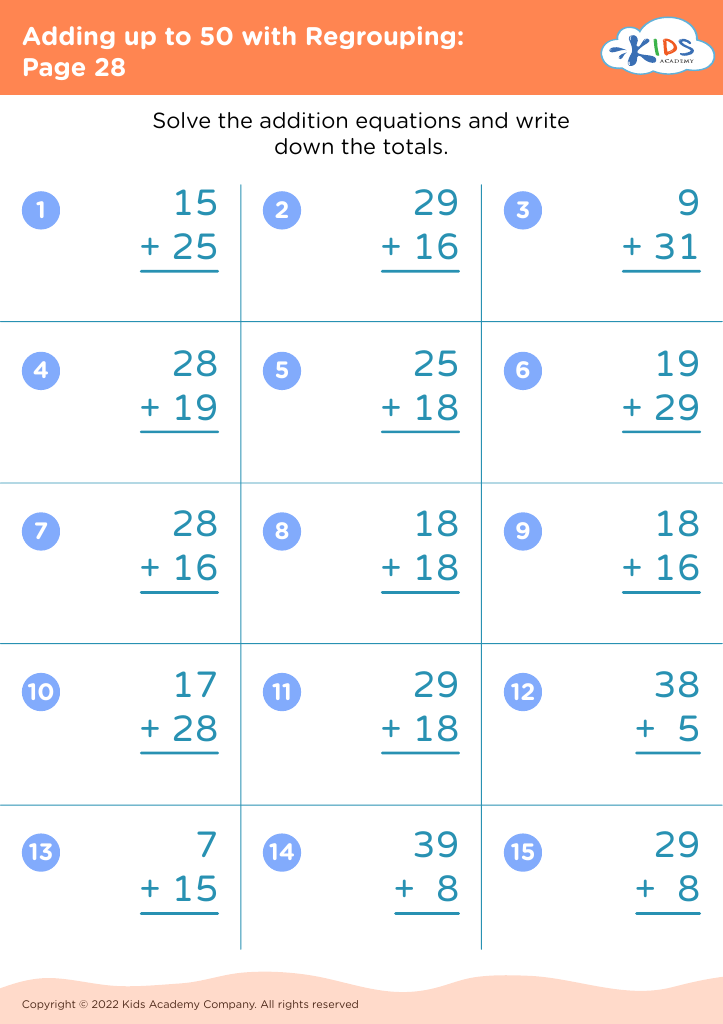
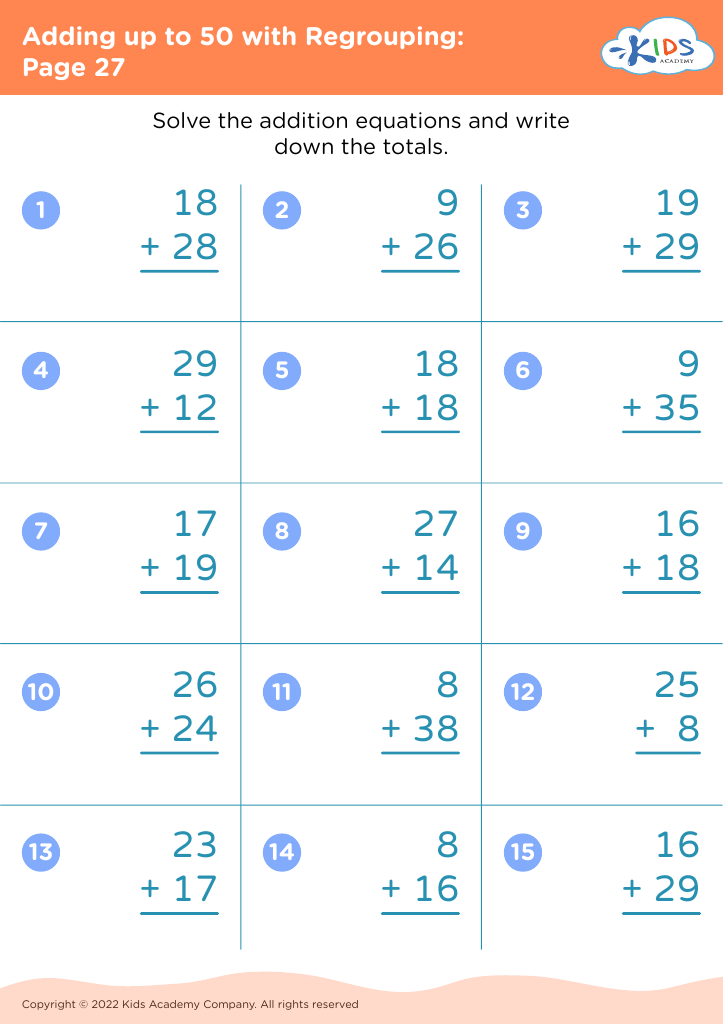




Parents and teachers should prioritize subtraction skills up to 50 for children aged 7-8 because these foundational abilities are essential for their overall mathematical development and everyday problem-solving. At this age, children are beginning to grasp more complex concepts, and proficient subtraction skills foster confidence in their math abilities.
Understanding subtraction encourages critical thinking and enhances cognitive development, as it helps children learn to analyze problems, develop strategies, and make logical connections. It also lays the groundwork for future mathematical operations, such as addition, multiplication, and division. Mastery of subtraction up to 50 supports children in grasping age-appropriate word problems, helping them relate mathematics to real-world scenarios, such as calculating change while shopping or determining the time left for an activity.
Moreover, strong subtraction skills are often linked to academic success across various subjects, reinforcing the importance of early math intervention. Engaging with subtraction through games, visuals, and hands-on activities can make learning enjoyable, bolstering children's interest and motivation in mathematics. By focusing on subtraction skills, parents and teachers can cultivate a positive attitude towards math, setting children on a path for lifelong skills needed in academics and daily life.








