Understanding patterns Adding up to 50 Worksheets for Ages 7-8
8 filtered results
-
From - To
Discover the joy of mastering math with our "Understanding Patterns Adding Up to 50 Worksheets" designed for ages 7-8. Perfect for young learners, these worksheets help kids grasp the concepts of addition and pattern recognition up to 50. Enhance problem-solving skills and build a strong math foundation through engaging exercises. Each worksheet is crafted to make learning interactive and fun, fostering confidence and encouraging independent thinking. Whether at home or in the classroom, our worksheets are the ideal resource for strengthening essential math skills the kids need to succeed. Explore and start learning today!
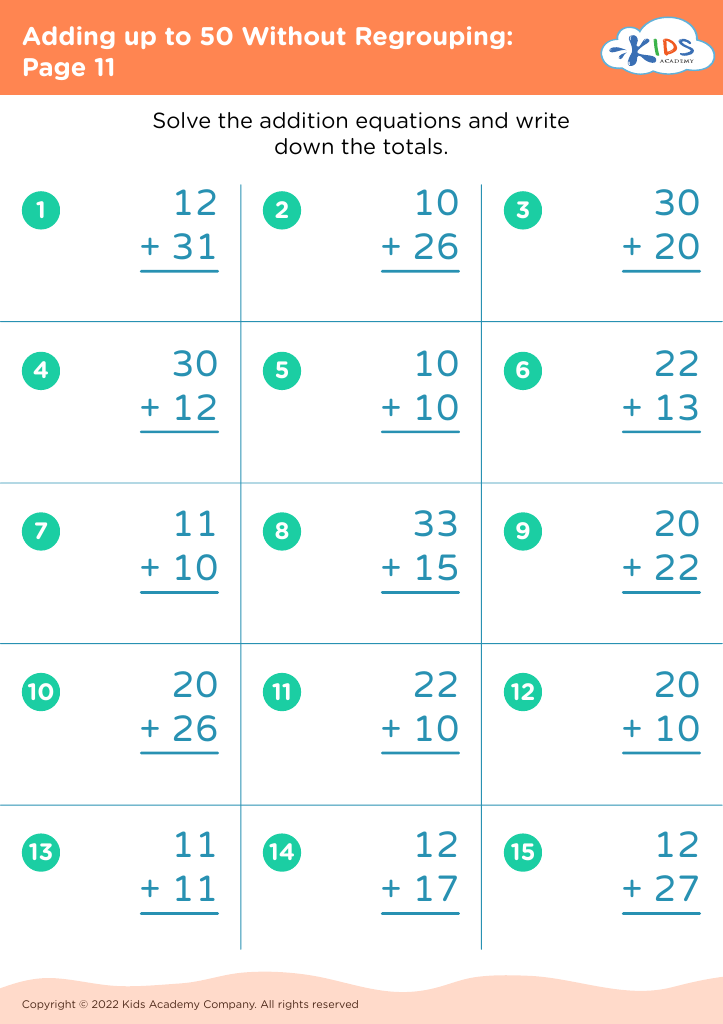
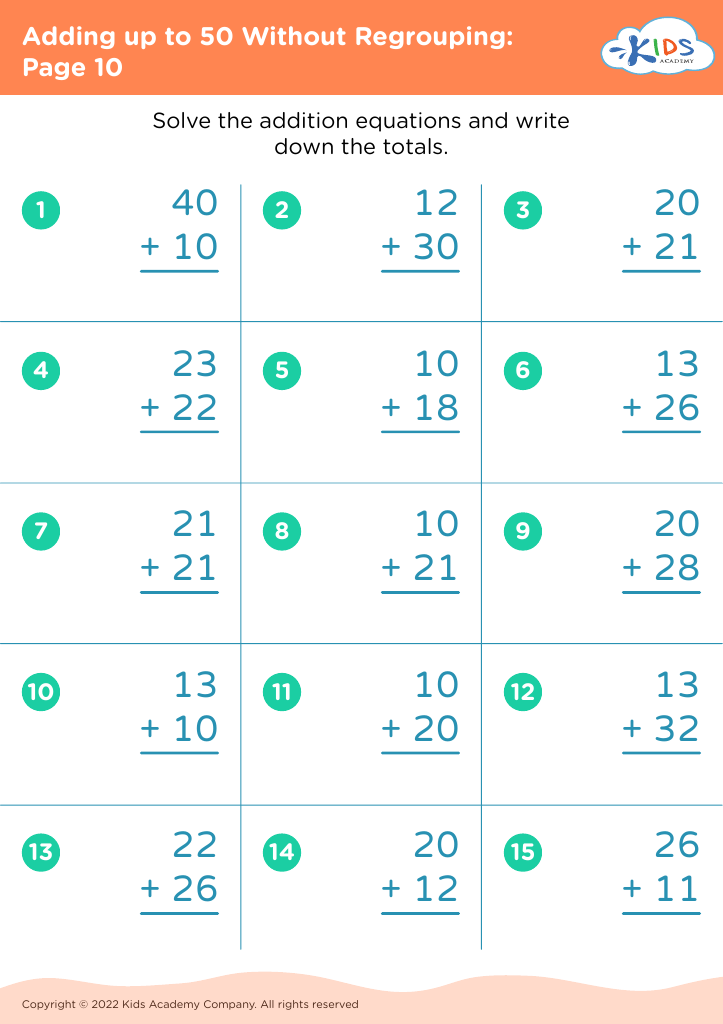
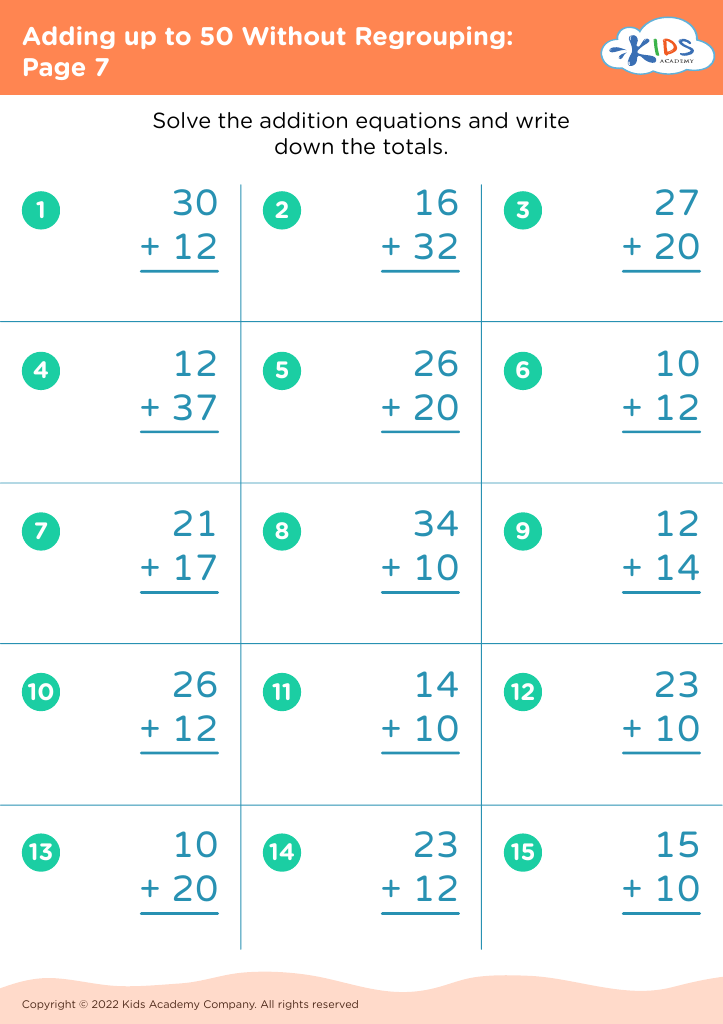
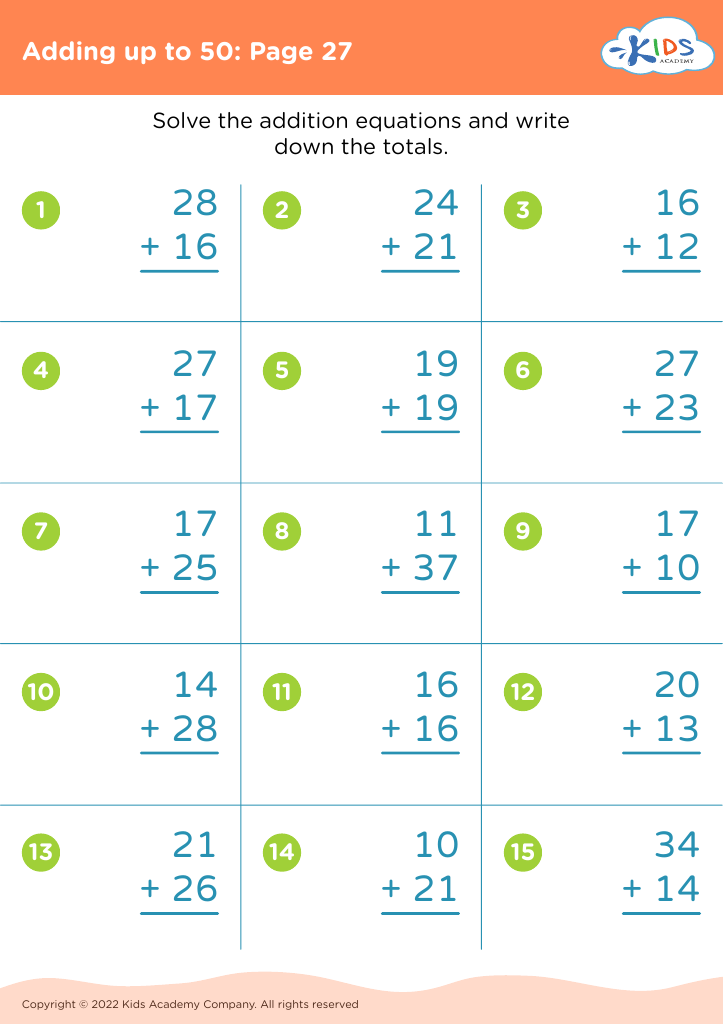
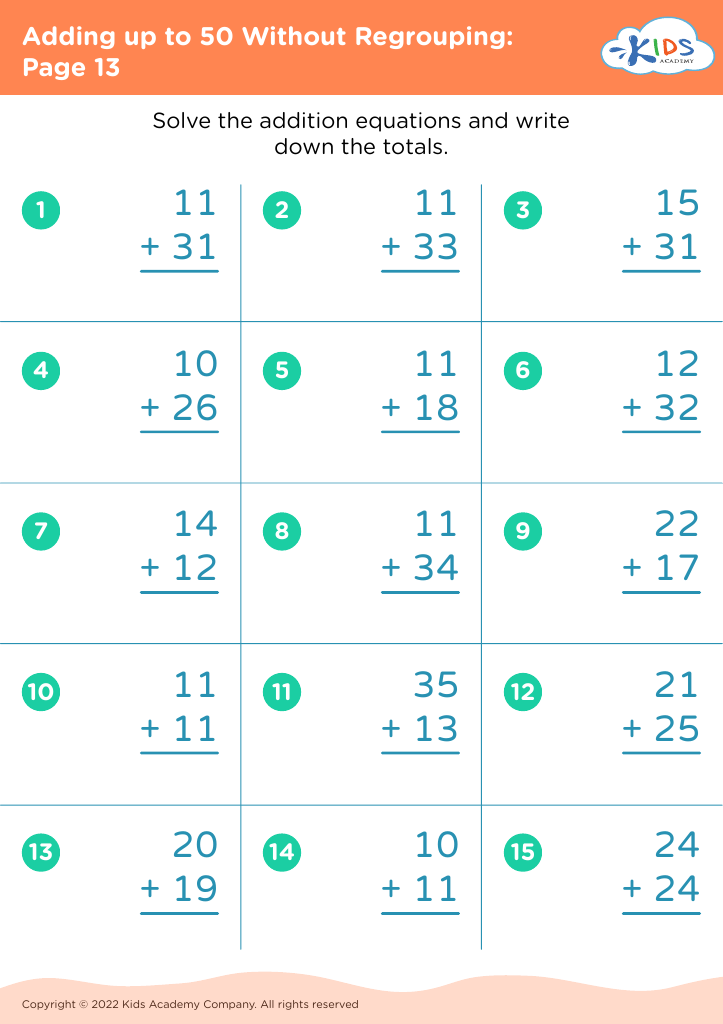
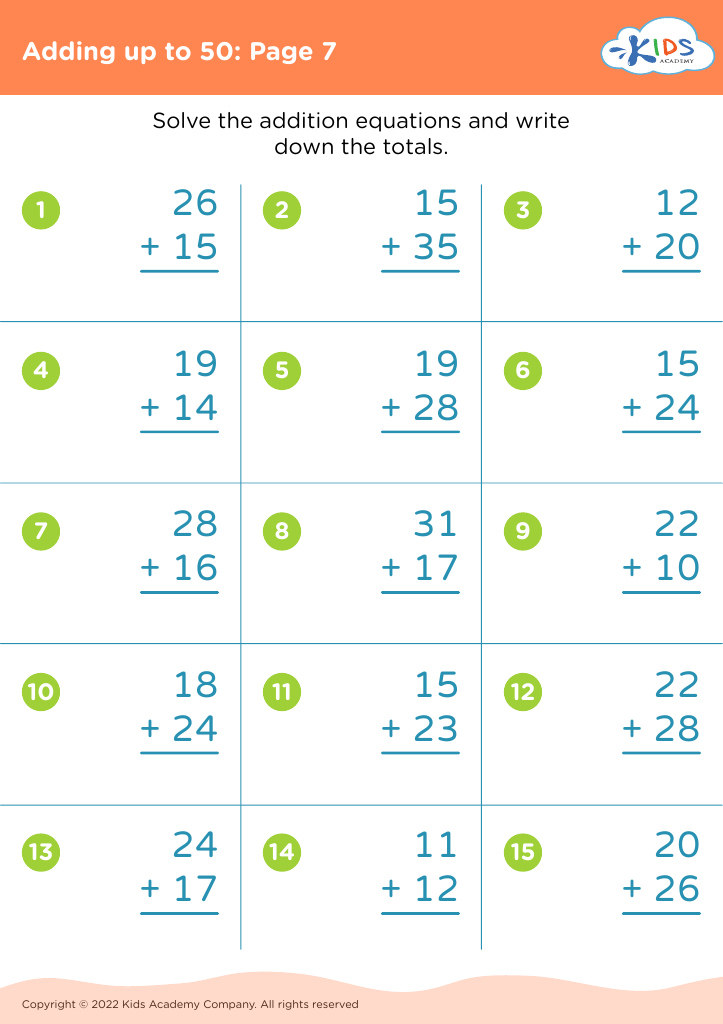
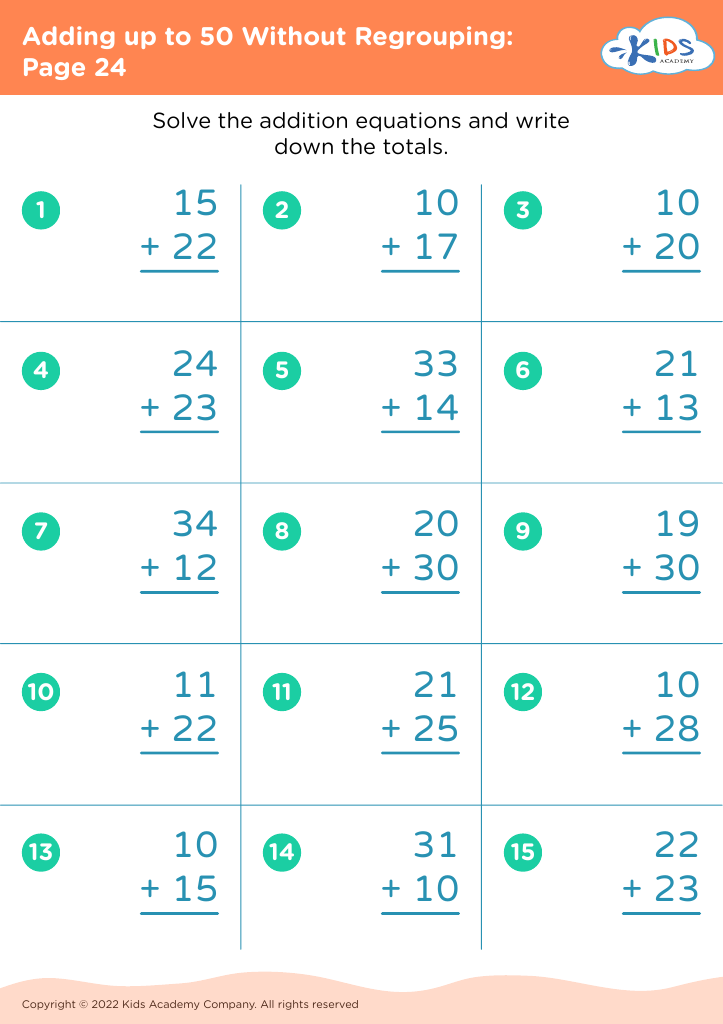
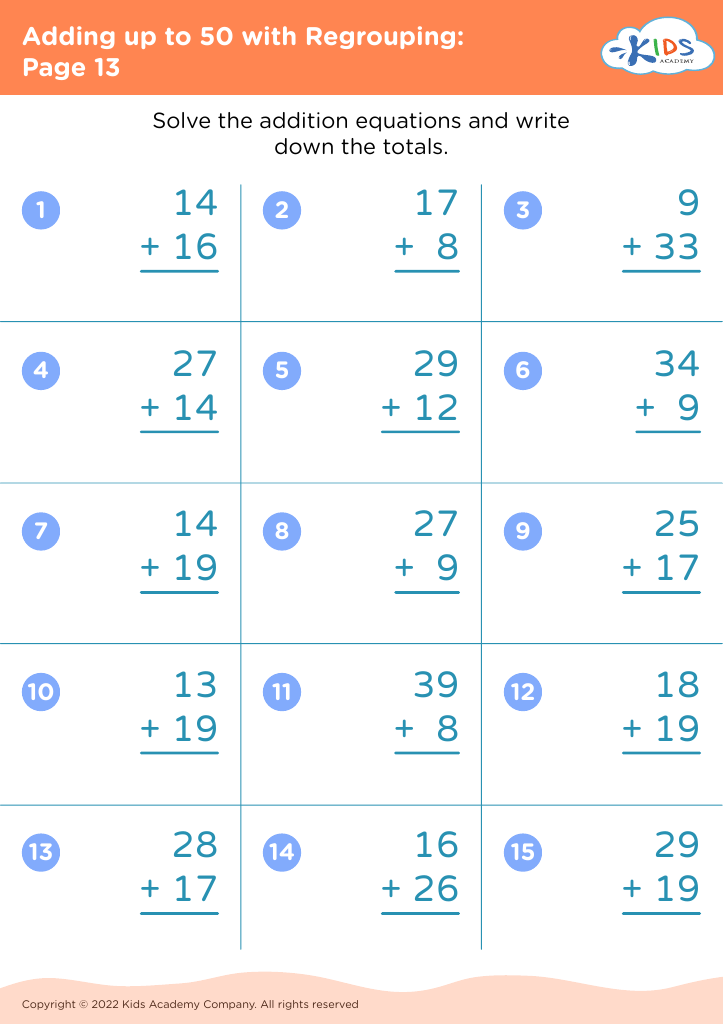




Understanding patterns and mastering addition up to 50 are foundational skills that set the stage for future mathematical and cognitive development for children aged 7-8. During these pivotal years, children transition from basic arithmetic to more complex mathematical concepts. Recognizing patterns enhances their ability to predict, analyze, and understand relationships among numbers, which is crucial for advanced topics like multiplication, division, and algebra.
Additionally, proficiency in addition up to 50 helps solidify their mental math abilities, encouraging quicker and more accurate calculations. This boost in number sense is not just academically beneficial; it nurtures critical thinking and problem-solving skills that are valuable in everyday life.
For parents and teachers, supporting these skills ensures children are meeting key learning milestones, developing confidence, and building a love for learning. Activities that involve pattern recognition and addition can be both fun and educational, fostering an engaging learning environment. Being actively involved in this stage of their mathematical journey ensures that any difficulties are promptly addressed, paving the way for a more robust understanding in later years.
Ultimately, investing time in these fundamental skills sets a strong foundation, equipping children with the tools they need for future academic success and fostering a positive attitude towards mathematics.








