Animal recognition Addition and Subtraction Word Problems Worksheets for Ages 7-8
4 filtered results
-
From - To
Explore our engaging "Animal Recognition Addition and Subtraction Word Problems Worksheets" designed specifically for children ages 7-8. These worksheets seamlessly integrate math skills with fascinating animal scenarios, making learning fun and relatable. Each problem challenges young learners to solve addition and subtraction tasks while identifying various animals, fostering both critical thinking and creativity. Perfect for reinforcing math concepts, our worksheets are suitable for classroom use, homework, or independent practice. Watch as your child enhances their problem-solving skills while discovering the world of animals. Dive into the exciting realm of math with our themed worksheets to inspire a love for learning!
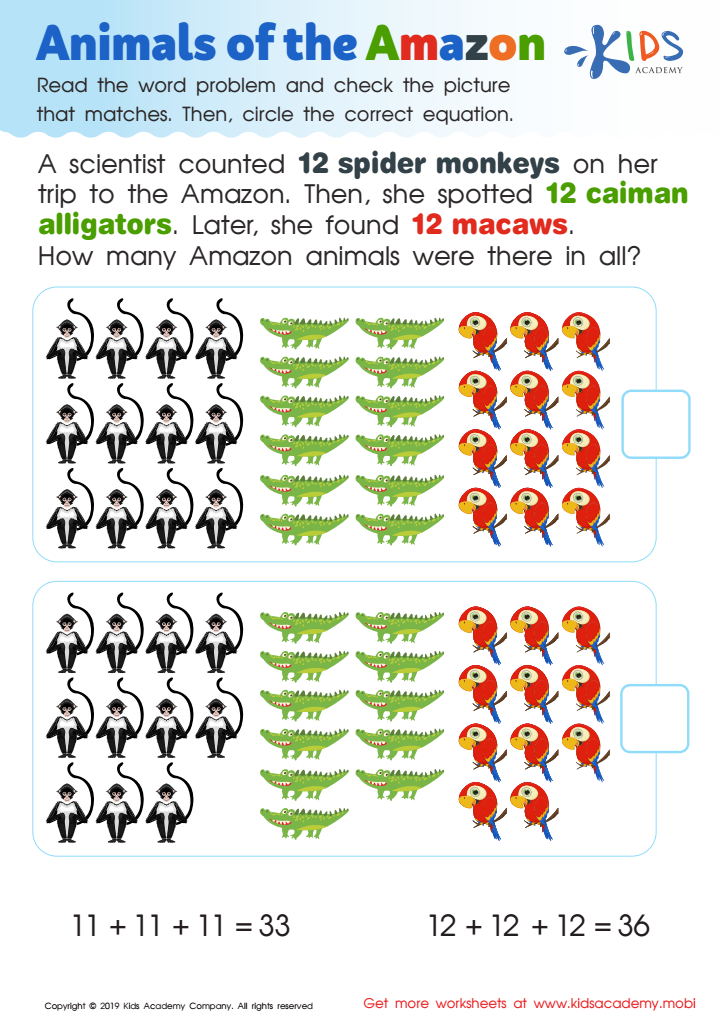
Animals of Amazon Worksheet
 Assign to My Students
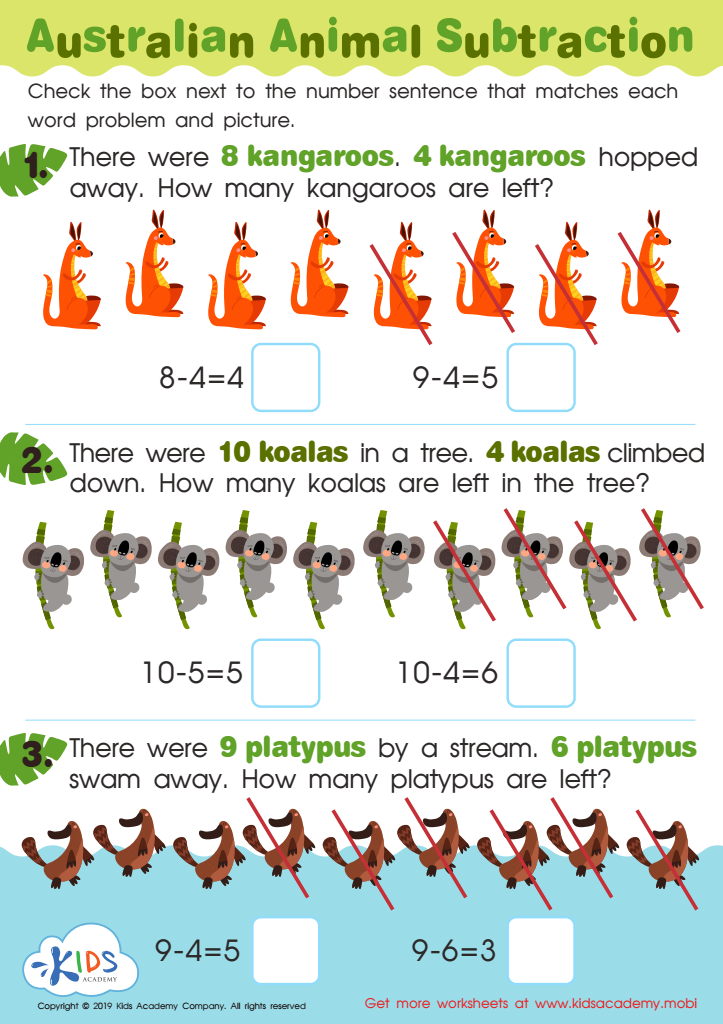
Australian Animal Subtraction Worksheet
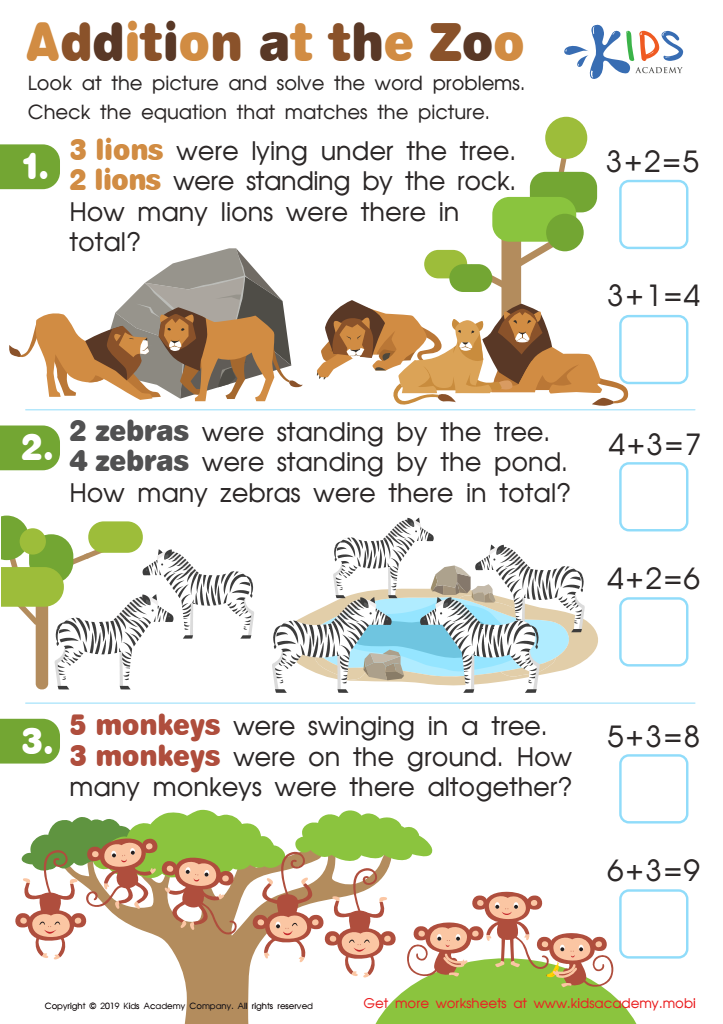
Addition at the Zoo Worksheet
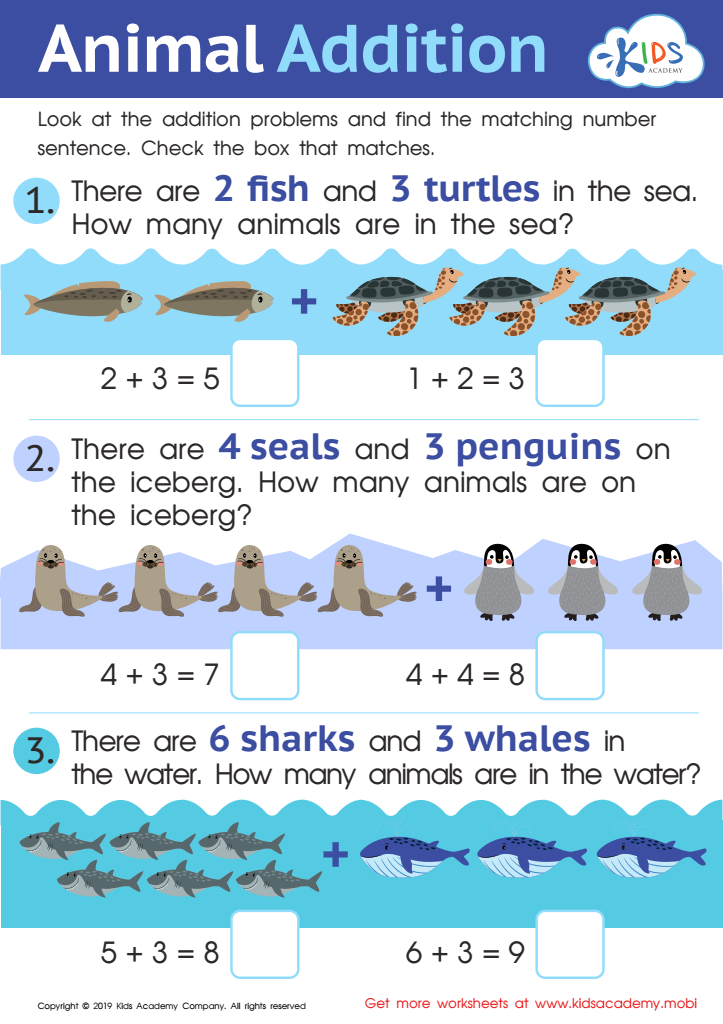
Animal Addition Worksheet








Animal recognition addition and subtraction word problems play a crucial role in enhancing the mathematical and cognitive skills of children ages 7-8. At this developmental stage, children are refining their problem-solving abilities and learning to engage with abstract concepts. Incorporating animals into word problems makes math more relatable and engaging, capturing children's interest while promoting comprehension.
These problems not only reinforce basic math skills, such as addition and subtraction, but they also support literacy development by improving reading comprehension. Children learn to interpret the context and details of each word problem, honing their analytical skills. Furthermore, the use of animals can foster empathy and curiosity about wildlife, contributing to emotional and social development.
From a teaching perspective, these word problems can facilitate discussions about different species, habitats, and conservation, integrating cross-curricular learning. For parents, engaging children in these types of problems can provide an opportunity for quality bonding time and an encouraging environment for learning.
Overall, animal recognition addition and subtraction word problems offer a multi-faceted educational experience that makes learning math enjoyable, interactive, and relevant to children's everyday lives. By supporting children in this way, both parents and teachers contribute to their long-term academic success and personal growth.