Animal recognition Addition & Subtraction Worksheets for Ages 7-8
6 filtered results
-
From - To
Our "Animal Recognition Addition & Subtraction Worksheets for Ages 7-8" make learning math engaging and fun! Designed especially for young learners, these worksheets blend educational math practice with delightful animal themes. Kids will enhance their addition and subtraction skills while identifying various animals, making problem-solving an adventure. Each colorful sheet is crafted to challenge and entertain, ensuring that children stay motivated and enjoy the learning process. Suitable for classroom settings and at-home practice, these worksheets foster both mathematical proficiency and a love for animals. Boost your child's arithmetic abilities with these innovative and enjoyable learning tools!
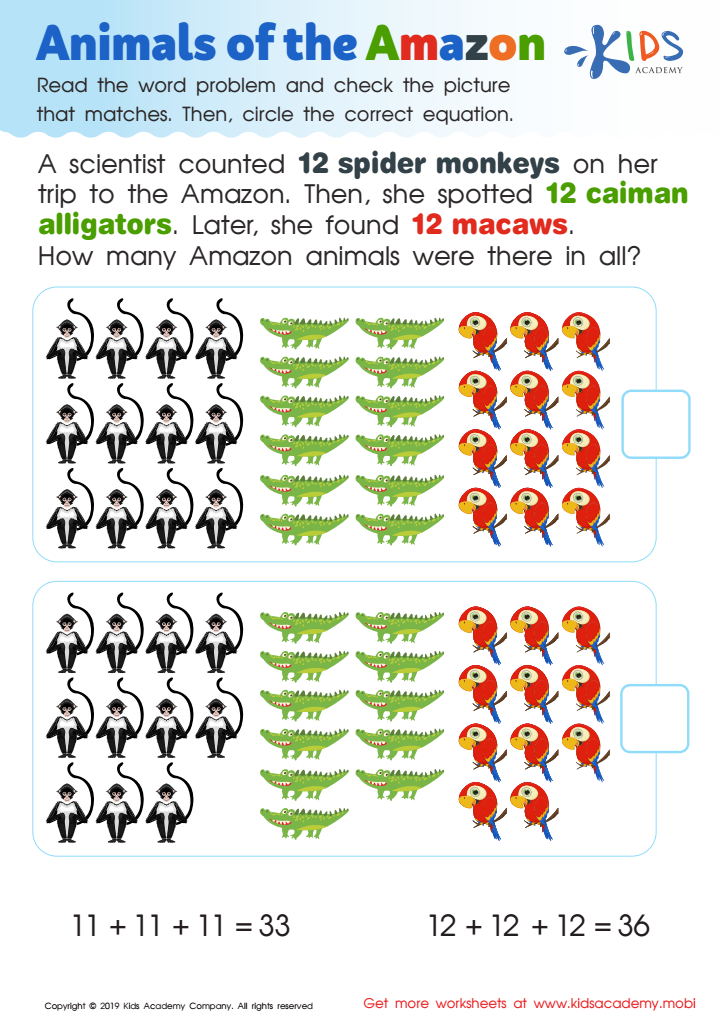
Animals of Amazon Worksheet
 Assign to My Students
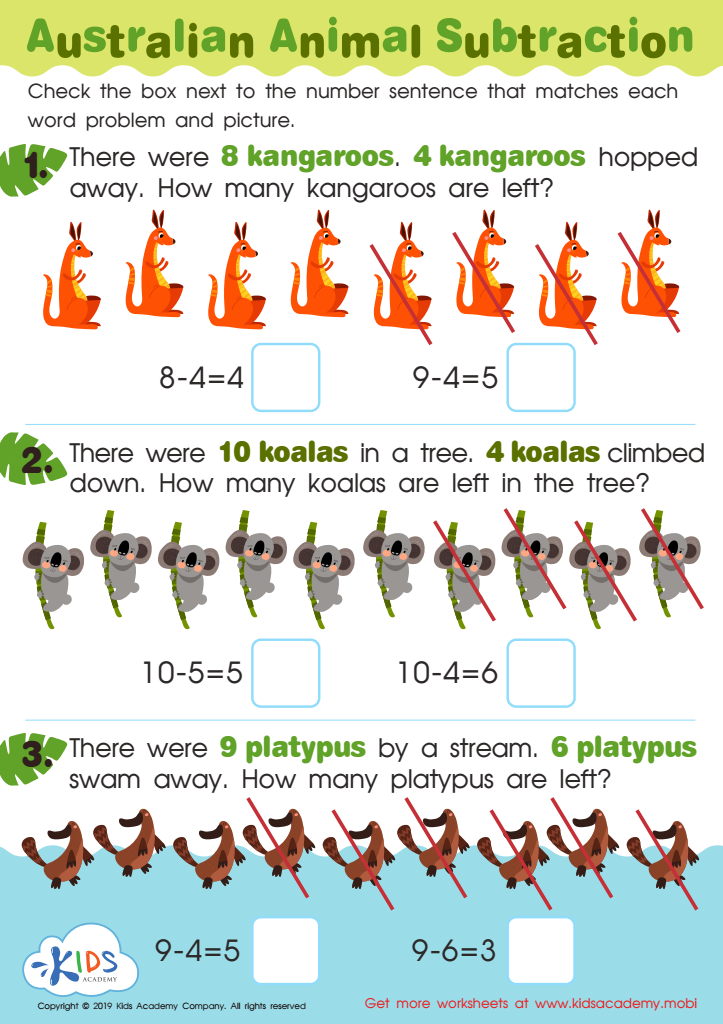
Australian Animal Subtraction Worksheet
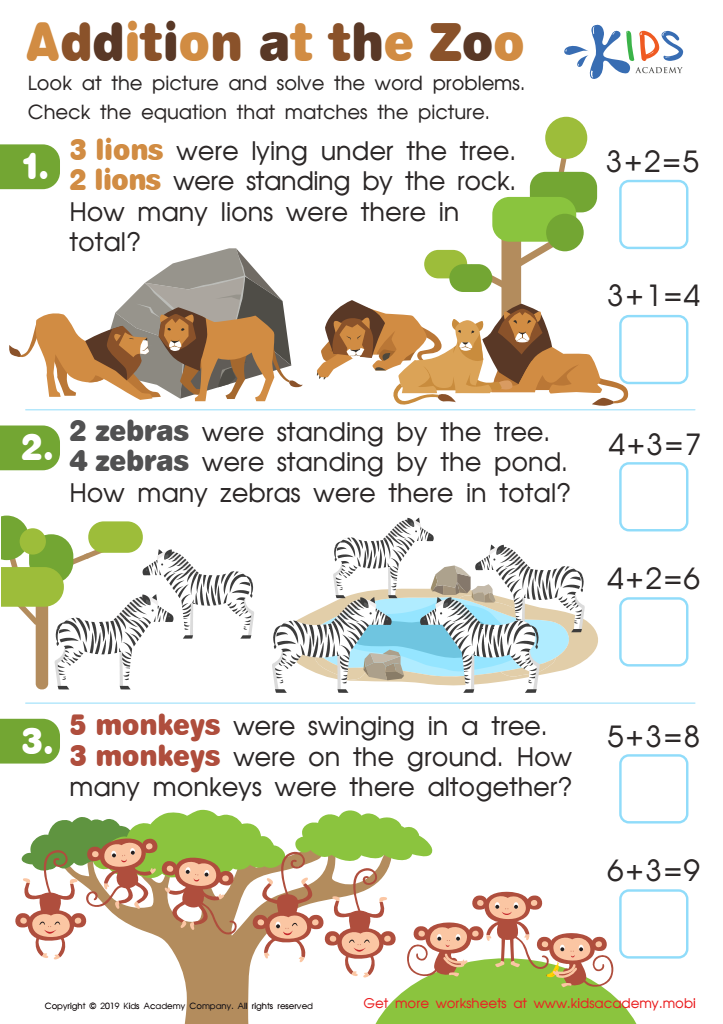
Addition at the Zoo Worksheet
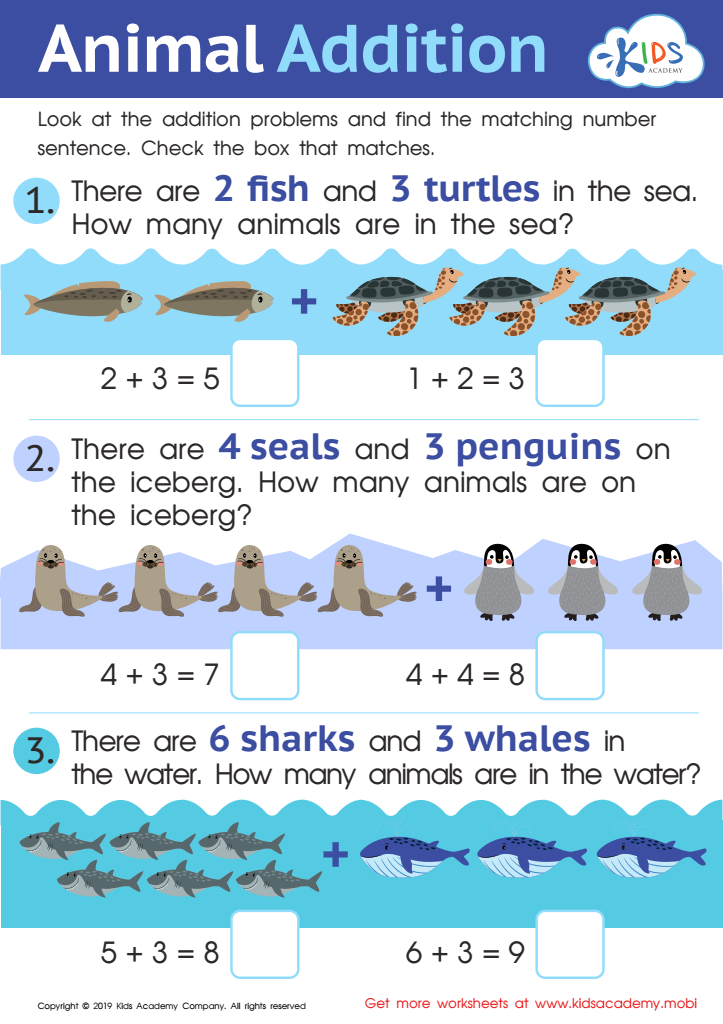
Animal Addition Worksheet
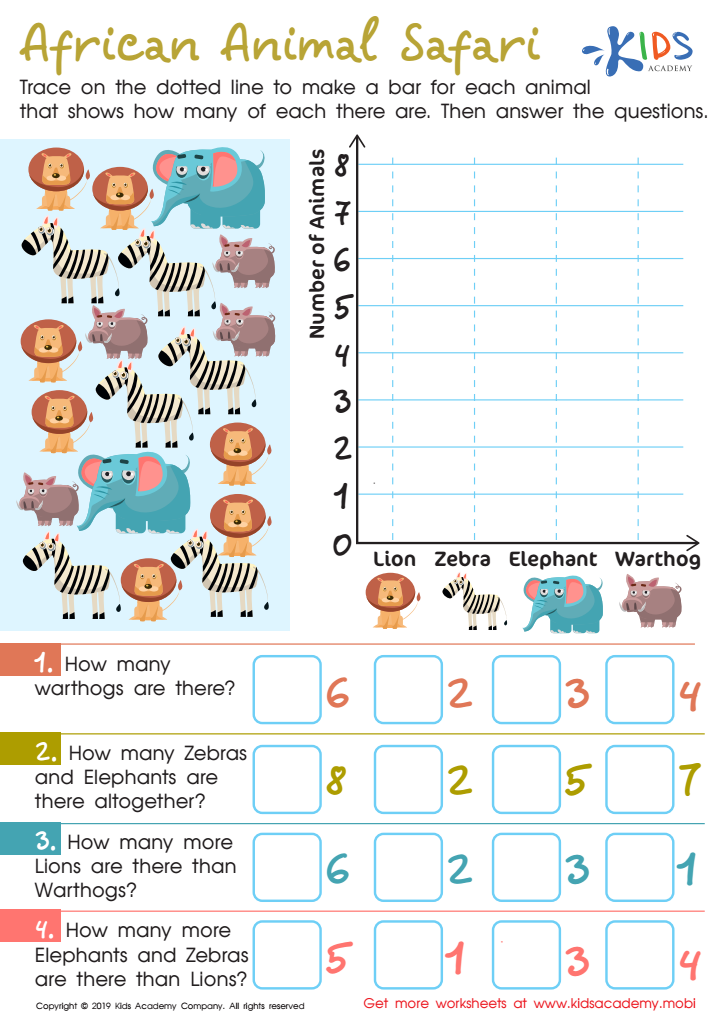
African Animal Safari Worksheet








Parents and teachers should prioritize Animal Recognition in addition to Addition and Subtraction for children aged 7-8 because it fosters a foundational understanding of the natural world and simultaneously bolsters essential academic skills. At this developmental stage, children are highly curious and eager to explore their environment, making it the perfect time to integrate lessons about animals, which can spark an interest in biology and ecology.
Furthermore, combining these lessons with addition and subtraction exercises enhances cognitive development by promoting critical thinking and problem-solving abilities. For instance, using animal-themed math problems can make abstract concepts more relatable and engaging for young learners. Word problems involving animals, such as "If you have five lions and three tigers, how many big cats do you have in total?" can make arithmetic operations more intuitive and enjoyable.
Also, such interdisciplinary approaches cater to various learning styles. Visual learners benefit from animal imagery, while hands-on learners can engage with physical animal counters. This can lead to improved retention and understanding.
Ultimately, integrating animal recognition with basic arithmetic prepares children holistically for more advanced subjects, nurtures a lifelong love of learning, and promotes empathy and awareness of the natural world.








