Math skills improvement Addition & Subtraction Worksheets for Ages 7-8
4 filtered results
-
From - To
Enhance your child's math skills with our expertly designed Addition & Subtraction Worksheets for Ages 7-8. These worksheets provide engaging exercises tailored to strengthen understanding and proficiency in fundamental arithmetic operations. With a variety of fun problems, your child will enjoy mastering addition and subtraction, boosting their confidence and improving their math performance. Perfect for classroom use or extra practice at home, our worksheets are the ideal resource to help young learners develop a solid math foundation. Download now and watch your child grow into a math whiz!
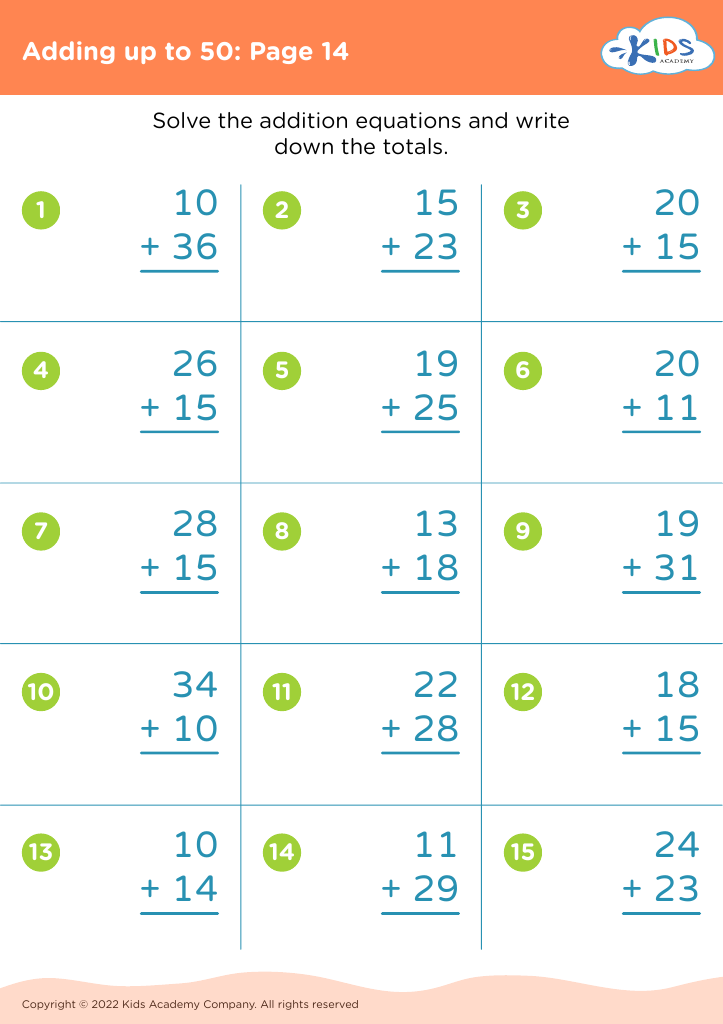
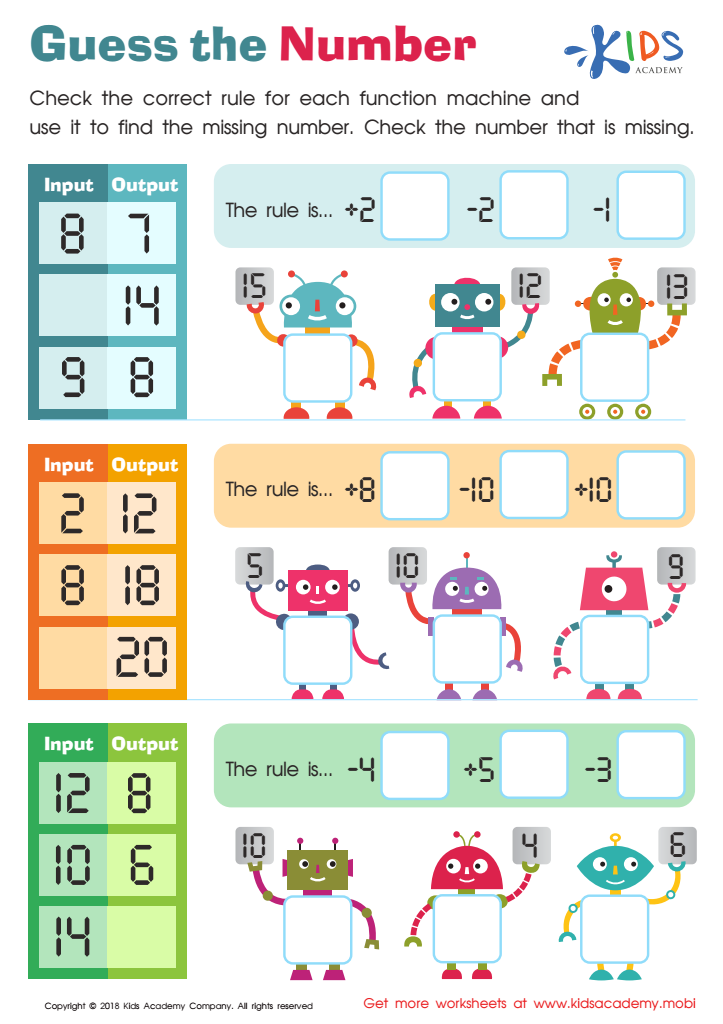
Guess the Number Worksheet
 Assign to My Students
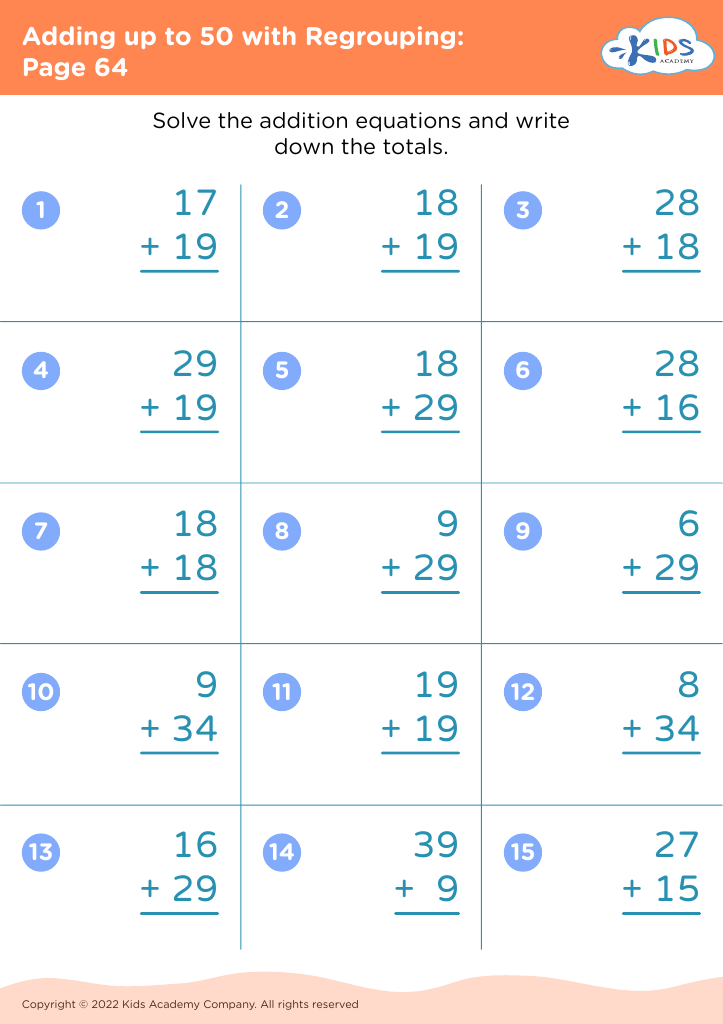
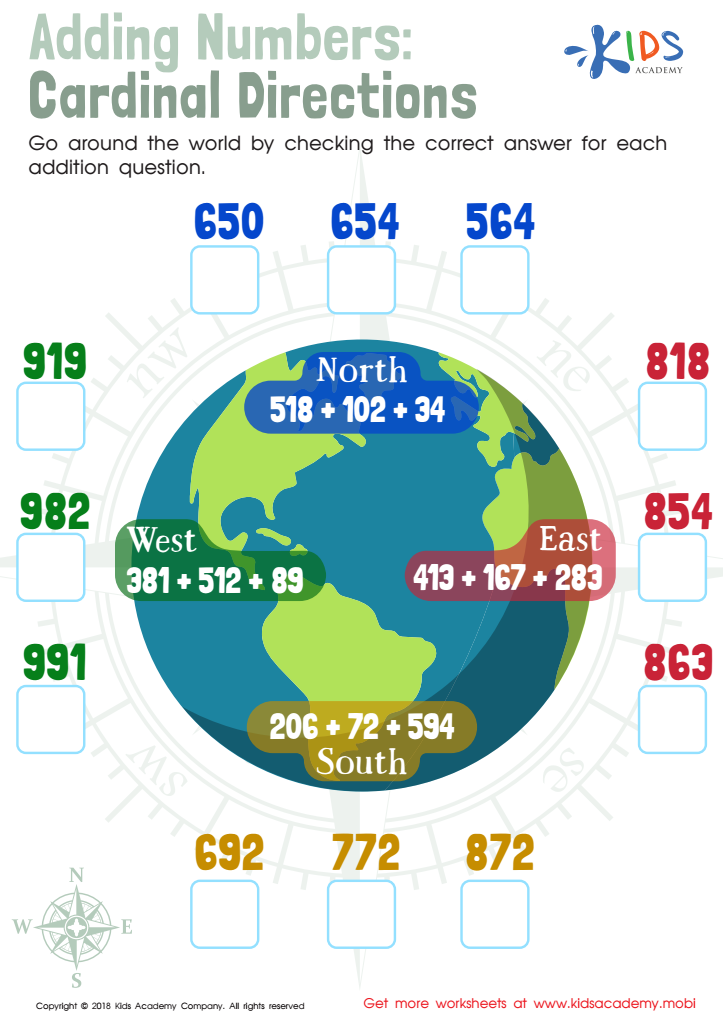
Adding Numbers: Cardinal Directions Worksheet








Helping children ages 7-8 improve their math skills, particularly in addition and subtraction, is critical for several reasons. At this stage, children are developing foundational skills that will support their future learning and critical thinking abilities. Mastery of basic addition and subtraction is essential for more advanced concepts such as multiplication, division, fractions, and problem-solving skills.
Moreover, strong math skills are tied to academic confidence and performance across subjects. When children feel competent in their math abilities, they are more likely to participate in class, tackle new challenges, and develop a positive attitude toward learning. This can foster a love for learning that extends beyond math.
Parents and teachers also play a key role in developing children's persistence, patience, and critical thinking – skills that are nurtured through the process of learning math. When children see that their setbacks in understanding addition and subtraction can be managed and overcome with effort and support, they build resilience.
Additionally, practical life skills such as handling money, measuring ingredients in cooking, and understanding time schedules depend on solid addition and subtraction knowledge. Ensuring children can perform these basic operations fluently sets the stage for real-world competence and confidence, making math not just a school subject but a vital, impactful life skill.








