Problem-solving abilities Addition & Subtraction Worksheets for Ages 7-8 - Page 2
26 filtered results
-
From - To
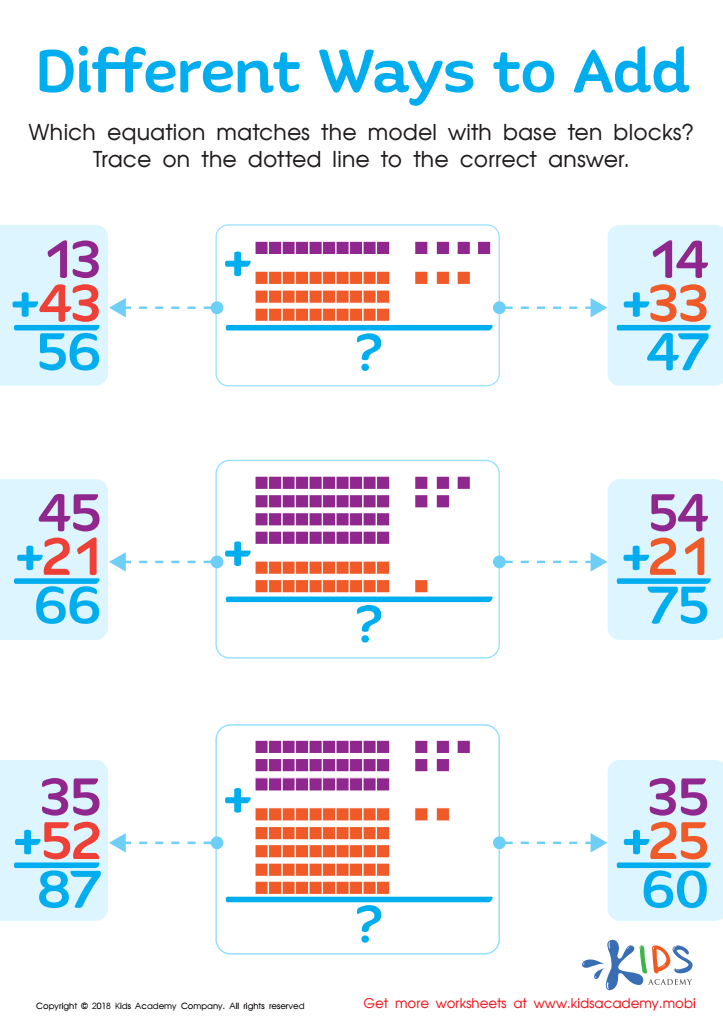
Different Ways to Add Worksheet
 Assign to My Students
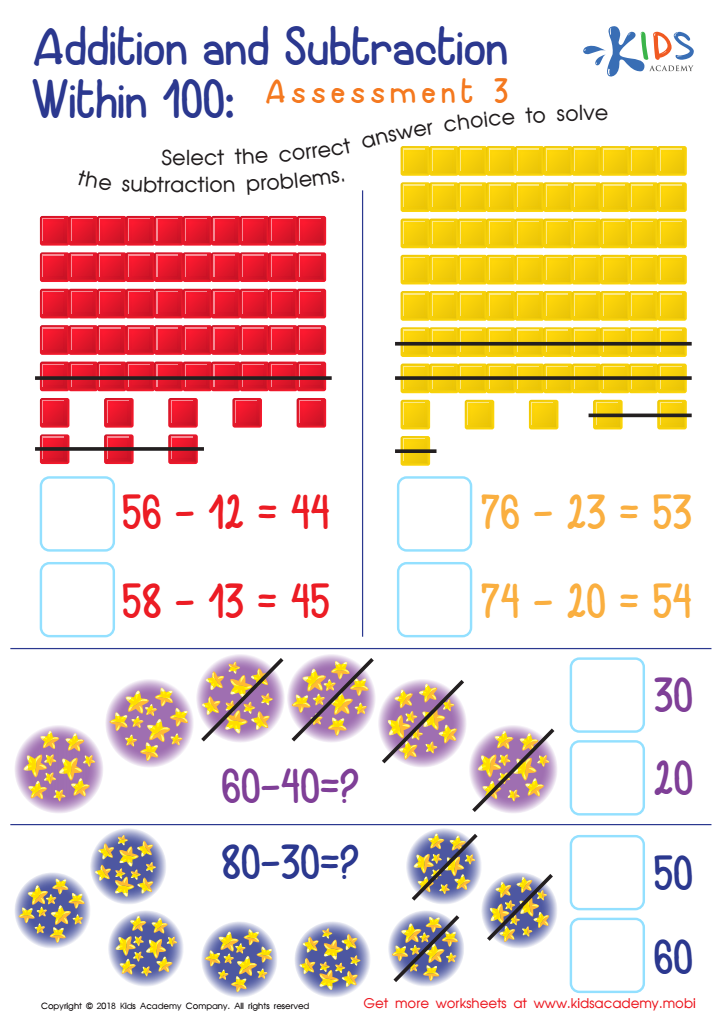
Addition and Subtraction Within 1: Assessment 3 Worksheet








Problem-solving abilities in addition and subtraction for children aged 7-8 are crucial for their academic and daily life skills. At this age, children are transitioning from concrete operations to more abstract thinking, making it an ideal time to build strong foundational mathematical skills. Proficient problem-solving enhances their ability to tackle not just math but also real-world challenges, fostering critical thinking and resilience.
By building these skills, children develop number sense and understand how to manipulate numbers, paving the way for future math concepts such as multiplication and division. Strong addition and subtraction skills also help children gain confidence in mathematics, allowing them to engage computational tasks with ease.
Moreover, these abilities extend beyond academics. Everyday situations, like calculating change or determining the best deal while shopping, require basic arithmetic skills. Parents and teachers play a vital role in cultivating these problem-solving abilities by encouraging practical applications of math, using games, and involving kids in activities that challenge their understanding.
Ultimately, investing time and effort into enhancing children’s problem-solving capabilities in addition and subtraction helps equip them with essential life skills, not only fostering academic success but encouraging a lifetime of curiosity and exploration in mathematics.








