Recognizing equivalent fractions Addition & Subtraction Worksheets for Ages 7-8
4 filtered results
-
From - To
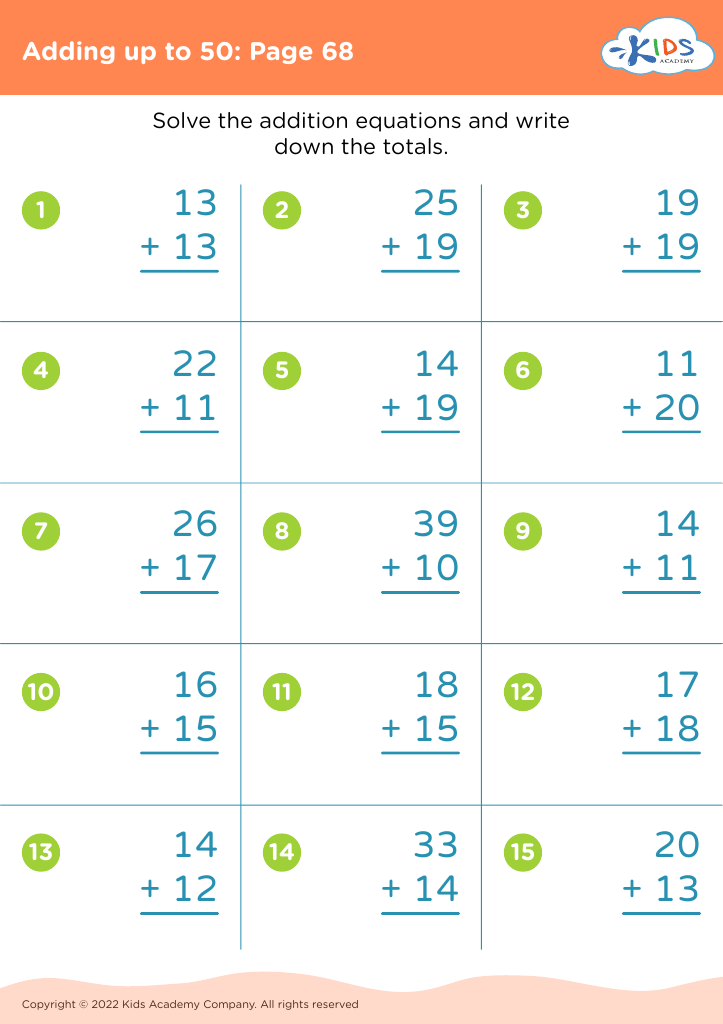
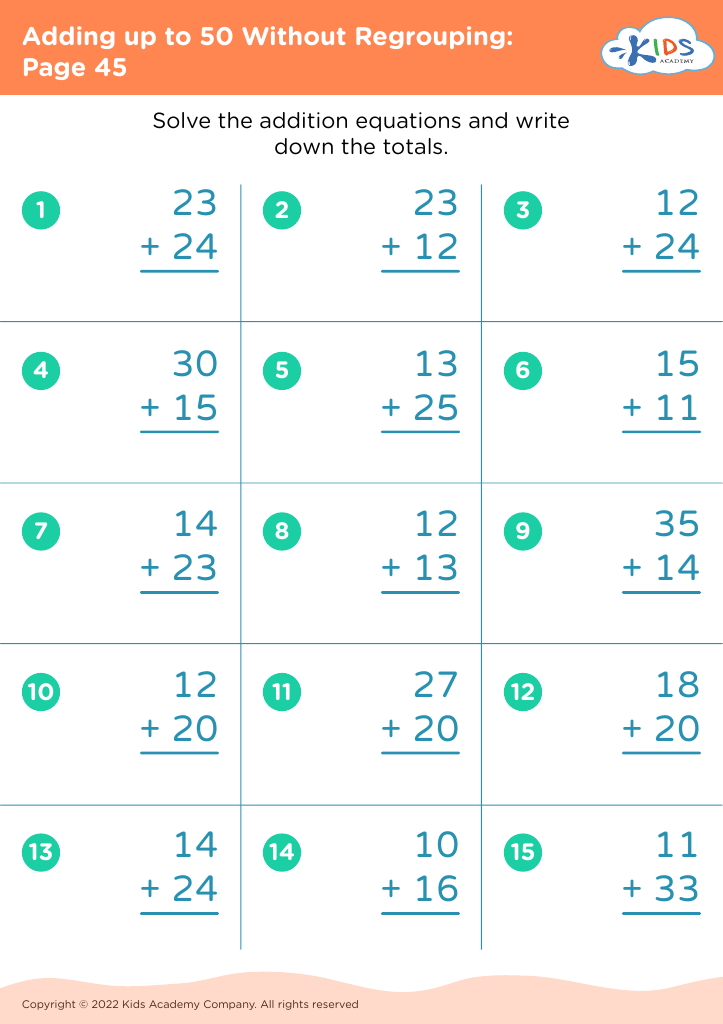
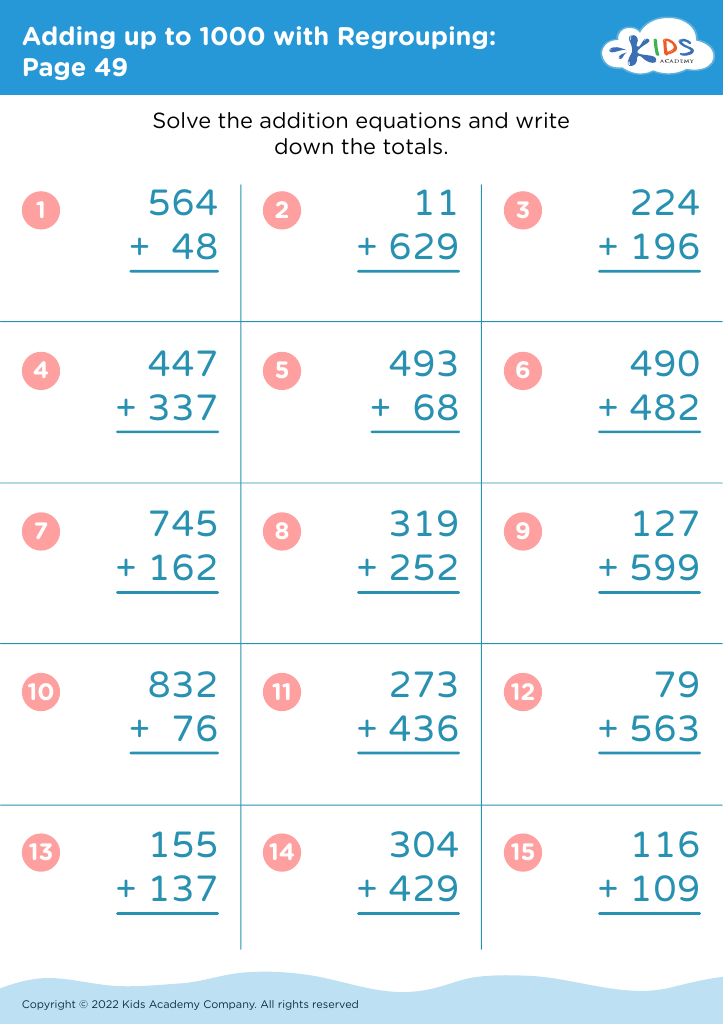
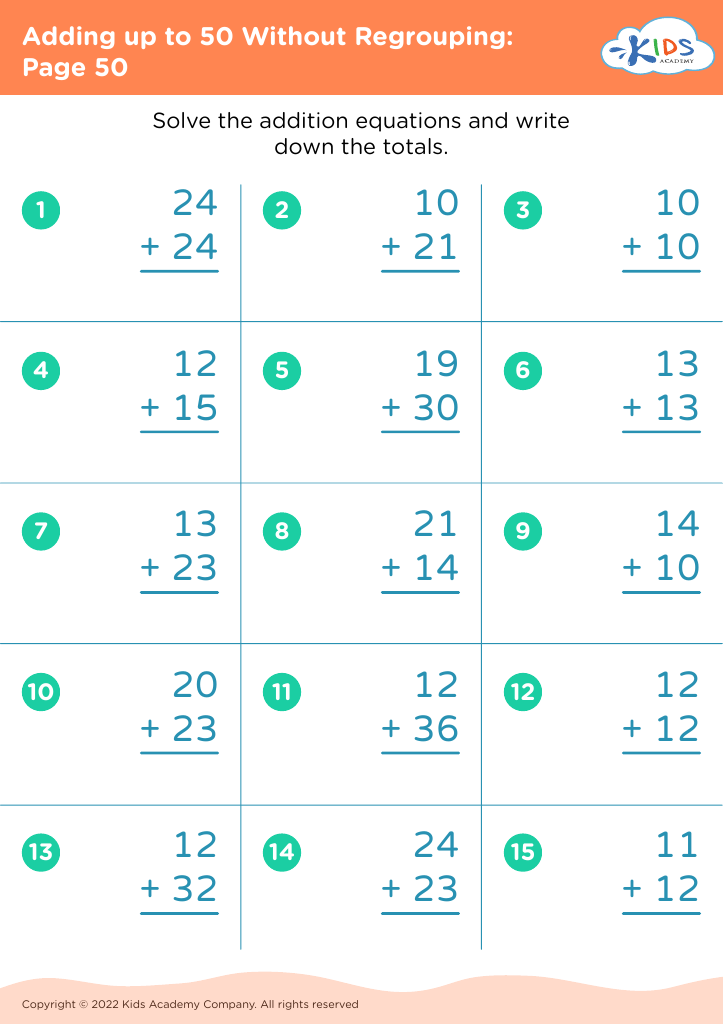
Enhance your child's math skills with our "Recognizing Equivalent Fractions Addition & Subtraction Worksheets" designed specifically for ages 7-8. These engaging worksheets help young learners comprehend the concept of equivalent fractions through fun exercises and real-life examples. With a focus on both addition and subtraction, children will practice recognizing and working with fractions that represent the same value, reinforcing their understanding of this essential math concept. Our user-friendly layout, colorful illustrations, and varied activities make learning interactive and enjoyable. Perfect for home and classroom use, these worksheets support early math education, laying a strong foundation for future learning.








Recognizing equivalent fractions is a crucial skill for children ages 7-8 as it lays the foundation for understanding more complex mathematical concepts. When parents and teachers focus on this skill, they help children grasp the relationship between different fractions, enabling them to see that fractions can represent the same value, even if they look different.
By mastering equivalent fractions, students enhance their ability to add and subtract fractions effectively. For example, understanding that 1/2 is equivalent to 2/4 is key when combining fractions that share different denominators. This knowledge aids in problem-solving and promotes numerical flexibility, essential for future mathematical operations.
Moreover, recognizing equivalent fractions builds confidence in young learners. As they practice, children develop critical thinking skills that encourage them to approach problems with a solution-oriented mindset. When parents and teachers actively support this learning process, they foster an environment that values mathematics, making it engaging and meaningful. This foundational skill not only contributes to academic success in math but also cultivates a positive attitude towards learning in general. Engaging in fun, interactive activities can strengthen this knowledge and maintain children's interest in mathematics.








