Understand subtraction Addition & Subtraction Worksheets for Ages 7-8
6 filtered results
-
From - To
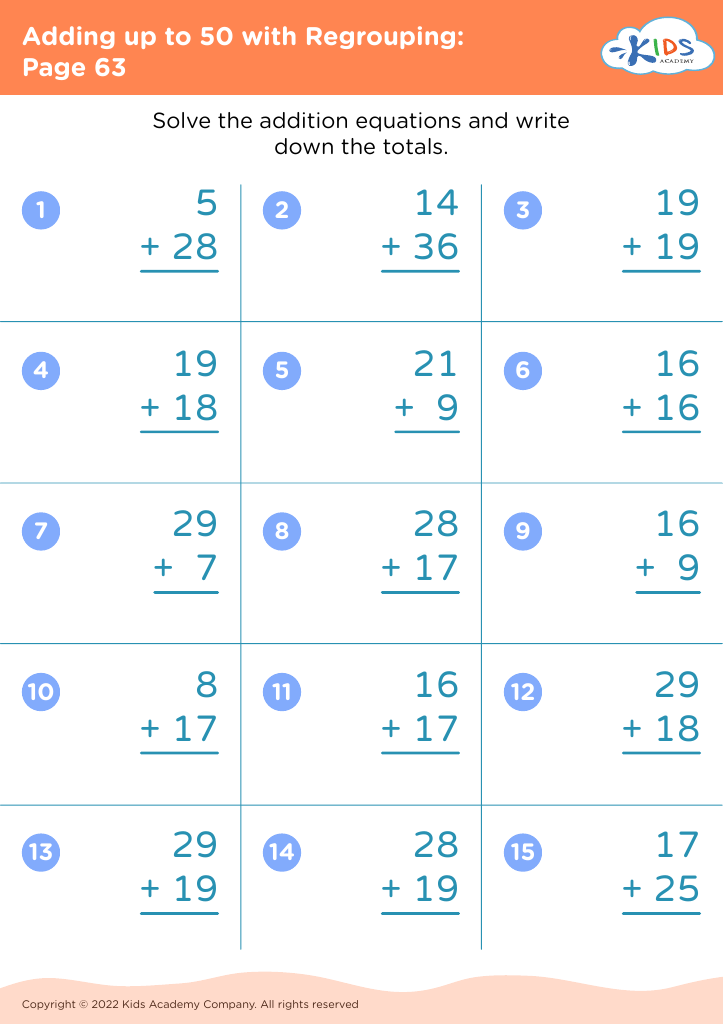
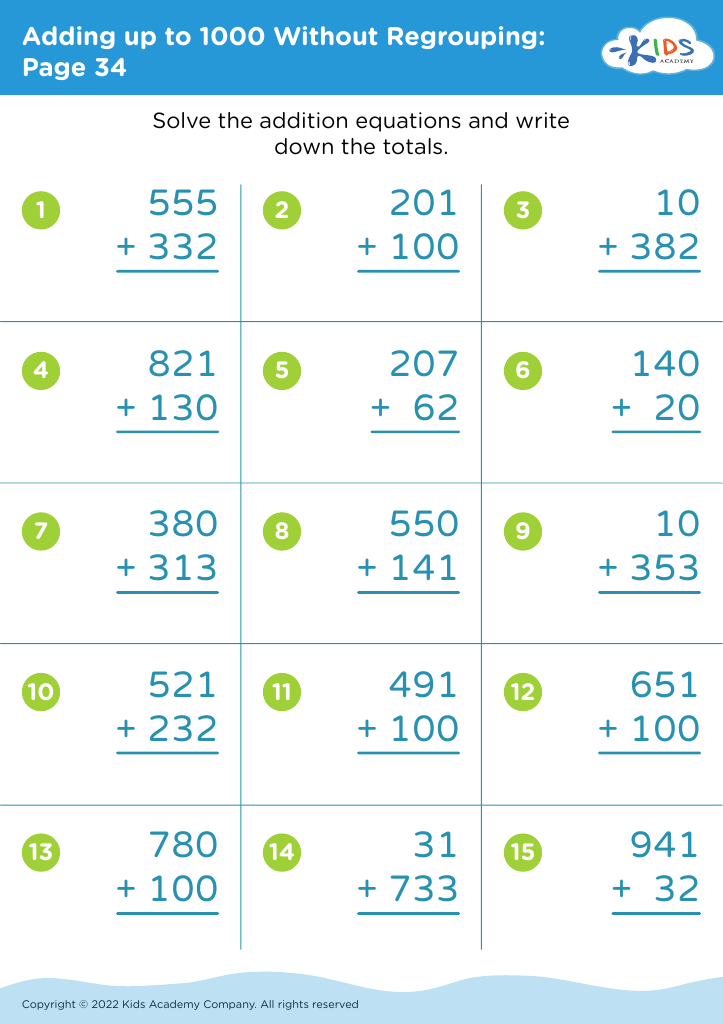
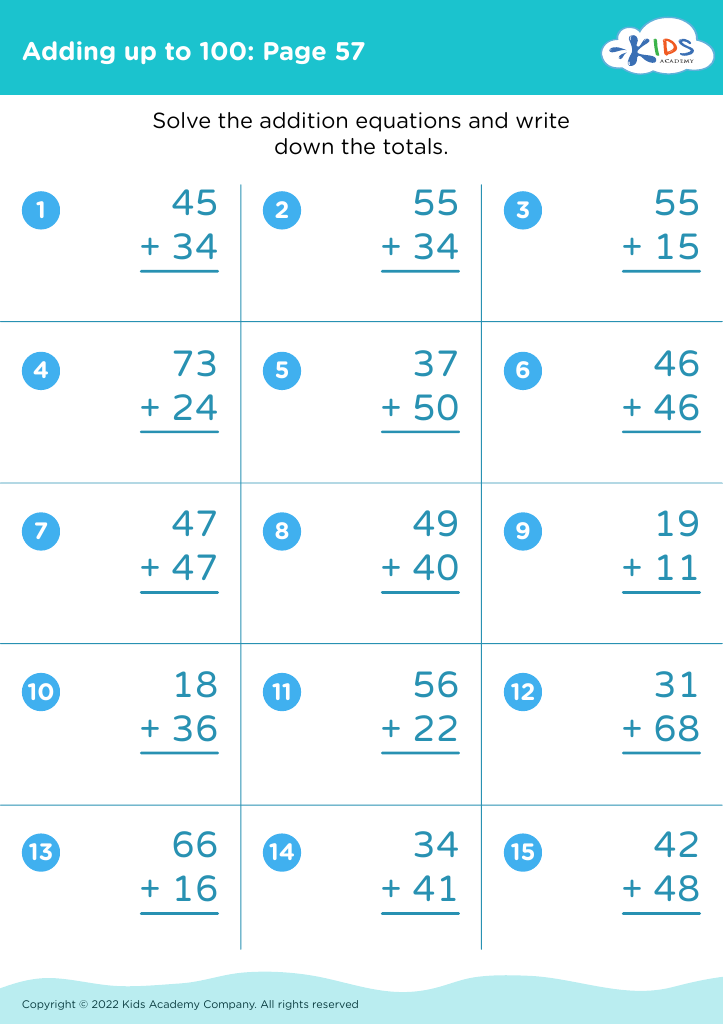
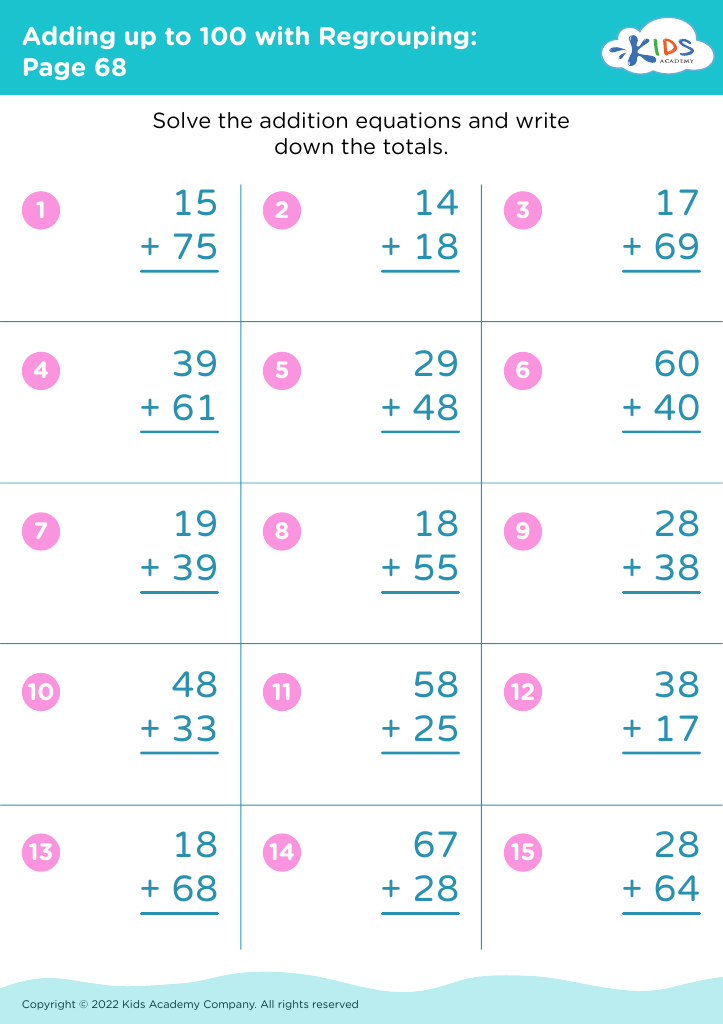
Discover our engaging Addition & Subtraction worksheets designed specifically for children ages 7-8! These resources help young learners master the concept of subtraction while reinforcing addition skills. Each worksheet offers a variety of activities that promote critical thinking and help students understand the relationship between addition and subtraction. With colorful illustrations and age-appropriate examples, children will stay motivated and enjoy the learning process. Ideal for classroom use or at-home practice, our worksheets serve to enhance math confidence and proficiency in early learners. Explore our collection today and support your child's journey to mathematical success!
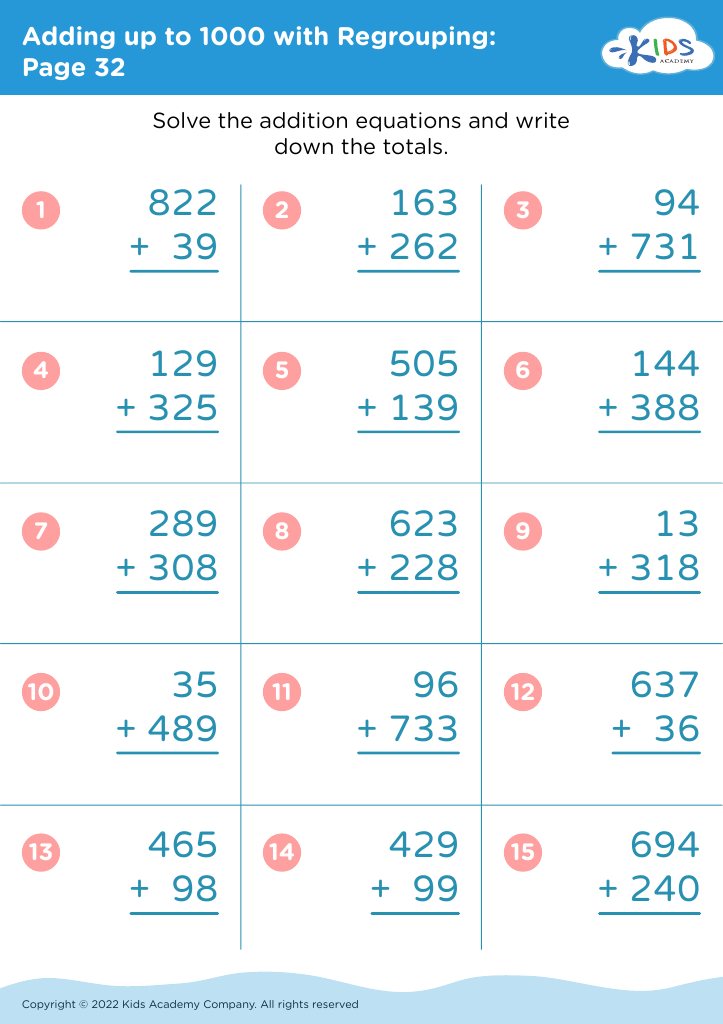
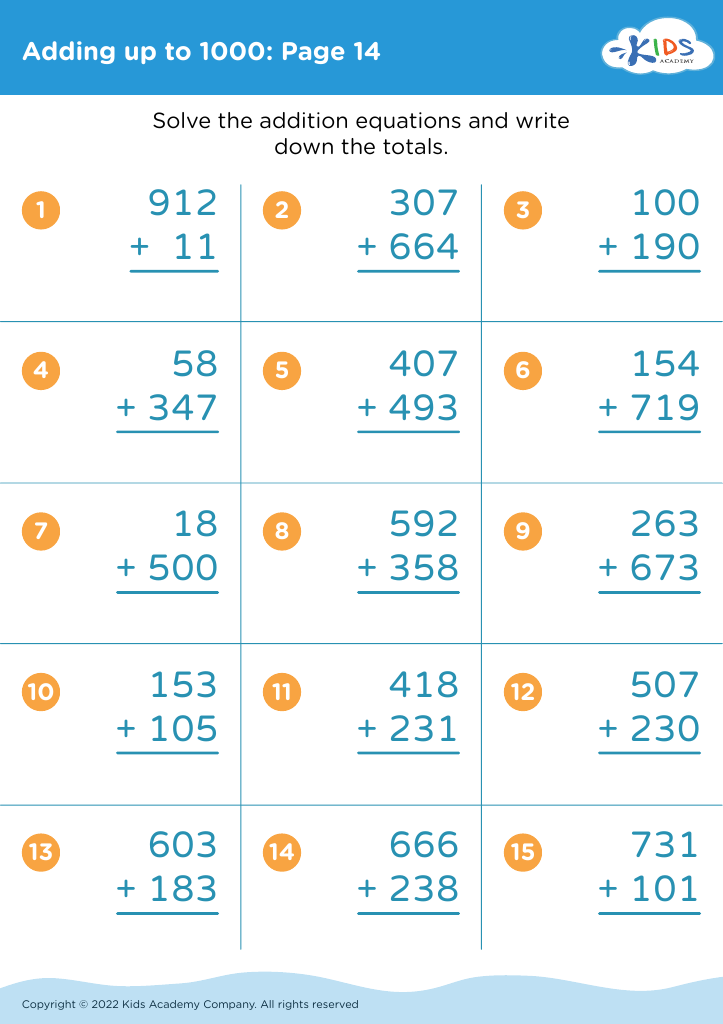








Understanding addition and subtraction is crucial for children aged 7-8, as it lays the foundation for their future mathematical learning and critical thinking skills. At this stage, children transition from concrete number manipulation to abstract thinking, and mastery of these concepts enhances their confidence and motivation in mathematics.
Parents and teachers play key roles in this developmental phase. Proficiency in addition and subtraction not only aids in tackling word problems but also strengthens problem-solving and reasoning abilities. This skill set fosters a strong mathematical framework enabling students to tackle more complex concepts in later grades, such as multiplication, division, and even advanced topics like fractions and decimals.
Moreover, these basic arithmetic operations are applicable in everyday life, helping children learn to budget, understand time, and estimate costs—skills vital for their independence and daily decision-making. Engaging with students through interactive activities supports their learning, making math enjoyable and relevant.
By prioritizing the understanding of addition and subtraction, parents and teachers are not just teaching math; they are equipping children with essential skills for academic success and practical living. This investment in critical early education ultimately supports children's overall development and future opportunities.








