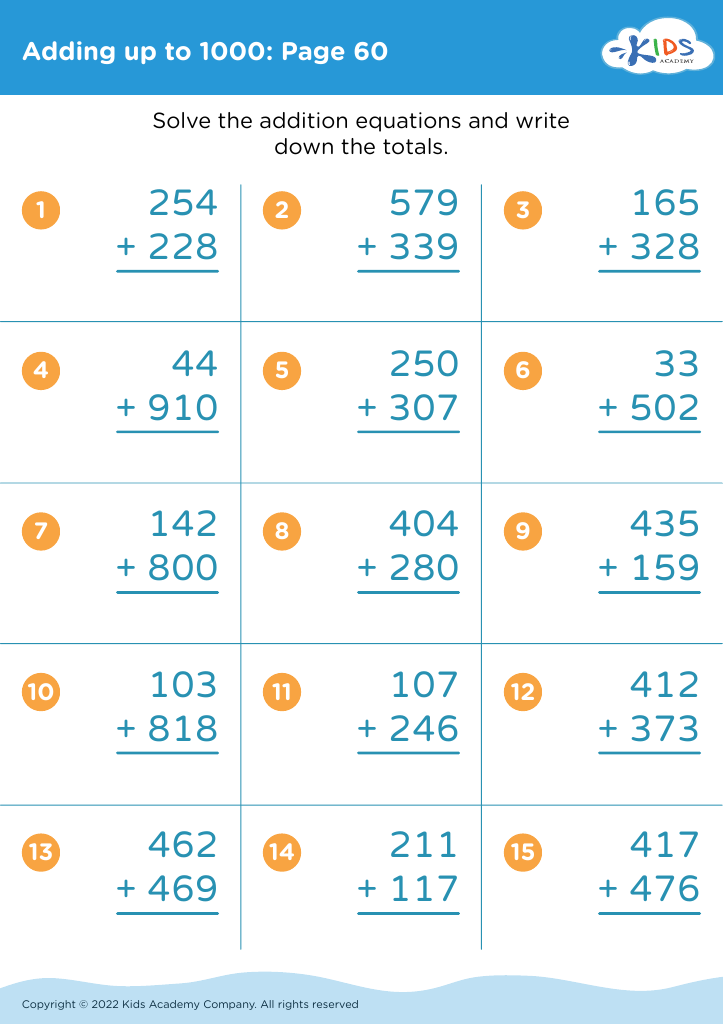
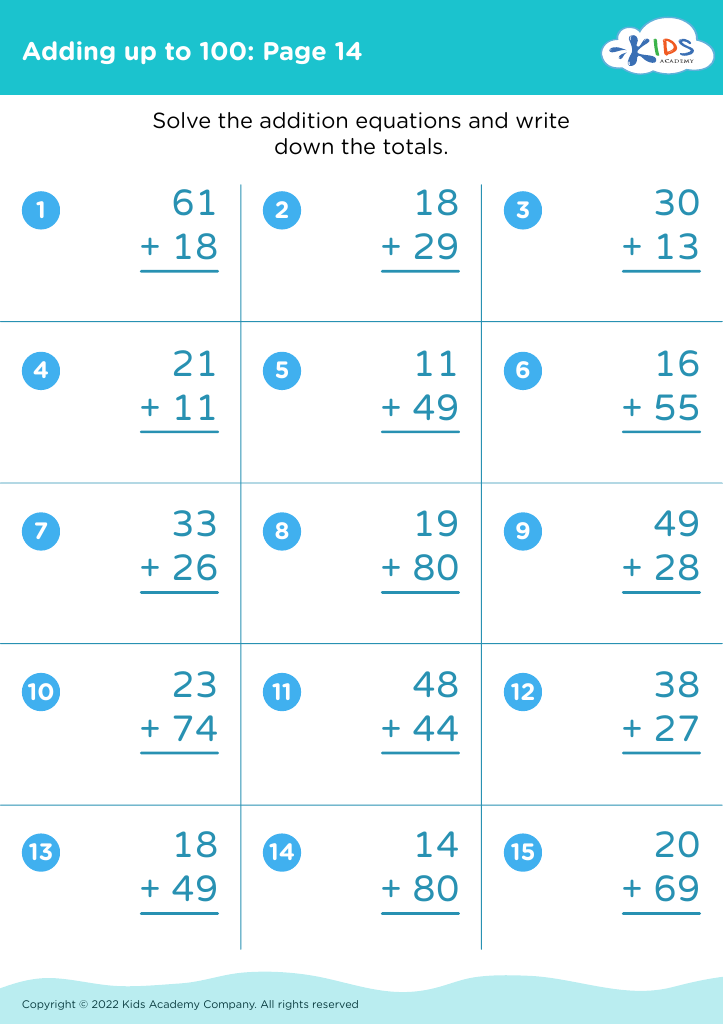
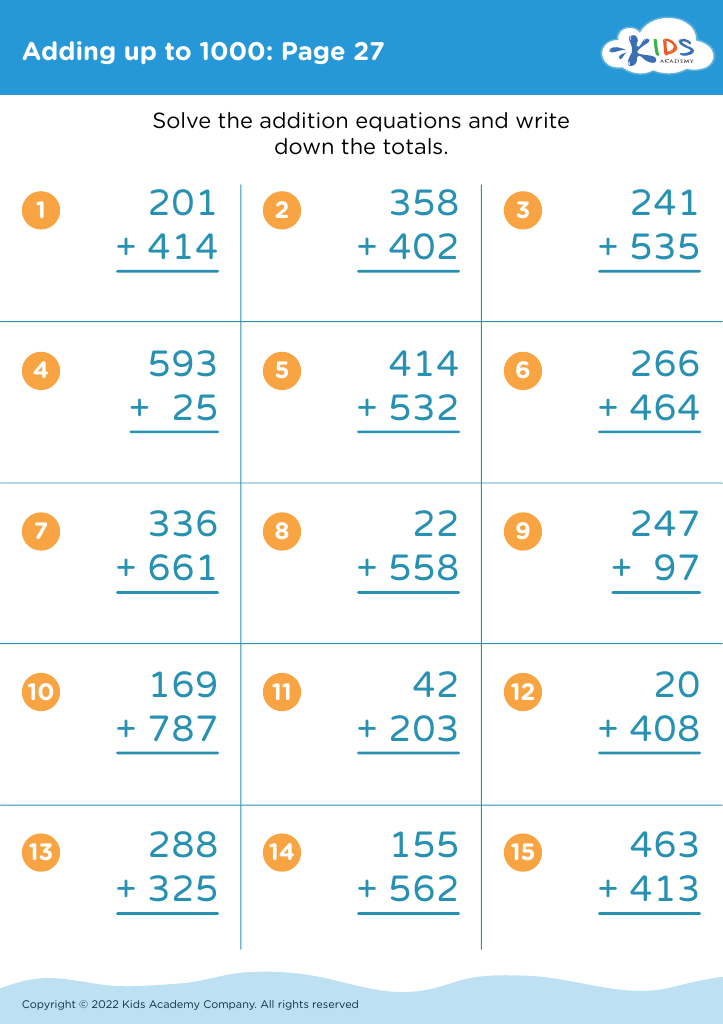
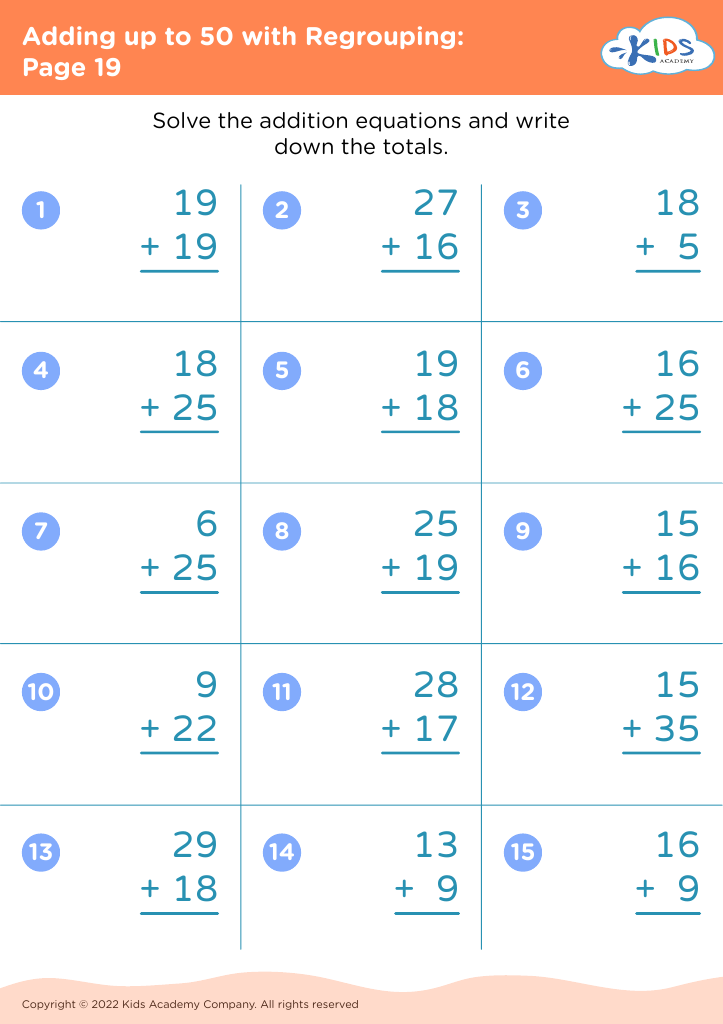
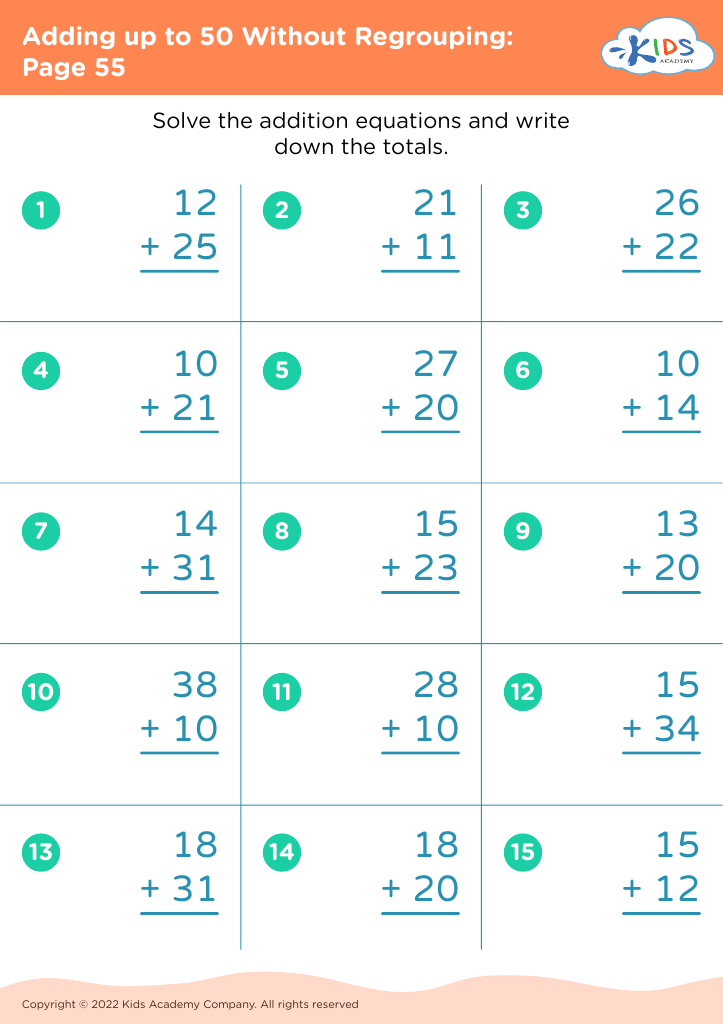
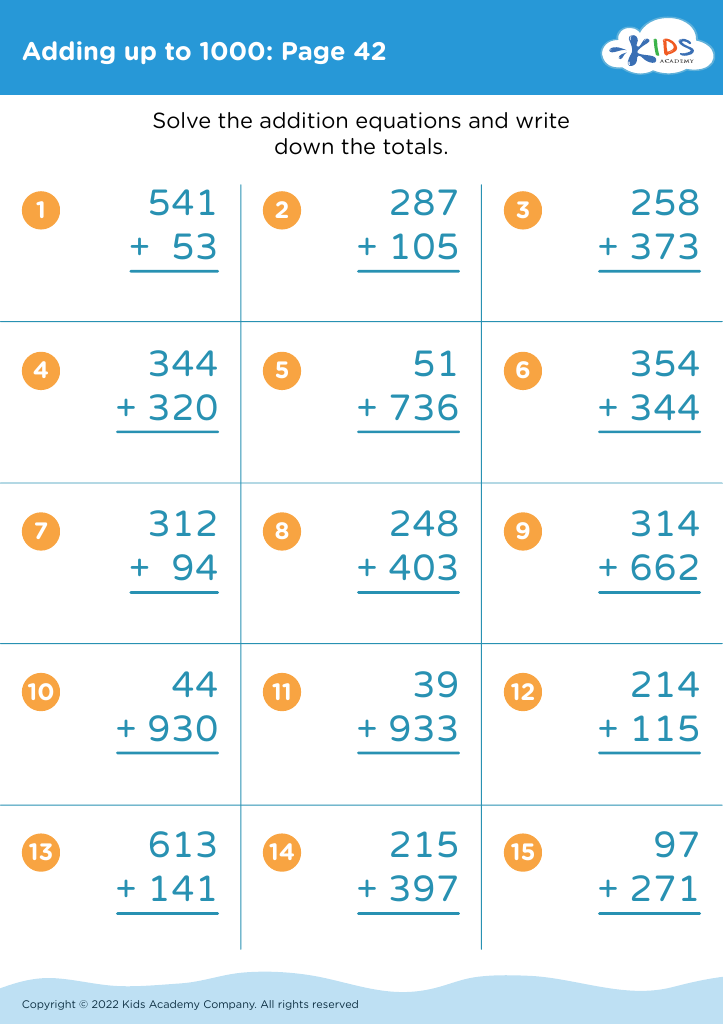
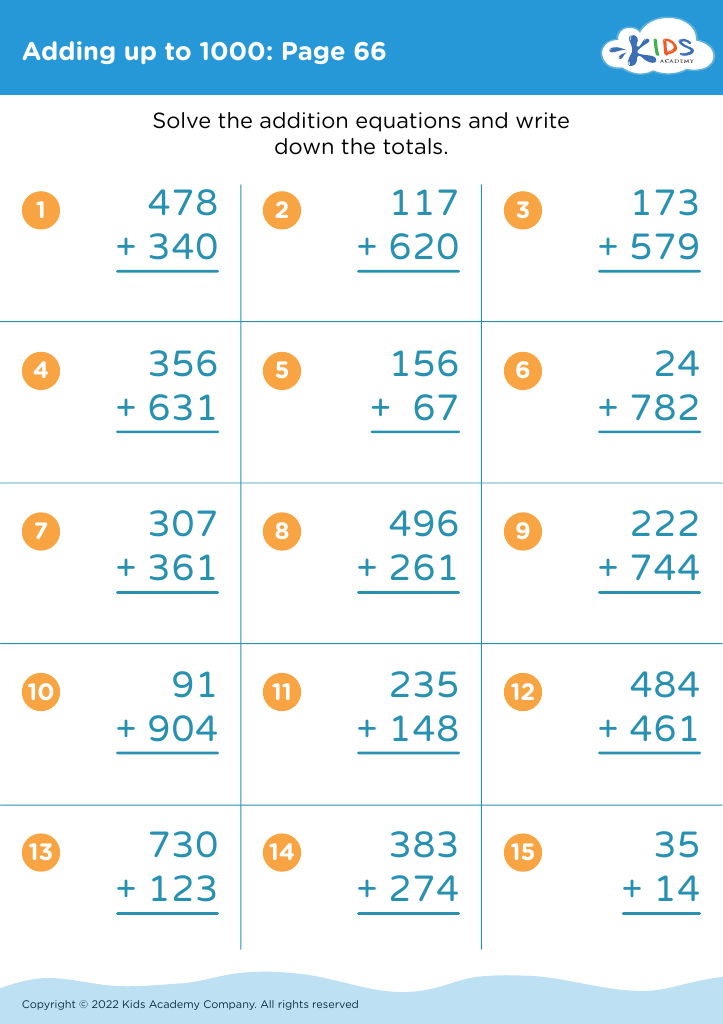
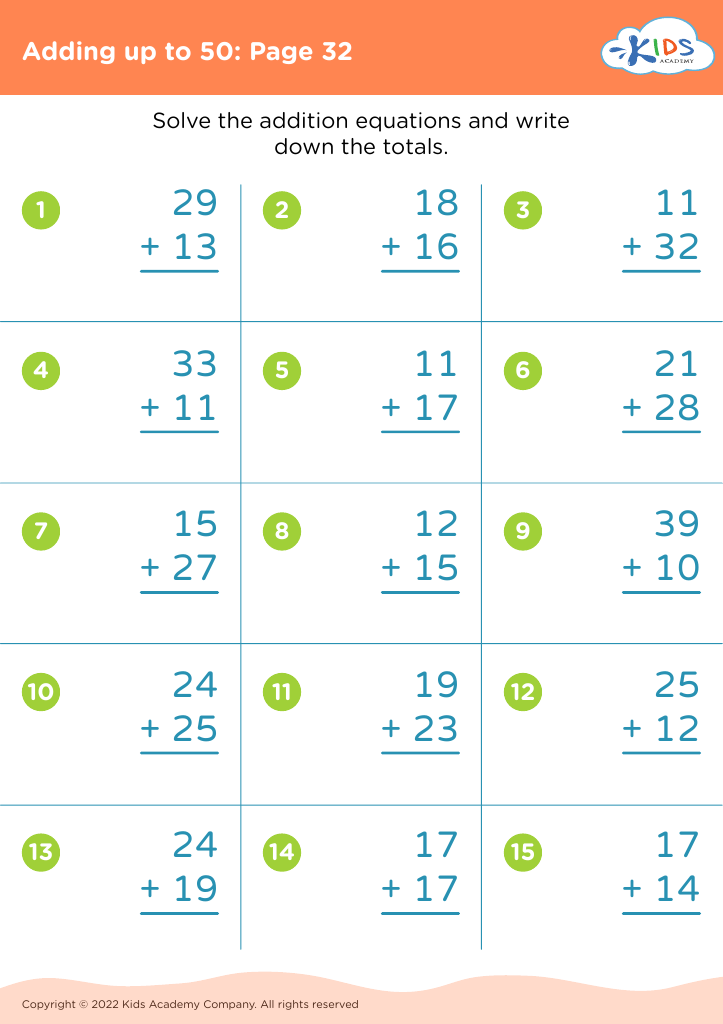








Parents and teachers should prioritize addition practice for children ages 7-8 due to its foundational role in their overall math competence. At this age, children are transitioning from simple arithmetic to more complex mathematical concepts, and mastering addition is crucial for their future success in mathematics. Regular practice not only reinforces their ability to add quickly and accurately but also helps develop essential problem-solving skills.
Furthermore, addition proficiency is linked to confidence in math, which has long-term effects on a child's attitude towards the subject. A strong grasp of addition can ease the learning of subtraction, multiplication, and division, creating a cohesive understanding of arithmetic.
Additionally, engaging in addition practice fosters a child's cognitive development. It enhances critical thinking, improves memory skills, and encourages logical reasoning. By providing structured and fun addition activities—whether through games or worksheets—adults can create a positive learning environment that strengthens these skills and instills a love for math.
Ultimately, consistent addition practice during these formative years prepares children not only for academic challenges but also for real-life situations where math plays a vital role. Ensuring children feel confident in their addition skills will yield benefits that last a lifetime.








