Addition skills Addition Worksheets for Ages 7-8 - Page 2
27 filtered results
-
From - To
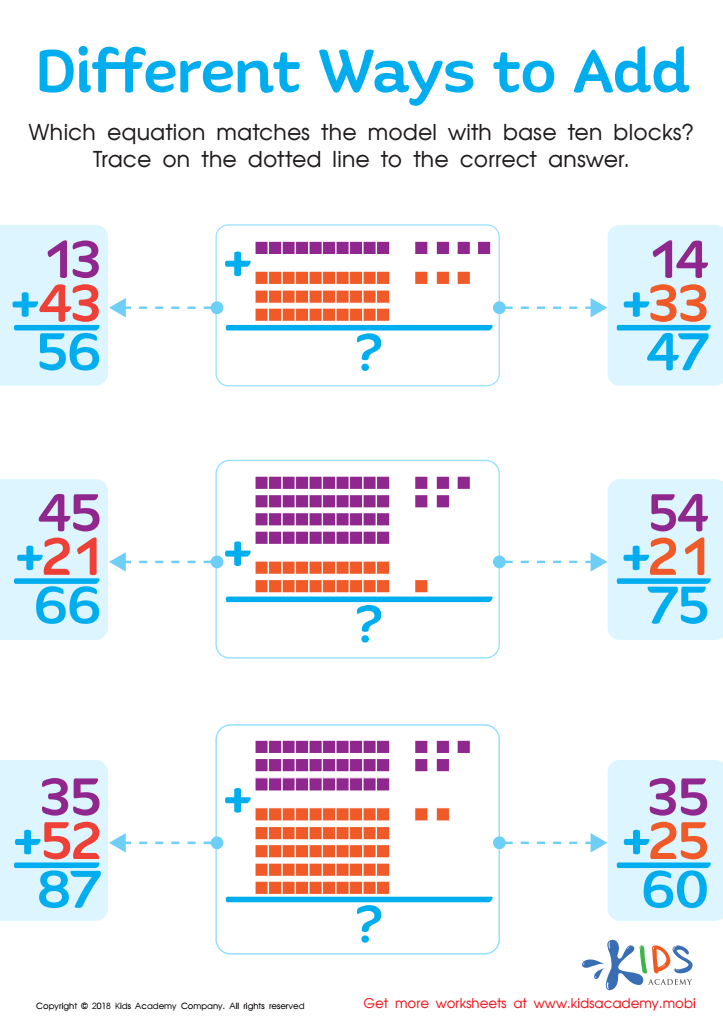
Different Ways to Add Worksheet
 Assign to My Students
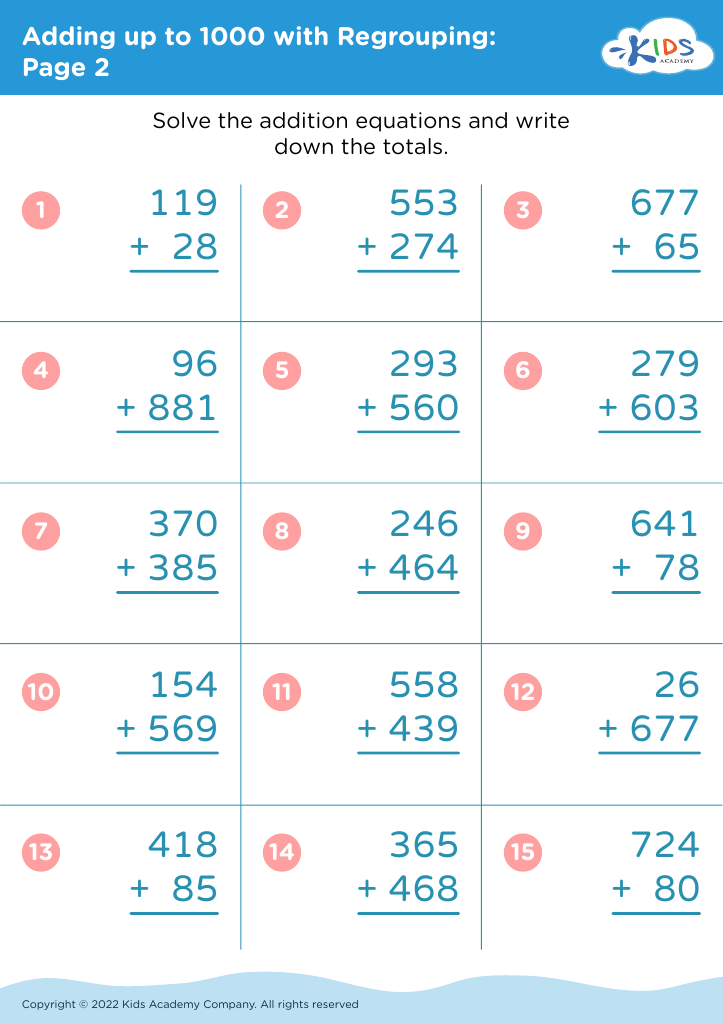
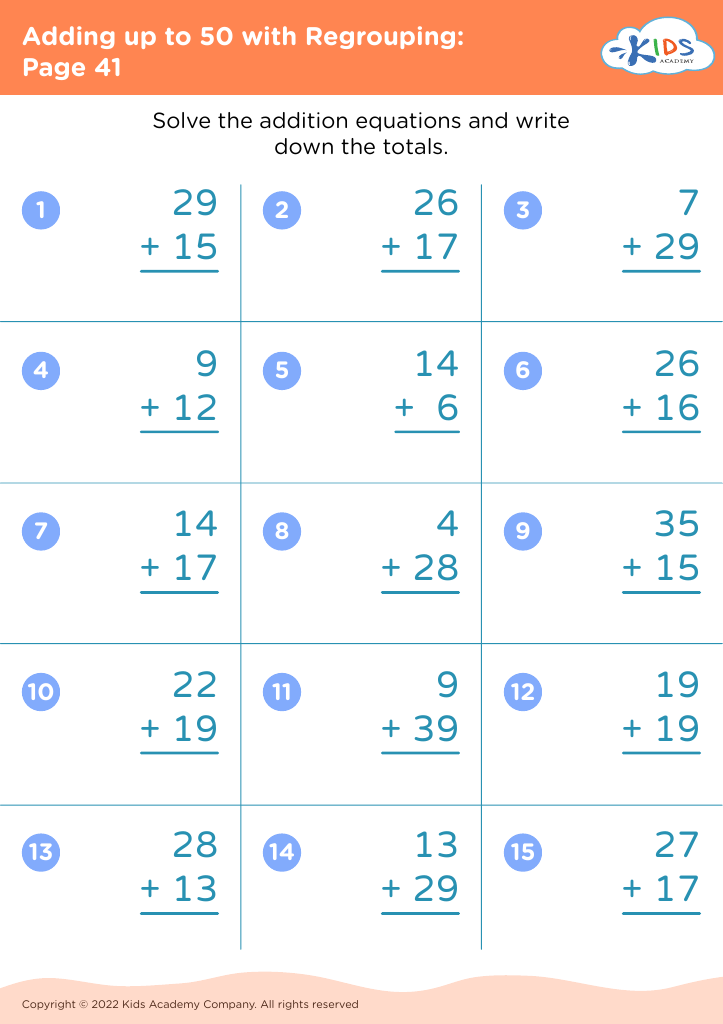








Addition skills are fundamental building blocks for a child's mathematical understanding, particularly for those aged 7-8. At this developmental stage, children typically transition from basic arithmetic to more complex problem-solving. Proficiency in addition not only helps with future math concepts but also enhances logical thinking and analytical skills critical in everyday situations.
Parents and teachers should care about fostering strong addition skills since they contribute to a child's confidence in their academic abilities. A solid foundation in addition allows students to tackle multi-digit operations, understand place value, and begin exploring other mathematical concepts like subtraction, multiplication, and even division. It prepares them for real-world scenarios, such as budgeting and time management.
Moreover, math competence in early grades positively affects overall academic performance, influencing language and reading skills. When children grasp addition, they are more likely to enjoy mathematics and see it as an accessible, manageable subject. Encouraging consistent practice and demonstrating the relevance of these skills can unite parents and teachers in promoting a supportive learning environment, ensuring that children build a robust mathematical foundation essential for lifelong learning and problem-solving.








