Color matching Addition Worksheets for Ages 7-8
3 filtered results
-
From - To
Discover our fun and educational Color Matching Addition Worksheets designed for ages 7-8! Ideal for young learners, these printable worksheets enhance math skills by combining colorful activities with addition practice. Each worksheet features engaging color-by-number exercises that help kids visualize numerical concepts while honing their addition skills. Perfect for at-home practice or classroom use, these worksheets support cognitive development and foster a love for learning math. Boost your child's confidence and proficiency in addition with our interactive and easy-to-use resources. Visit our page to download your worksheets today and make math learning an enjoyable adventure!
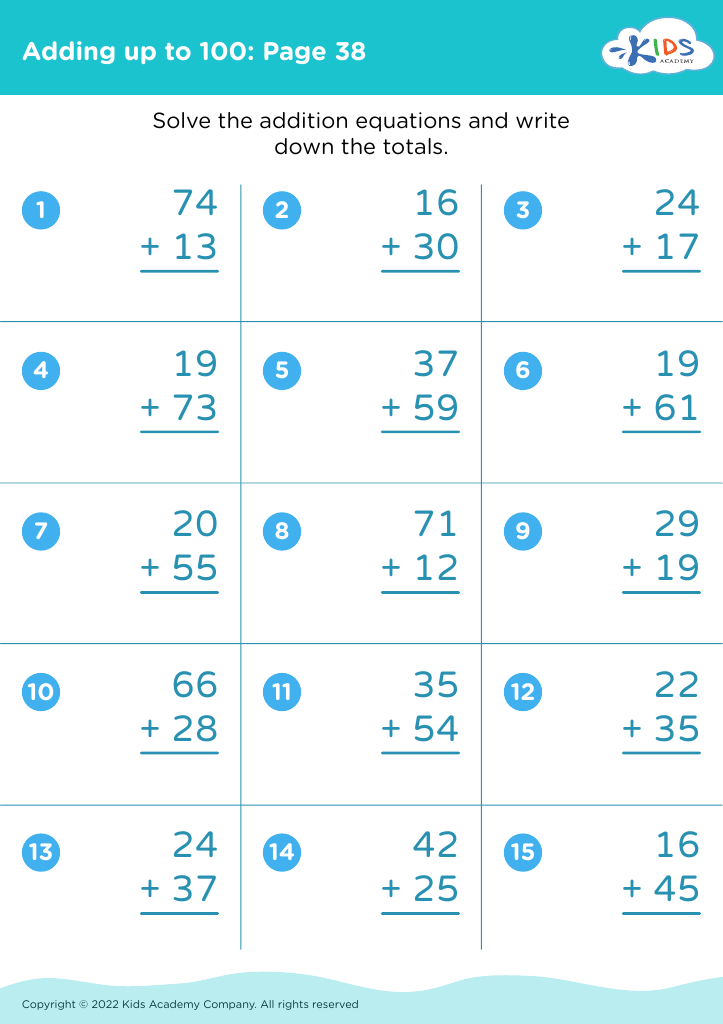
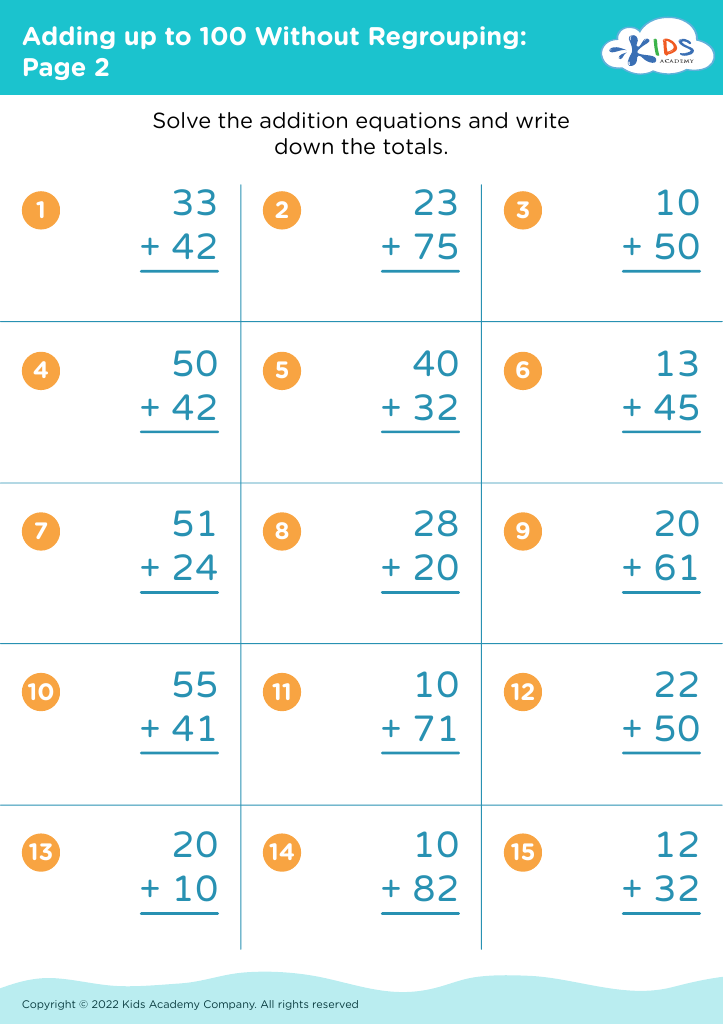
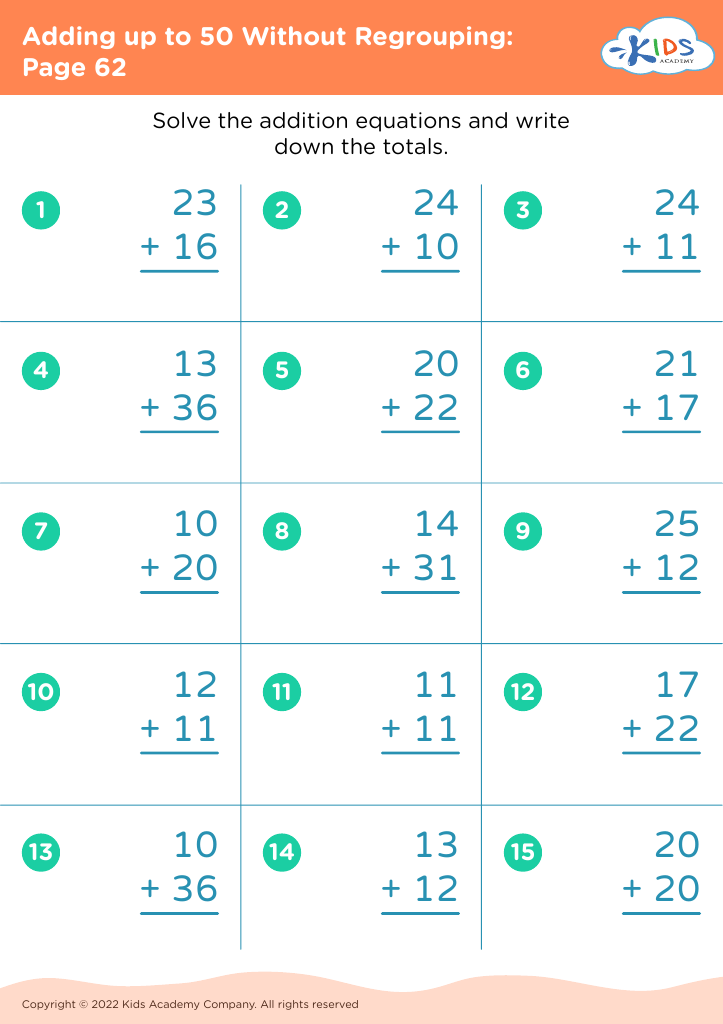








Color matching addition activities are valuable for children aged 7-8 as they offer multifaceted learning opportunities that go beyond basic arithmetic. Firstly, these activities integrate visual learning with mathematical concepts, helping young students develop a deeper understanding of numbers and operations. By associating numbers with specific colors, children can grasp addition concepts more vividly, which can be particularly beneficial for visual learners.
Such activities also enhance cognitive skills. Matching colors while performing addition exercises strengthens memory, attention to detail, and pattern recognition. These cognitive skills are foundational for academic success across various subjects, not just math.
Moreover, color matching addition makes learning engaging and enjoyable. At ages 7-8, children thrive in environments where learning feels like play. Engaging activities capture their interest better than traditional rote memorization methods, fostering a positive attitude towards math early on. This positive experience builds their confidence and encourages a proactive approach to learning new concepts.
Additionally, these activities develop fine motor skills as children often use markers or pencils to match and solve problems, promoting better hand-eye coordination and precision.
In essence, color matching addition is a holistic educational tool that reinforces math skills, boosts critical cognitive abilities, and fosters a love for learning, making it indispensable for young learners.








