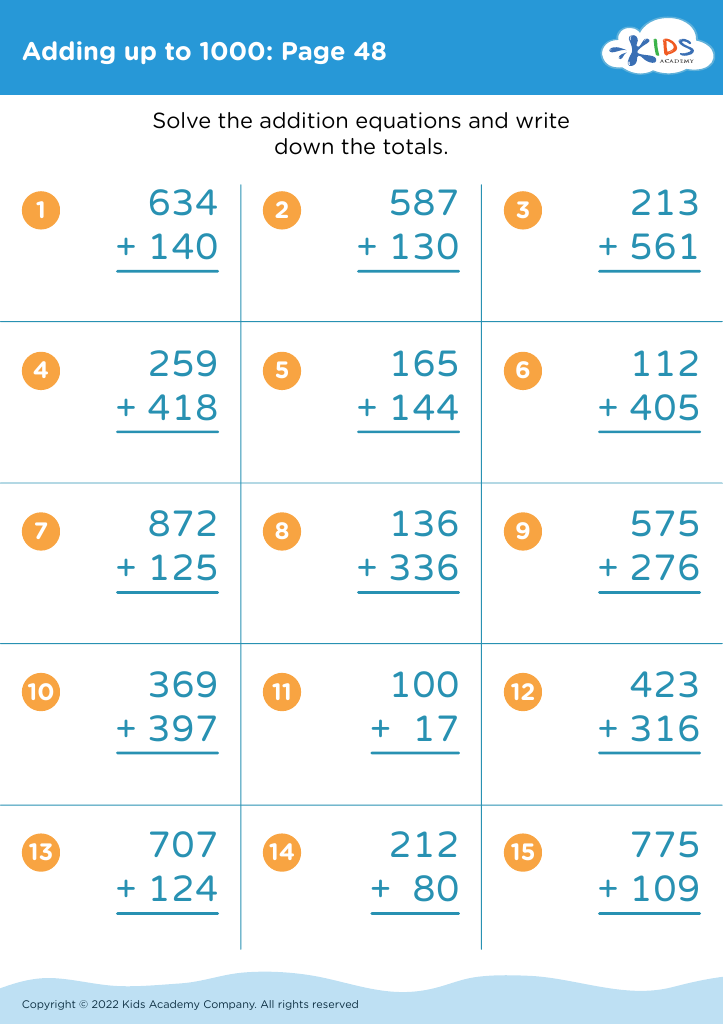
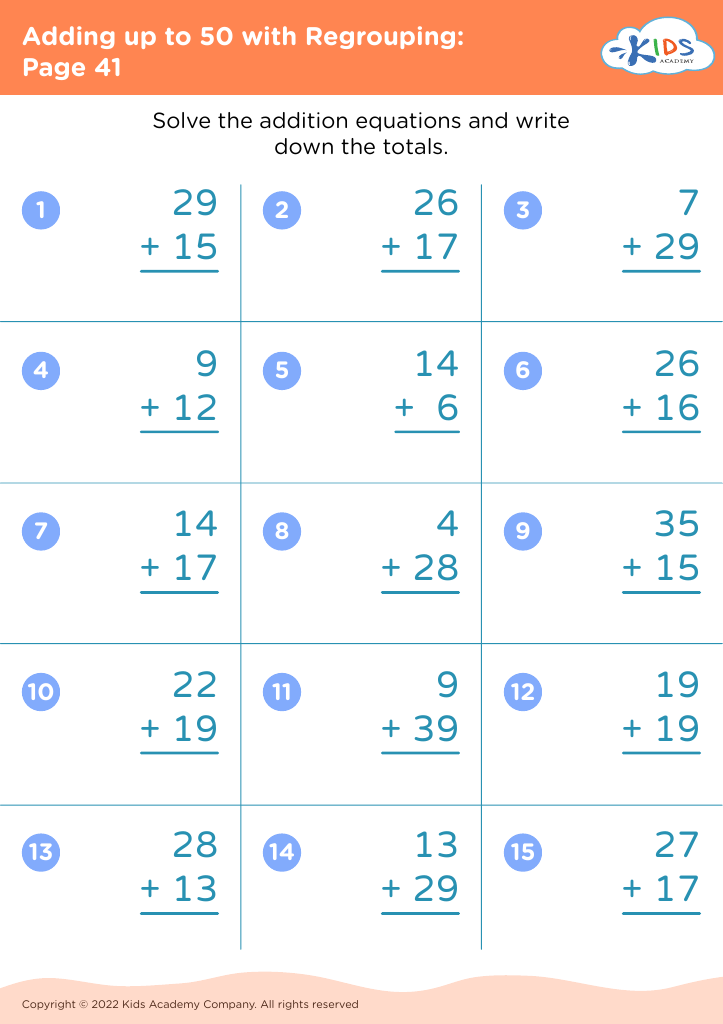
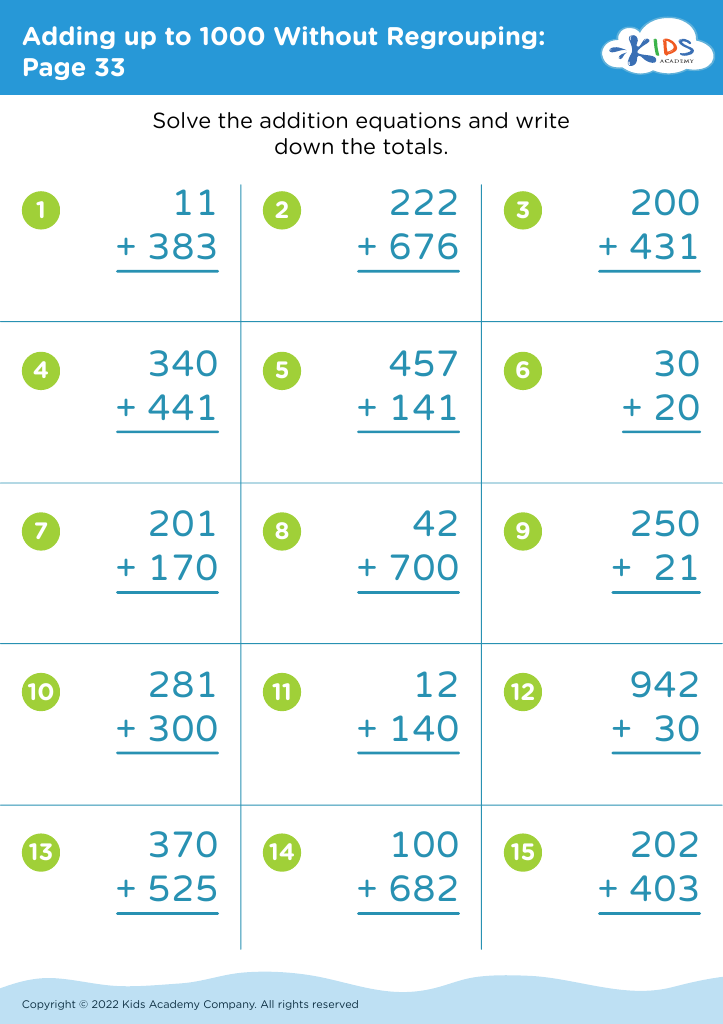
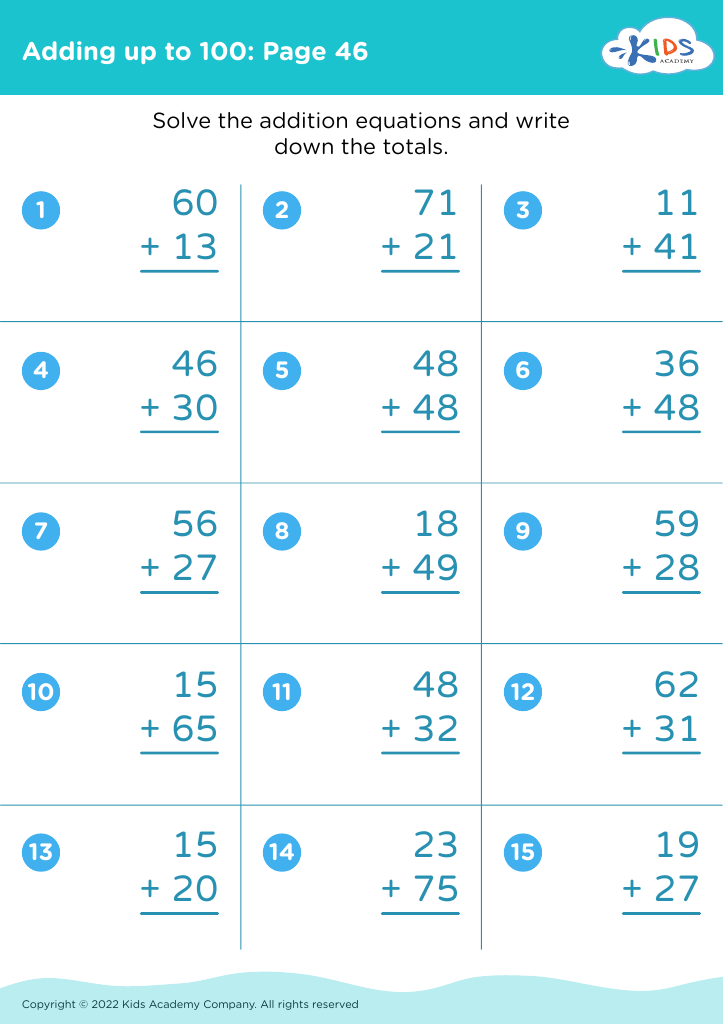








Counting practice and addition skills are fundamental building blocks for children's mathematical understanding, especially for ages 7-8. At this age, students transition from basic number recognition to more complex operations, forming the foundation for future math concepts. Engaging in counting and addition helps children develop number sense, whereby they understand how numbers relate to each other and can manipulate them effectively.
Parents and teachers should care about these practices because strong foundational skills lead to confidence and success in higher-level math later on. Additionally, counting and addition foster critical thinking and problem-solving abilities. When children engage in these exercises, they not only learn to calculate but also to think through mathematical problems logically.
Moreover, regular practice enhances fine motor skills and cognitive development, as they manipulate physical objects or use drawing and writing activities to visualize and solve addition problems. By prioritizing counting and addition, adults can identify areas where individual support may be needed, ensuring that no child falls behind. These skills also encourage a positive attitude toward math, helping to reduce anxiety and increase enjoyment, setting children up for lifelong learning and appreciation of mathematics. Thus, nurturing these skills is vital for their education and personal growth.








