Develop fine motor skills Addition Worksheets for Ages 7-8
9 filtered results
-
From - To
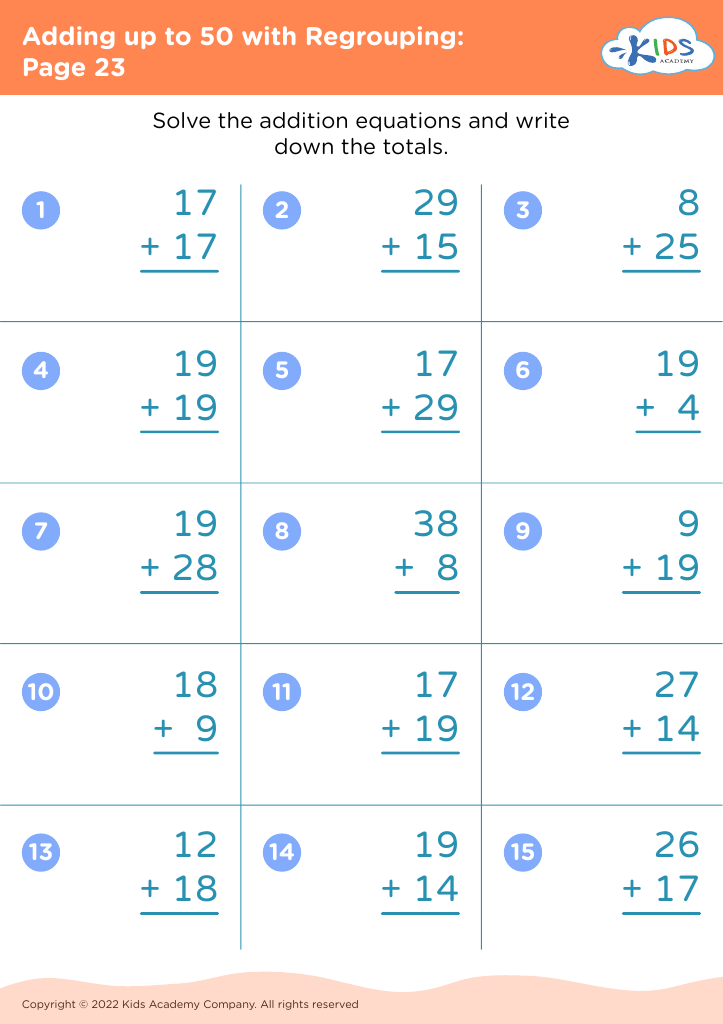
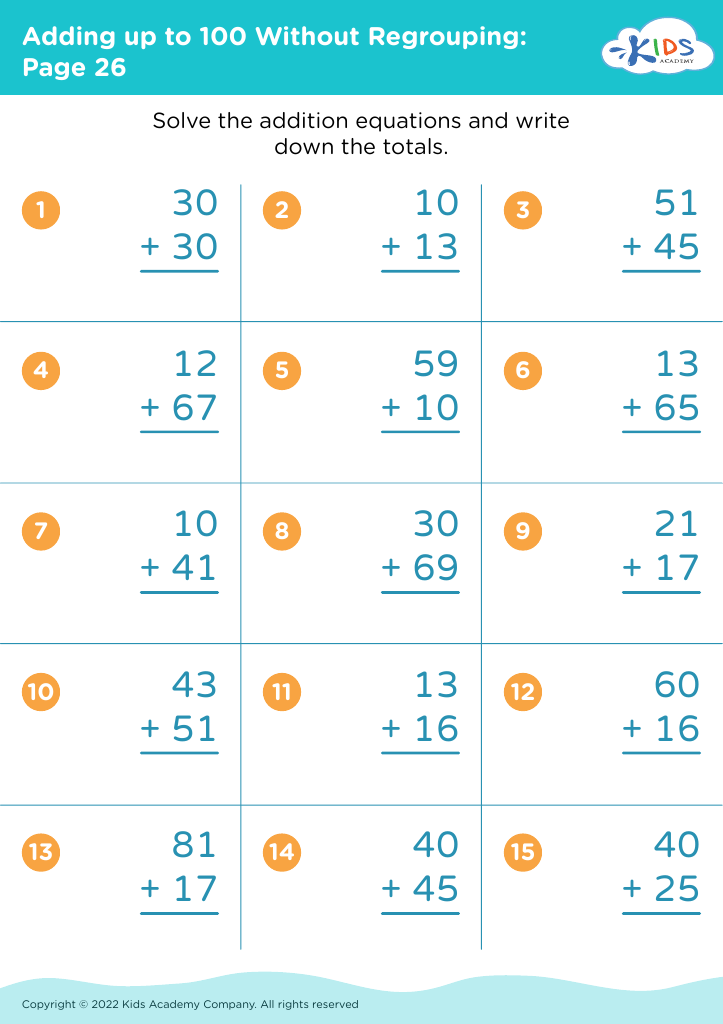
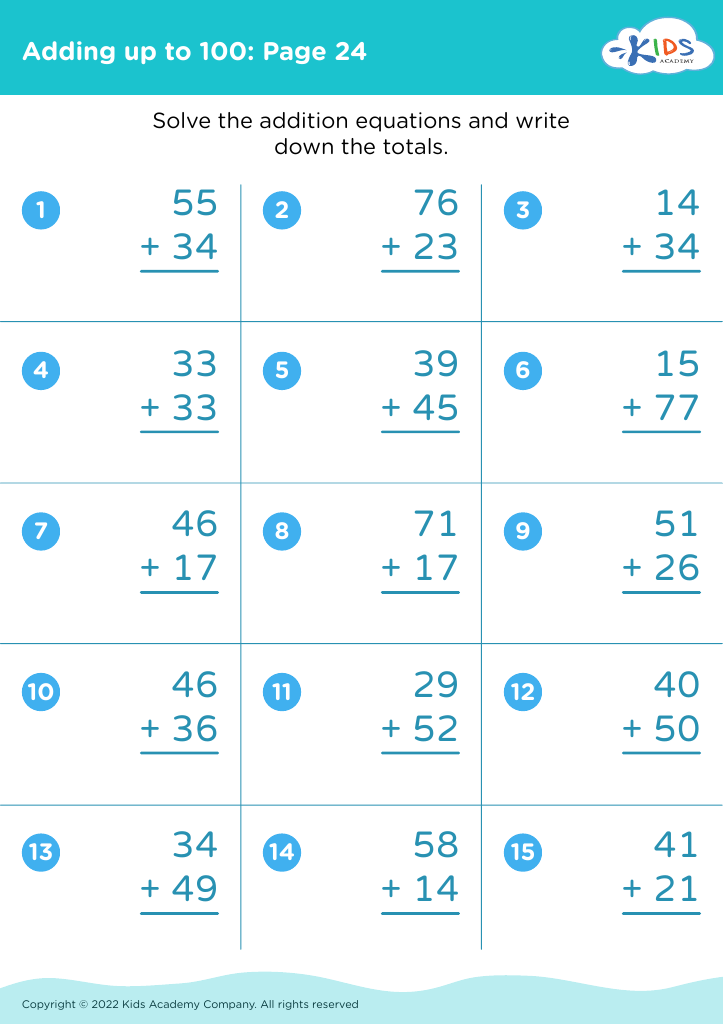
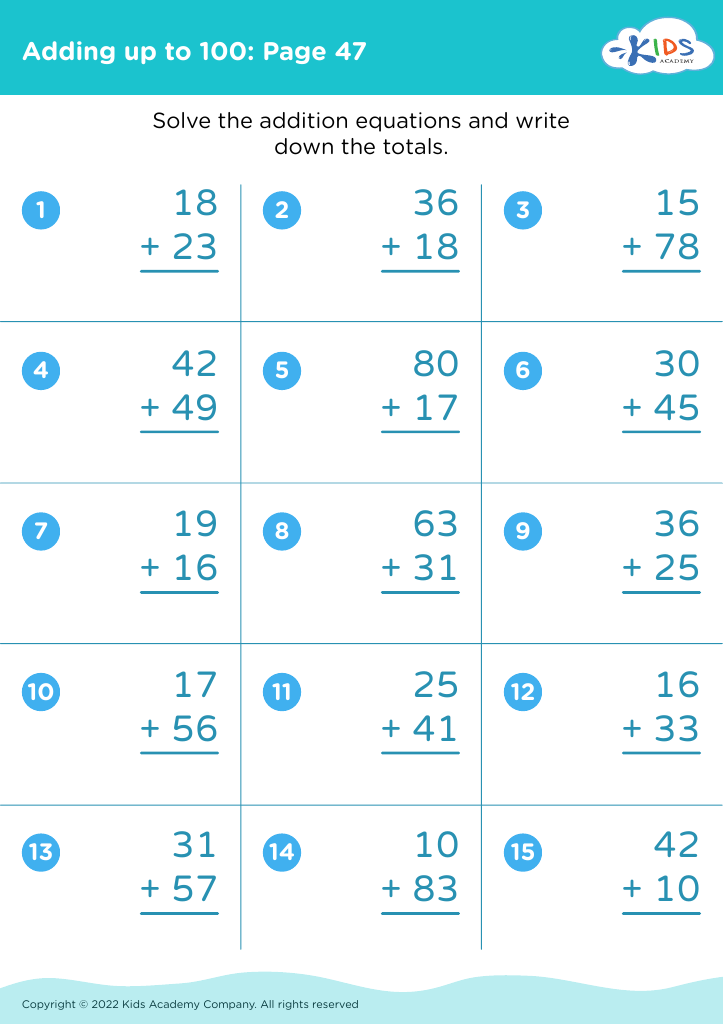
Boost your child's fine motor skills while mastering addition with our engaging worksheets designed for ages 7-8! Our meticulously crafted activities not only promote mathematical thinking but also enhance hand-eye coordination and dexterity necessary for effective writing and calculation. Each worksheet features fun, interactive exercises that integrate tracing, coloring, and cutting, making learning enjoyable. As children practice their addition skills, they simultaneously develop crucial motor skills essential for everyday tasks. Ideal for home or classroom use, these worksheets are the perfect resource to support holistic development in young learners. Explore our collection today and watch your child's skills flourish!
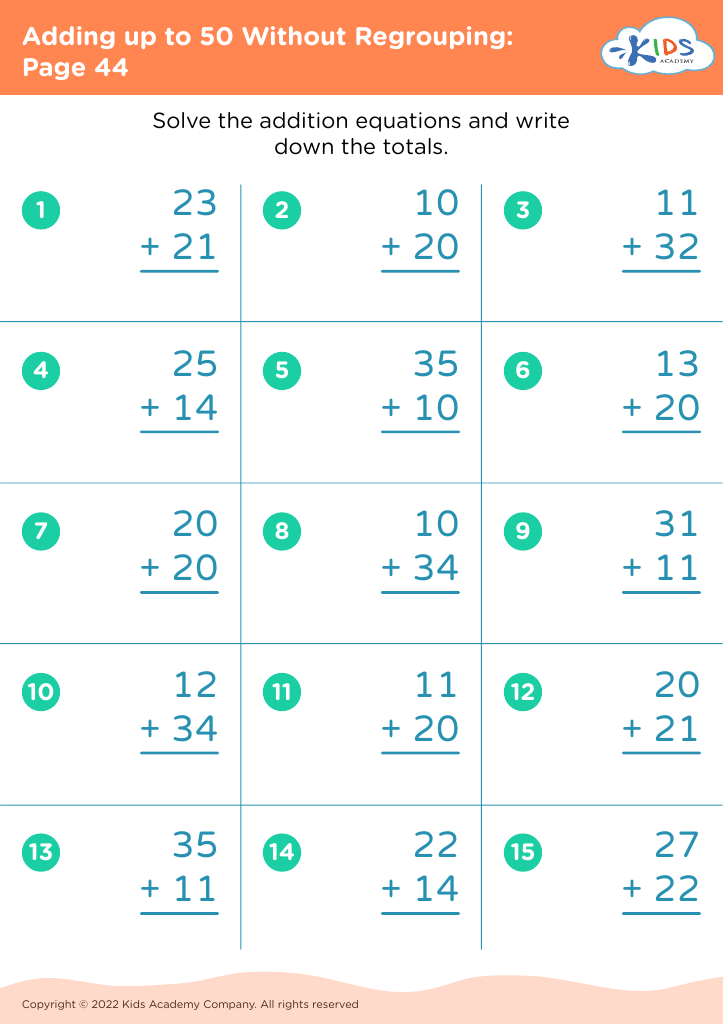
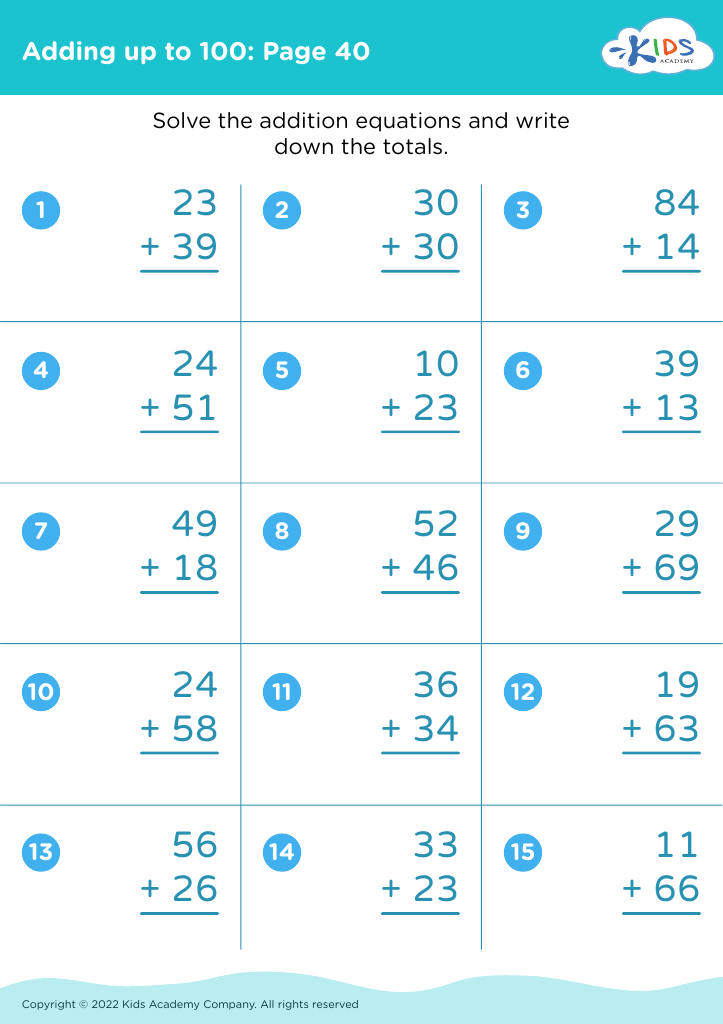
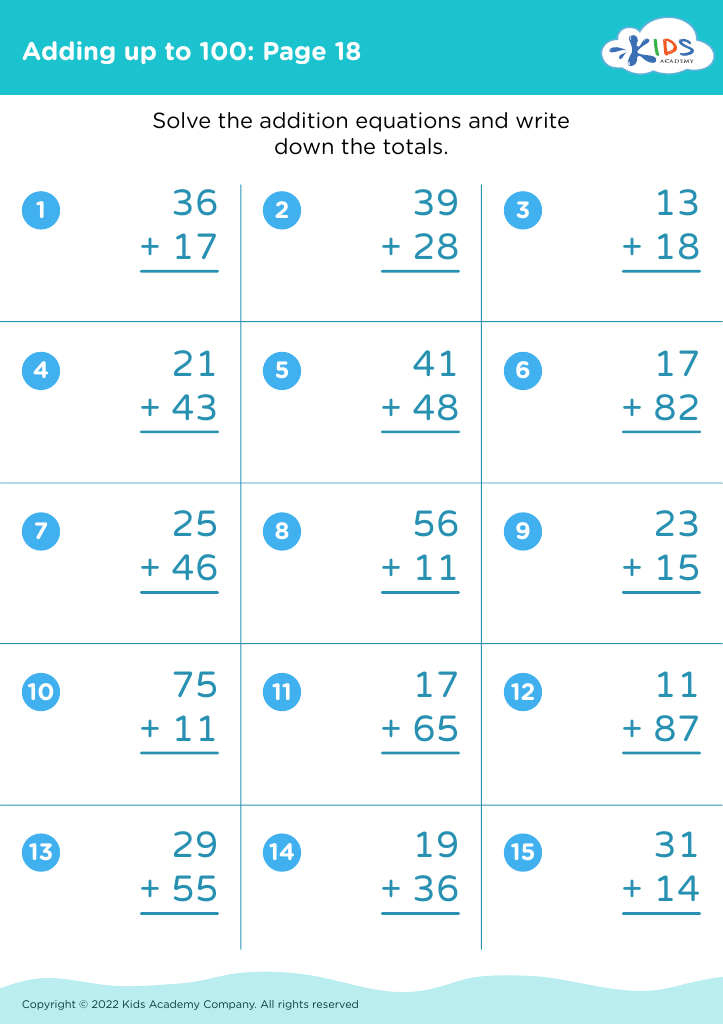
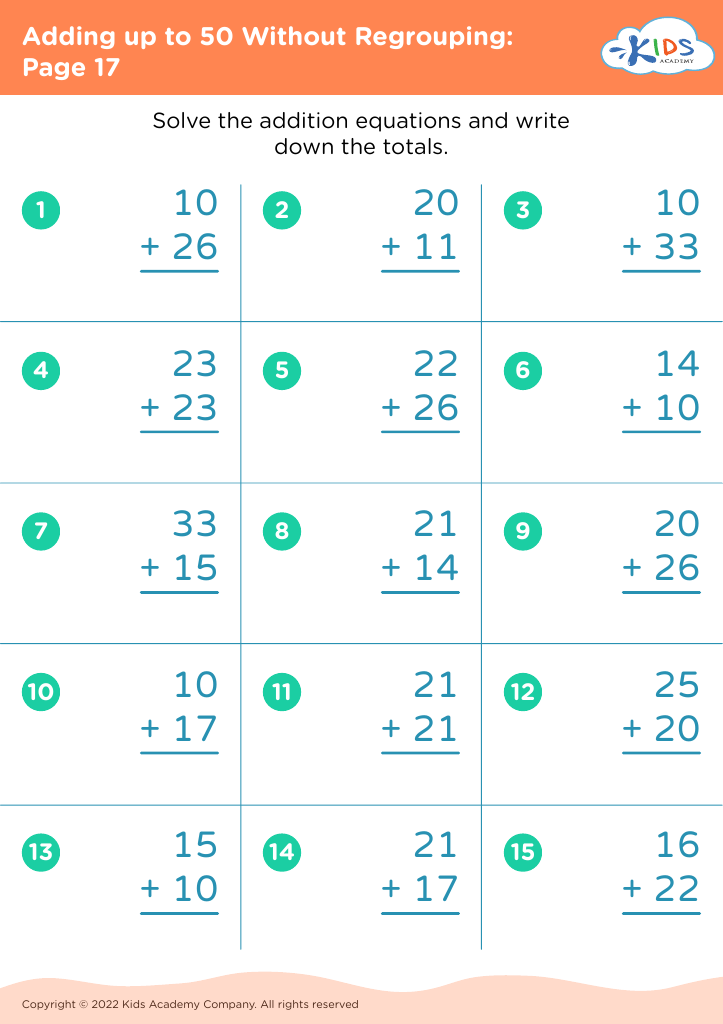
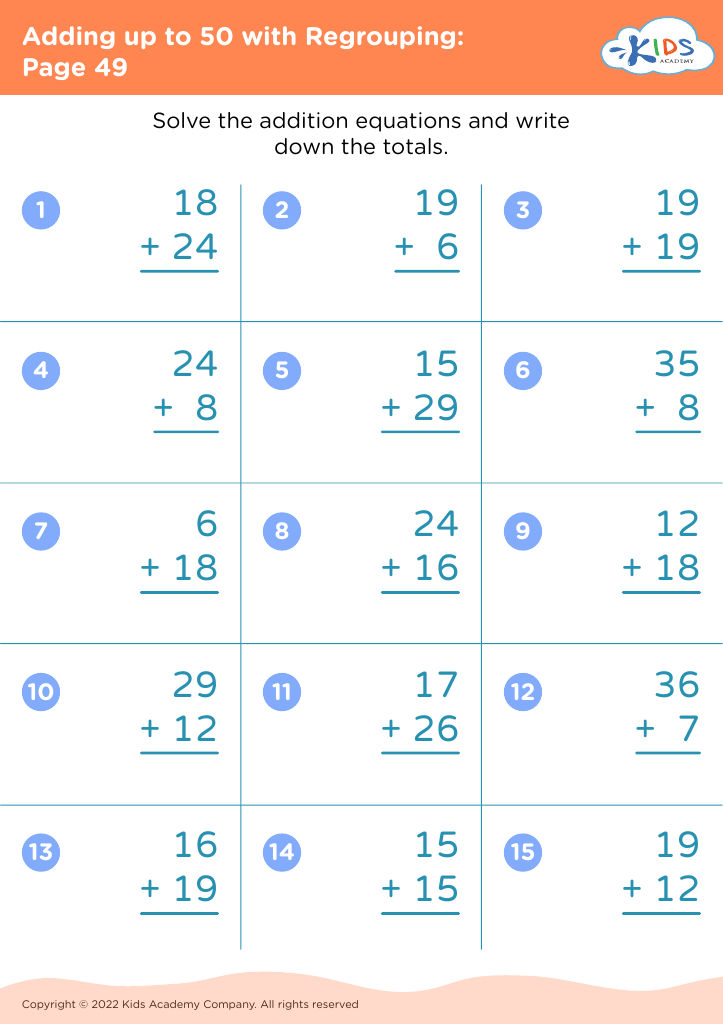








Developing fine motor skills in children aged 7-8 is crucial for several reasons, particularly in enhancing their overall academic and daily life success. At this age, children are refining their ability to control small muscle movements in their hands and fingers, which is fundamental for tasks such as writing, drawing, and manipulating objects. Strong fine motor skills aid in the formation of letters and numbers, directly impacting a child's writing legibility and mathematical capabilities as they begin to tackle more complex problems.
Moreover, fine motor skills are intrinsically linked to cognitive development. Activities that promote these skills, such as cutting, gluing, and crafting, encourage concentration, patience, and problem-solving abilities. Engaging in purposeful play that involves these skill sets fosters creativity and encourages children to express themselves.
Additionally, fine motor competency is essential for building self-esteem. As children master tasks that require precision, their confidence grows, enhancing their willingness to participate in school activities and social interactions. For parents and teachers, recognizing the significance of fine motor skill development is essential not only for academic success but also for fostering well-rounded, confident individuals ready to take on the challenges of childhood and beyond.








