Enhance concentration Addition Worksheets for Ages 7-8
4 filtered results
-
From - To
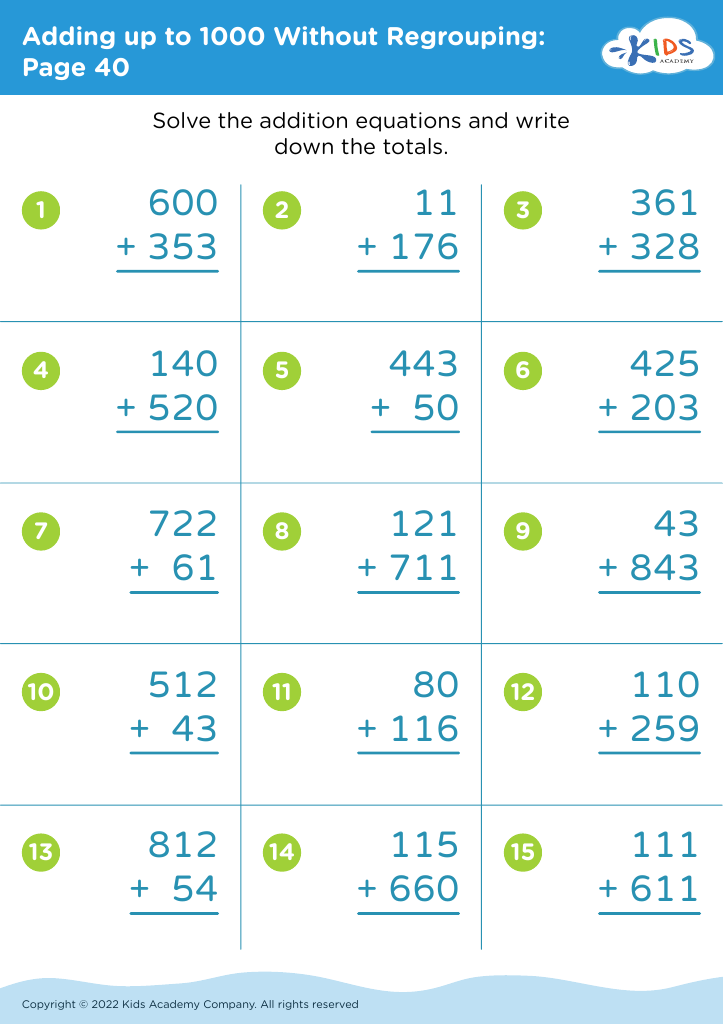
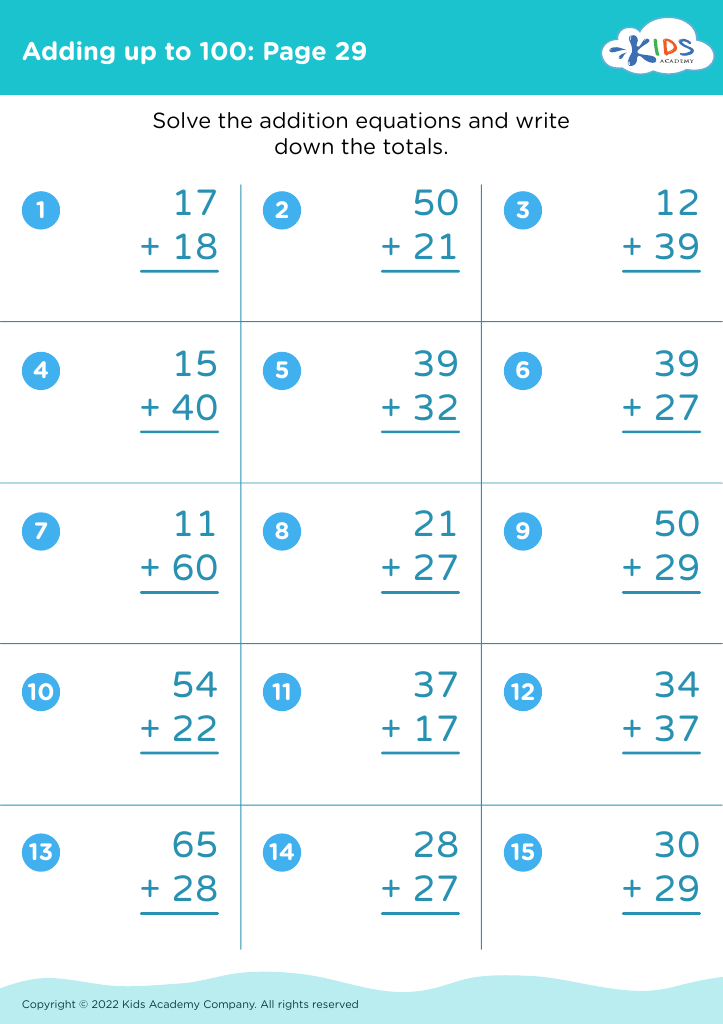
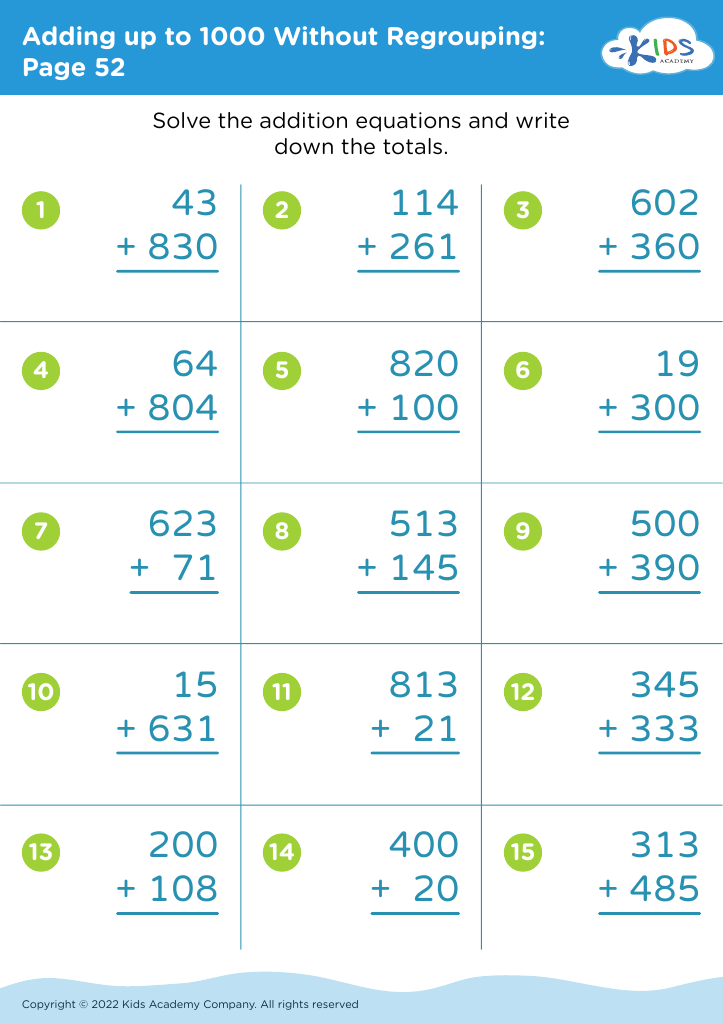
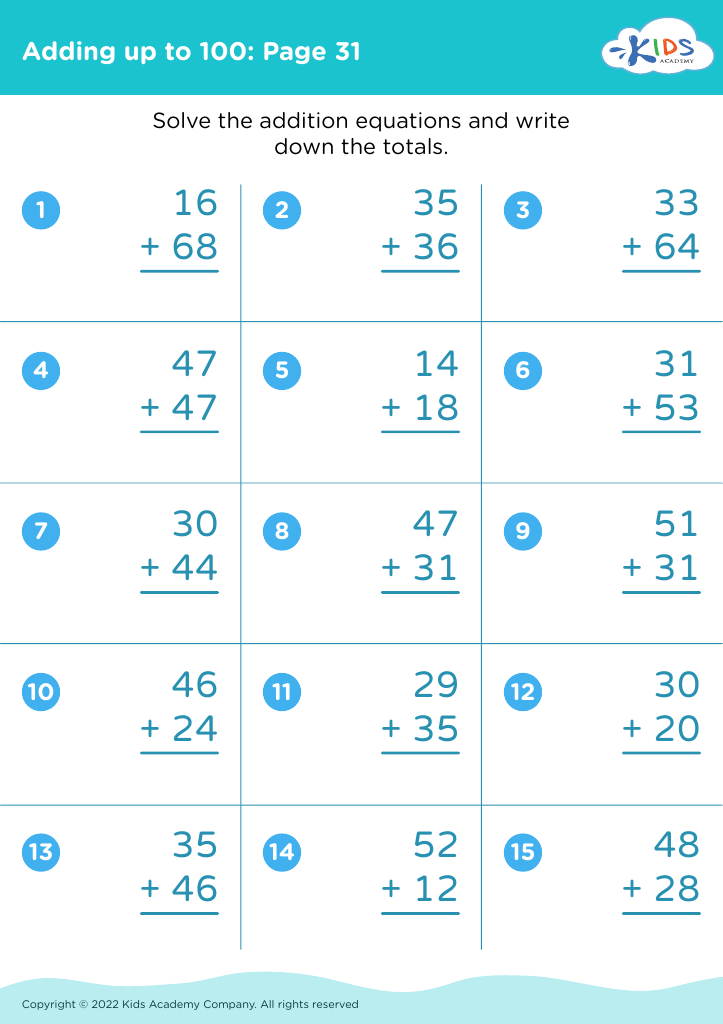
Boost your child's mathematical skills with our "Enhance Concentration Addition Worksheets" designed specifically for ages 7-8. These engaging worksheets not only strengthen addition capabilities but also improve attention and focus through fun exercises. Each worksheet incorporates a variety of challenging problems that encourage children to think critically and maximize their concentration levels. As kids navigate the colorful and interactive tasks, they will enjoy practicing their math skills while honing their ability to concentrate effectively. Ideal for home or classroom use, these resources make learning math a fun and rewarding experience. Unlock your child's potential with our enrichment activities today!








Enhancing concentration in children aged 7-8, particularly in foundational skills like addition, is crucial for their overall academic success and cognitive development. At this age, children are developing critical thinking skills and beginning to tackle more complex math concepts. Improved concentration helps them grasp fundamental mathematical principles, leading to higher confidence and better performance in the classroom.
When children focus well during math lessons, they are more likely to understand and retain information, making future learning easier. Furthermore, strong concentration skills have far-reaching implications beyond academics; they support effective problem-solving, decisiveness, and self-discipline in various aspects of life.
For parents and teachers, fostering concentration through engaging and interactive addition activities can bridge the gap between interests and education, making learning enjoyable. Strategies such as using games, visual aids, or playful math challenges can motivate children to participate actively, reinforcing their learning experience.
Ultimately, prioritizing concentration in addition reflects a commitment to holistic child development, laying the groundwork for lifelong learning habits. By valuing these early skills, parents and teachers contribute to nurturing confident, capable individuals ready to tackle future academic challenges.








