Enhances number recognition Addition Worksheets for Ages 7-8
4 filtered results
-
From - To
Boost your child's number recognition with our engaging "Enhances Number Recognition Addition Worksheets" designed specifically for ages 7-8. These worksheets provide vibrant and interactive exercises that make learning fun and effective. Through a variety of activities, children will practice identifying numbers while honing their addition skills. Each worksheet reinforces essential concepts and supports your child’s confidence in math. Ideal for home or classroom use, our materials are tailored to enhance critical thinking and promote a love for learning. Watch as your young learner flourishes, mastering numbers and building a solid foundation in mathematics with our carefully crafted resources!
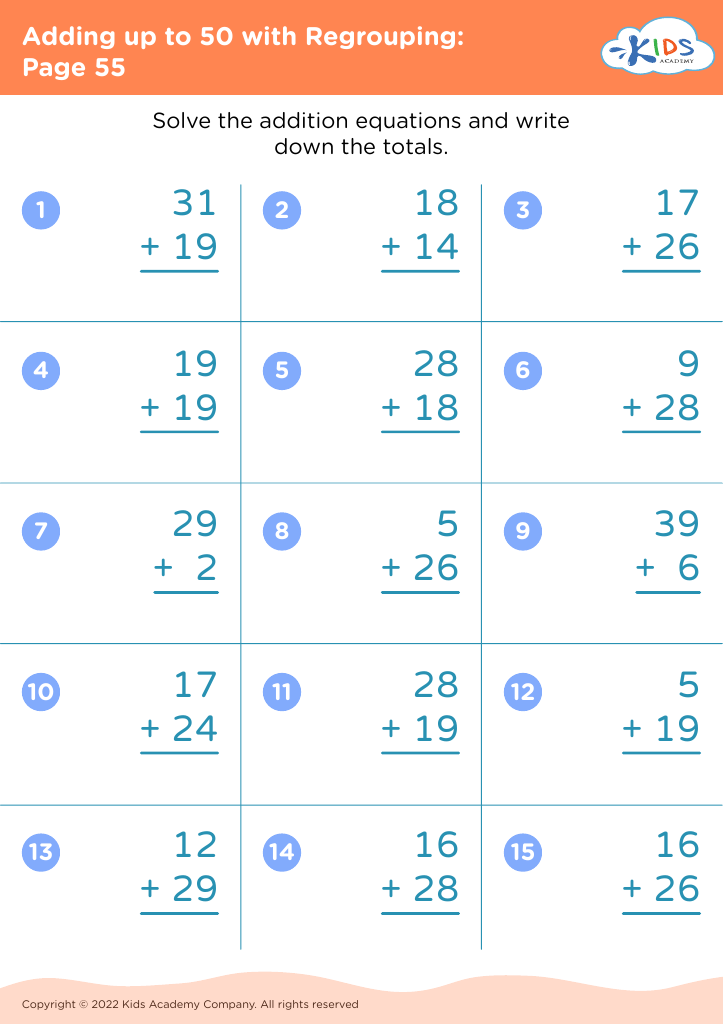
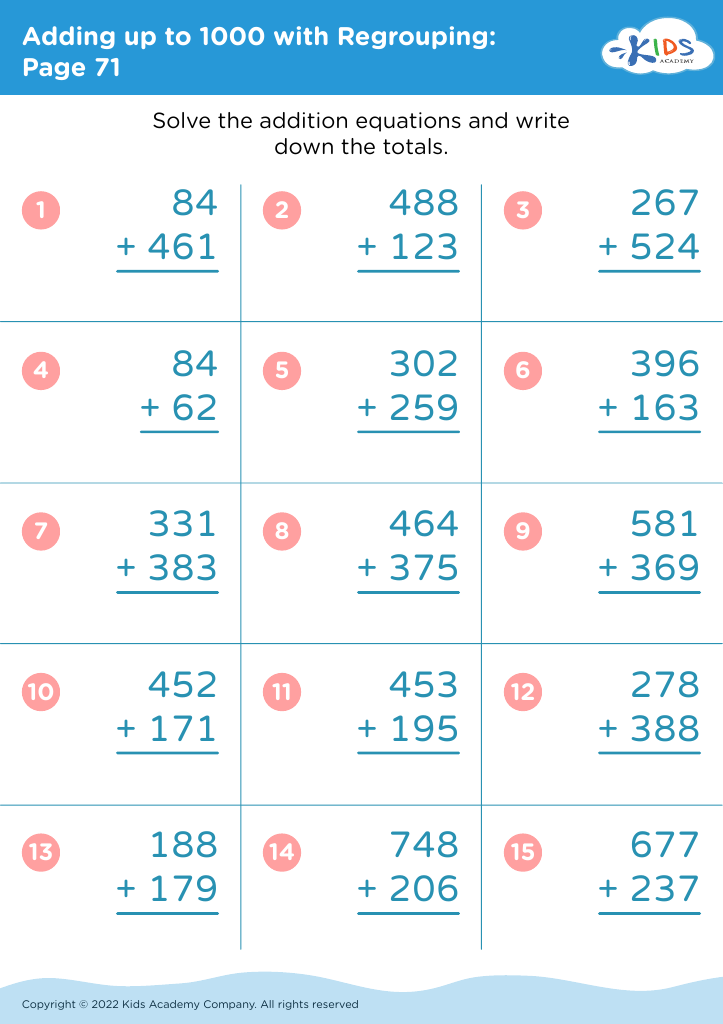
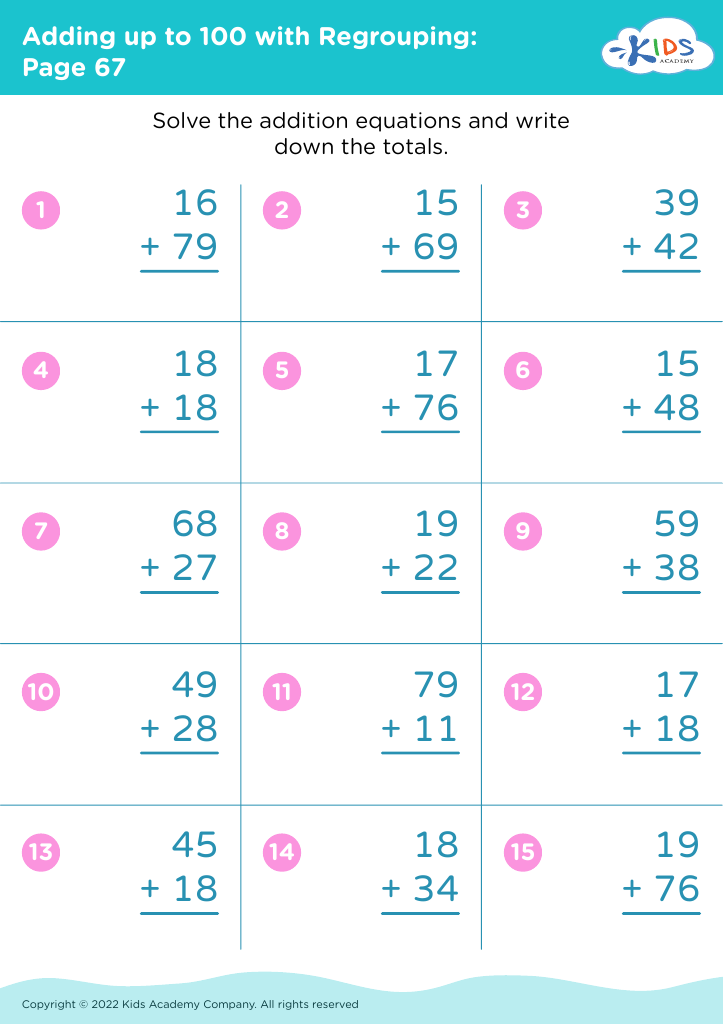
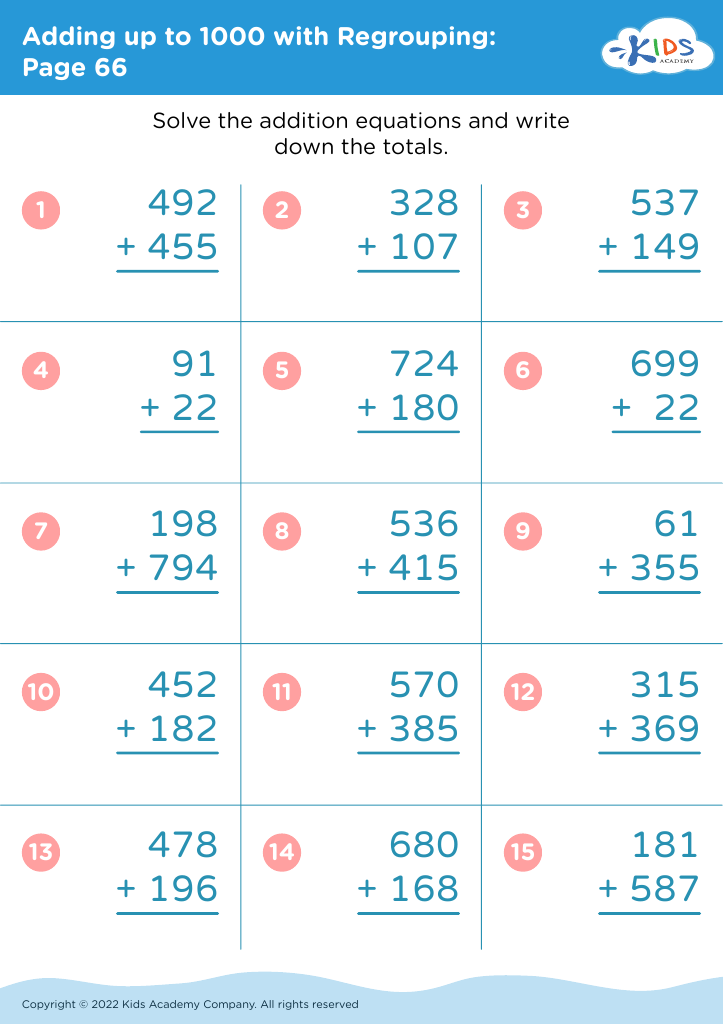







Enhancing number recognition and addition skills for children ages 7-8 is crucial because these foundational mathematical skills form the backbone of future academic success. At this age, students transition from basic counting to more complex arithmetic, making it essential for them to build confidence and proficiency in mathematics.
Parents and teachers should care about improving these skills as they directly impact a child’s problem-solving abilities and cognitive development. Mastery of number recognition allows children to recognize numerical patterns, understand place value, and grasp advanced concepts in future grades. Additionally, strong addition skills facilitate learning in other subjects, including science and economics, where quantitative reasoning is key.
Furthermore, early interventions in mathematical understanding helps prevent future learning difficulties. Engaged parents and insightful teachers can create supportive environments that foster curiosity and enthusiasm for math, making it less intimidating for children. Moreover, positive experiences in learning addition boost self-esteem and encourage a growth mindset, making students more resilient learners.
Ultimately, supporting children in enhancing their number recognition and addition skills lays a solid foundation for lifelong learning, critical thinking, and success in an increasingly numerate society. Prioritizing these skills today paves the way for brighter opportunities tomorrow.








