Enhancing creativity Addition Worksheets for Ages 7-8
4 filtered results
-
From - To
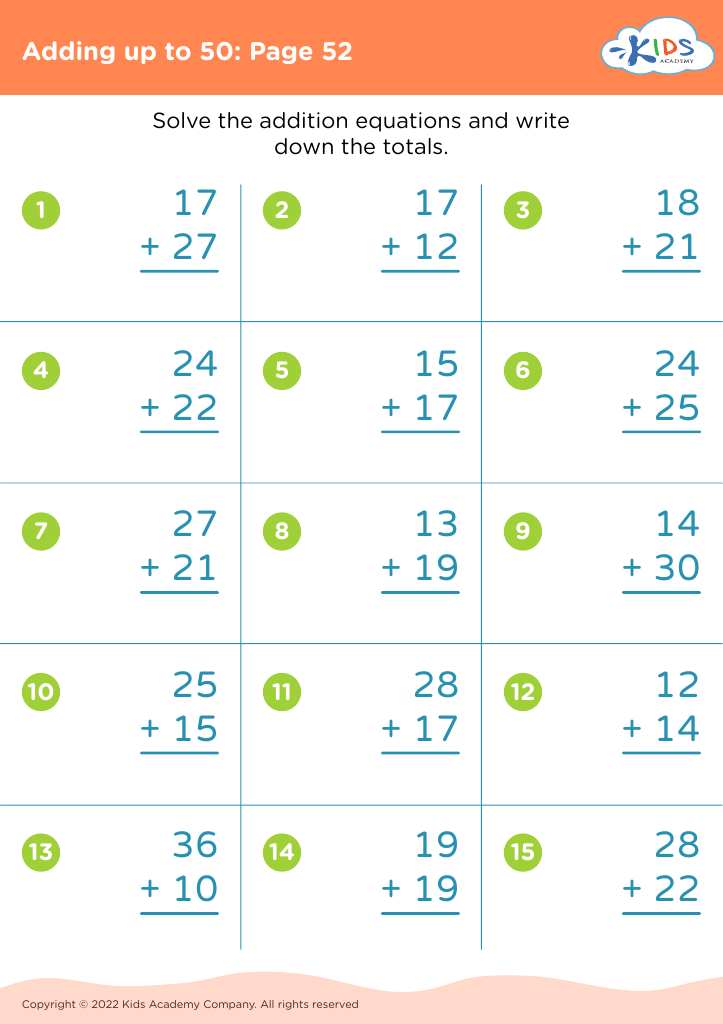
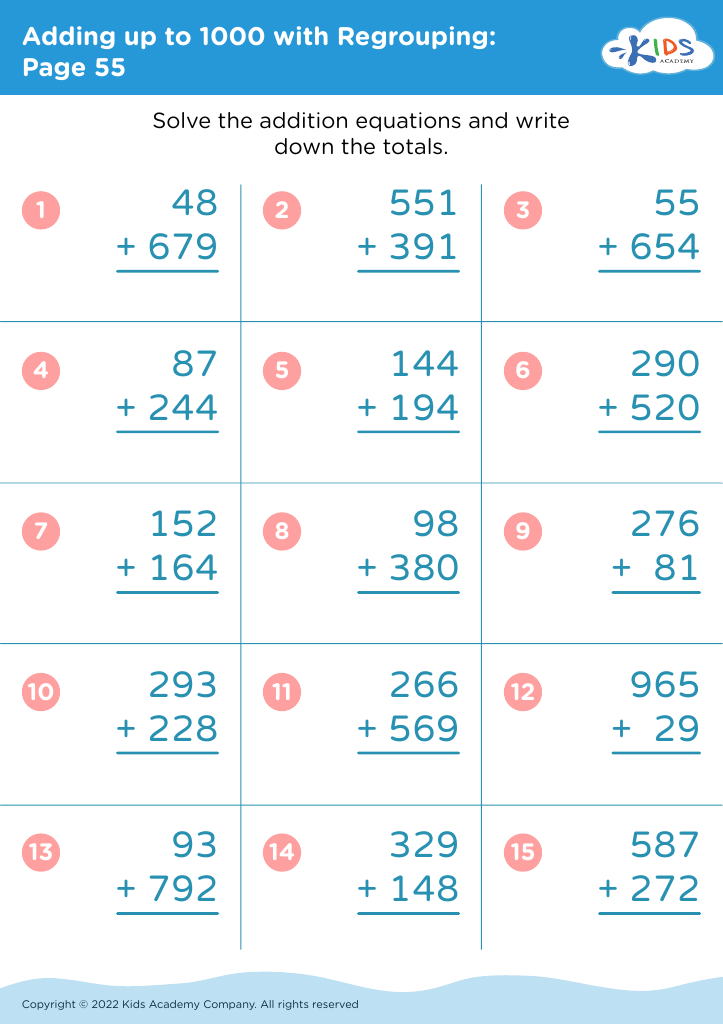
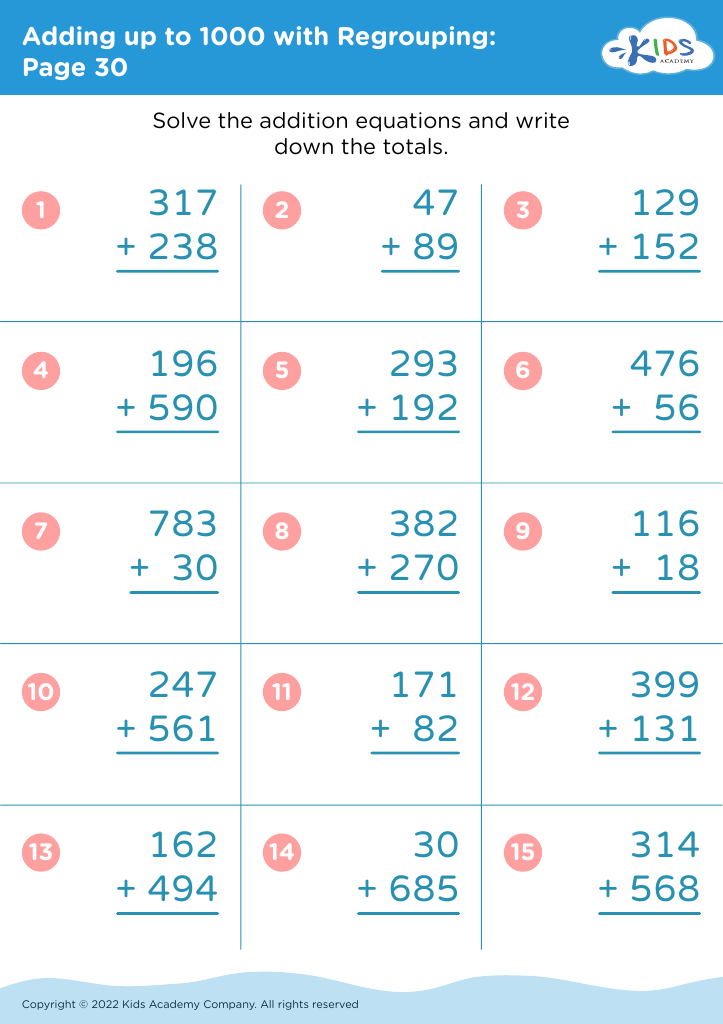
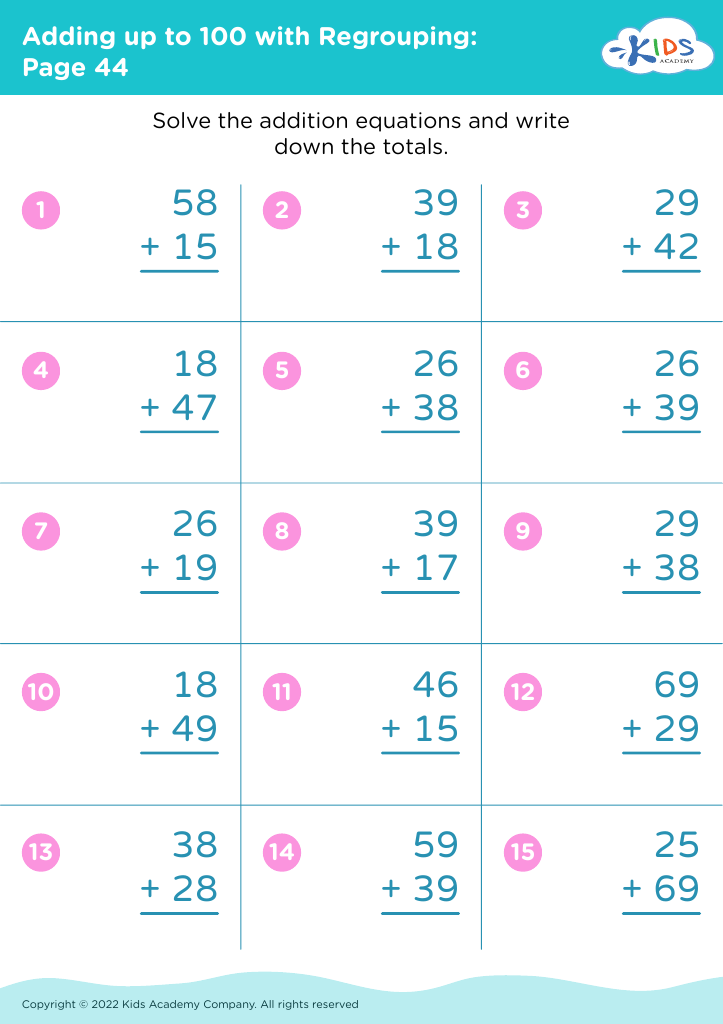
Looking to make addition practice more exciting for your child? Our “Enhancing Creativity Addition Worksheets for Ages 7-8” blend learning with creativity to foster a love for math. Each worksheet features engaging, colorful designs and imaginative themes that keep young minds intrigued. Beyond mastering addition skills, children enhance their creative thinking and problem-solving abilities. Ideal for classroom use or additional practice at home, these worksheets provide the perfect combination of fun and education. Watch your child’s confidence soar as they explore math in a playful, creative way. Help them build a strong mathematical foundation with our innovative approach!








Enhancing creativity in addition for ages 7-8 is crucial for several reasons. At this developmental stage, children are naturally curious and imaginative, making it the perfect time to cultivate both their mathematical and creative thinking skills simultaneously.
First, incorporating creativity into addition helps children understand mathematical concepts more deeply. Instead of viewing addition as mere rote memorization, they learn to see patterns, relationships, and connections between numbers, enhancing their conceptual understanding and problem-solving abilities.
Creative addition activities, such as using visual aids, stories, or real-life contexts, also make learning more engaging and enjoyable. When children are actively interested in the learning process, they are more likely to retain information and develop a positive attitude towards mathematics, laying a solid foundation for future math learning.
Additionally, fostering creativity in math helps children develop critical thinking and flexibility. They learn that there are multiple ways to approach and solve problems, which builds their resilience and adaptability in learning and in everyday life.
Ultimately, enhancing creativity in addition skills not only boosts mathematical proficiency but also empowers children with confidence and a love for learning. Both parents and teachers play integral roles in promoting these enriching experiences, ensuring that children grow into well-rounded, capable, and enthusiastic learners.








