
Handwriting practice Addition Worksheets for Ages 7-8
5 filtered results
Difficulty Level
Grade
Age
-
From - To
Subject
Activity
Standards
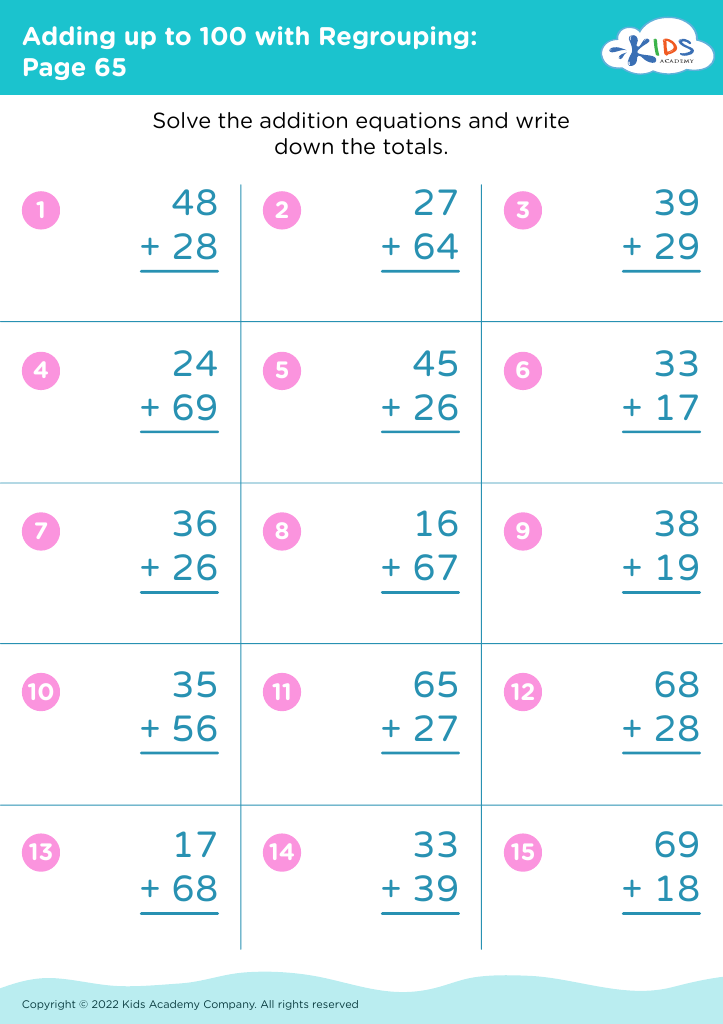
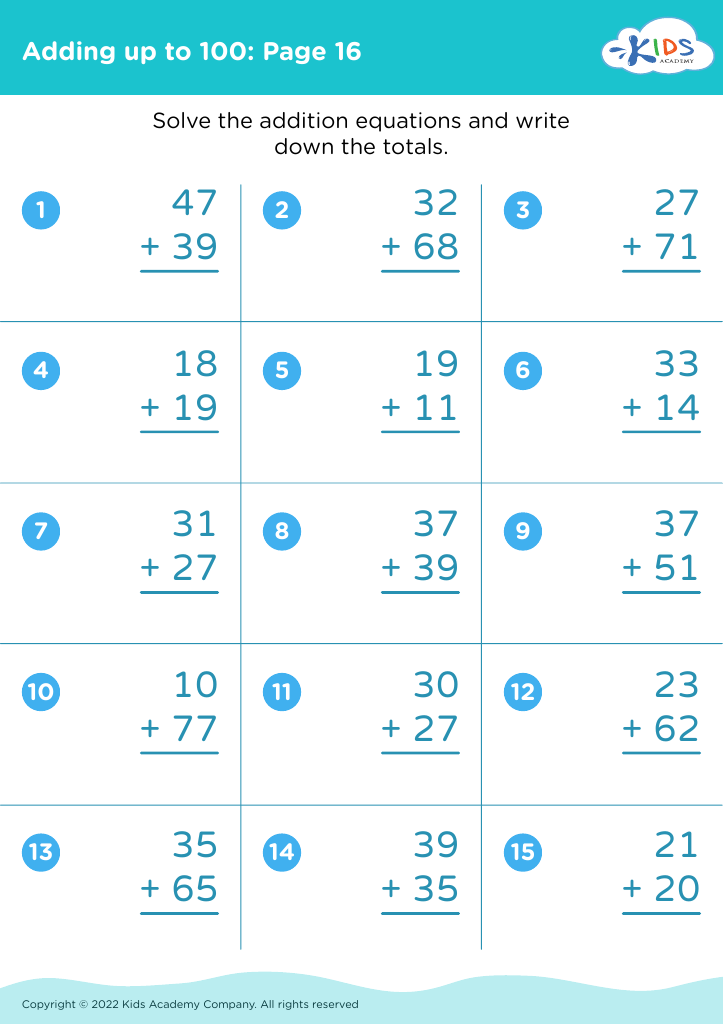
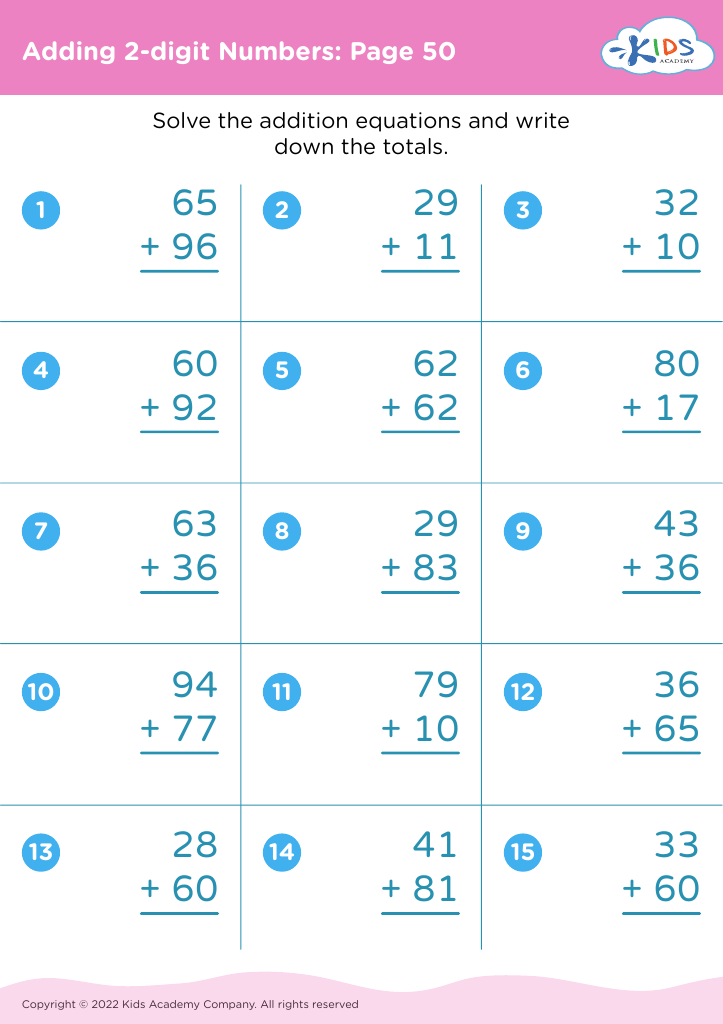
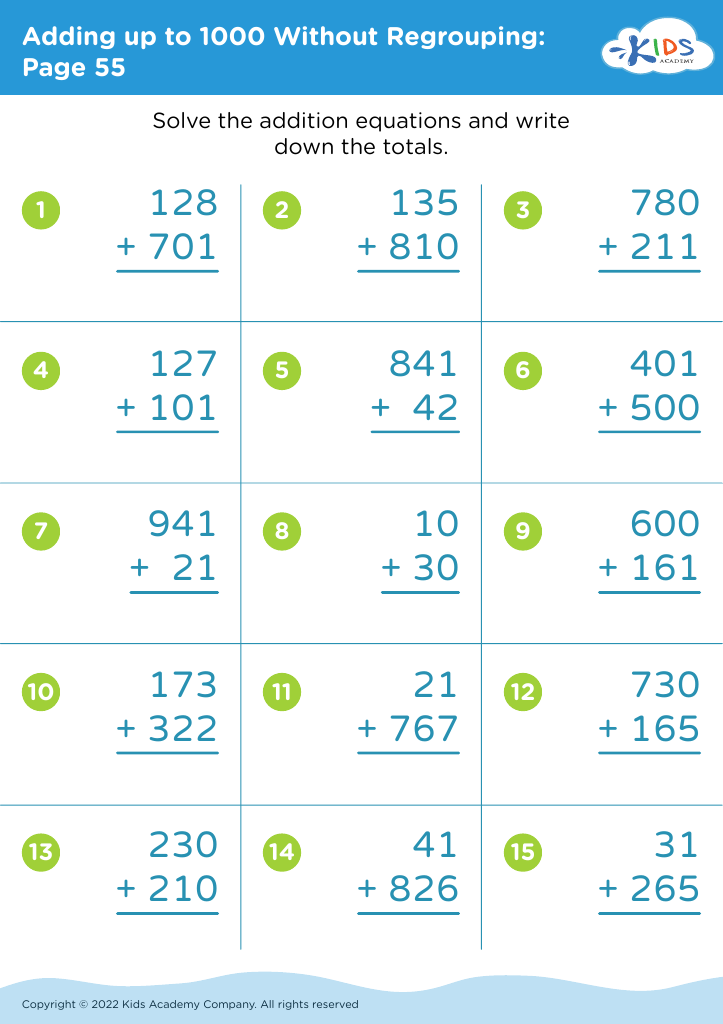
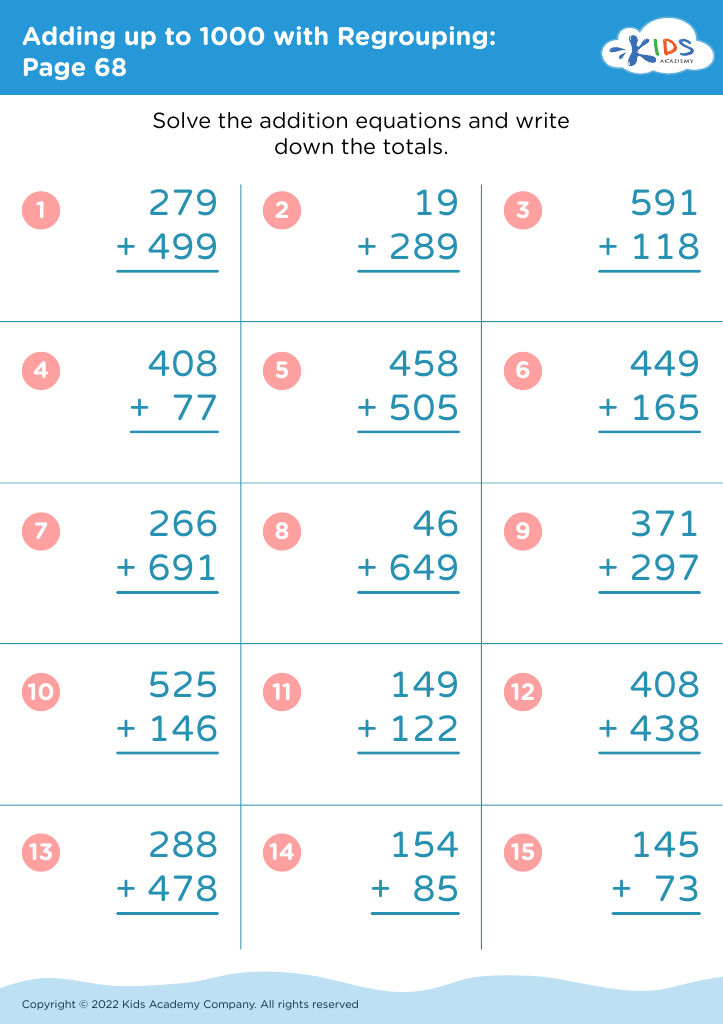
Boost your child’s math and writing skills with our Handwriting Practice Addition Worksheets designed for ages 7-8! These engaging printable worksheets combine addition problems with handwriting exercises, helping young learners improve their number sense while refining their penmanship. Each worksheet features colorful illustrations and carefully crafted math challenges that make learning enjoyable. Perfect for classroom or at-home practice, these resources will encourage your child to master addition concepts and enhance their writing abilities simultaneously. Help your child develop confidence in math and neat handwriting with our expertly designed worksheets. Start your learning journey today with fun, interactive handwriting practice!
Favorites
With answer key
Interactive
Join Kids Academy for Free
Who is primarily going to use this learning content?








Handwriting practice during ages 7-8 is crucial for a child's development, as it supports both academic success and fine motor skill development. At this age, children begin to express their ideas more extensively in writing, connecting their thoughts with adequately formed letters. Practicing handwriting offers several benefits.
Firstly, improved handwriting can enhance a child's confidence in their written communication. Clear writing allows children to convey their thoughts accurately, reducing frustration in both academic and social interactions. Secondly, engaging in handwriting exercises strengthens fine motor skills, which are essential for tasks like typing, drawing, and other daily activities.
In addition, handwriting practice improves cognitive development. Writing by hand helps children better retain information, as it engages them in a more active learning process compared to typing. It also encourages attention to detail and discipline.
Moreover, incorporating activities that blend handwriting with addition can make learning enjoyable and reinforce mathematical concepts. Using handwriting practice to solve addition problems merges two important skills—numeracy and literacy—while fostering creativity. Parents and teachers should prioritize this practice to support holistic child development, nurturing skills that last a lifetime.








