Identifying Animals Addition Worksheets for Ages 7-8
3 filtered results
-
From - To
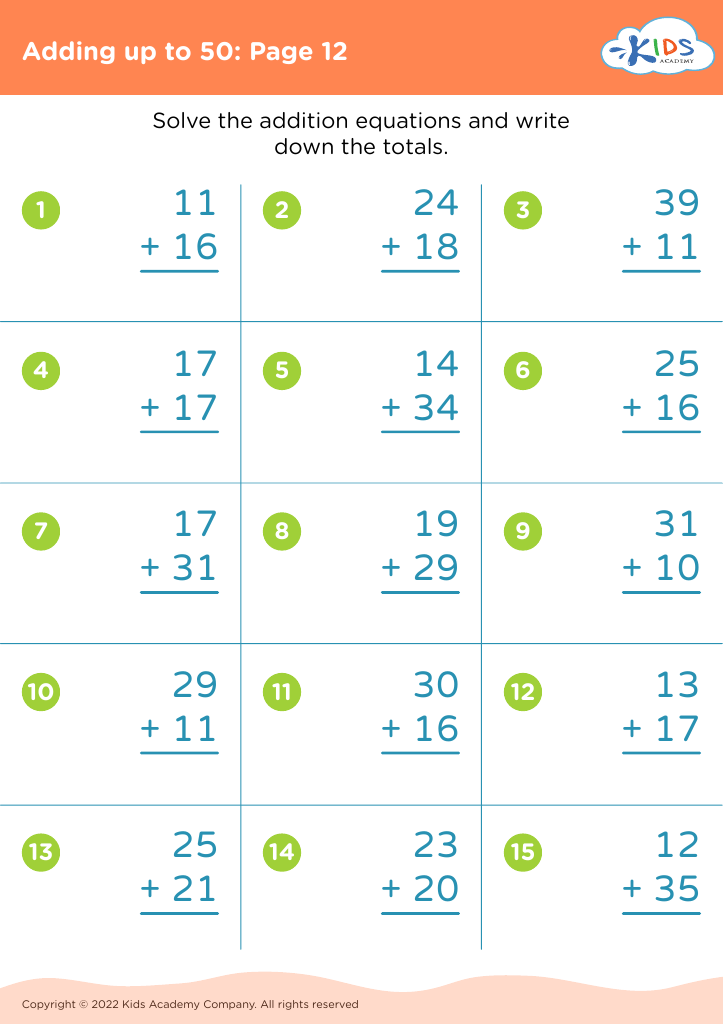
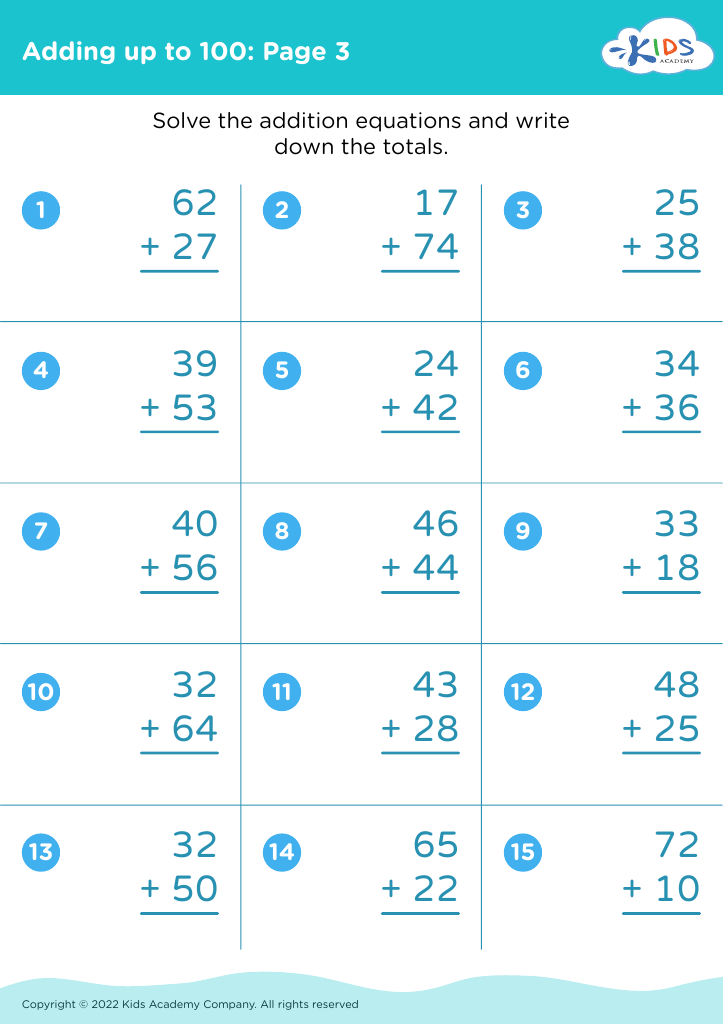
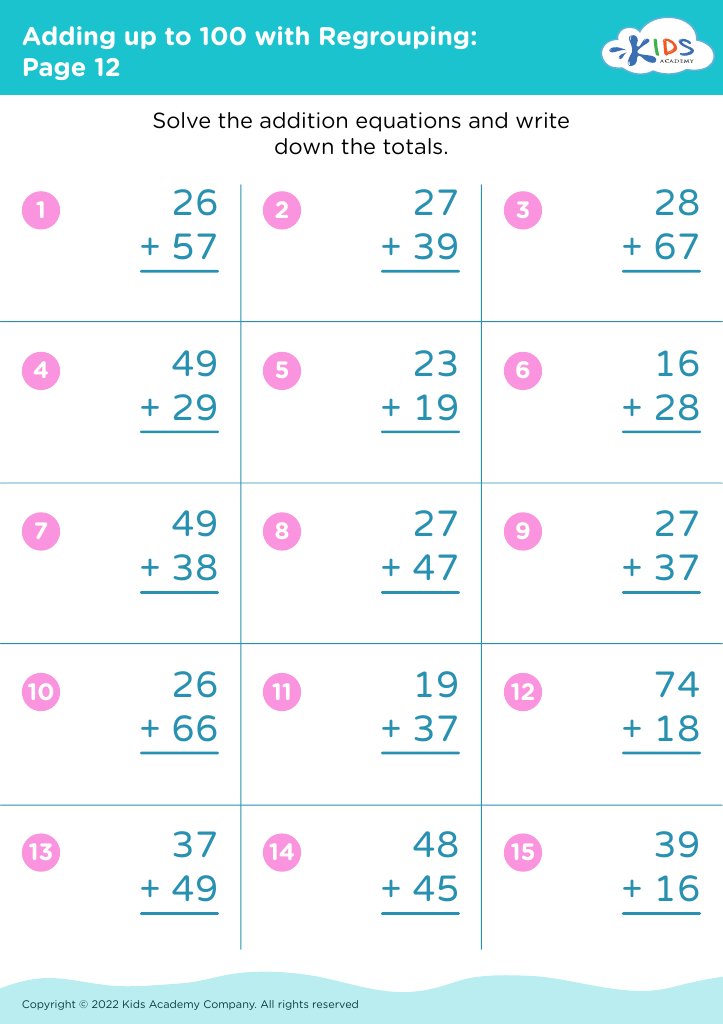
Introduce a fun and educational way to enhance your child’s math and science skills with our Identifying Animals Addition Worksheets for ages 7-8. Perfectly blending arithmetic with animal identification, these worksheets make learning exciting. Your child will practice addition while discovering a variety of fascinating animals. Designed by education experts, they not only reinforce math fundamentals but also expand knowledge of the natural world. Suitable for both classroom use and homeschooling, these printable worksheets are a delightful, engaging tool to foster a love for learning in young minds. Ignite your child’s curiosity and numeracy skills today!






.jpg)

Identifying animals and practicing addition are fundamental skills essential for cognitive and academic development in children aged 7-8. Combining these two areas through engaging activities offers multifaceted benefits.
Firstly, learning to identify animals expands a child's knowledge of the natural world, fostering curiosity and a sense of wonder. It aids in the development of observational skills, differentiation, and classification abilities, which are critical in science education.
Math skills like addition are foundational for academic success and daily life problem-solving. Mastery of addition at an early age builds confidence and encourages a positive attitude towards mathematics, laying the groundwork for more complex arithmetic and critical thinking skills in later years.
Integrating these learning activities captivates children's attention through hands-on interaction and visual stimuli, enhancing memory retention. For example, counting the legs of various animals to solve addition problems combines learning with play, making abstract concepts more concrete and enjoyable.
By emphasizing animal identification and addition, parents and teachers create a rich, supportive learning environment. This approach not only strengthens subject-specific skills but also promotes intellectual curiosity, critical thinking, and a lifelong love of learning. Engaging children in such an interdisciplinary manner fosters holistic development, preparing them for future educational endeavors.








