Improve counting Addition Worksheets for Ages 7-8
3 filtered results
-
From - To
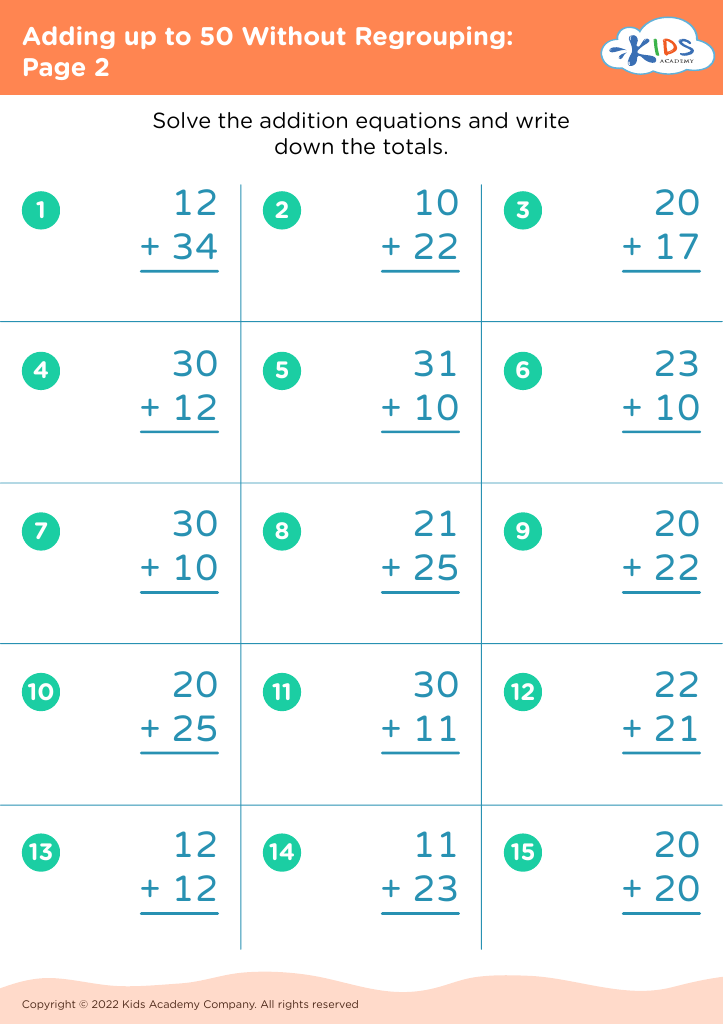
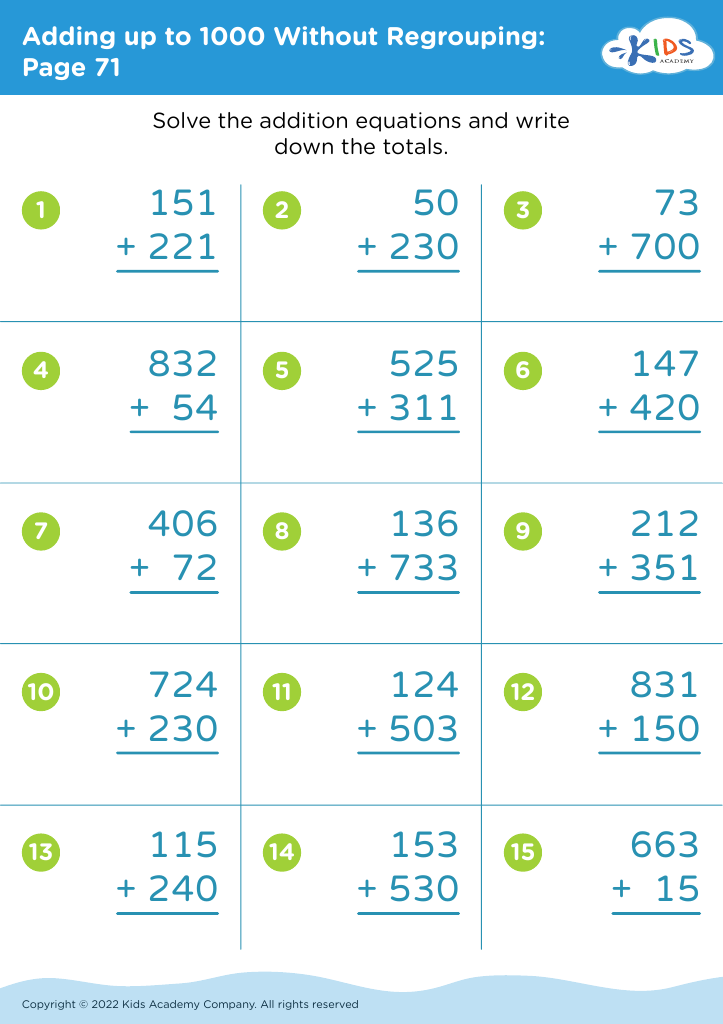
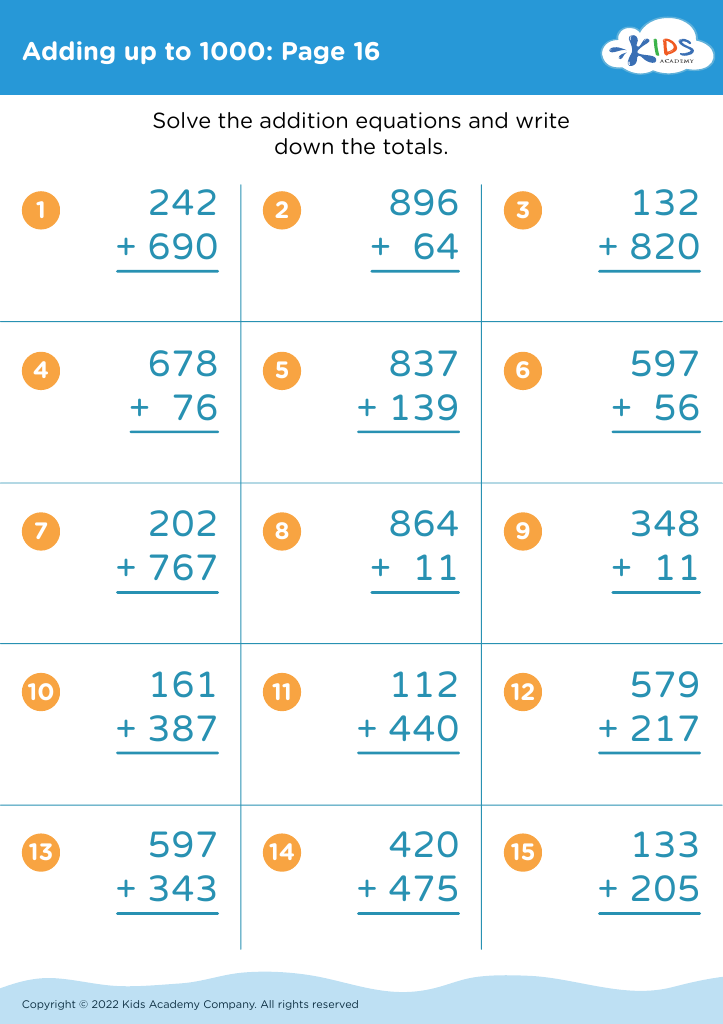
Enhance your child's math skills with our "Improve Counting Addition Worksheets" designed specifically for ages 7-8. These engaging resources focus on developing counting proficiency while reinforcing fundamental addition concepts. Each worksheet includes a variety of interactive problem types to facilitate learning and boost confidence in young learners. By practicing essential counting techniques through fun exercises, children will deepen their understanding of numbers and improve their overall math fluency. Perfect for classroom use or at-home practice, our worksheets are an excellent tool for parents and teachers alike, ensuring that kids build a solid foundation in mathematics that will last a lifetime.








Parents and teachers should prioritize improving counting and addition skills for children aged 7-8, as these are foundational skills essential for academic success and everyday problem-solving. At this age, children develop a greater understanding of numbers, and strengthening these skills can enhance their confidence in mathematics. Mastering counting helps children recognize numerical patterns, which is crucial for understanding advanced math concepts in the future.
Furthermore, solid counting and addition skills prepare students for more complex operations, such as subtraction and multiplication, leading to a more comprehensive grasp of mathematics. Early proficiency in these areas also contributes to improved analytical thinking and reasoning skills, which are valuable beyond the classroom.
Additionally, a strong foundation in basic math can foster a positive attitude toward learning and decrease math-related anxiety as they progress in their education. Engaging in fun counting games and exercises can make learning appealing, encouraging a growth mindset and collaboration between parents and teachers. Lastly, these skills play a vital role in daily life situations, facilitating effective money management and problem-solving, making it essential for parents and teachers to actively support and nurture their development.








