Improving reading skills Addition Worksheets for Ages 7-8
4 filtered results
-
From - To
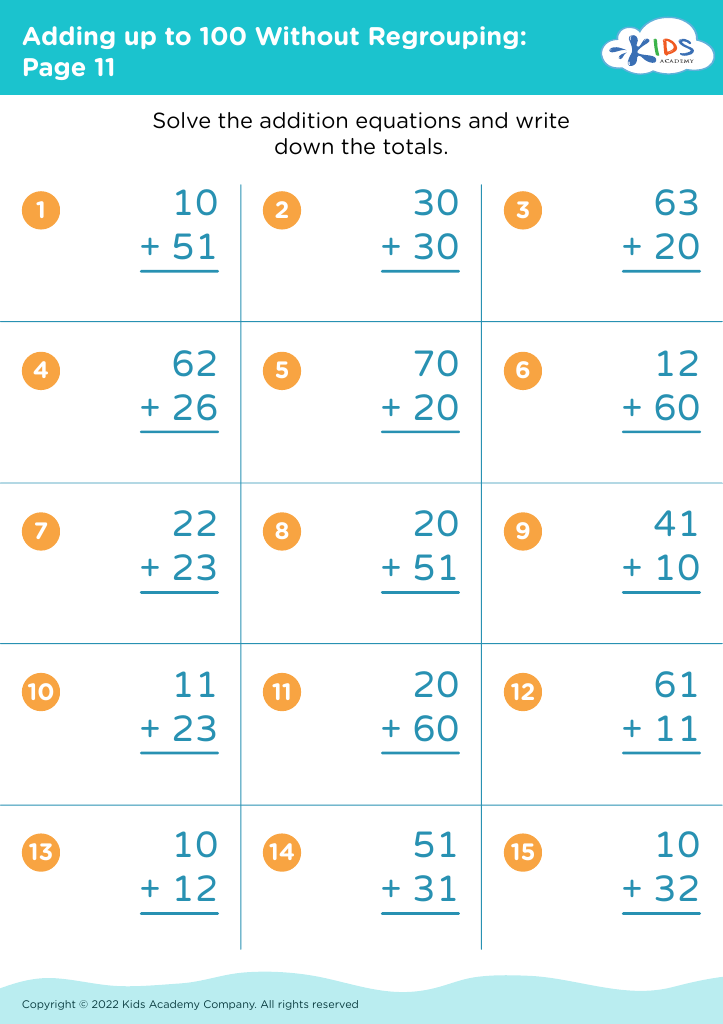
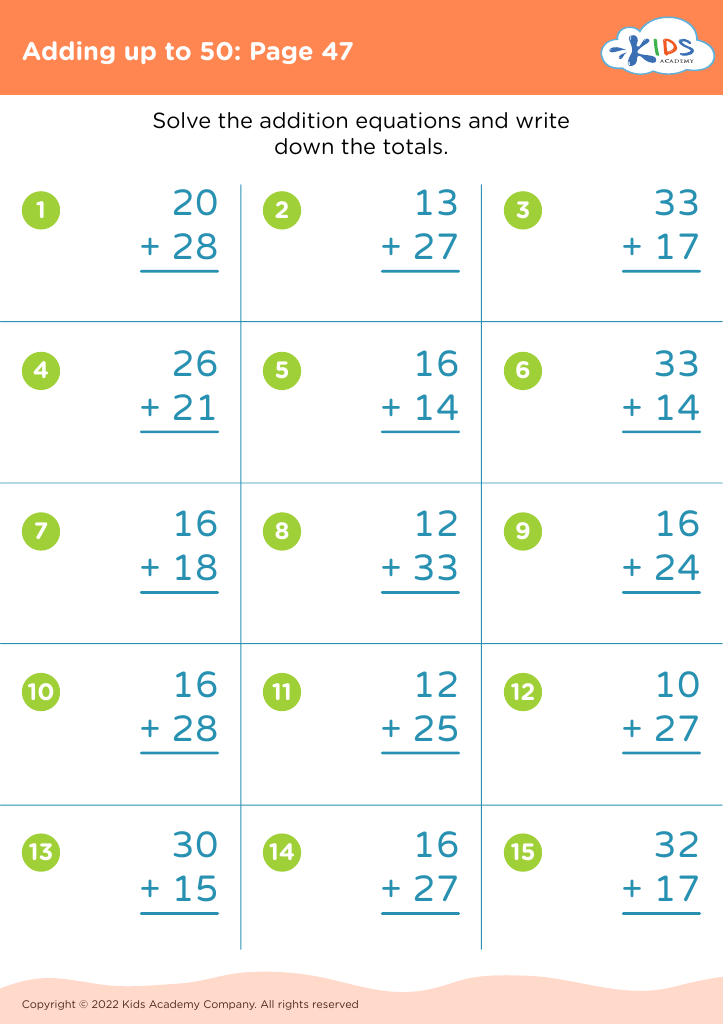
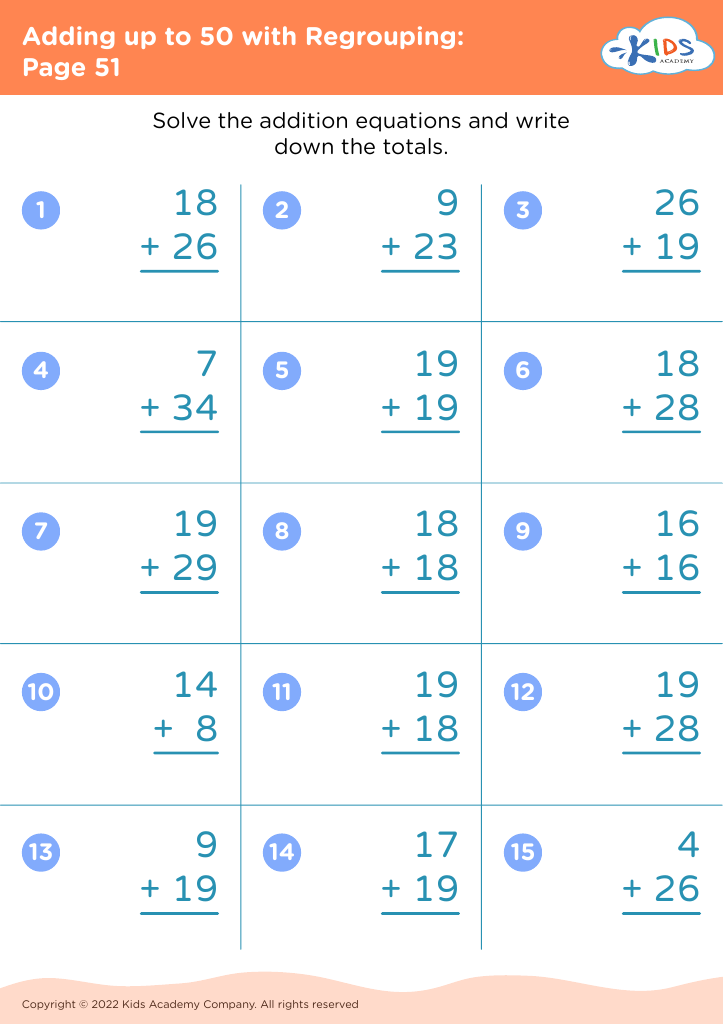
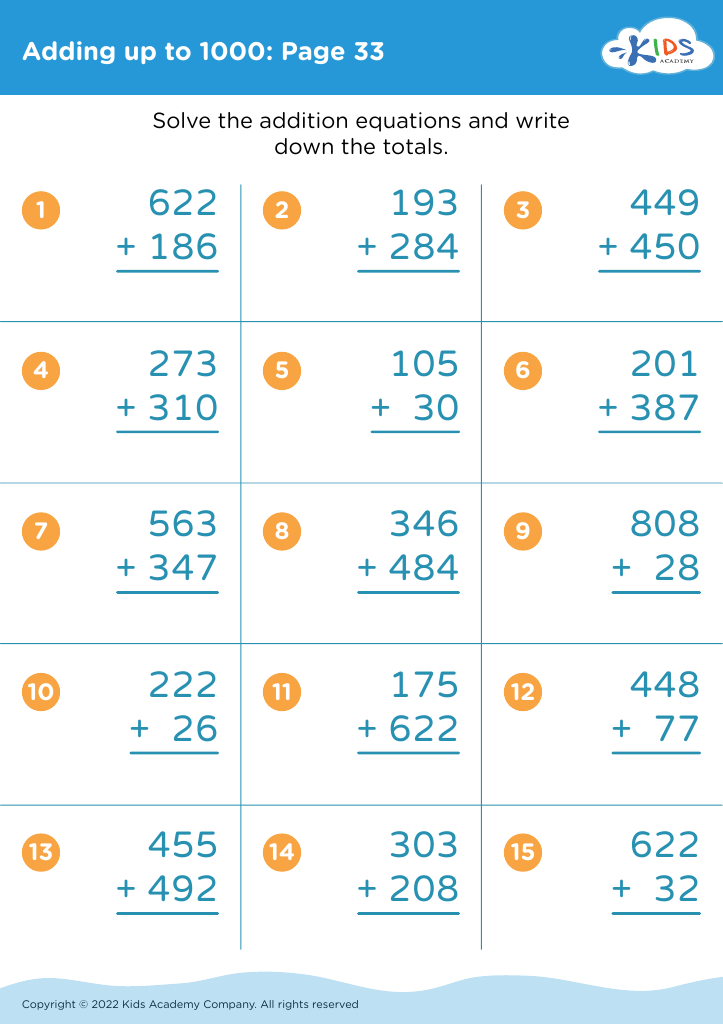
Enhance your child's literacy and math abilities with our "Improving Reading Skills Addition Worksheets" for ages 7-8. Designed to foster reading comprehension while reinforcing addition, these engaging worksheets encourage young learners to connect mathematical concepts with verbal understanding. Each activity is tailored to develop essential reading skills alongside basic math principles, helping children learn to follow instructions, analyze problems, and articulate solutions. Perfect for classroom or home use, our worksheets make learning fun and interactive. Boost your child's confidence and proficiency in both reading and addition with our comprehensive resources, ensuring a well-rounded educational foundation for future success!


.jpg)





Improving reading skills for children ages 7-8 is crucial for their overall academic success and lifelong learning. At this stage, children are transitioning from learning to read to reading to learn. Strong reading skills enhance comprehension, allowing them to engage with a variety of subjects, including math, science, and social studies. When children read effectively, they develop critical thinking skills, vocabulary, and the ability to analyze text, which is essential for problem-solving and higher-order thinking.
Additionally, fostering good reading habits can boost children's confidence and motivation. As they become proficient readers, they are more likely to engage with texts and explore new ideas independently. This engagement not only fuels their curiosity but also lays the foundation for informed citizenship and personal growth.
Furthermore, reading is a fundamental skill that influences children’s performance in academic assessments. By supporting their reading development, parents and teachers are helping to prevent future educational challenges. Parents and teachers should collaborate to promote a love for reading, provide access to diverse materials, and create a supportive environment where children can practice and enjoy reading. In doing so, they ensure that children not only succeed academically but also cultivate a lifelong passion for learning.








