Learn addition Addition Worksheets for Ages 7-8
3 filtered results
-
From - To
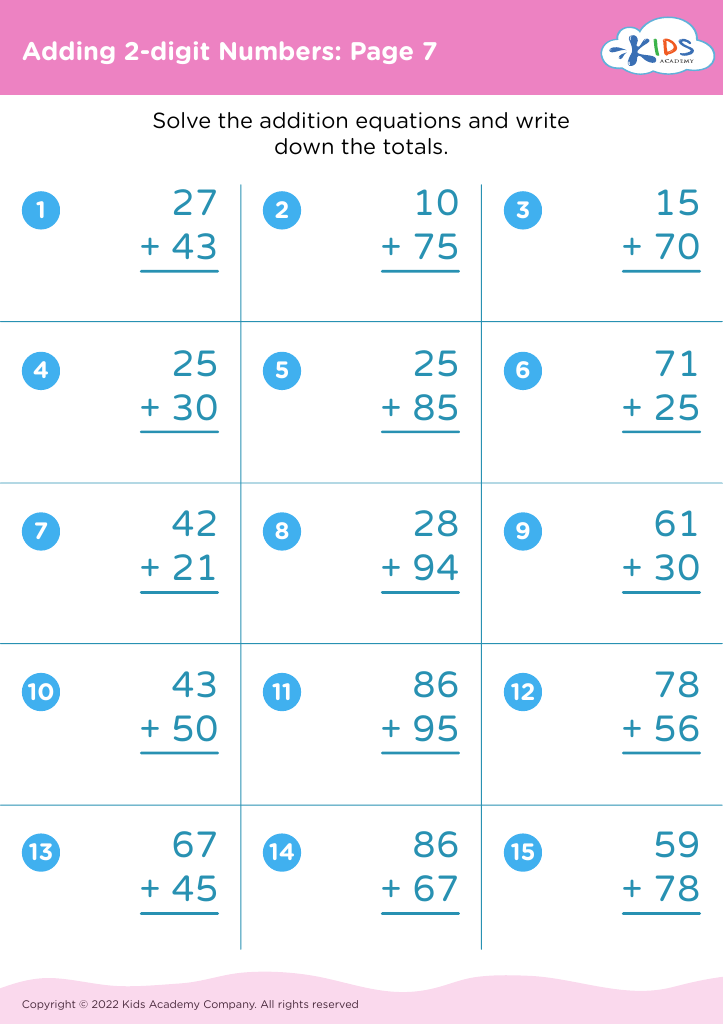
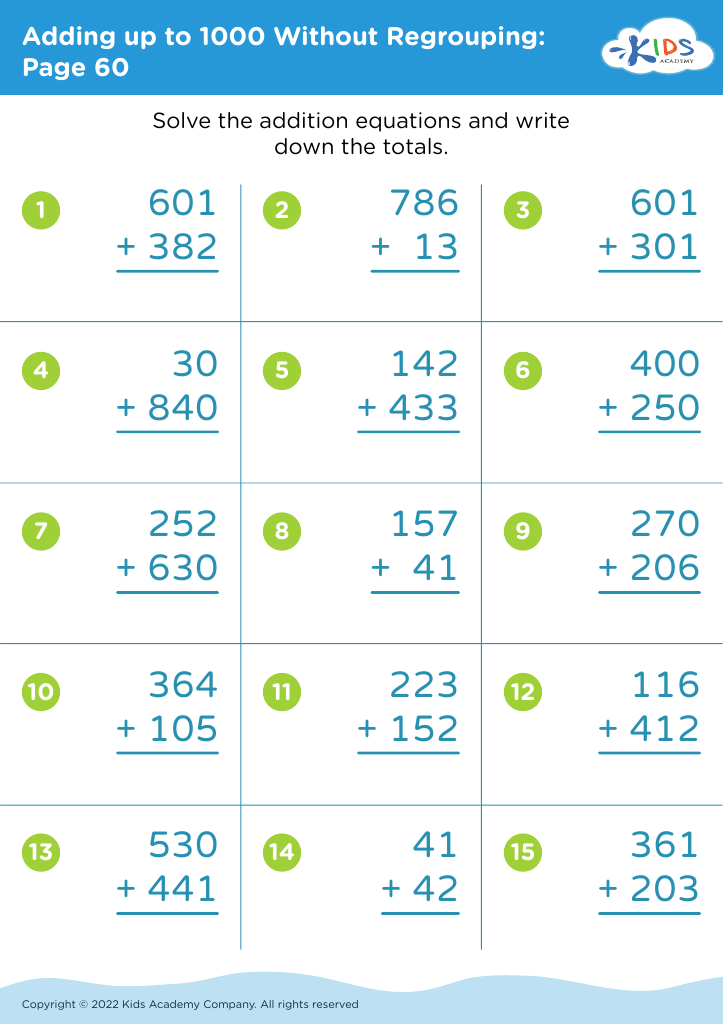
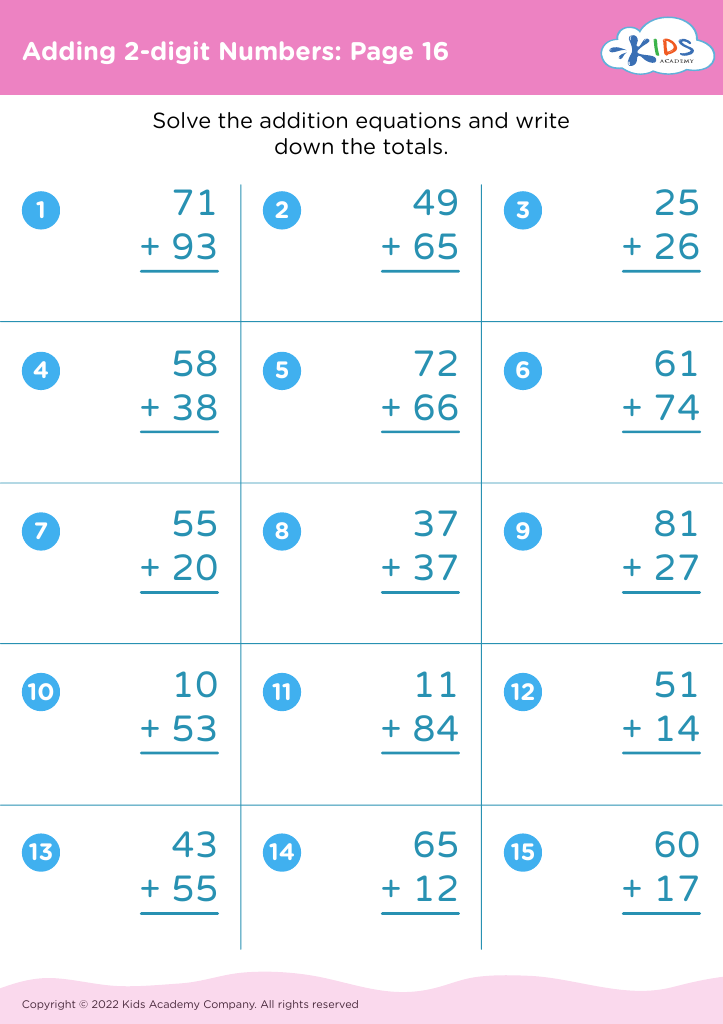
Welcome to our "Learn Addition Worksheets for Ages 7-8"! Designed to make learning fun, our engaging worksheets help young learners grasp essential addition skills through colorful activities and interactive exercises. Tailored specifically for children in this age group, these worksheets are perfect for reinforcing classroom learning and promoting independent practice at home. Children will enjoy solving problems, taking part in games, and developing number sense—all while building confidence in their math abilities. Let your child embark on an exciting mathematical journey and become proficient in addition with our user-friendly resources. Start exploring today for a brighter math future!






.jpg)

Parents and teachers should prioritize learning addition for ages 7-8 because this foundational math skill sets the stage for all future mathematical understanding. At this age, children are developing cognitive skills that allow them to grasp more complex concepts. Mastery of addition not only supports arithmetic but also builds confidence, encouraging a positive attitude towards math.
Moreover, learning addition promotes critical thinking and problem-solving abilities, essential skills for real-life situations. As they engage with addition games and exercises, children enhance their ability to reason logically and make connections between numbers, which can lead to improvements in their overall academic performance.
Additionally, social interaction during math activities can foster cooperation and communication skills among peers, nurturing a collaborative learning environment. Parents can engage in activities at home, making math fun through games, storytelling, and everyday experiences, while teachers can create a stimulating curriculum that caters to different learning styles.
Ultimately, a solid understanding of addition through engaging and diverse experiences ensures that children are well-equipped for more advanced concepts such as subtraction, multiplication, and division. By emphasizing this skill at a young age, parents and teachers contribute significantly to a child's lifelong learning journey.








