
Matching skills Addition Worksheets for Ages 7-8
3 filtered results
Difficulty Level
Grade
Age
-
From - To
Subject
Activity
Standards
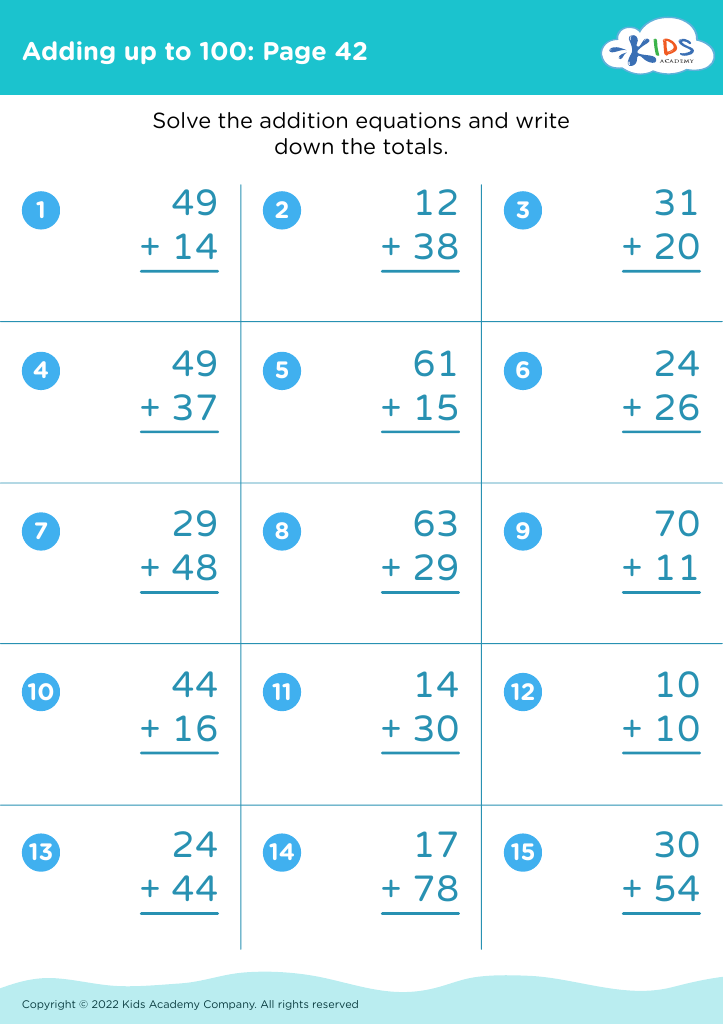
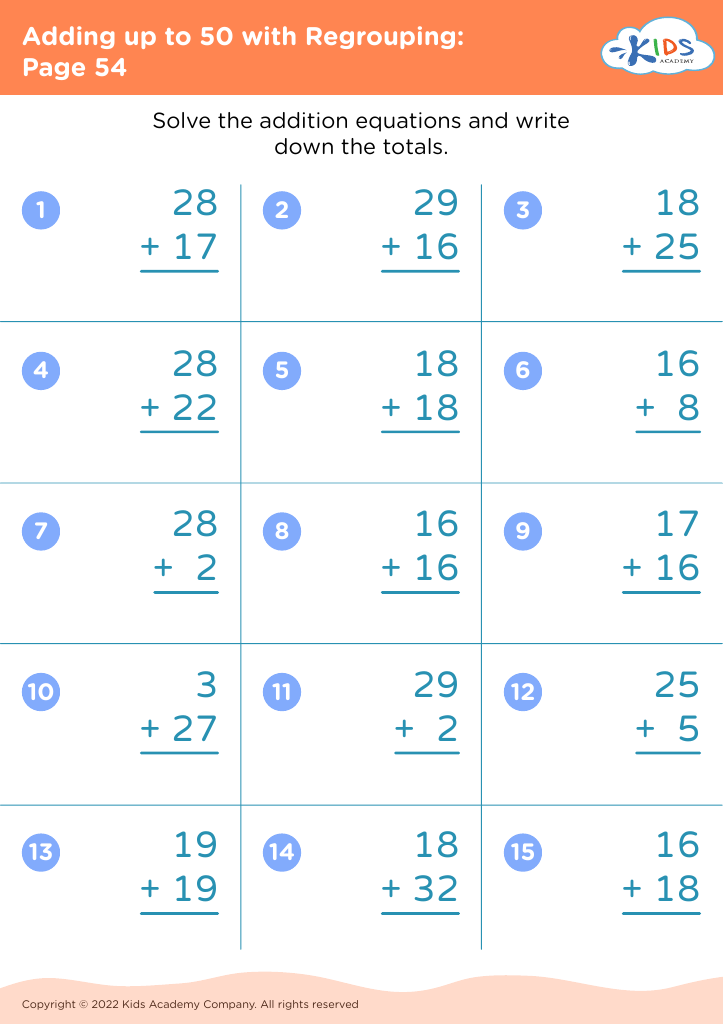
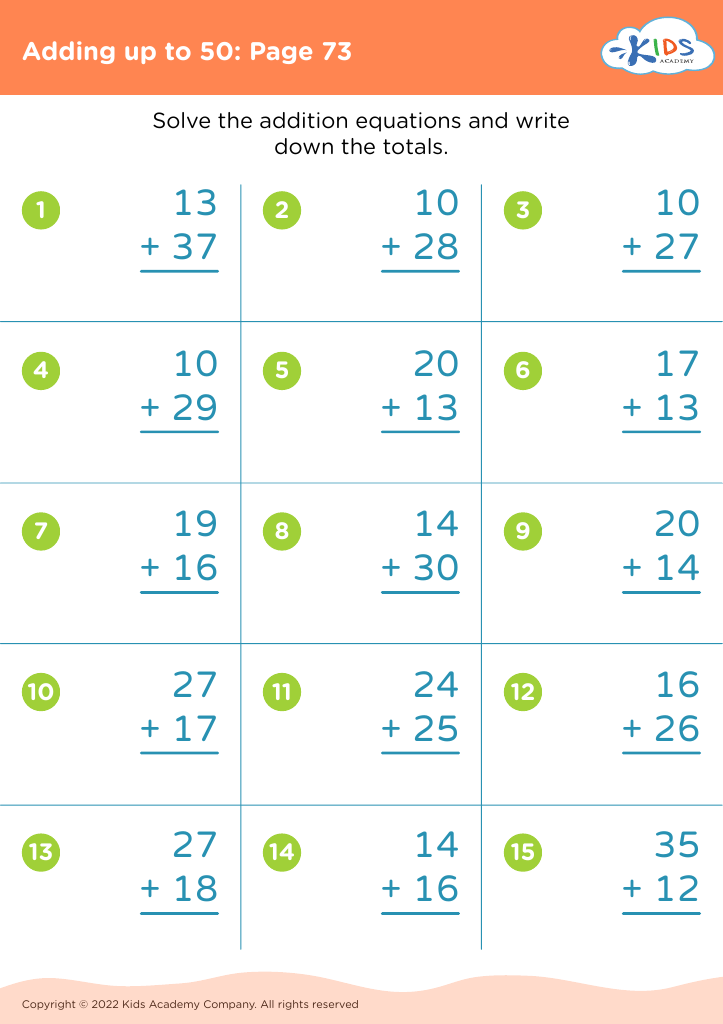
Enhance your child’s math journey with our Matching Skills Addition Worksheets tailored for ages 7-8! These engaging and educational worksheets are designed to strengthen addition skills while making learning fun. Kids will enjoy matching problems with their solutions, fostering not only numerical skills but also critical thinking abilities. Our worksheets are ideal for classroom use or at-home practice, promoting independent learning and boosting confidence in math. With colorful visuals and clear instructions, your child will effortlessly grasp addition concepts. Explore our printable worksheets and watch your little ones blossom as they master addition through interactive matching exercises! Download now to get started!
Favorites
With answer key
Interactive
Join Kids Academy for Free
Who is primarily going to use this learning content?








Matching skills in addition for children aged 7-8 are essential for developing foundational math abilities. At this stage, students transition from basic counting to more complex problem-solving. By practicing matching skills, whether through games, worksheets, or interactive activities, children can enhance their understanding of numbers and their relationships. This not only builds their confidence in handling addition but also provides a stepping stone for future mathematical concepts such as subtraction, multiplication, and division.
Moreover, engaging in matching skills helps improve cognitive and memory functions. These activities challenge children to recognize patterns and establish connections, reinforcing their learning experience. When parents and teachers prioritize these skills, they promote a richer learning environment that encourages collaborative play and social interaction. Moreover, recognizing the progress children make fosters a love for learning, leading to positive attitudes towards math in the long run.
In addition, these skills promote critical thinking and persistence, as children learn to approach problems methodically. For parents and teachers, investing time and resources into matching skills for addition is not just about enhancing mathematics; it's about nurturing well-rounded learners equipped with essential life skills. Ultimately, it paves the way for academic success and a lifelong love of learning.








