Mental math practice Addition Worksheets for Ages 7-8
6 filtered results
-
From - To
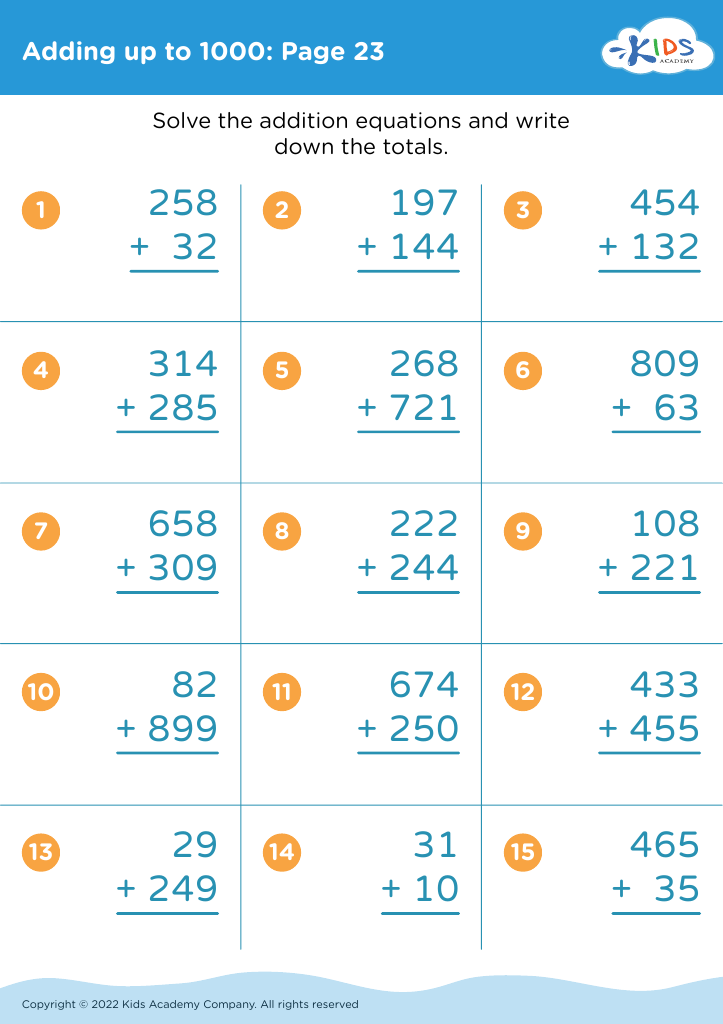
Boost your child's math skills with our engaging Mental Math Practice Addition Worksheets tailored for ages 7-8! These worksheets provide a fun and interactive way to enhance basic addition abilities, enabling students to solve problems quickly and confidently without relying on calculators or written calculations. Foster mental agility and reinforce number sense through a variety of activities designed to challenge young minds. Our resources are perfect for at-home practice or supplemental classroom use, ensuring a comprehensive understanding of addition concepts. Equip your child with the tools needed for success in math and watch their confidence soar! Visit us today to explore our collection!
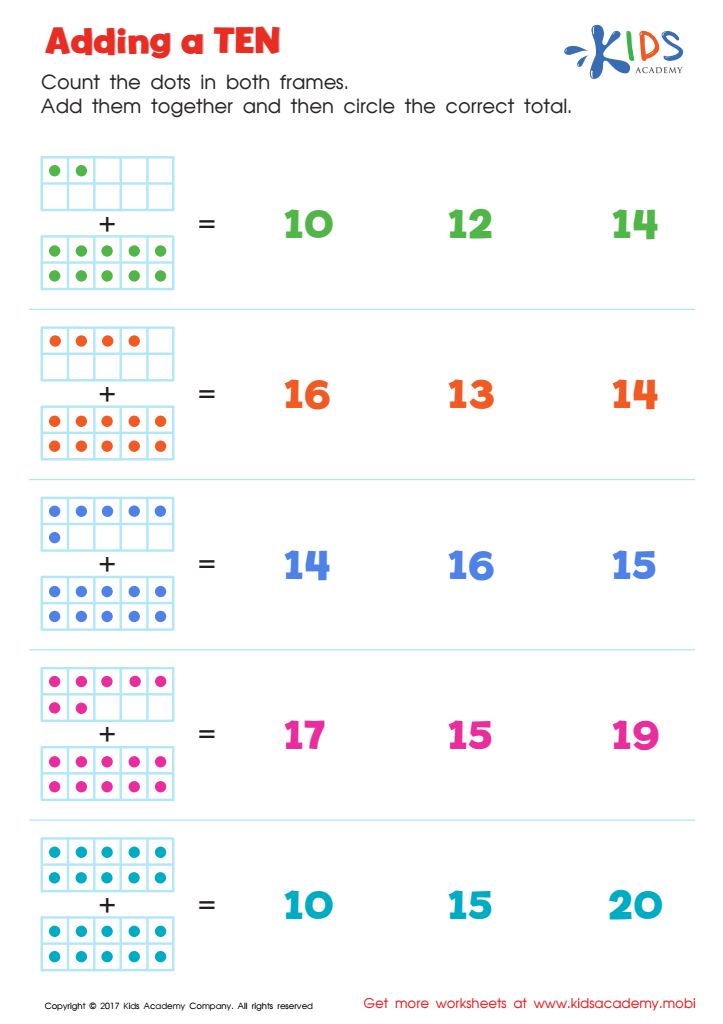
Adding a Ten Worksheet
 Assign to My Students
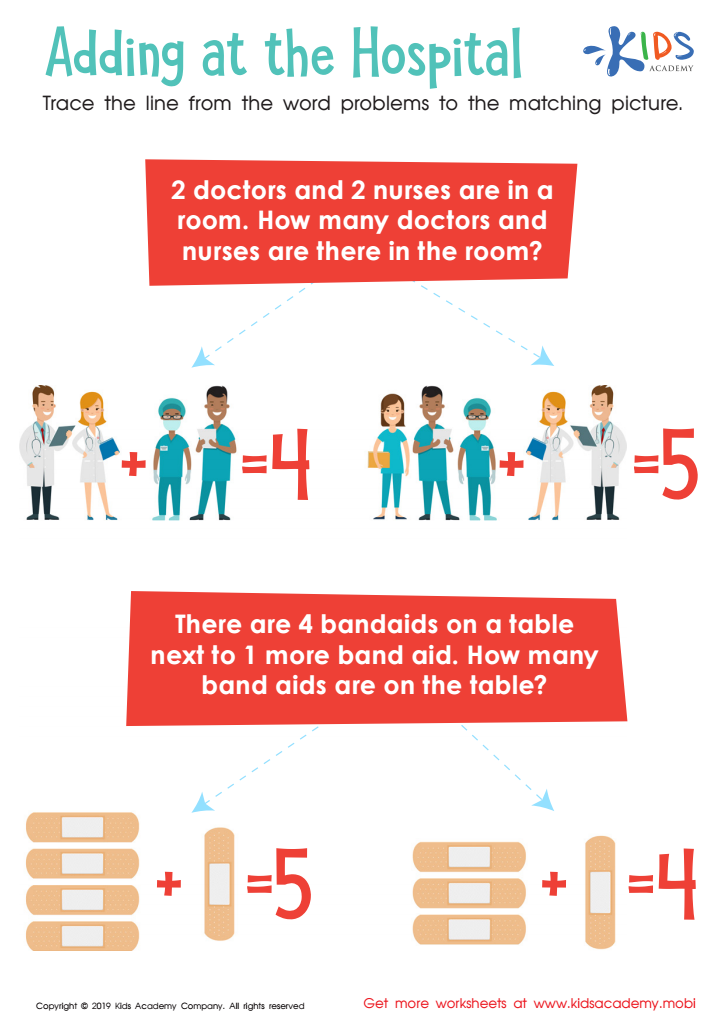
Adding at the Hospital Worksheet
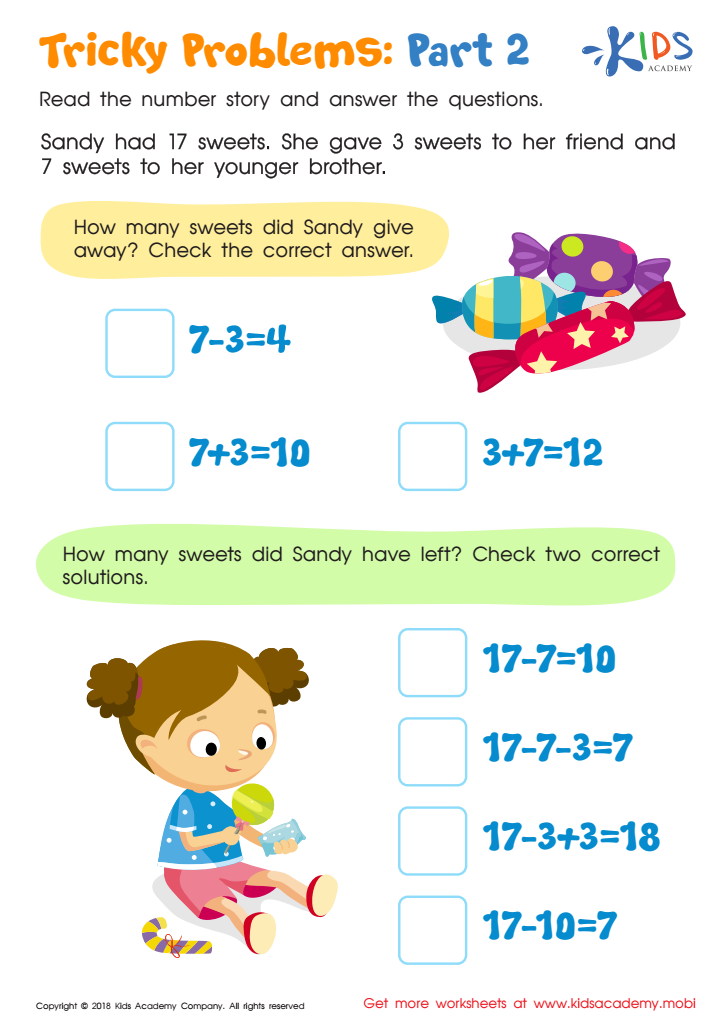
Tricky Problems Worksheet: Part 2
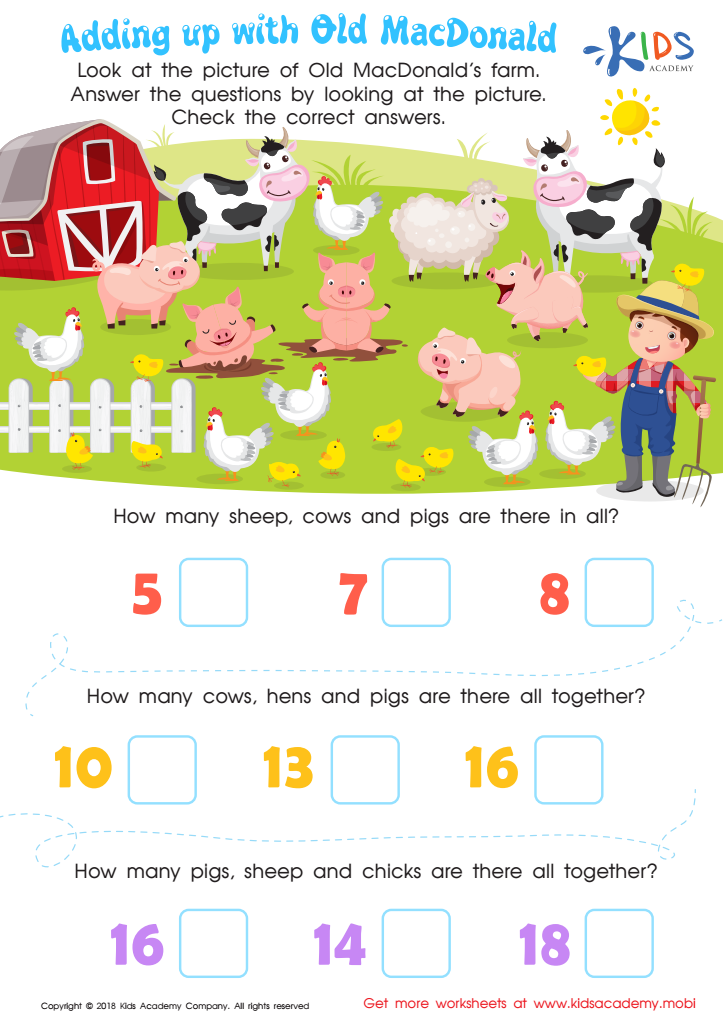
Adding Up with Old MacDonald Worksheet
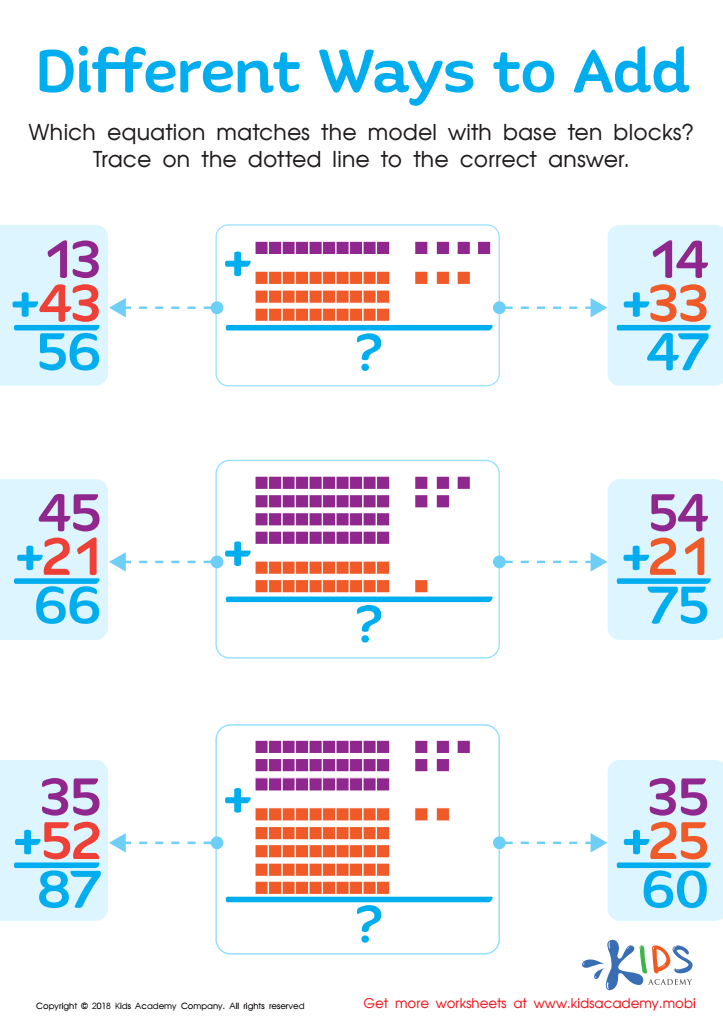
Different Ways to Add Worksheet




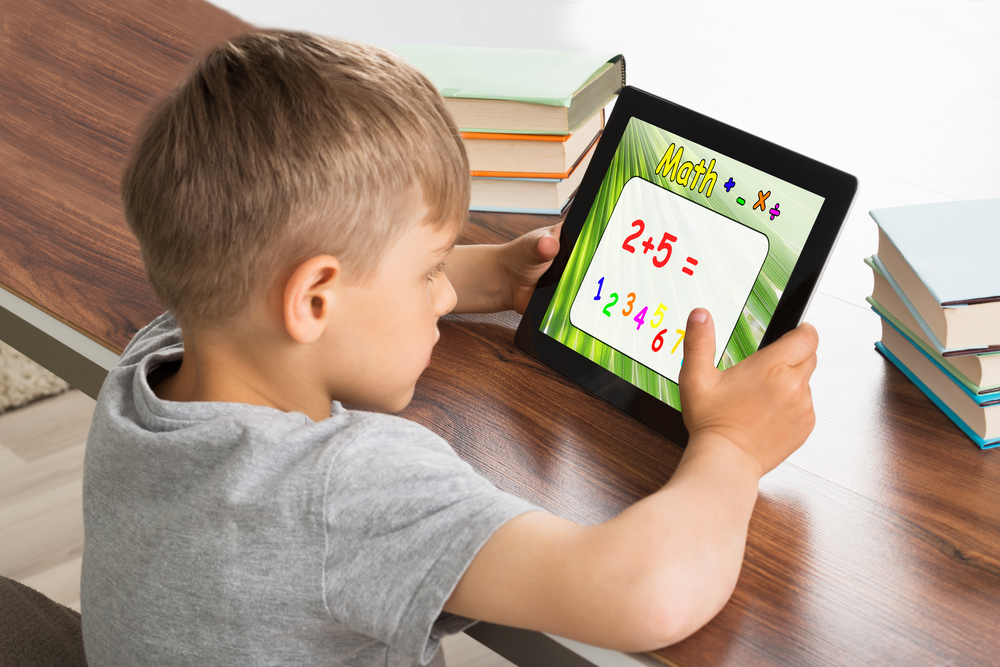



Mental math practice, particularly in addition, is crucial for children aged 7-8 as it lays the foundation for their numerical understanding and cognitive development. At this age, children are transitioning from concrete to more abstract mathematical concepts. Mental math fosters number sense and fluency, allowing students to solve problems quickly and accurately without relying on calculators or external aids. This skill not only helps in building confidence but also enhances concentration and memory retention.
Additionally, mental math promotes critical thinking and problem-solving abilities, enabling children to tackle more complex mathematical tasks in the future. Consistent practice can help them recognize patterns, develop estimation skills, and strategize their approach to solving addition problems.
Teachers and parents should care about these practices as they prepare students for future academic challenges. Integrating mental math into daily routines can make learning fun and engaging, leading to a positive attitude towards math. Furthermore, as children gain proficiency in addition, they can apply these skills in real-world situations, such as budgeting allowance or measuring ingredients in cooking, bridging classroom learning with life skills. Thus, supporting mental math development is essential for cultivating resilient, capable learners.








