
Numeracy skills Addition Worksheets for Ages 7-8
8 filtered results
Difficulty Level
Grade
Age
-
From - To
Subject
Activity
Standards
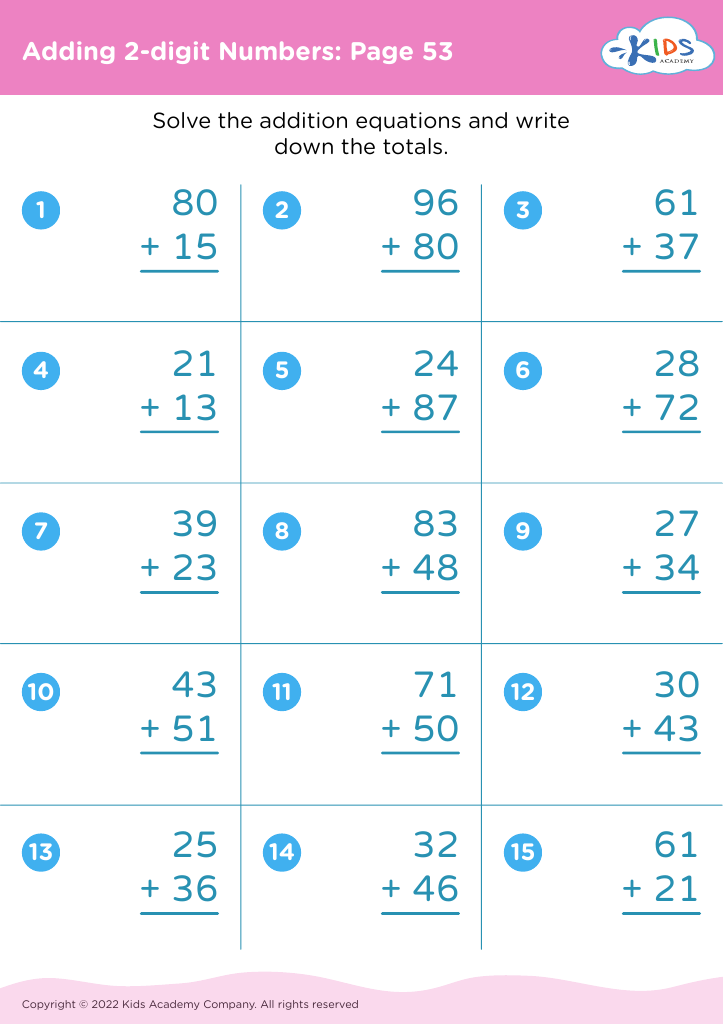
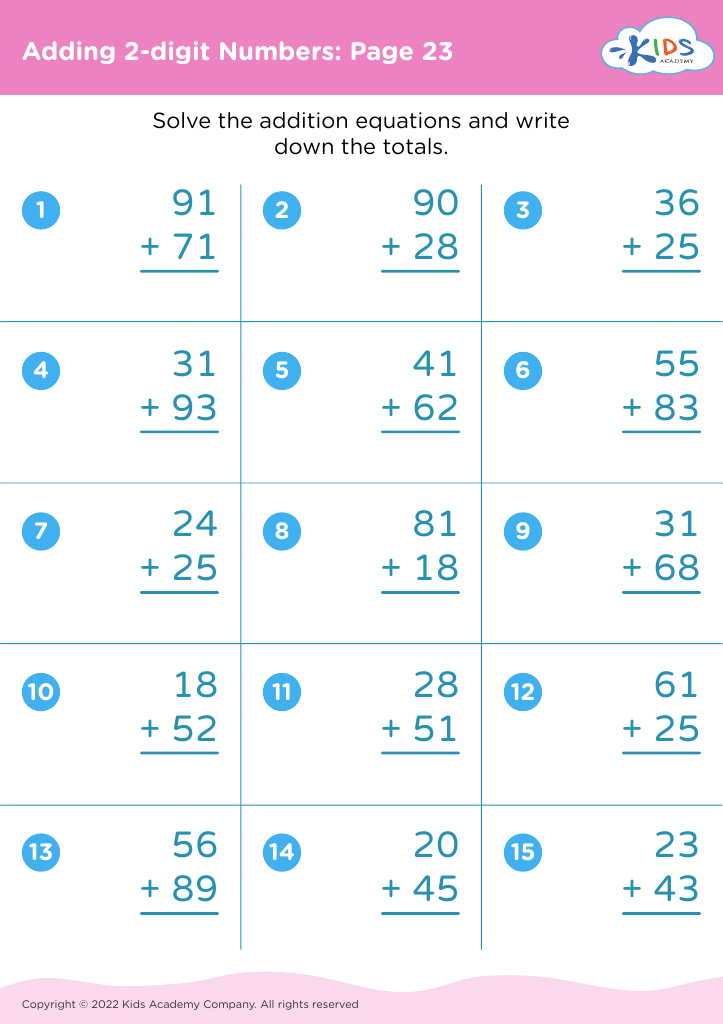
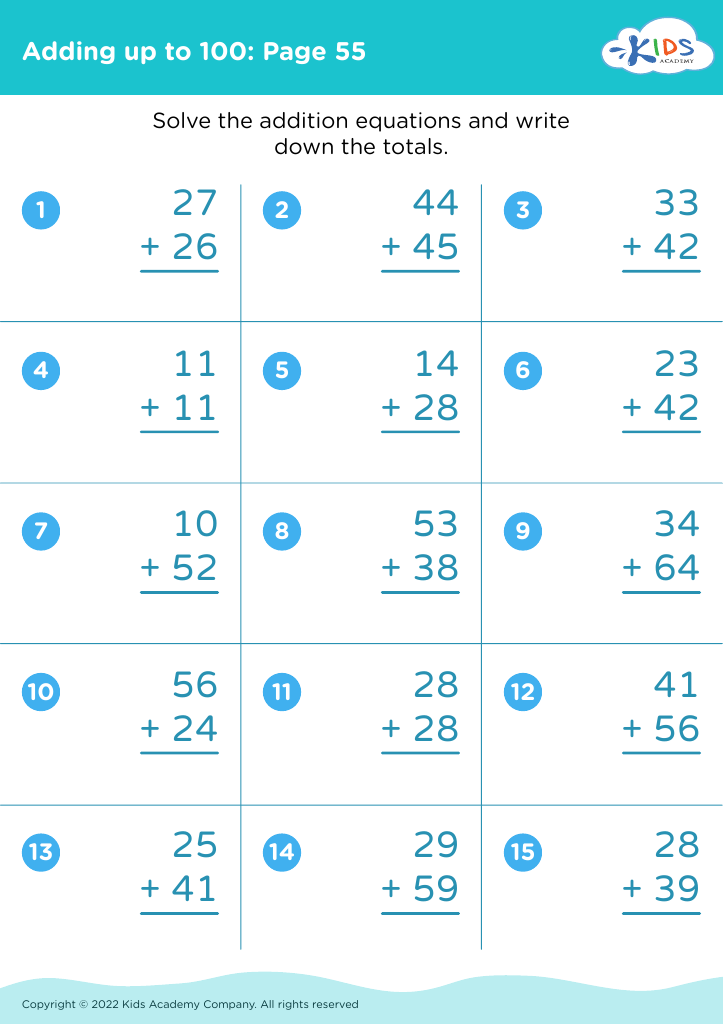
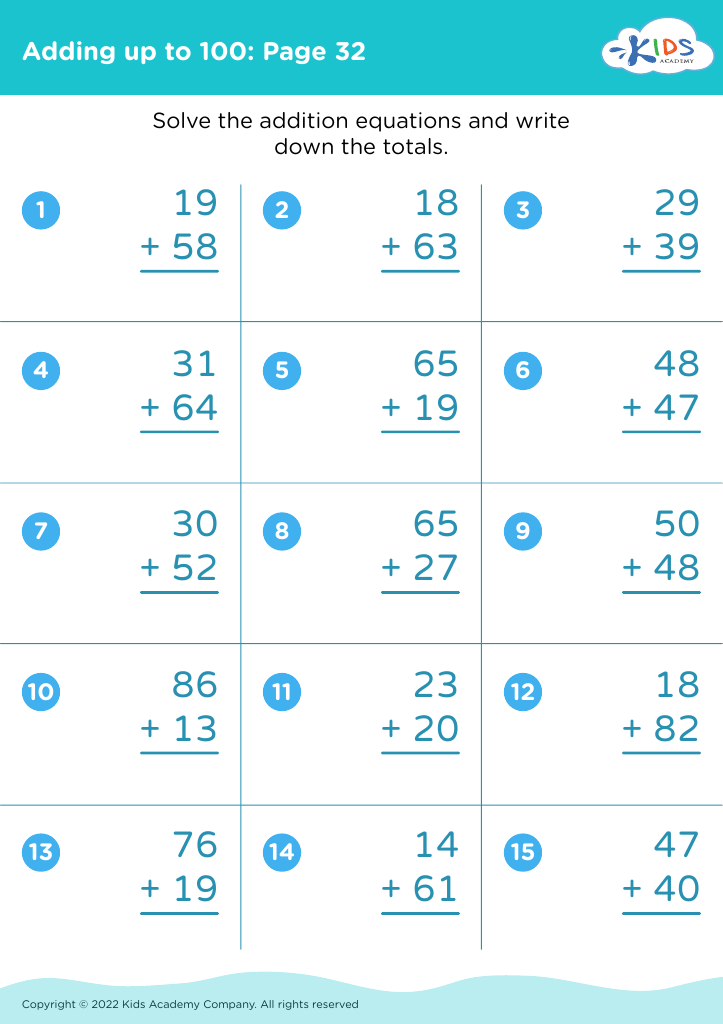
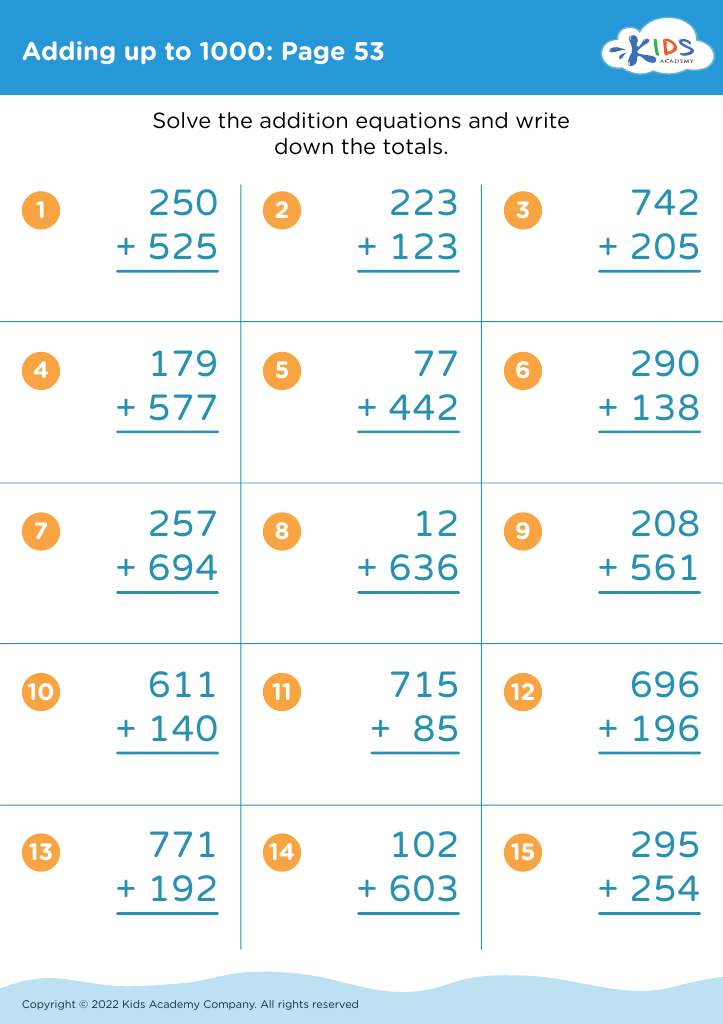
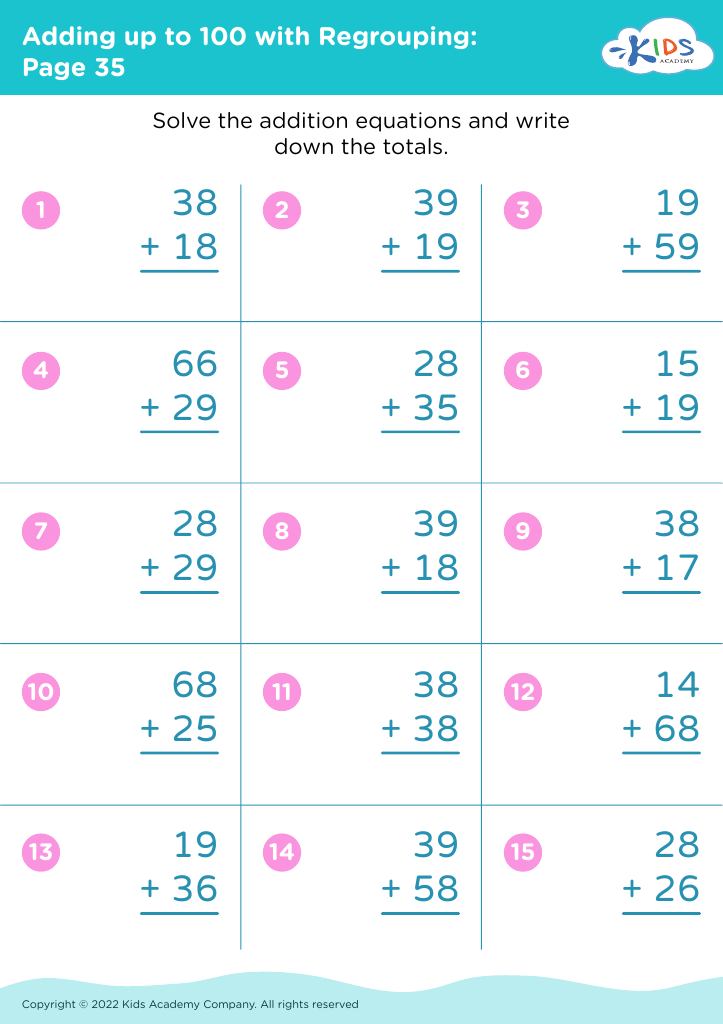
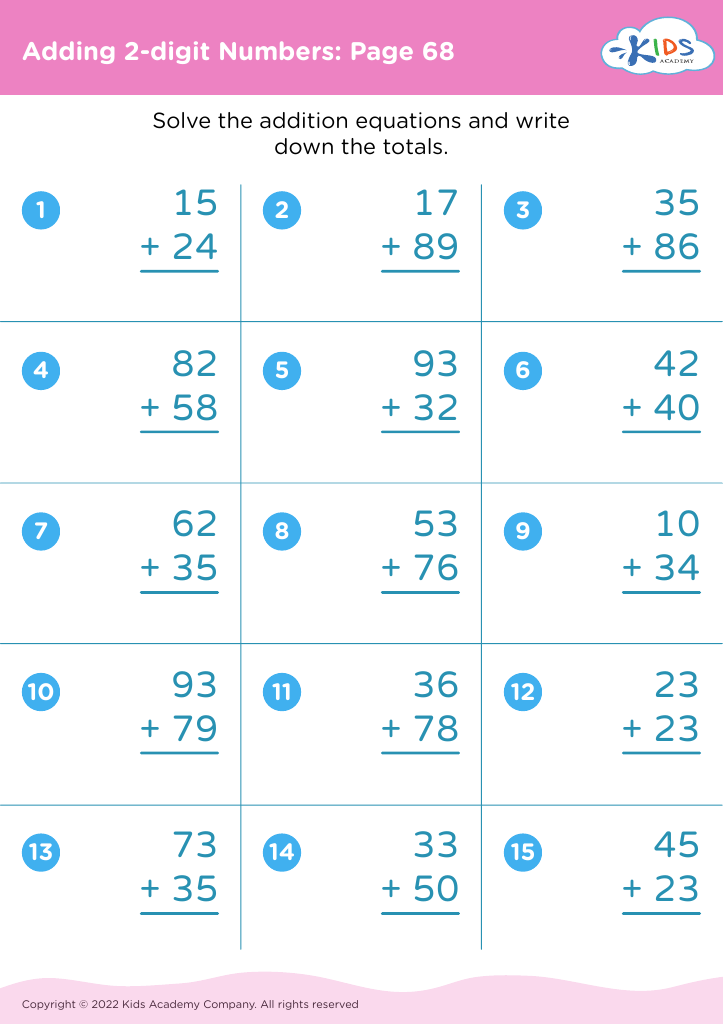
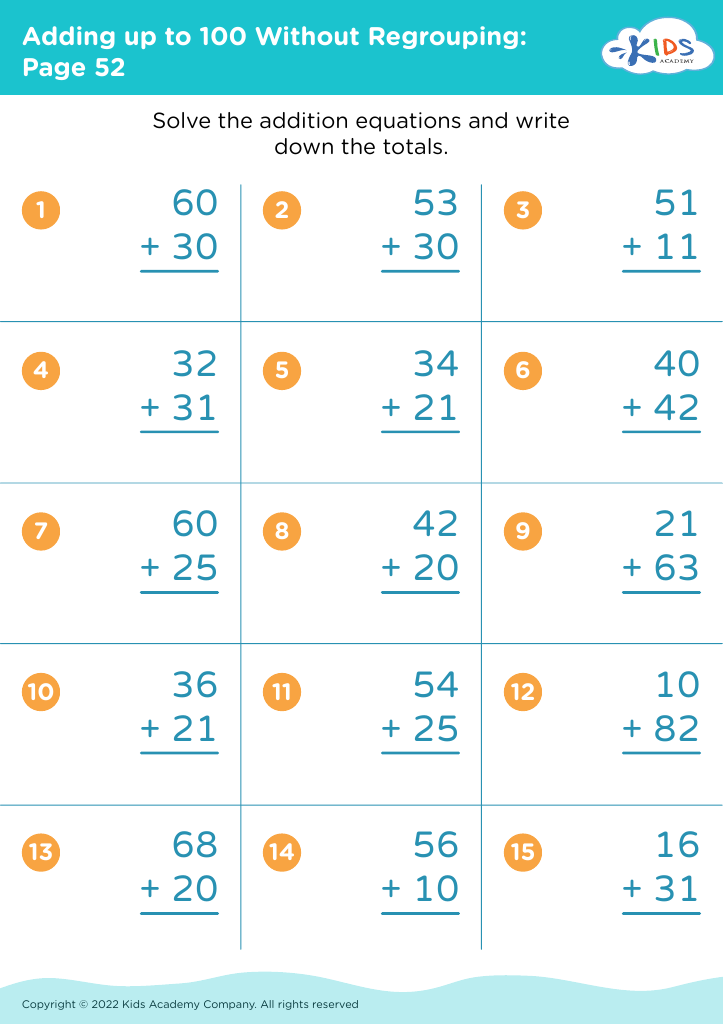
Discover our engaging Numeracy Skills Addition Worksheets designed specifically for children aged 7-8! These worksheets provide a fun and interactive way to reinforce addition concepts, helping young learners build a solid math foundation. With a variety of exercises, including single-digit and multi-digit addition, word problems, and more, students will enhance their numerical understanding and problem-solving skills. Our worksheets cater to different learning styles, ensuring that every child has the opportunity to succeed. Perfect for classroom use or at-home practice, these resources will instill confidence in young mathematicians as they master addition. Explore our collection today and make learning math enjoyable!
Favorites
With answer key
Interactive
Join Kids Academy for Free
Who is primarily going to use this learning content?








Parents and teachers should prioritize numeracy skills, particularly addition, for children ages 7-8, for several compelling reasons. At this age, children are developing critical foundational math skills that are essential for everyday life and more complex mathematical concepts in the future. Mastery of addition lays the groundwork for understanding subtraction, multiplication, and even division, equipping children with the tools needed for solving a variety of real-world problems.
Furthermore, strong addition skills enhance a child’s confidence in their mathematical abilities. Children who feel secure in their numeracy skills are more likely to engage with math positively, fostering a lifelong interest in the subject. This early enthusiasm can lead to better academic performance and a readiness to tackle new challenges.
Additionally, addition plays a significant role in areas beyond math, such as science and economics, where calculations and data interpretation are necessary. Promoting addition skills can help children develop critical thinking and problem-solving abilities that are beneficial in multiple disciplines.
Lastly, nurturing these skills can strengthen the parent-child or teacher-student relationship through interactive and engaging learning opportunities, making math a fun and collaborative subject. Overall, attention to numeracy and addition during this age can set children on a path to future success.








