Practice counting Addition Worksheets for Ages 7-8
6 filtered results
-
From - To
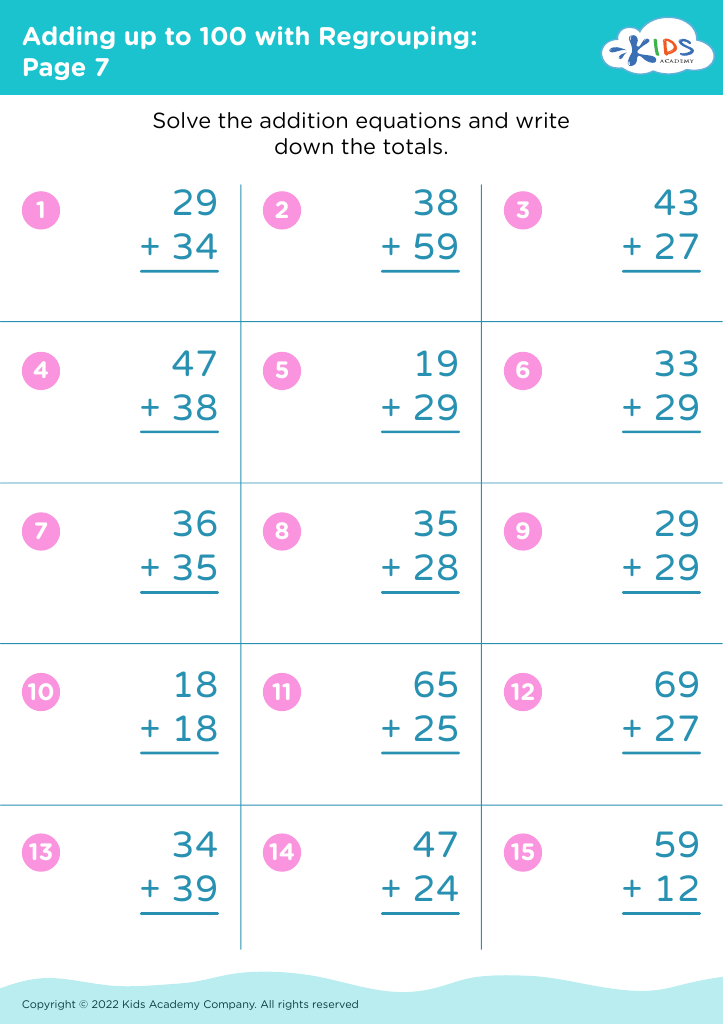
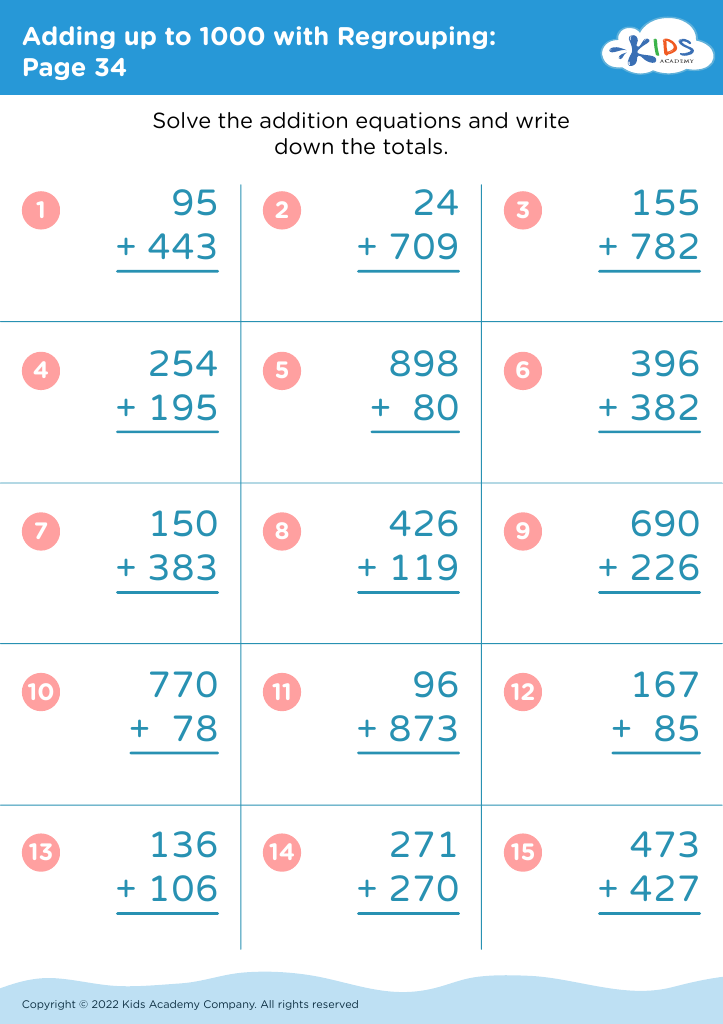
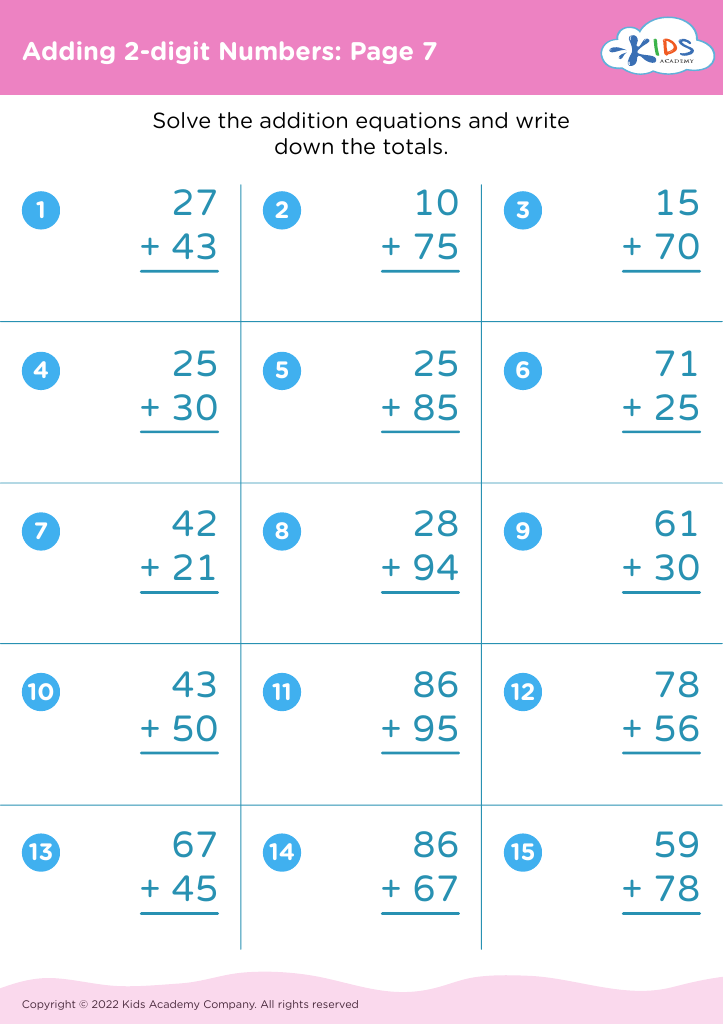
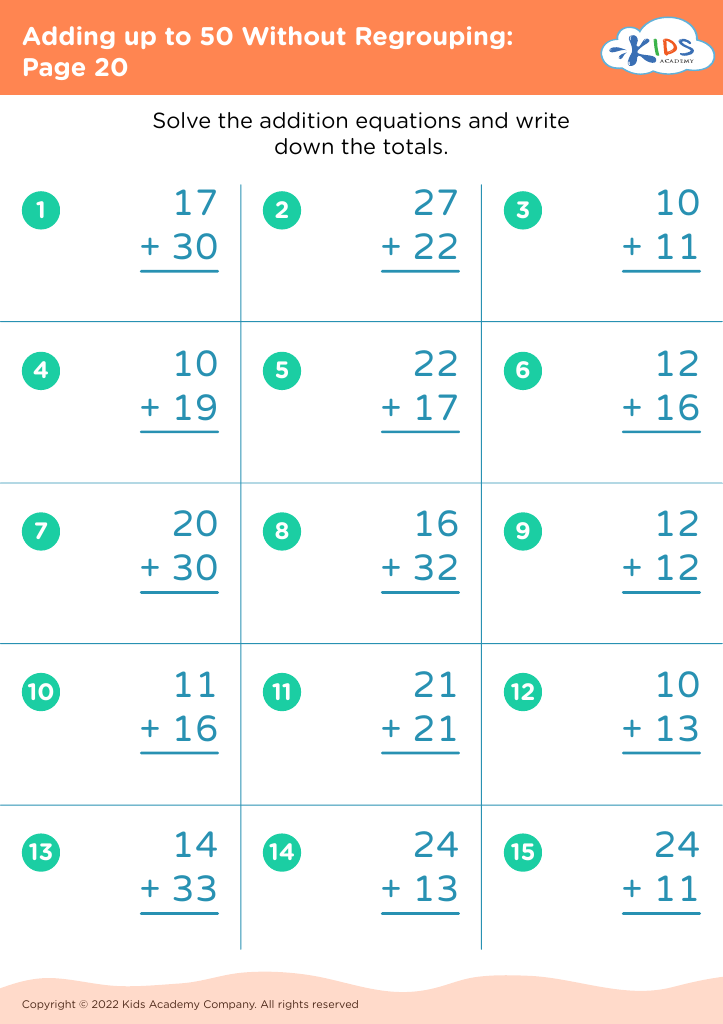
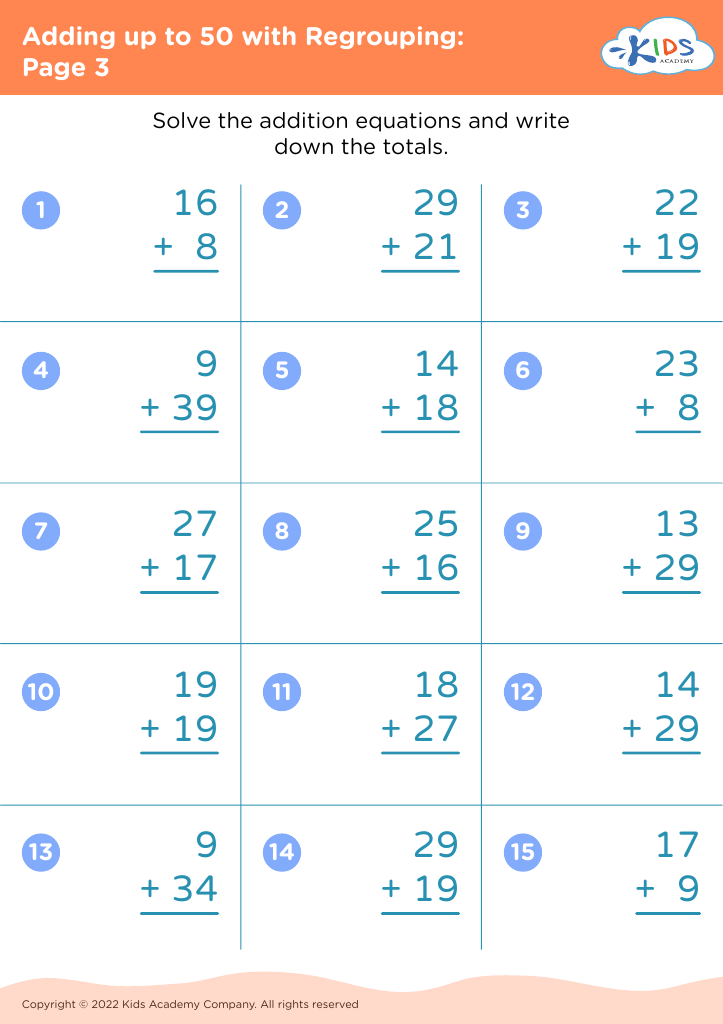
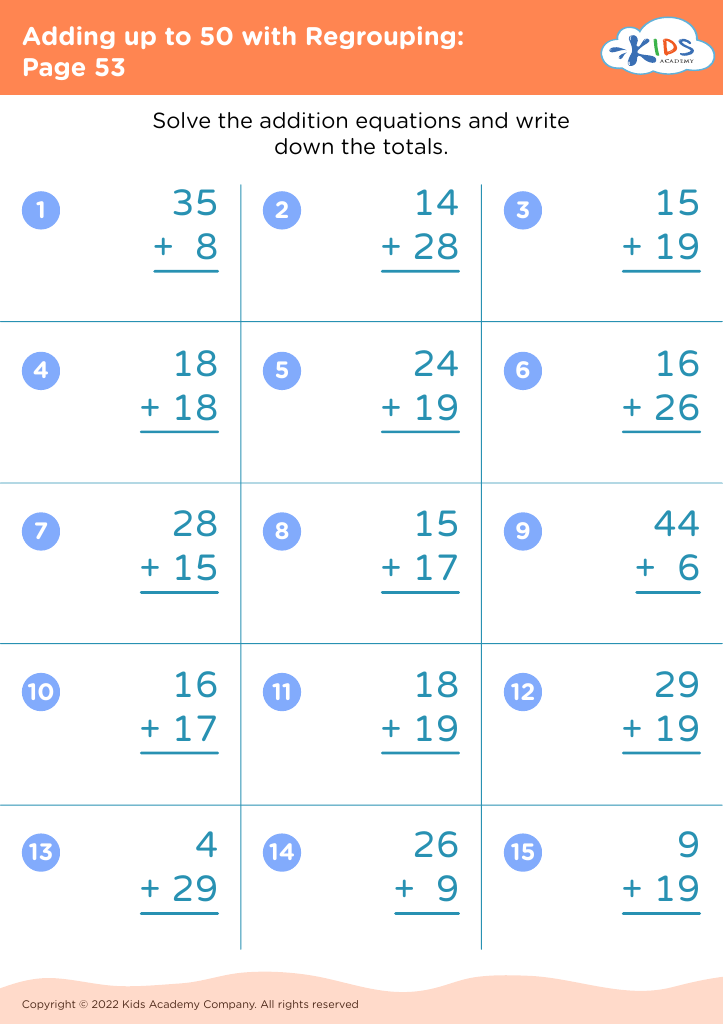
Boost your child's math skills with our engaging "Practice Counting Addition Worksheets" designed for ages 7-8. Our carefully curated worksheets help children strengthen their basic addition abilities through fun and interactive counting exercises. By combining visual aids and practical problems, these printable worksheets enable kids to grasp addition concepts efficiently. Ideal for both classroom use and homeschooling, these resources foster a love for math while building essential arithmetic skills. Enhance learning with step-by-step practice that makes mastering addition enjoyable and accessible. Download now and watch your child's confidence in math soar!




.jpg)



Parents and teachers should prioritize practicing counting and addition for children aged 7-8 because these foundational skills are crucial for their future math success. At this age, children are typically in second or third grade, a key period for developing essential arithmetic abilities. Mastering counting and basic addition builds the groundwork for understanding more complex math concepts later on, such as subtraction, multiplication, and division.
Counting nurtures numerical familiarity and fluency, helping children recognize patterns and orders in numbers, which are vital for problem-solving and logical thinking. When children become proficient in addition, they enhance their ability to perform mental calculations, boosting their confidence and competence in handling math-related tasks in everyday life.
Moreover, practicing these skills improves cognitive development, memory, and attention to detail, which benefits overall academic performance. Positive early experiences with math also foster a love for the subject, dispelling any fear or failure associated with it. By reinforcing counting and addition at this stage, educators and parents set children on a path to become proficient, enthusiastic learners who are well-equipped to tackle future mathematical challenges.








