Recognize shapes Addition Worksheets for Ages 7-8
8 filtered results
-
From - To
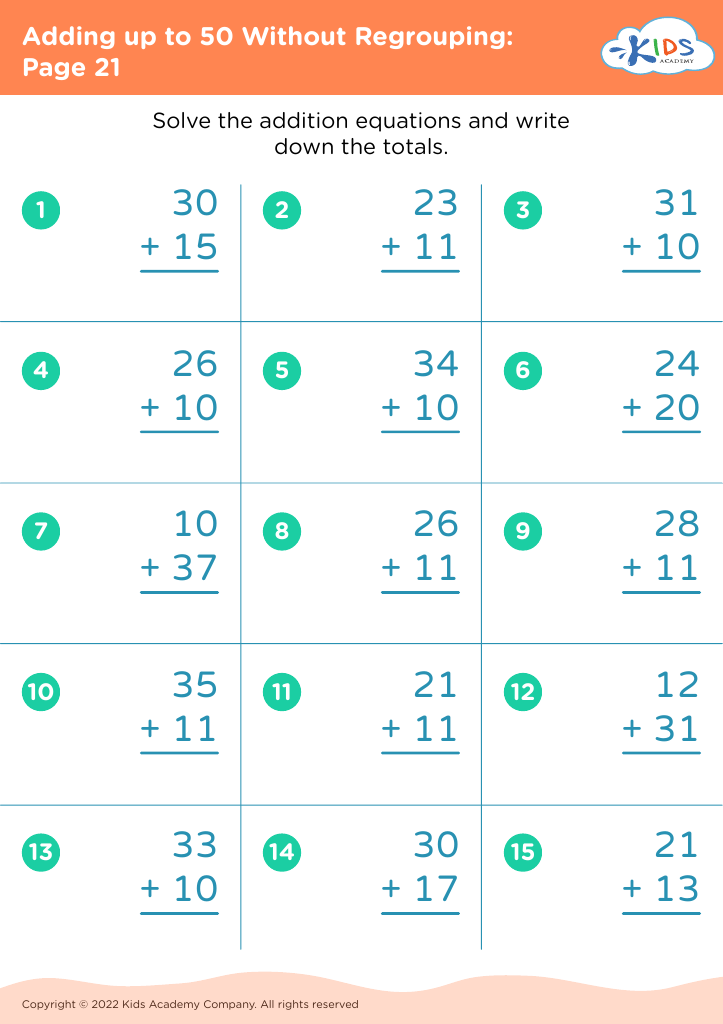
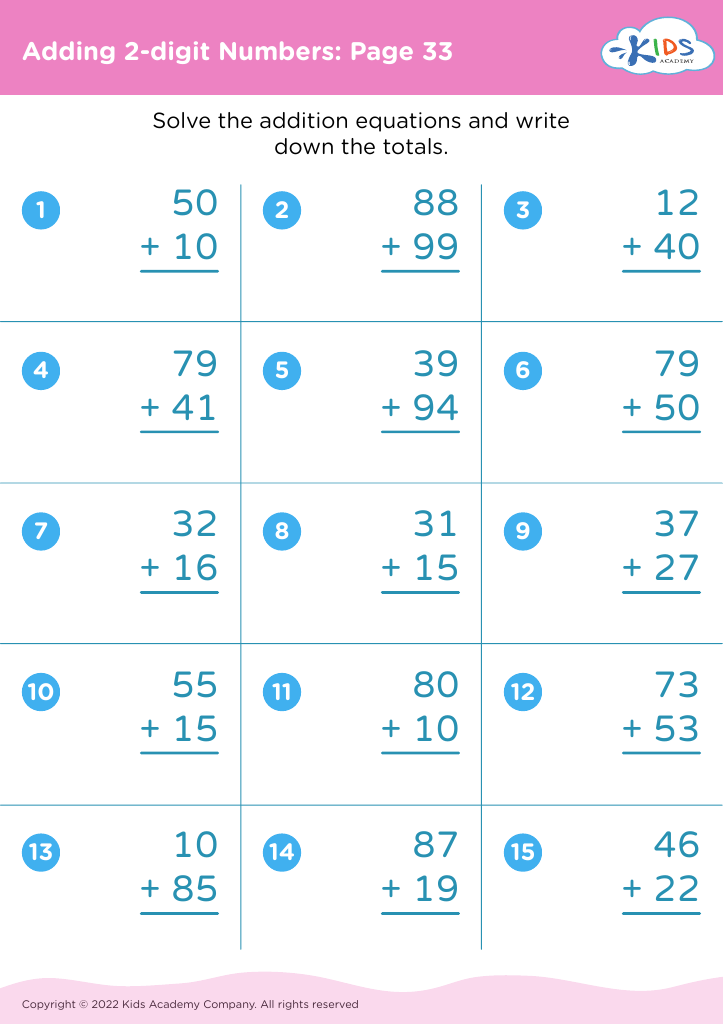
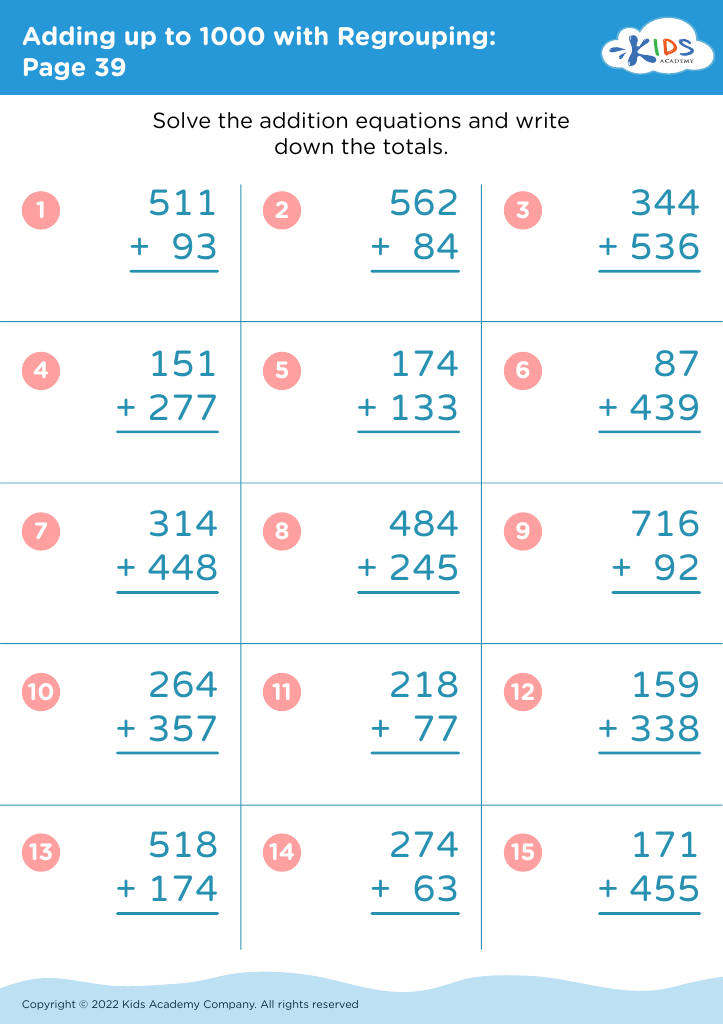
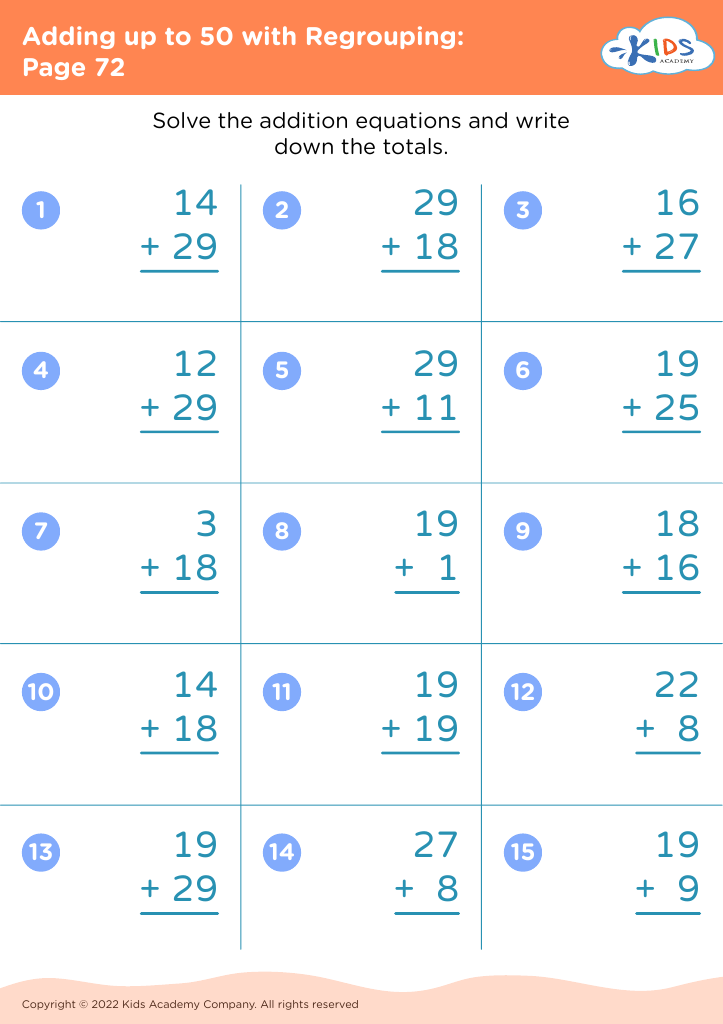
Help your child master math with our "Recognize Shapes Addition Worksheets for Ages 7-8." These engaging worksheets combine the fundamentals of shape recognition and addition, designed to develop both visual and numerical skills. Perfect for second graders, each worksheet challenges students to identify shapes and solve related addition problems, strengthening their understanding in a fun, interactive way. With bright graphics and varied exercises, kids stay motivated while learning essential math concepts. Excellent for classroom activities or additional practice at home, these worksheets enhance cognitive development and boost math confidence. Discover the ideal blend of learning and fun today!








Recognizing shapes and understanding basic addition are foundational skills for children aged 7-8, as they form the building blocks for more advanced mathematical concepts. Shapes recognition helps children in developing spatial awareness and visual processing skills. By identifying shapes, children learn to categorize and compare different objects, which enhances their reasoning and problem-solving abilities. These skills are essential not only in mathematics but also in everyday life, where shapes are omnipresent—from traffic signs to building structures.
Basic addition is crucial as it introduces children to the rules of arithmetic, which is fundamental for all later math learning. Knowing how to add allows children to tackle more complex operations such as subtraction, multiplication, and division. Mastery of these skills boosts their confidence and supports a positive attitude towards mathematics.
Moreover, integrating these concepts early fosters a sense of curiosity and a love for learning. Parents and teachers who emphasize the importance of recognizing shapes and practicing addition provide children with a solid mathematical foundation. In doing so, they equip young learners with the tools necessary to succeed in school, handle real-life challenges, and develop critical thinking skills that are valuable throughout life.








