Recognizing equivalent fractions Addition Worksheets for Ages 7-8
4 filtered results
-
From - To
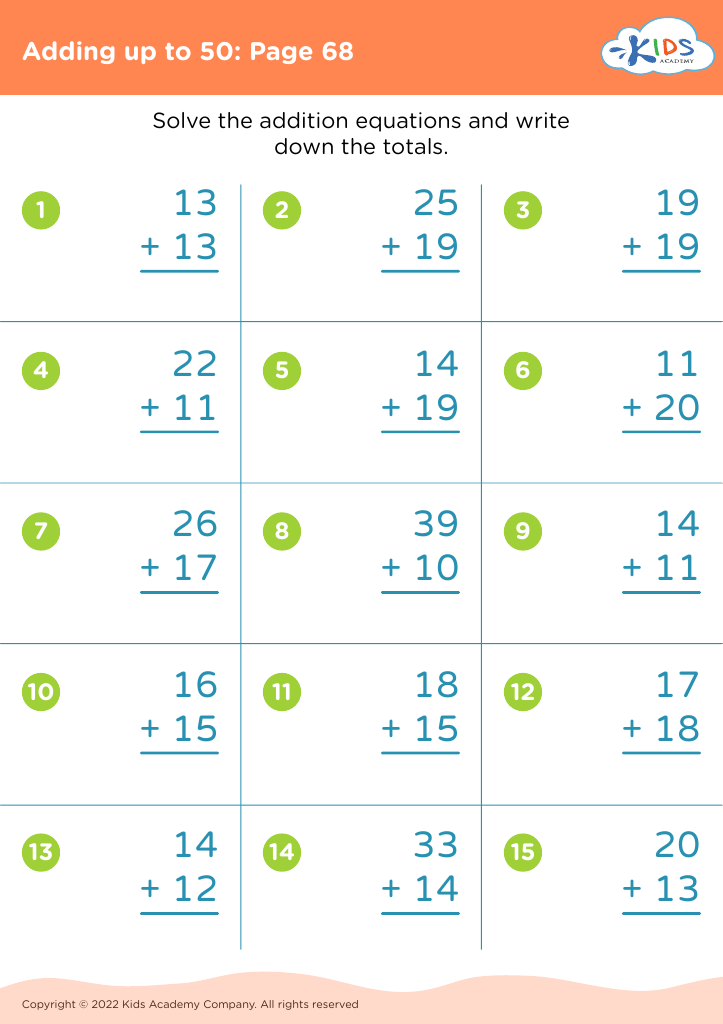
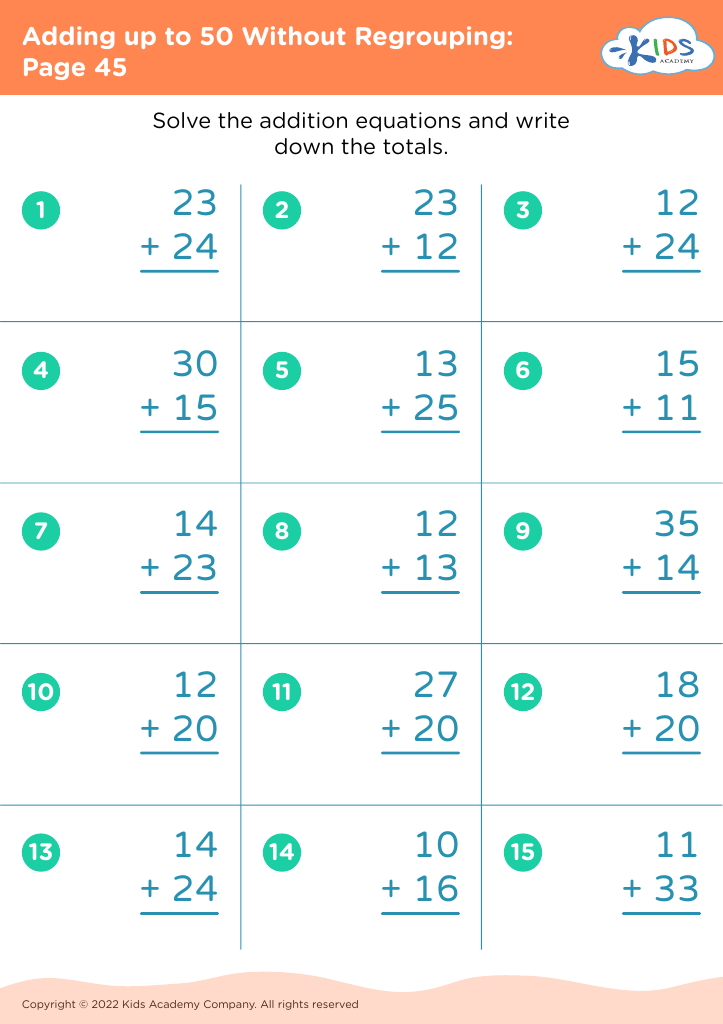
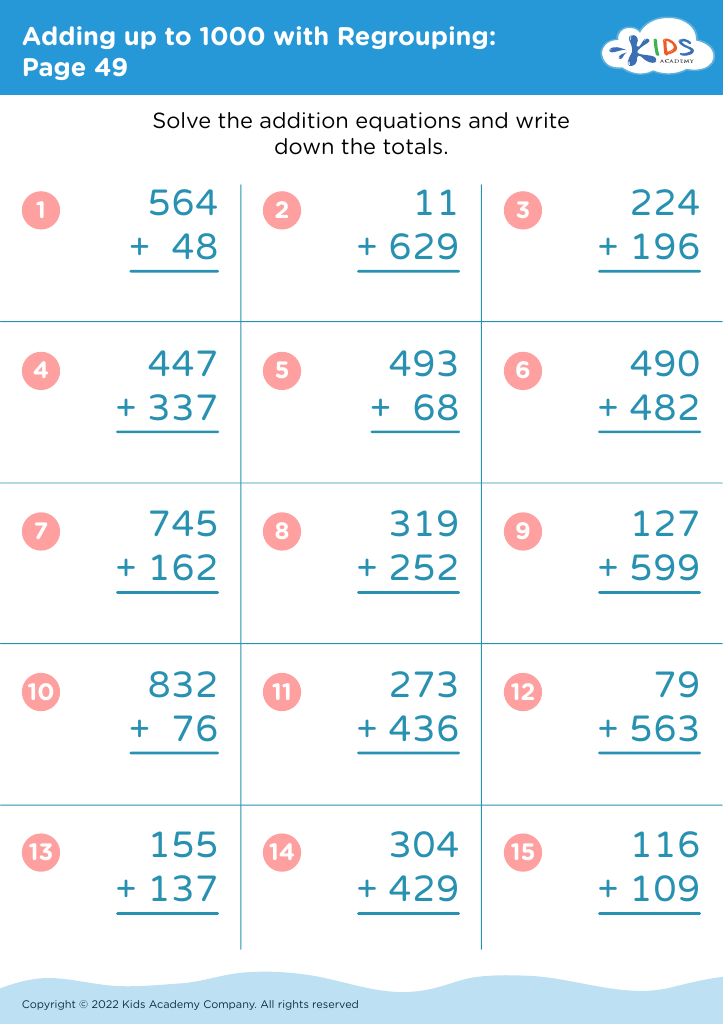
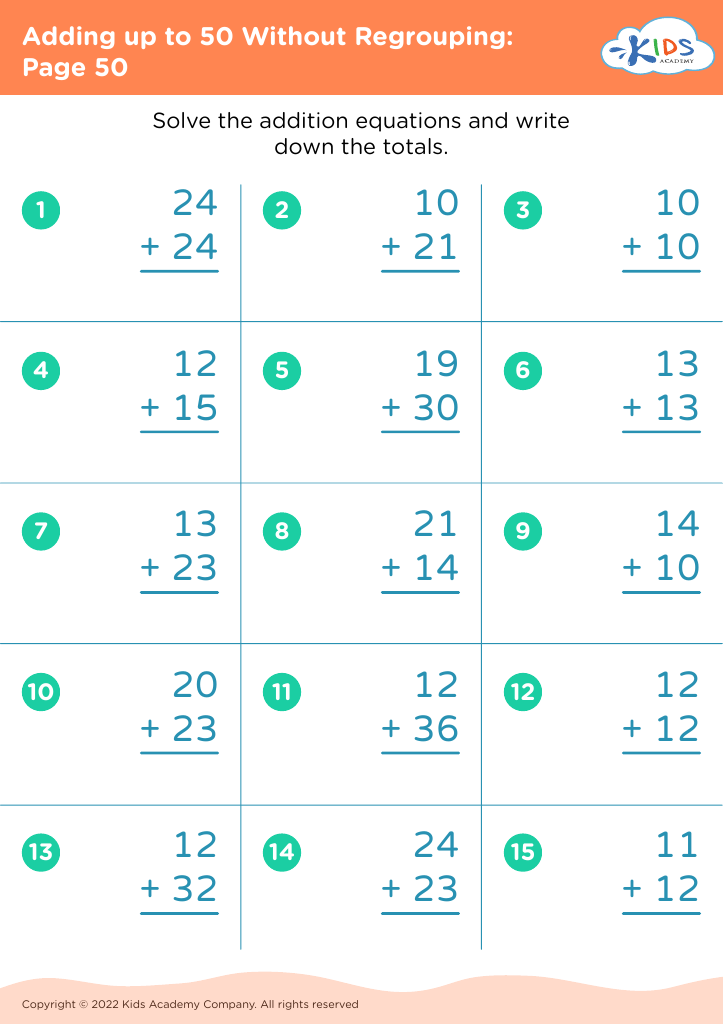
Welcome to our Recognizing Equivalent Fractions Addition Worksheets for Ages 7-8! Designed for young learners, these engaging worksheets help kids grasp the concept of equivalent fractions while enhancing their addition skills. Each worksheet features colorful visuals and interactive exercises that make learning fun and effective. As children practice, they will gain confidence in identifying fractions that are equal, reinforcing their understanding of basic math principles. Ideal for classroom use or at-home practice, our resources support early math education in a playful way. Download now and watch your child explore the world of fractions with excitement and curiosity!








Recognizing equivalent fractions and addition is an essential skill for children aged 7-8, vital for their mathematical foundation. At this developmental stage, children are beginning to grasp the concepts of numbers and operations, making it crucial for parents and teachers to encourage these skills.
Understanding equivalent fractions enhances a child’s ability to manipulate and compare fractions, fostering problem-solving skills. This understanding lays the groundwork for more complex concepts in later grades, such as adding fractions and fraction word problems. By recognizing that different fractions can represent the same quantity (e.g., 1/2 is equivalent to 2/4), students become more adept at simplifying operations in mathematics.
Additionally, these skills promote critical thinking and analytical abilities, which are invaluable for lifelong learning. When children are taught to recognize equivalent fractions and perform addition with them, they gain confidence in mathematics and become more willing to tackle challenging problems.
Moreover, parental engagement in these educational moments can strengthen the child’s mathematical skills while fostering a supportive learning environment at home. Overall, recognizing equivalent fractions and performing related additions are vital skills that ensure success in mathematics and establish a strong foundational understanding for students as they progress academically.








