
Reinforce math concepts Addition Worksheets for Ages 7-8
3 filtered results
Difficulty Level
Grade
Age
-
From - To
Subject
Activity
Standards
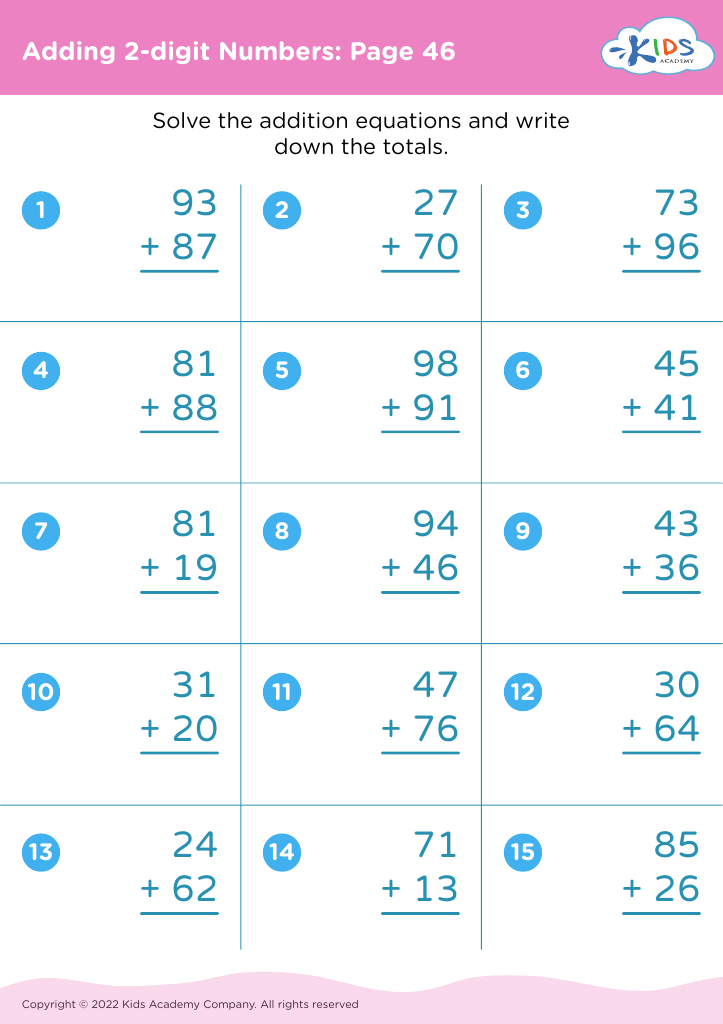
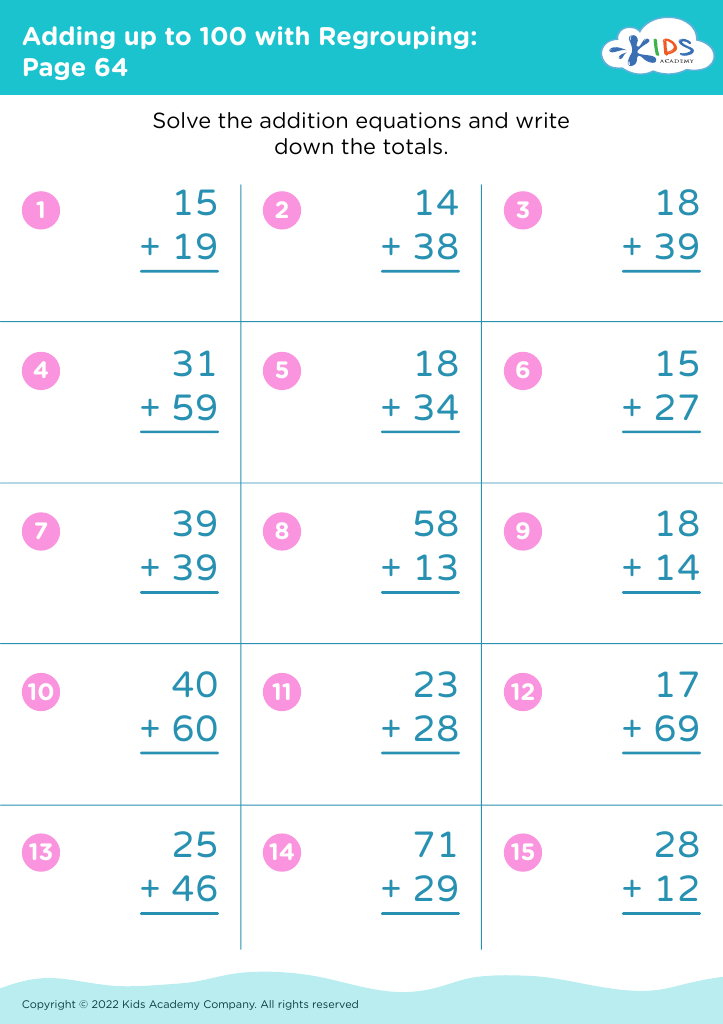
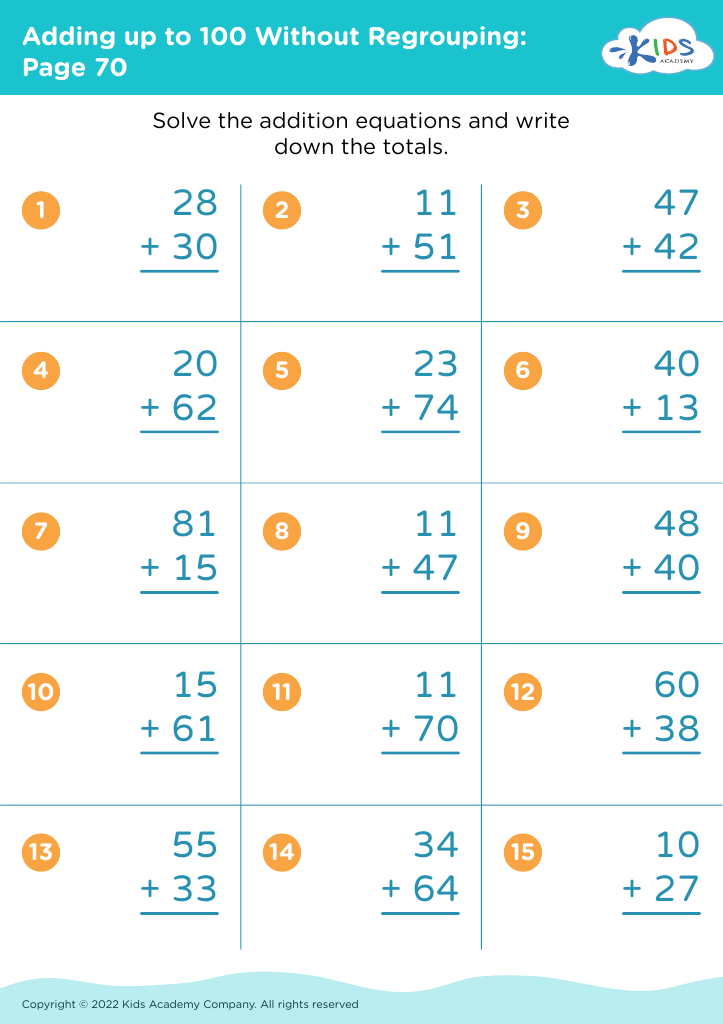
Boost your child's math skills with our engaging addition worksheets designed specifically for ages 7-8! These printable resources are perfect for reinforcing math concepts, making learning enjoyable and interactive. With a variety of exercises that challenge and empower young learners, your child will strengthen their understanding of addition with hands-on practice. Our worksheets provide clear instructions and colorful visuals, fostering enthusiasm for math! Ideal for home or classroom use, these resources cater to different learning styles, ensuring that each child can progress at their own pace. Explore our collection and help your child master addition today!
Favorites
With answer key
Interactive
Join Kids Academy for Free
Who is primarily going to use this learning content?



.jpg)
.jpg)



Reinforcing math concepts like addition for ages 7-8 is crucial for several reasons. At this age, children are building foundational skills that will impact their understanding of more complex mathematical topics in the future. Mastering addition not only enhances their computation abilities but also builds confidence as they tackle more challenging mathematical concepts, such as subtraction, multiplication, and division.
Additionally, reinforcing addition helps develop critical thinking and problem-solving skills. When children practice addition through various methods, such as manipulatives, games, or real-life scenarios, they learn to approach problems from different angles and think critically about numbers. This adaptability is essential for future academic success.
Moreover, parents and teachers play a vital role in creating a supportive learning environment. Engaging children in fun, interactive addition activities fosters a positive attitude toward math, making it a subject they enjoy rather than fear. By demonstrating enthusiasm and offering encouragement, adults can significantly influence a child's relationship with math.
Ultimately, reinforcing addition empowers children with essential skills that extend beyond the classroom, supporting their overall cognitive development and preparing them for logical reasoning required in everyday life. This investment in their early math education pays dividends throughout their academic journey and beyond.








