Telling time Addition Worksheets for Ages 7-8
3 filtered results
-
From - To
Discover our engaging Telling Time Addition Worksheets designed specifically for children aged 7-8! These fun, interactive worksheets help students master both time-telling and addition skills through enjoyable exercises. Each worksheet provides a blend of practical clock-reading practice and addition problems that promote essential math fluency. With colorful visuals and relatable scenarios, kids will be motivated to learn while enhancing their understanding of hours, minutes, and basic math concepts. Perfect for classroom use or at-home practice, our unique resources ensure that children develop confidence in time management and arithmetic in a playful way. Explore our collection and watch learning come alive!
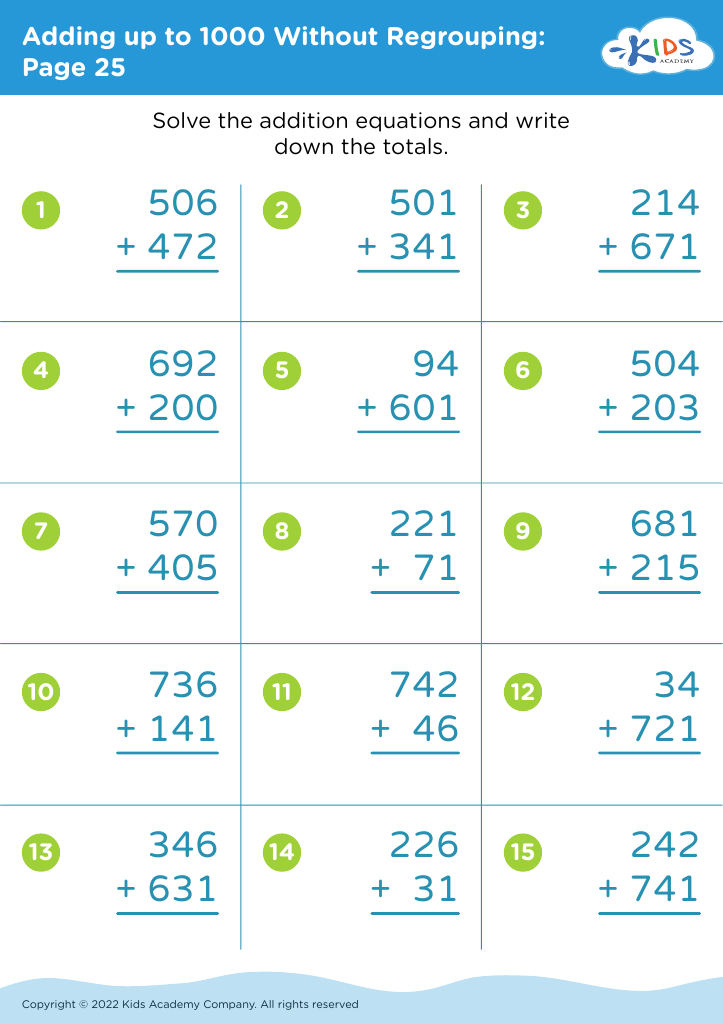
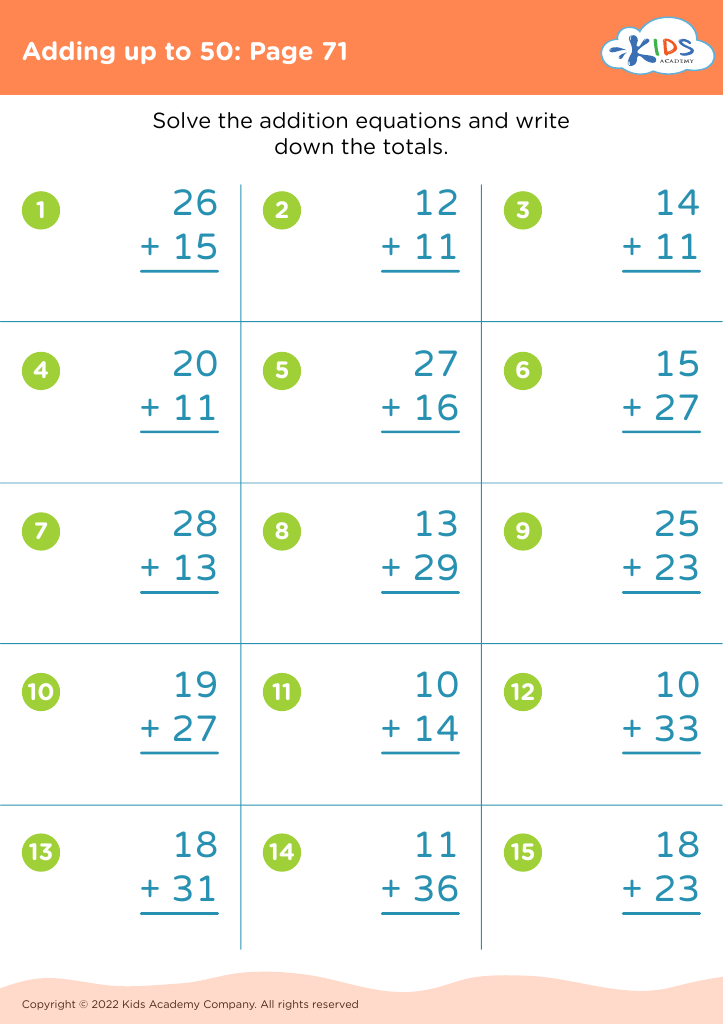
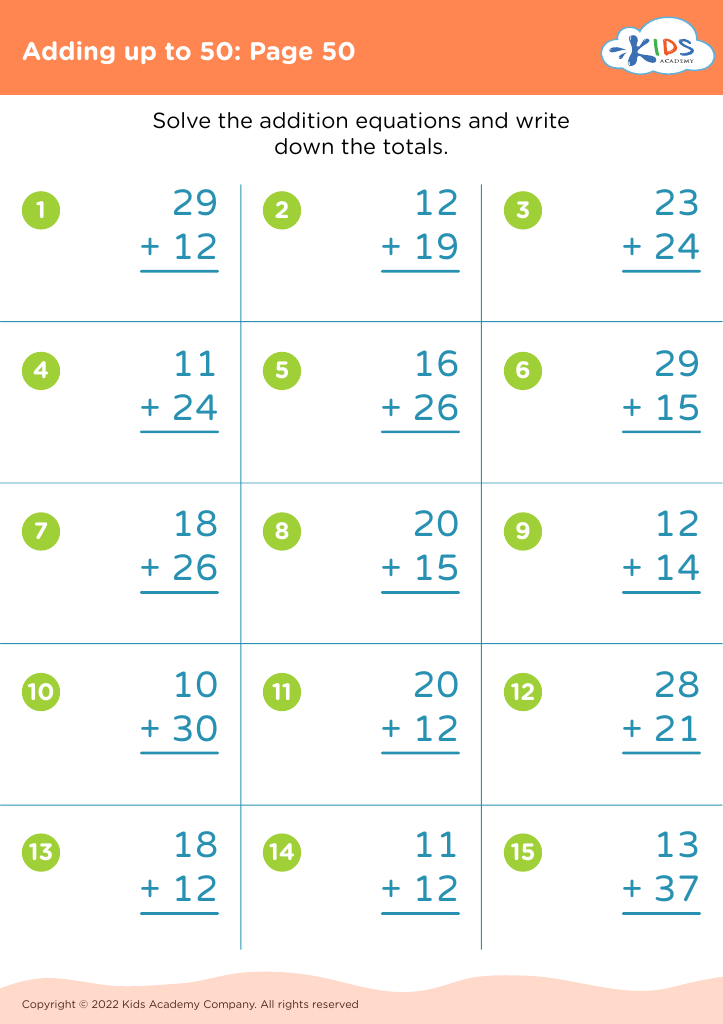








Understanding how to tell time and perform addition related to time is crucial for children aged 7-8. At this developmental stage, children are honing their cognitive skills, and these lessons serve multiple educational purposes.
First, telling time enhances their time management skills, which are essential for future academic performance and personal responsibility. Children learn to visualize schedules, develop routines, and understand the significance of time in daily life, such as knowing when to start homework or when to go to activities.
Moreover, addition involving time fosters robust mathematical skills. Children practice key concepts like addition and subtraction in a real-world context, reinforcing their understanding of numbers and their relationships. For instance, calculating the duration of events or adding minutes to an hour helps deepen their number sense.
Finally, these concepts encourage problem-solving skills. As children engage with activities related to time, they must think critically and independently, allowing them to develop analytical skills that are invaluable in all areas of learning. By supporting children in mastering telling time and associated addition, parents and teachers contribute to building foundational skills for lifelong learning and independence. In summary, these competencies not only aid academic success but also foster essential life skills.








