Understanding number sequence Addition Worksheets for Ages 7-8
3 filtered results
-
From - To
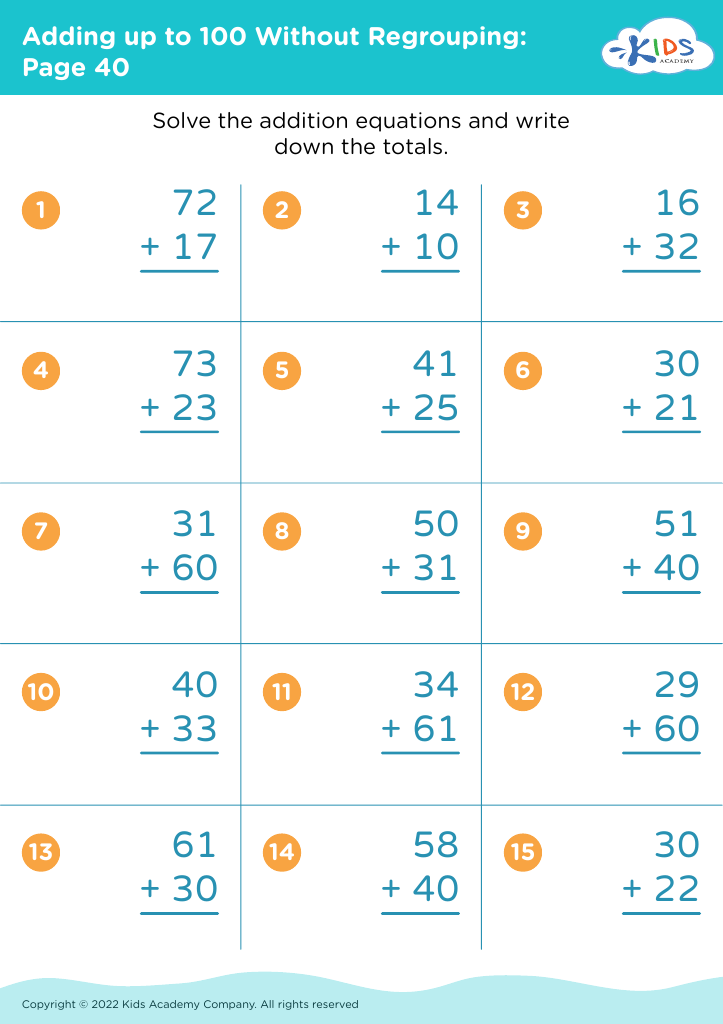
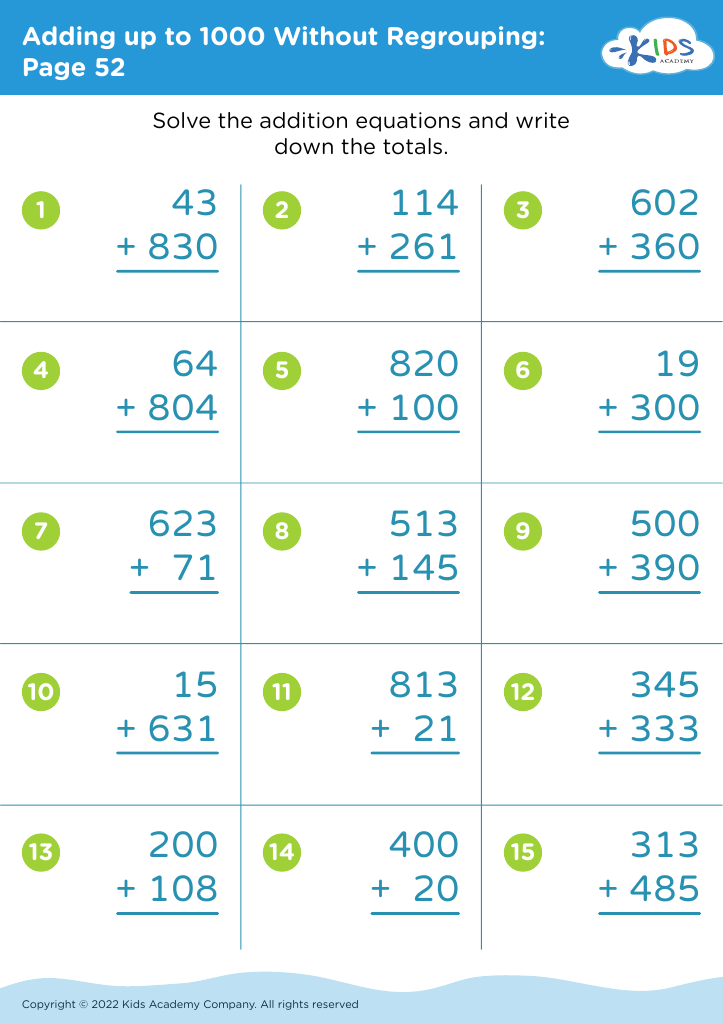
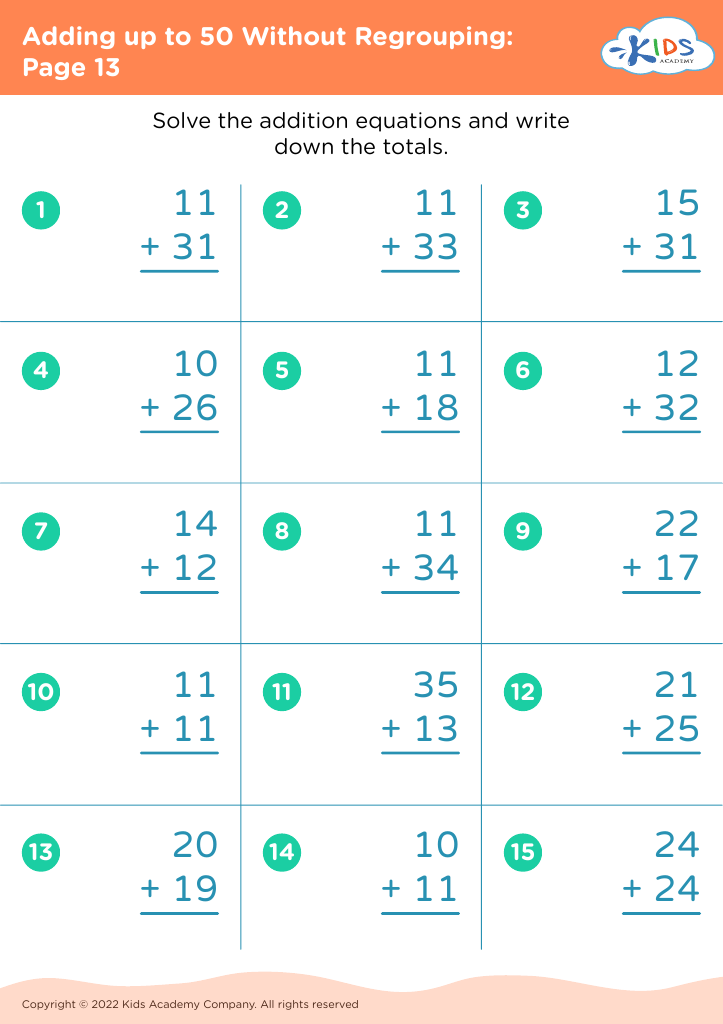
Discover our engaging Understanding Number Sequence Addition Worksheets specifically designed for children aged 7-8. These worksheets facilitate the development of essential math skills by helping kids grasp number sequences through interactive addition activities. Young learners will build confidence as they explore patterns and connections in numbers, enhancing their addition abilities. Our fun and colorful exercises keep students motivated while providing the guidance they need to master these important concepts. Perfect for classroom or home use, these worksheets foster critical thinking and problem-solving skills, making math both enjoyable and educational. Unlock your child’s potential in math with our comprehensive resources today!








Understanding number sequences and addition for children aged 7-8 is crucial for several reasons. At this developmental stage, children begin to explore more complex mathematical concepts, which serve as the foundation for their future learning. A firm grasp of number sequences aids in identifying patterns, which in turn enhances problem-solving skills and mathematical reasoning.
Parents and teachers should prioritize this understanding as it fosters numerical fluency, essential for performing calculations efficiently. Recognizing sequences, such as counting by 2s, 5s, or understanding skip counting, supports foundational concepts in addition and helps students appreciate the relationships between numbers. This understanding paves the way for mastering more advanced topics, such as multiplication and division.
Additionally, children who struggle with number sequences may experience difficulty with overall math progress, leading to anxiety and decreased confidence. By ensuring that children have a solid understanding of these concepts, parents and teachers can encourage a positive attitude towards mathematics, ultimately supporting academic success. Engaging children with fun and interactive methods, such as games and hands-on activities, can enhance their learning experience, making math enjoyable while reinforcing crucial skills necessary for future academic achievement.








